Chinese Temples Are Trying To Tell You Something
You've walked through dozens of them. Here's what you've actually been looking at.

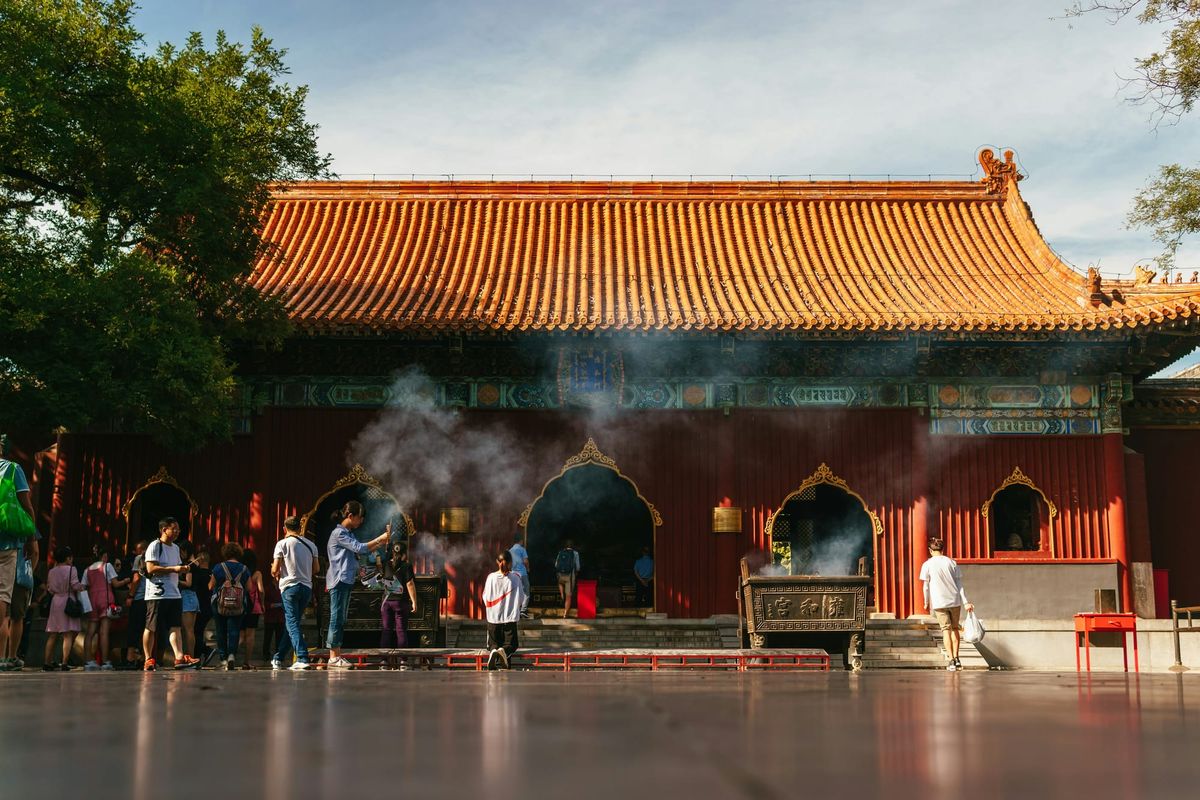
Most visitors to a Chinese Buddhist temple see the same beautiful tableau: swirling incense smoke, gilded statues, and courtyards full of people taking photographs.
Around the fourth or fifth visit, something shifts—a nagging suspicion that there’s a coherent logic underneath all of it, a structural grammar just out of reach.
That grammar exists.
Once you understand it, these spaces stop being atmospheric backdrops and become open books, revealing crucial aspects of Chinese society.
1.The Architecture of Status
In imperial China, a building‘s appearance wasn’t an aesthetic choice. It was the ultimate declaration of status. Roof shape, tile color, platform height, the number of bays across a facade—all of it was strictly codified by rank.
Imperial yellow and deep vermilion were state monopolies; commoners were prohibited from using colored roof tiles at all. The double-eaved hipped roof sitting atop the most important hall? That configuration was reserved exclusively for the Emperor, and—by rare imperial grant—sanctuaries dedicated to Confucius or the supreme Buddhist deities.
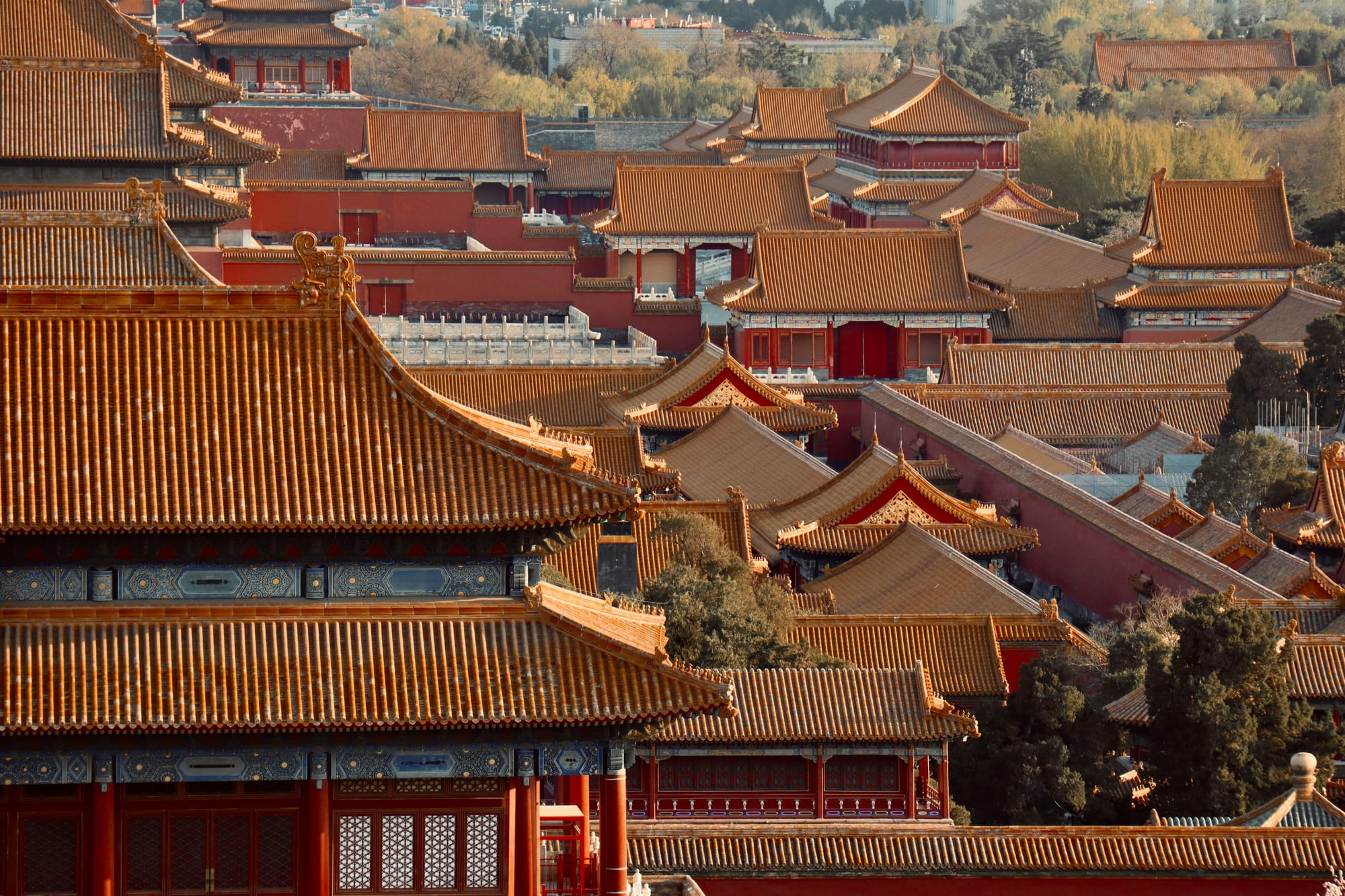
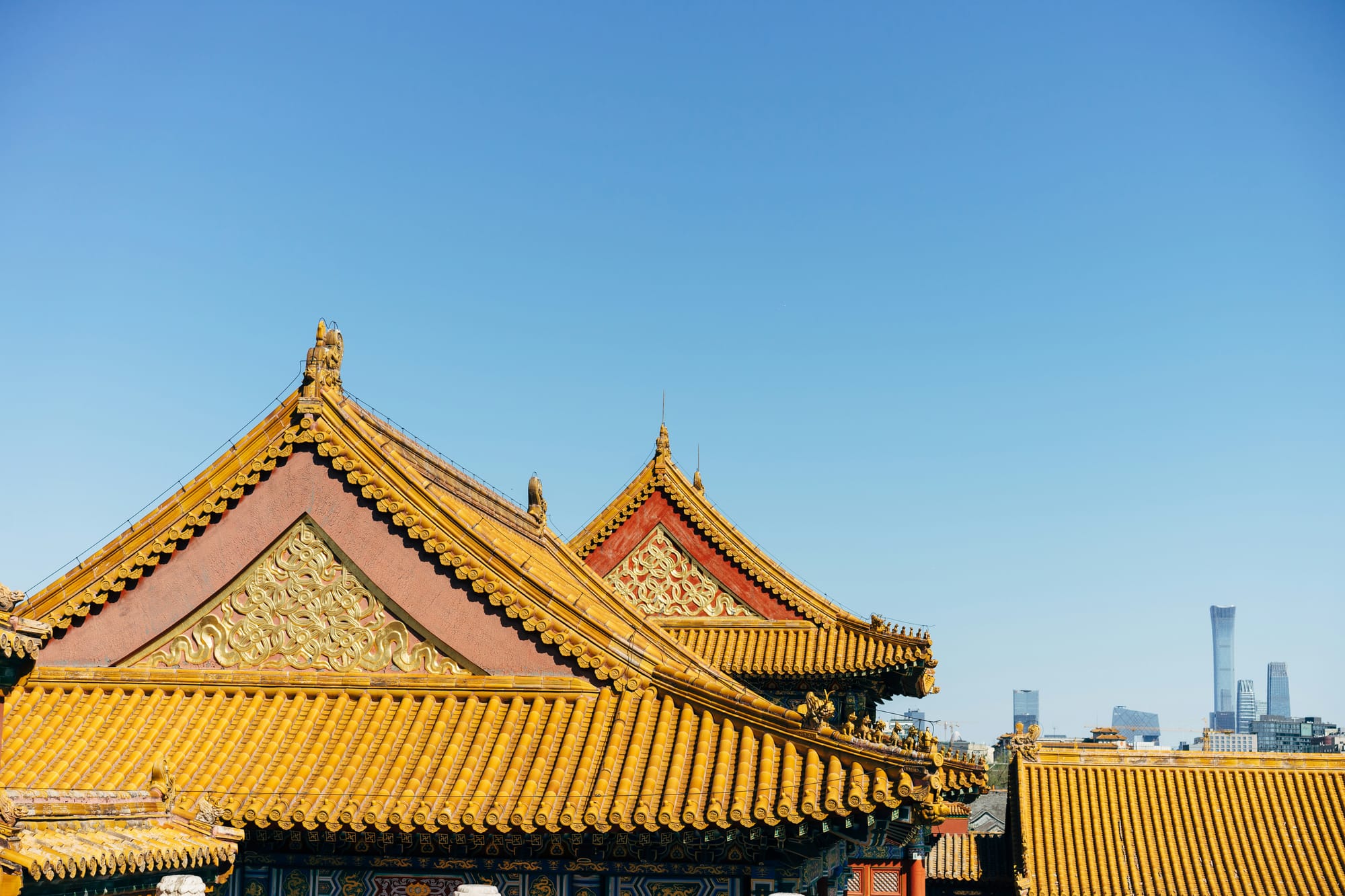
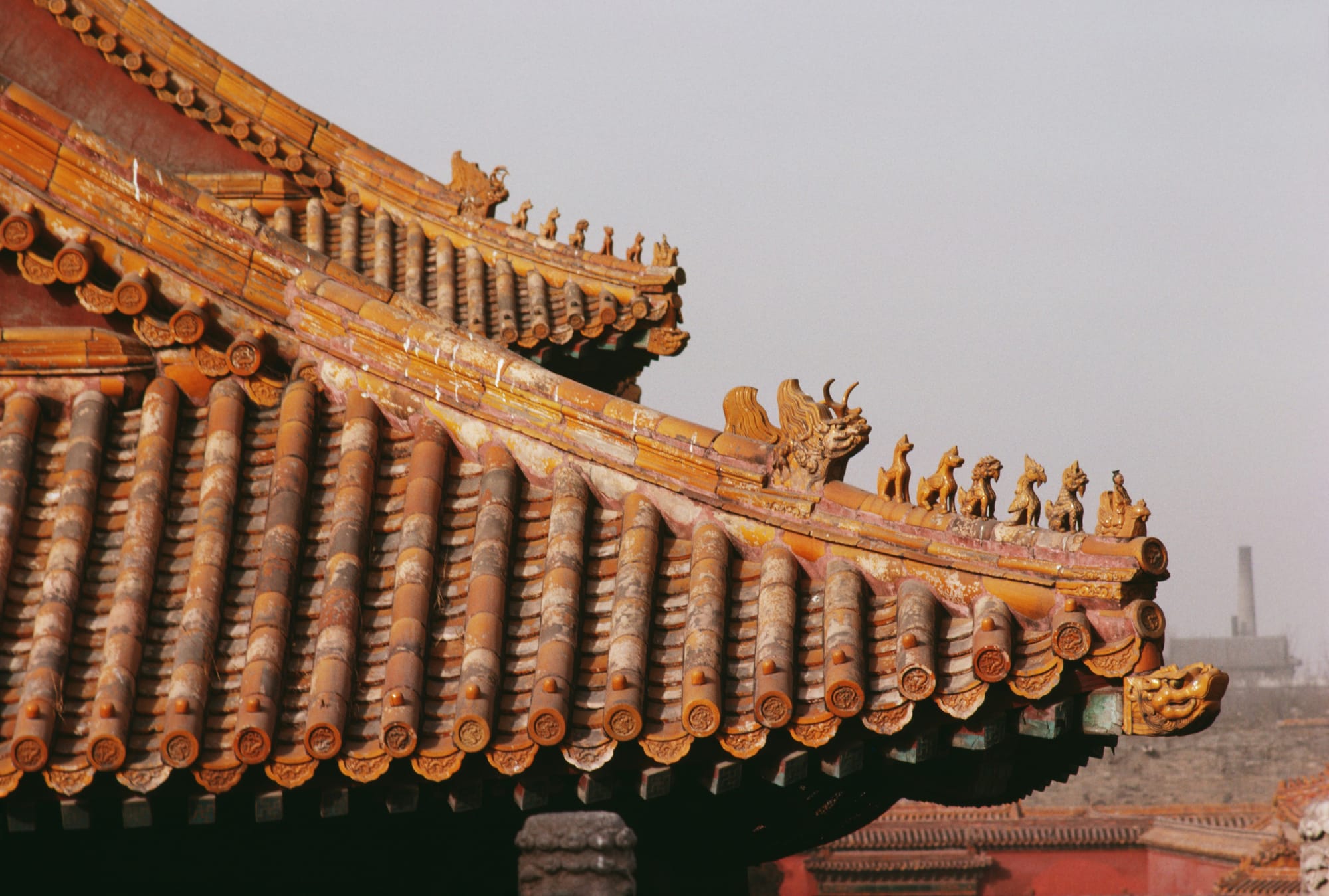
Under Confucian ritual doctrine (Lìzhì, 礼制), architecture was a direct expression of cosmic and social hierarchy. It still governs modern Chinese society in subtle ways. The seating arrangement at a high-stakes state banquet, the precise choreography of a corporate business card exchange, the ordering of names on a formal trade document—these follow the same visual grammar and cultural logic.
Look out for these subtle cues on your next visit.
2.Even Gods Have ROIs
Wander into any busy temple and you’ll notice that some altars are thick with incense and fresh offerings, while others collect dust.
This is the spiritual marketplace at work—and it is ruthlessly honest.
The Chinese phrase xianghuo hen wang (香火很旺)—"the incense fire burns vigorously"—is the ultimate consumer review. It signals that a deity has earned a reputation for lingyan (灵验): efficacy. This god delivers. So the community trusts it.
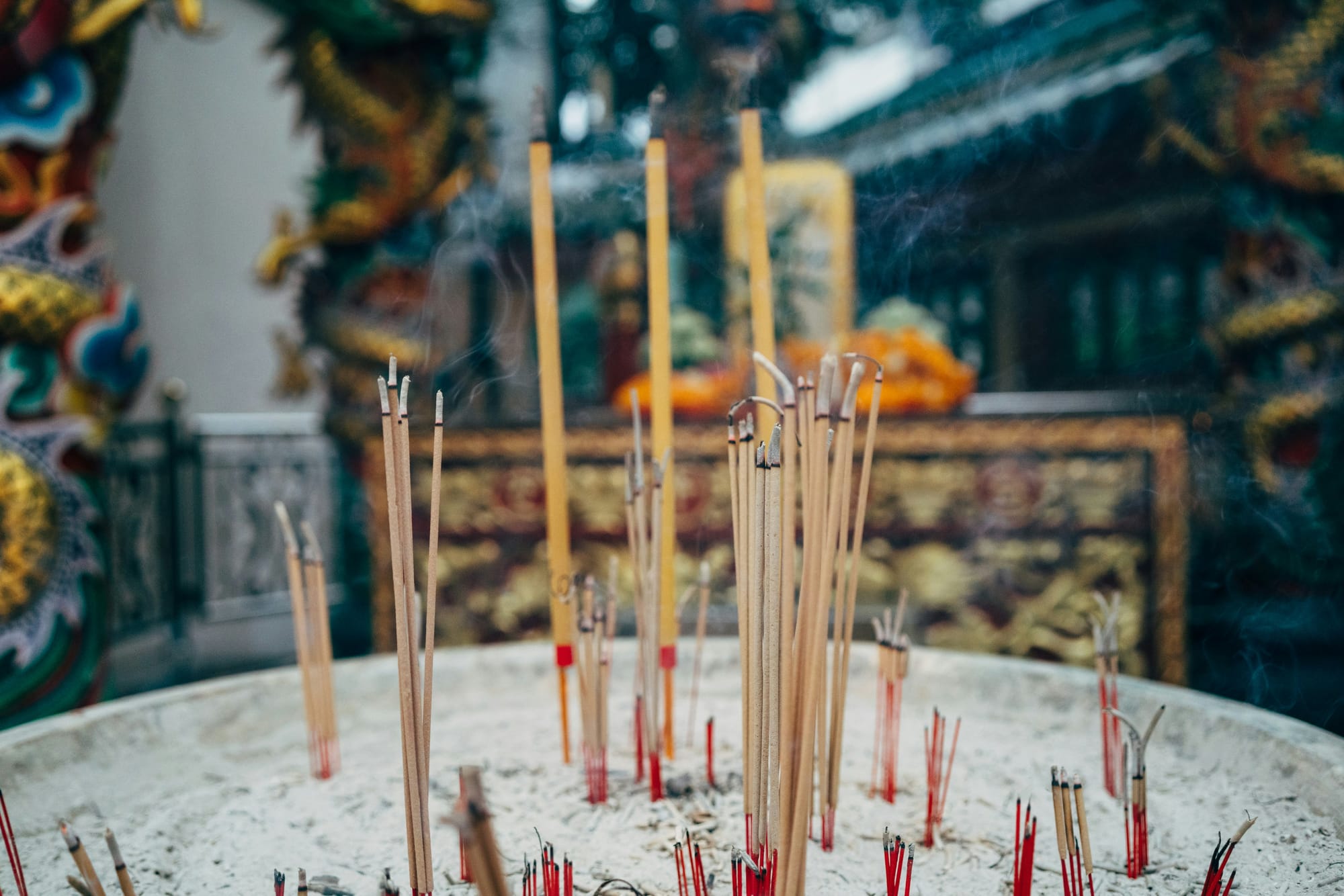
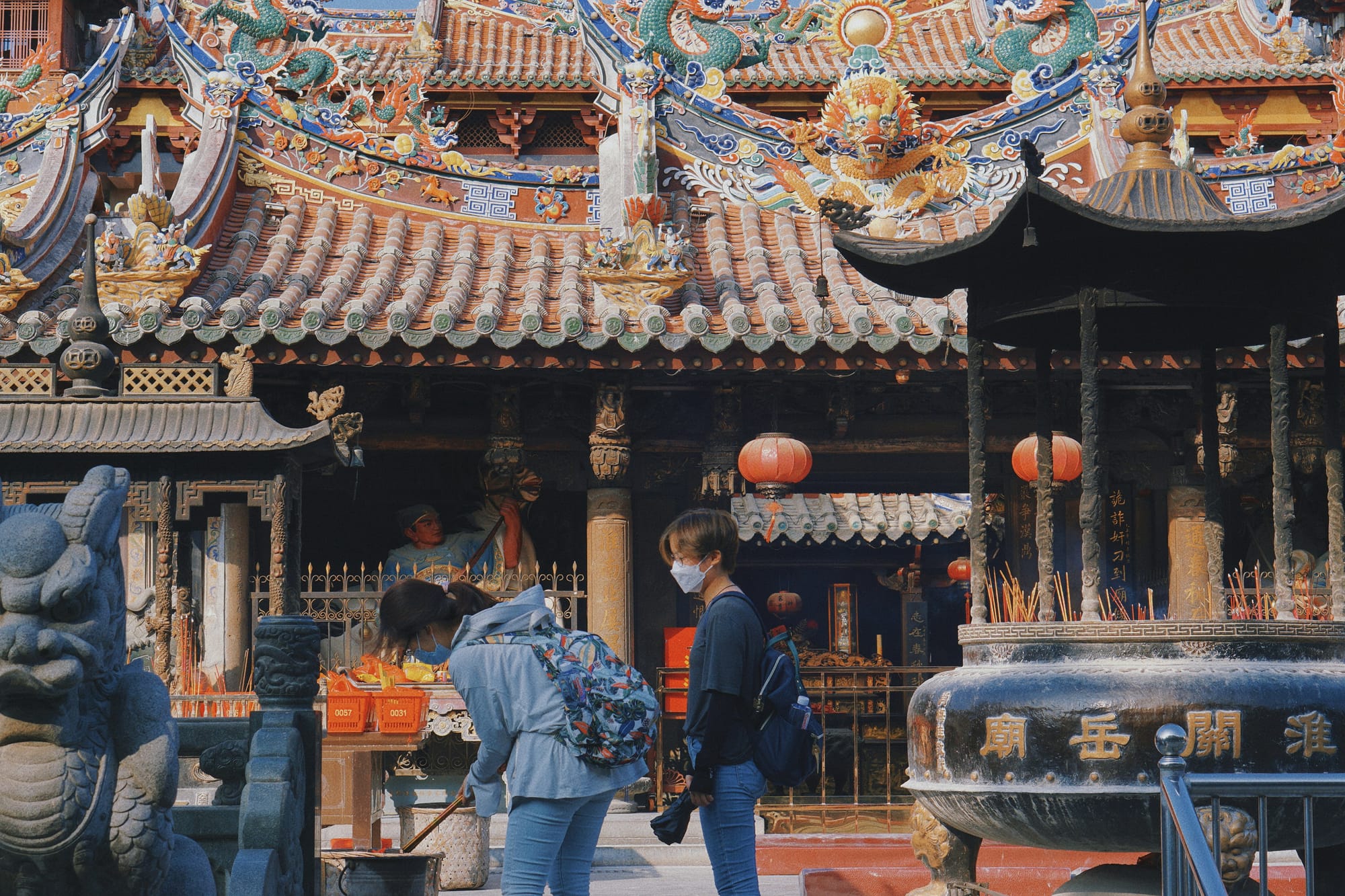
The transaction has two steps. You make a request. If results come through, you return, offer thanks, and close the loop—huanyuan (还愿), returning the vow. Break that loop and you compromise your credit with the deity. A temple that stands a thousand years has been market-tested by a millennium of pragmatic worshippers.
Viewed through this lens of efficacy, the mystified business concept of guanxi instantly becomes simple. If I invest trust and resources in this partner, will they come through? Good guanxi is where the answer is reliably yes. Bad guanxi is where it isn‘t.
The same logic governed dynasties. The Mandate of Heaven (Tianli, 天理) was explicitly conditional: deliver stability and prosperity, keep the mandate. Fail, and the mandate transfers. Today, the two performance metrics that matter most to institutional trust in China remain social stability and economic delivery. The accountability hasn’t changed.
3.A System of Adaptation
Walk into most Chinese temples and you are, without realizing it, standing inside three belief systems at once.
Confucianism provided the social playbook: how to behave, who defers to whom, how relationships are ordered from family to state. Daoism concerned itself with the larger picture: the relationship between humans and the cosmos.
Buddhism was entirely different. It arrived from India as a complete package—foreign deities, foreign cosmology, foreign answers to questions the other two had left largely untouched. What happens after death? How do you make peace with suffering?
China absorbed it, until it felt completely at one with its home-bred beliefs. The fascinating evidence is hiding in plain sight:
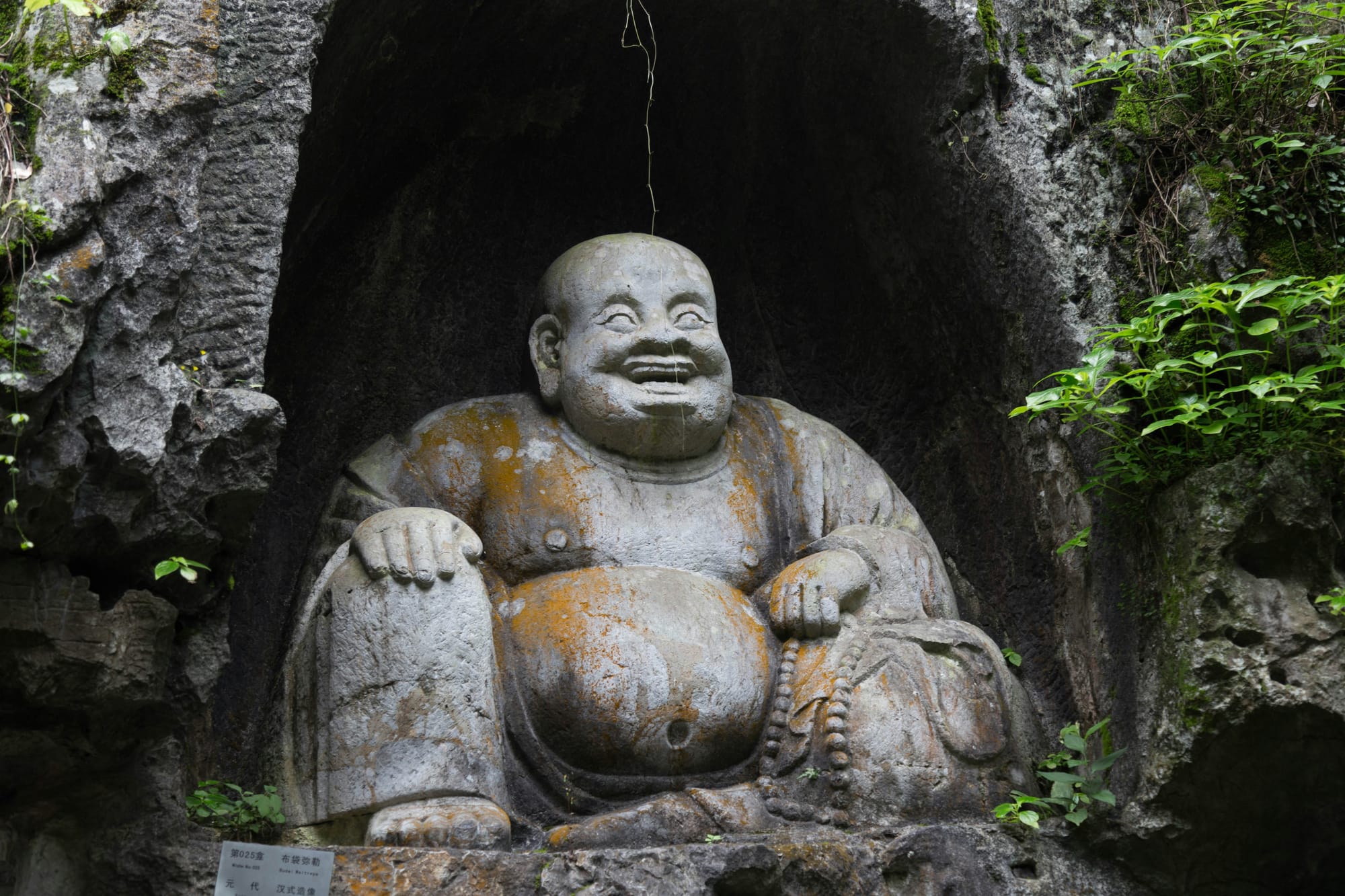
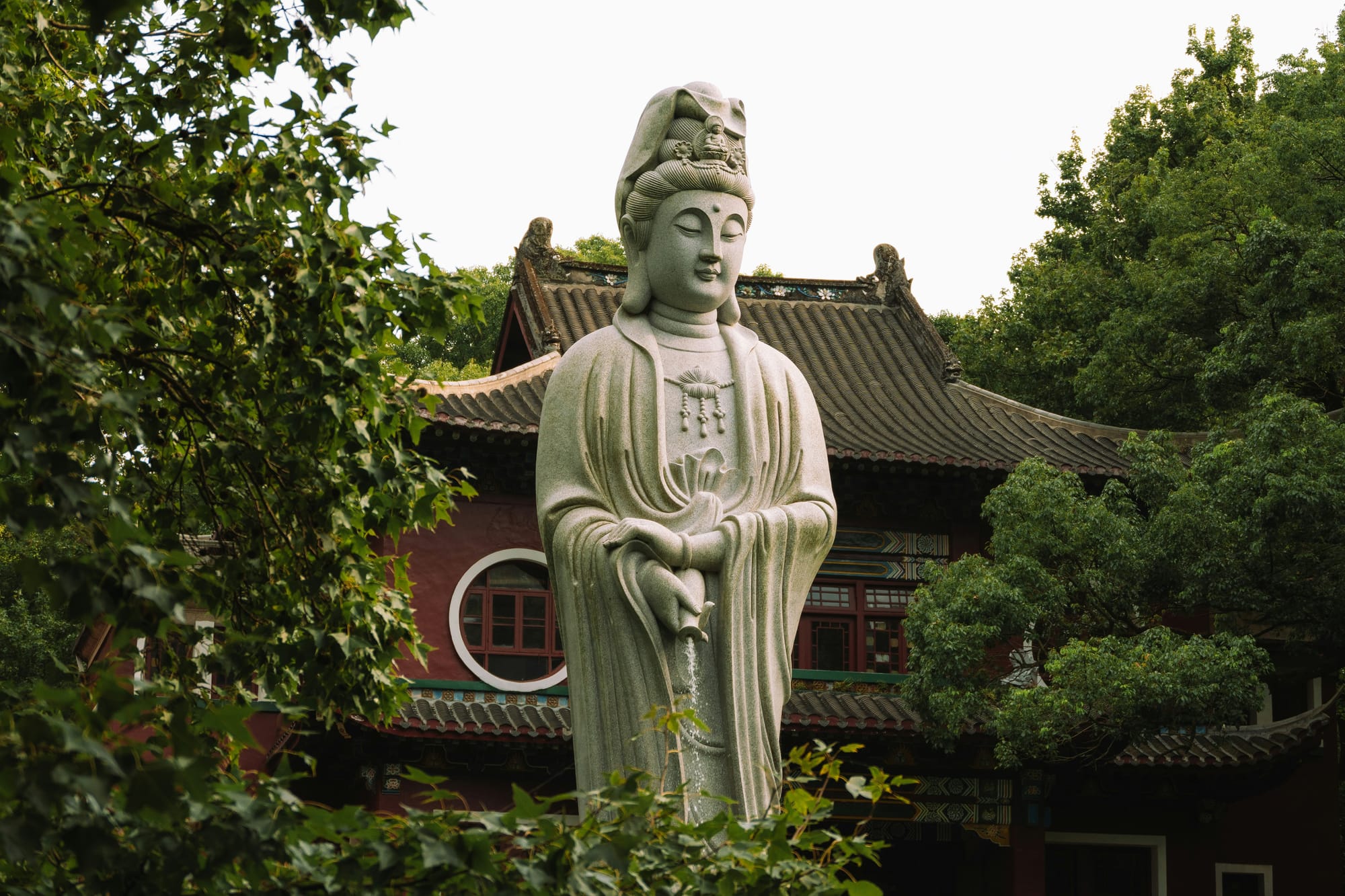
The laughing Buddha (left) and Guanyin (right)
- Guanyin arrived male. China made her female. Compassion, in China’s context, reads as feminine.
- The Laughing Buddha—a tenth-century Chinese folk saint—appears nowhere in Indian texts but everywhere in Buddhist temples.
- The Four Heavenly Kings stand guard in imperial Chinese armor, not Indian wraps. Look closer: the pipa, sword, umbrella, and serpent they hold form a visual allegory for a century-old prayer: feng tiao yu shuai (风调雨顺)—favorable wind, timely rain. Cosmic guardians, quietly reprogrammed for an agrarian society.
The same instinct that turned a male Indian bodhisattva into a female Chinese goddess later turned Japan‘s Shinkansen into the world’s largest high-speed rail network. It turned Western automotive joint ventures into BYD and the world's biggest EV market. It turned foreign mobile payment ideas into digital ecosystems that left their inspirations behind.
In each case, the logic is identical to the temple’s: take what is useful, adapt it until it fits the local condition, until the friction is gone and the foreign feels entirely frictionless.
4.Enlightenment Has a Waiting Room
Step inside a European cathedral. The nave draws your eye straight to the altar. The architecture implies a vertical relationship with the divine—direct, immediate, singular.
The Chinese temple disagrees.
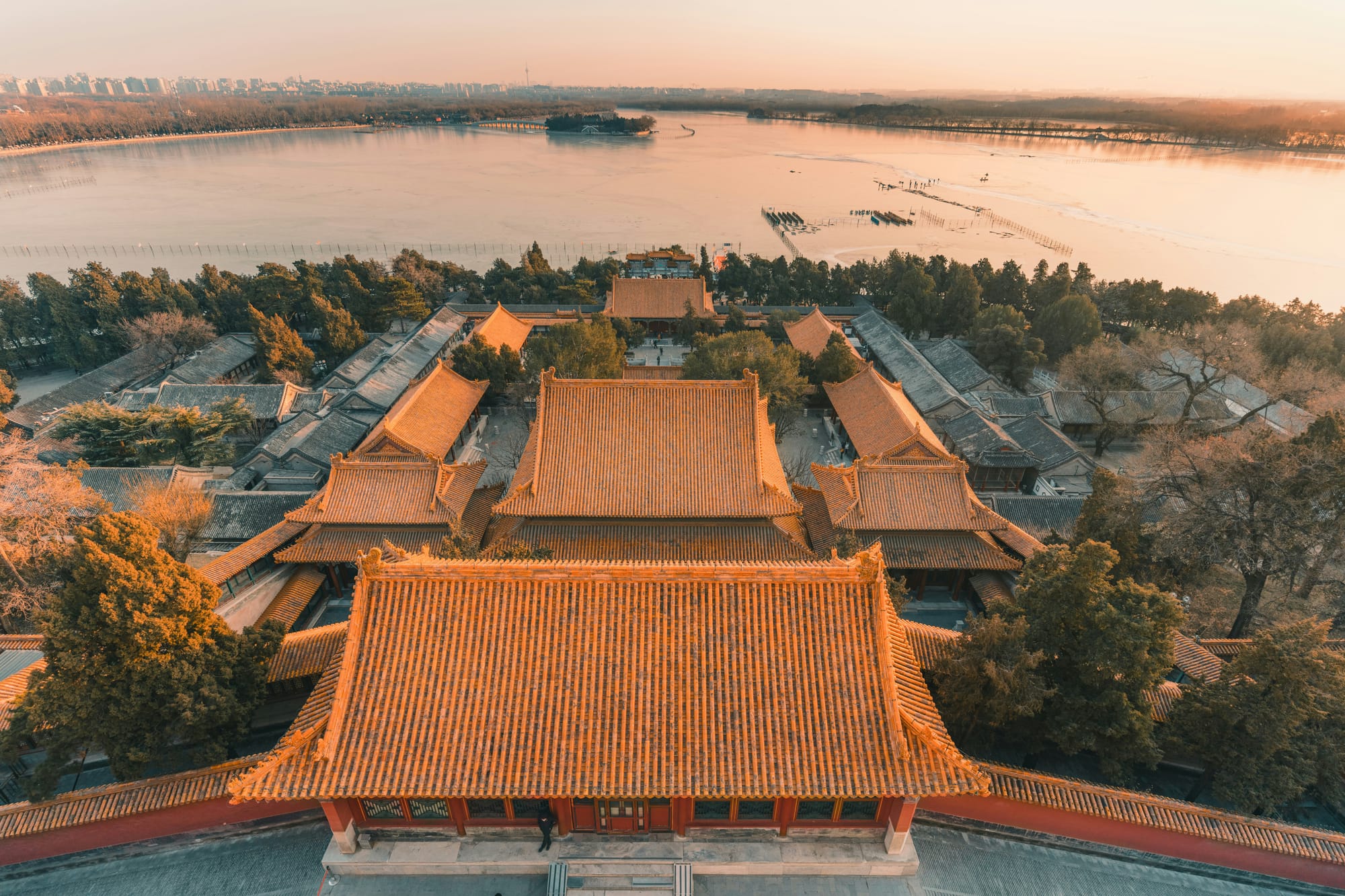
You enter through the outer Mountain Gate—three liberations offered, none yet granted. You pass the Heavenly Kings, prepared but not transformed. You cross the courtyard into the Great Hall (大雄宝殿 Daxiong Baodian). The icons are present, but the teaching hasn’t landed. The process completes—if it completes—only deep within the complex, in the Dharma Hall (法堂 Fatang) at the back.
The architectural principle is sequential for a reason: even enlightenment has a process. There is no immediate payoff or shortcut.
If you’ve spent time in Chinese business or diplomatic contexts and noticed an apparent comfort with slow cultivation—the long lunch before the deal, the relationship that precedes the contract—that‘s strategic patience encoded directly into the spatial culture.
The West tends to negotiate toward the moment of the signed agreement. China invests in the courtyard before it.
Three Temples Worth The Detour
1. Yonghe Temple (Lama Temple), Beijing
The single best showcase of imperial architectural status in a religious setting.
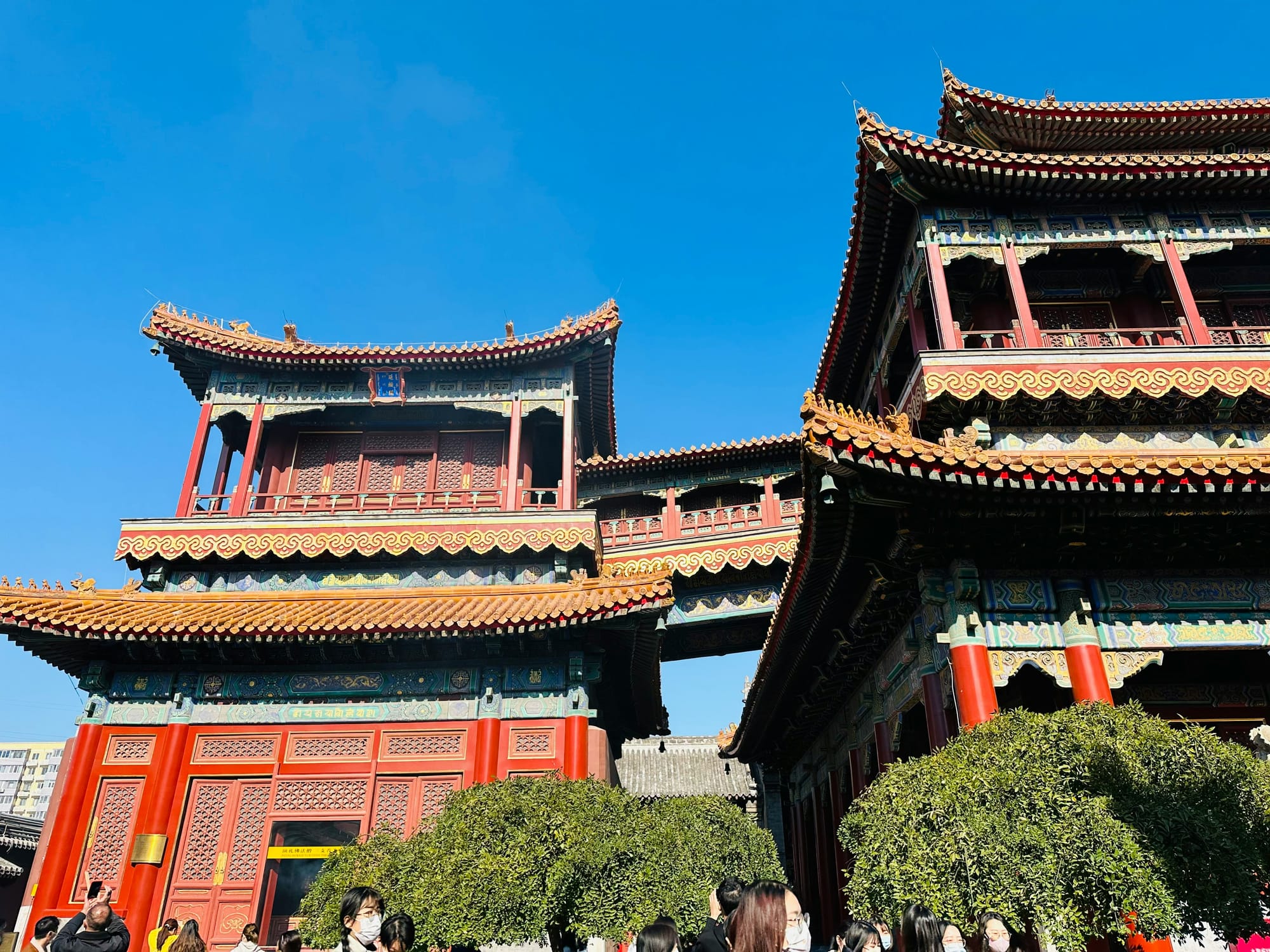
Originally the residence of Emperor Yongzheng before he ascended the throne, the complex was converted into a Tibetan Buddhist lama temple in 1744.
The yellow-glazed roofs and vermilion walls—colors that once belonged exclusively to the Emperor—say everything this article describes. Walk the central axis and you are walking the sequential logic of the courtyard system in practice.
The anchor is the Pavilion of Ten Thousand Happinesses: an 18-meter Maitreya Buddha carved from a single piece of sandalwood—the largest such carving in existence.
| Getting There | |
|---|---|
| Address | 12 Yonghegong Dajie, Dongcheng District, Beijing |
| Metro | Subway Line 2 or 5, Yonghegong Station, Exit C or F |
| Entry | 25 RMB |
2. Jing‘an Temple, Shanghai
A living example of A System of Adaptation.
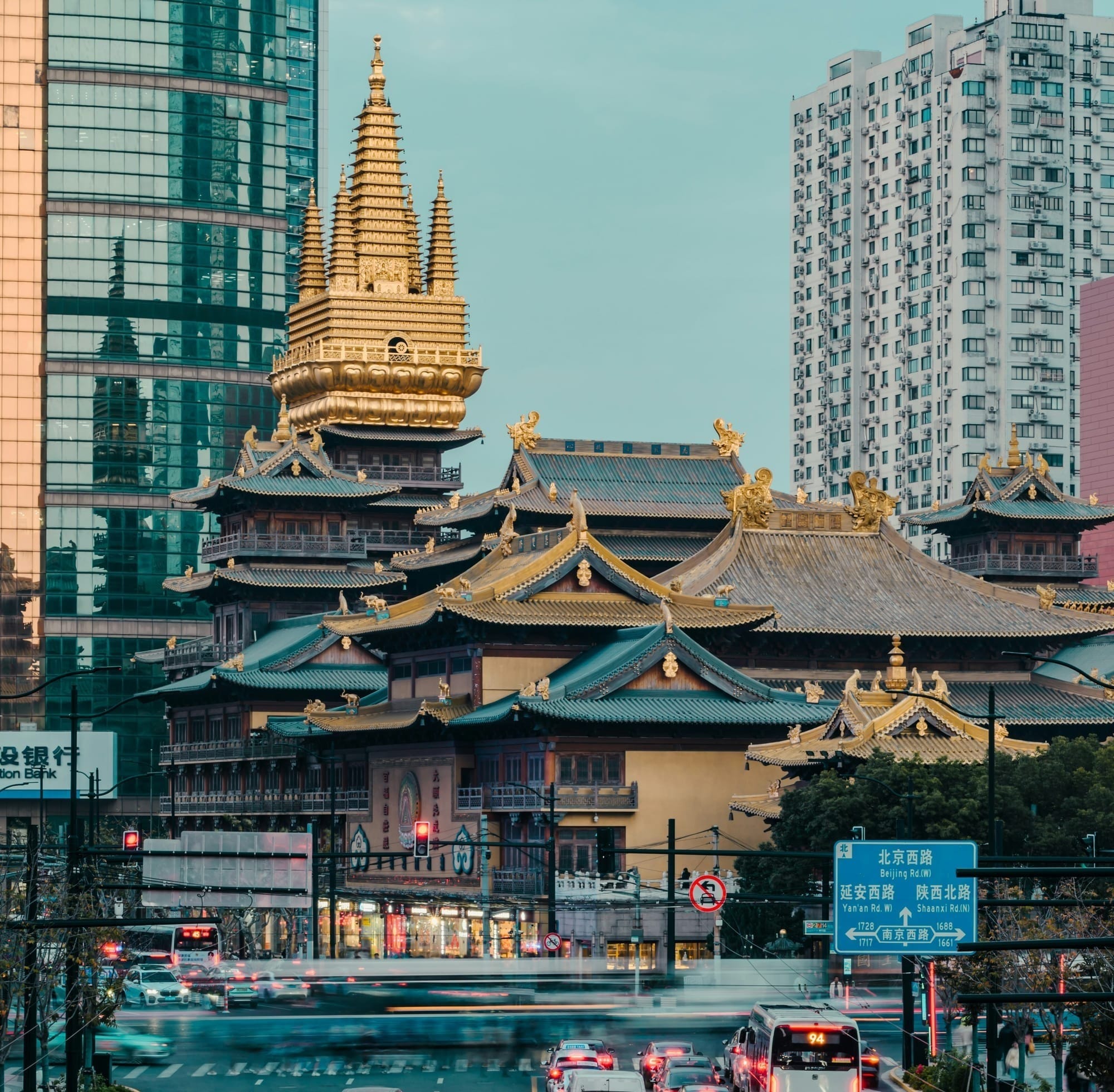
Founded in 247 AD, relocated in 1216, and now sitting squarely between luxury shopping malls and elite office towers in Shanghai's Jing'an district. The juxtaposition is the entire point—sacred and commercial in direct conversation, neither apologizing for the other.
A jade Buddha and a Ming Dynasty bronze bell anchor the main hall.
| Getting There | |
|---|---|
| Address | 1686 Nanjing West Road, Jing‘an District, Shanghai |
| Metro | Directly above Jing'an Temple Station, Lines 2, 7, and 14 |
| Entry | Typically 50 RMB, prices may vary on festival days and public holidays |
3. Wenshu Monastery, Chengdu
The most accessible demonstration of Even Gods Are Accountable.
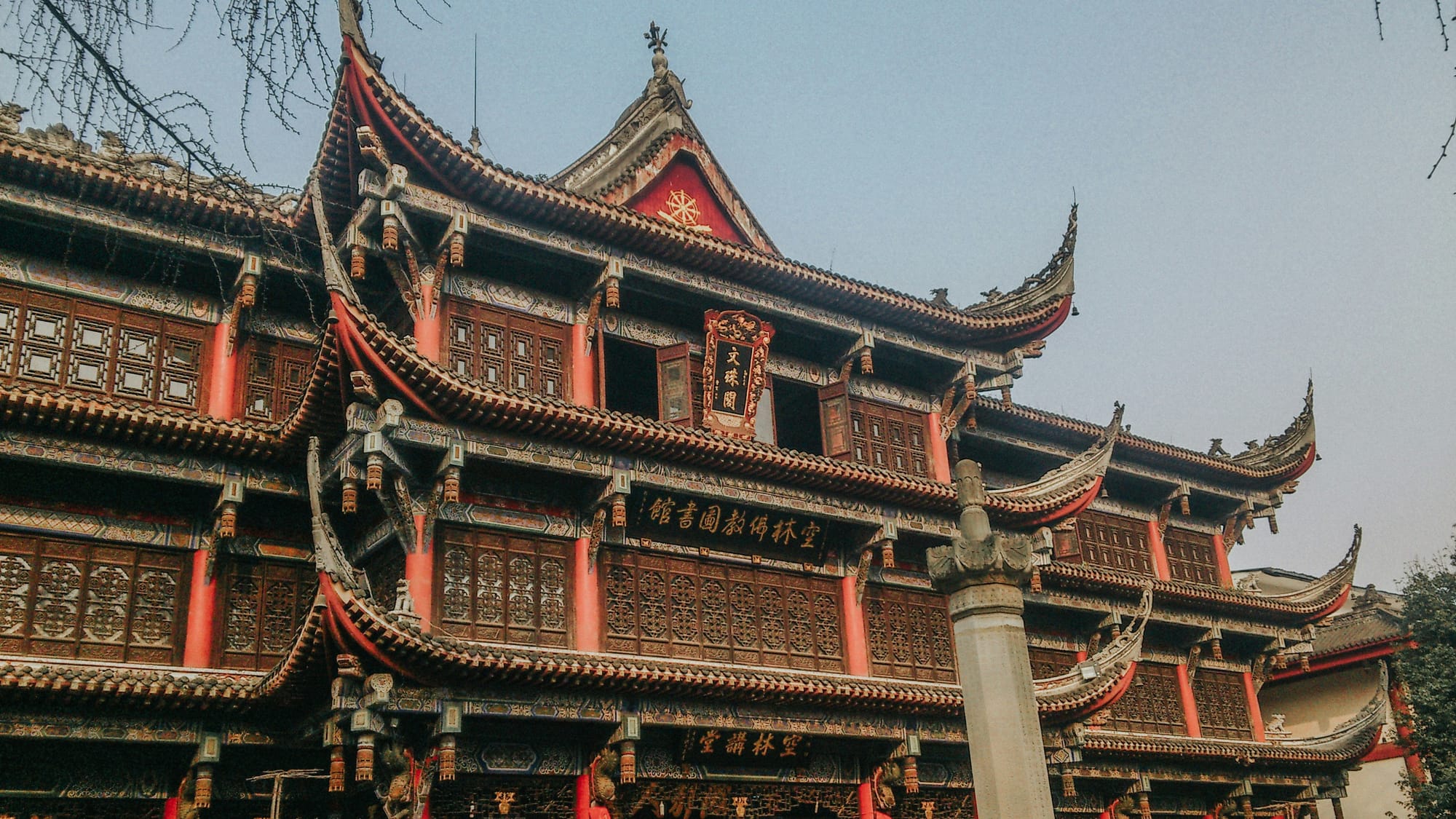
Over 1,400 years old, free to enter, and requiring no reservation.
On Buddhist holidays, incense is provided at the entrance. Watch which altars draw the most smoke and offerings—and which are quietly ignored. That is the spiritual market evaluating efficacy in real time.
Beyond the main hall, expect a traditional teahouse where locals spend hours going nowhere in particular, alongside a calligraphy academy and relic hall. A living institution, not a museum piece.
The temple is known for its vegetarian food — served inside at Xiang Yuan (香园), which offers both casual snacks and a formal banquet known as Wenshu Yuan Su Zhai (文殊院素斋).
| Getting There | |
|---|---|
| Address | 66 Wenshuyuan Street, Qingyang District, Chengdu |
| Metro | Metro Line 1, Wenshu Monastery Station, Exit K |
| Entry | Free |
-Mandarin Unpeeled


![[Quiz] Find the China City for How You Actually Want to Travel Right Now.](https://storage.ghost.io/c/73/63/7363a138-5ebf-4ec5-bfdf-0956583c3258/content/images/size/w600/2026/09/Image-Sep-2--2026-at-03_59_42-PM.png)