Dali
Wind, flowers, snow, moon — a thousand-year-old Buddhist kingdom, circled today on foot or by bike
Dali has been distilled into four words for over a millennium: the wind at Xiaguan, the flowers at Shangguan, the snow on Cangshan, the moon over Erhai. Those same four characters appear embroidered on Bai women's traditional headdresses as the city's most accurate self-description.
Those words rest on five centuries of real power. Bai and Yi ancestors settled here in the Neolithic era, and through the Tang (618–907 CE) and Song (960–1279 CE) dynasties, the Nanzhao and Dali kingdoms ruled Yunnan from the shores of Erhai Lake. Nine of the Dali Kingdom's 22 emperors abdicated to become monks — Buddhism was practically the state religion, earning the kingdom its old nickname, "the fragrant Buddhist land."
The old city dates to 1382, laid out in a grid of "nine streets, eighteen lanes," its lanes threaded with water channeled straight down from Cangshan — the root of the old saying: every household has flowing water, every household grows flowers.
- THE EXPERIENCE
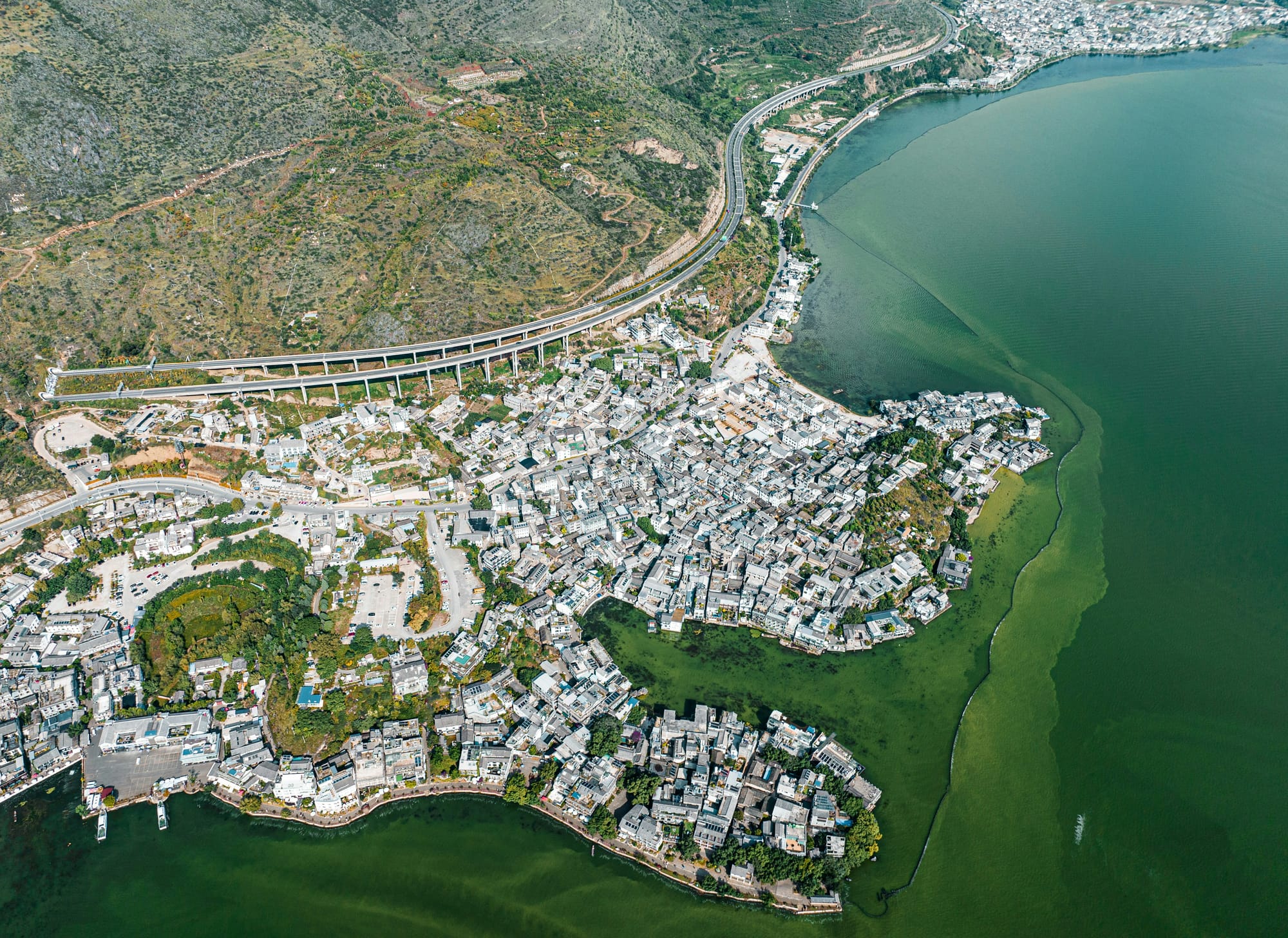
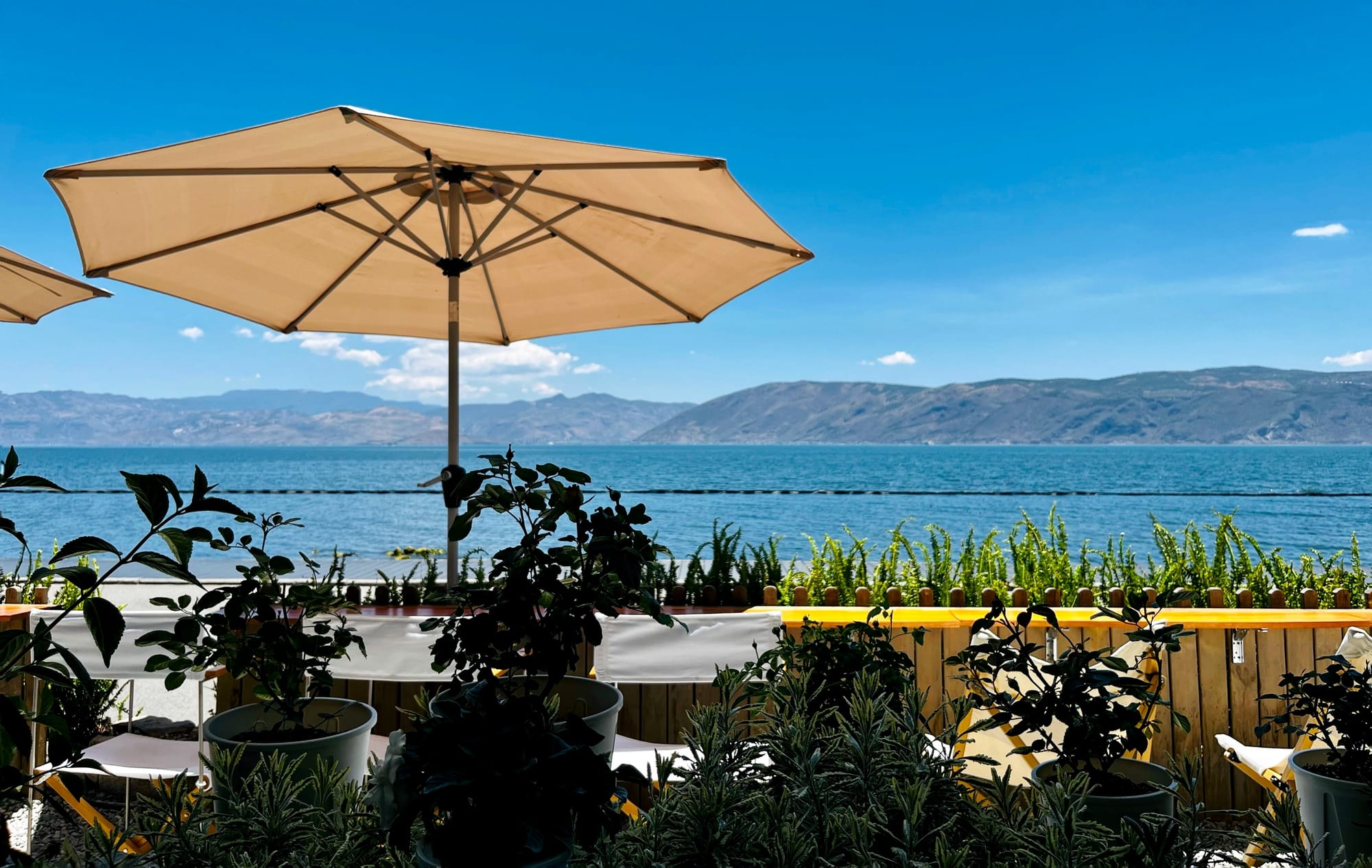
The Erhai Eco-Corridor is the most comfortable way to understand Dali. This 129km lakeside path bars motor vehicles entirely — walk or cycle only — with Bai villages on one side and the lake's breeze and water-celery blossoms on the other. The classic stretch runs from Longkan Pier to the Panxi S-curve, over the arched bridge, to Xizhou old town — Cangshan (Cang Mountain) on your left, Erhai on your right, both mountain and lake in the same frame almost the entire way. Rent a bike or take an electric shuttle cart. Longkan Pier is the best spot for sunrise.
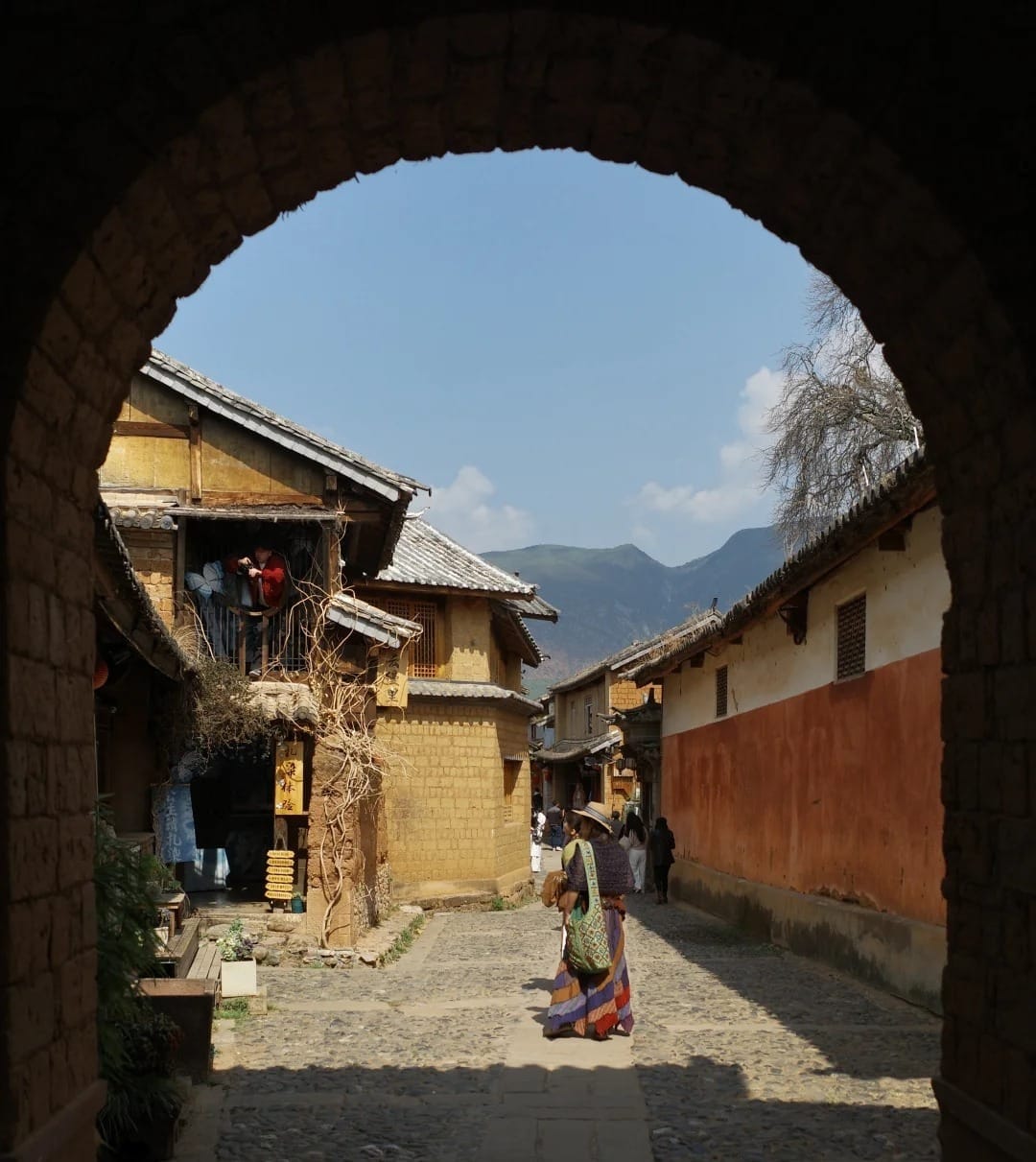
Shaxi Old Town, about two hours from Dali, is the slowest place in the region — the only surviving market town still intact from the old Tea Horse Road trading route. Its old theatre stage on Sideng Street, the stone-paved Yujin Bridge, and a converted Bai residence now housing the Pioneer Bookstore all reward an unhurried walk.
Torch Festival (火把节) is the Bai people's biggest annual celebration, held on the 25th day of the sixth lunar month — giant pine torches, some over ten metres tall, raised by hand in villages across the prefecture and lit at dusk by a village elder. Locals scatter pine resin into the flames, then dance in circles around the fire until the crowd pulls you in too.
Food to seek out: sour-and-spicy fish (白族酸辣鱼) , simmered with local sour papaya and chili; rufan, grilled milk sheets brushed with rose jam; charcoal-grilled Xizhou baba cakes; and water-celery flower soup, a genuine daily staple rather than a tourist dish.
- BEST FOR
Slow, scenic cycling pulls you in — a car-free lakeside path with mountains on one side and water on the other sounds like your kind of day. You're drawn to a region where five centuries of Buddhist kingdoms left a real, lingering imprint.
You want to experience village life. Ultra local food — sour fish, milk sheets, water-celery soup interests you.
- MAY NOT BE FOR YOU IF
You want fast-paced sightseeing with a packed checklist. You're visiting outside spring or autumn — summer brings rain (though also wild mushroom season), and winter strips away the flowers and clear skies that define the place at its best.
You want a destination close to China's heartland — Dali sits in the far southwest, about 4 hours by direct flight from Beijing, with Shanghai not far off that either.
- HOW LONG?
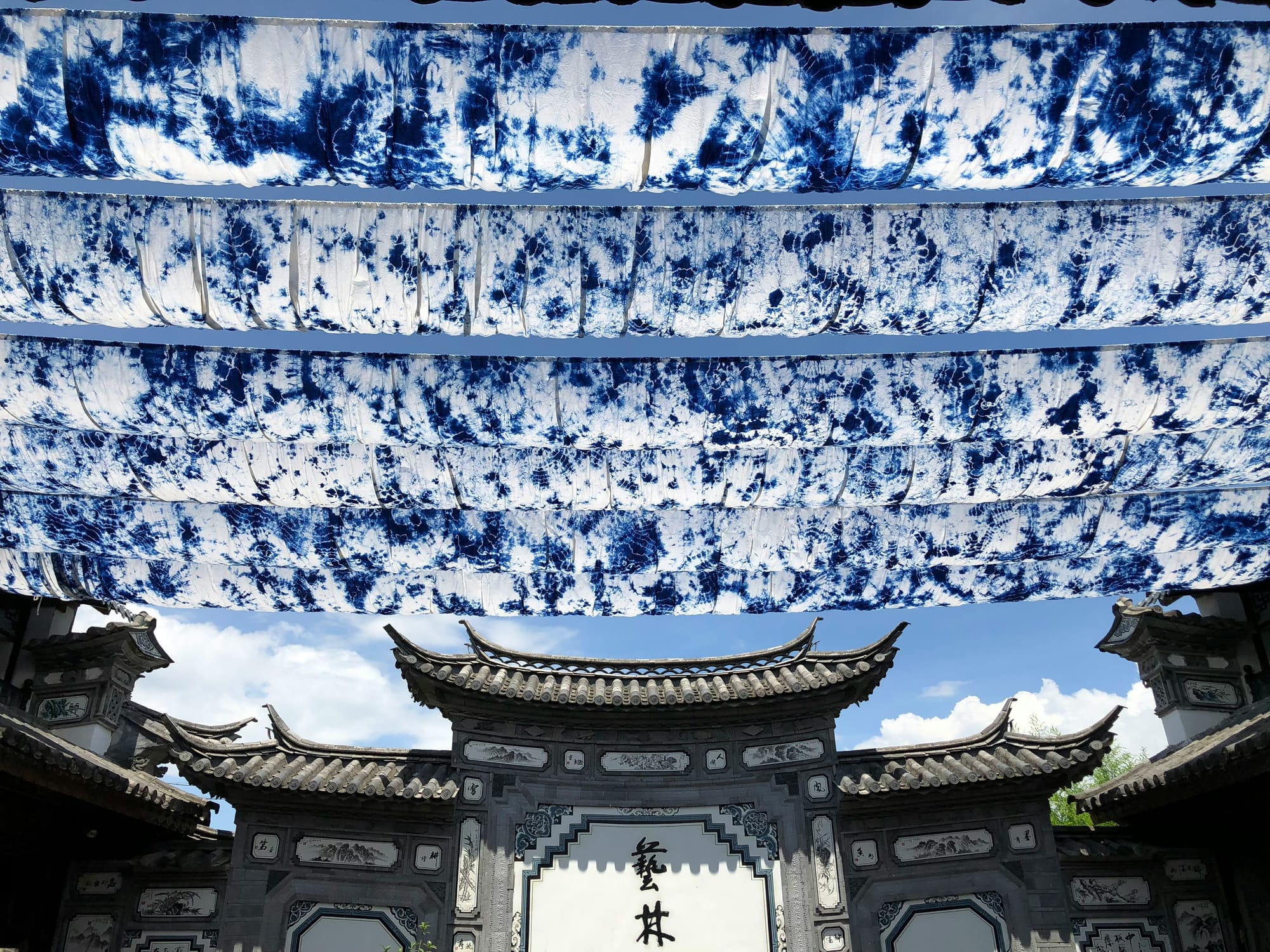
3–4 days: one for the Erhai eco-corridor by bike, one for Shaxi old town and a tie-dye workshop, allow some time for the old city itself and the Three Pagodas at Chongsheng Temple.
- GETTING THERE
Dali Fenghuangshan Airport has direct flights from Beijing, Shanghai, Chengdu and other major cities. More commonly, high-speed rail from Kunming takes about 2 hours (¥145), and from Lijiang about 1.5 hours.
From Dali station, a shuttle bus runs directly to the old city's south gate.
- PAIRS WELL WITH
Kunming, about 2 hours by high-speed rail, as Yunnan's gateway city · Lijiang, about 1.5 hours, for more Naxi culture and old-town architecture · Shaxi, about 2 hours by car, for the last intact Tea Horse Road market town
Rent an electric scooter or a private car to circle Erhai Lake — avoid the brightly colored "influencer jeeps" rented roadside, which can carry a steep markup. Altitude sits around 2,000m; most visitors won't feel much effect, but it's worth keeping your first day light regardless.
Dali's UV exposure is intense at this altitude, so sunscreen isn't optional.