Xiangji Temple 香积寺
The Kitchen God's temple on the pilgrim's road.
Originally constructed in 978 CE during the Northern Song dynasty, Xiangji Temple holds a singular identity in Chinese Buddhism: it is the only temple in the country dedicated to the Great Sage Kinnara King Bodhisattva (大圣紧那罗王菩萨) — known in Chinese Buddhist tradition as the Supervisor of Dining (监斋菩萨), a celestial figure presiding over food, fasting, and the sanctity of the kitchen.
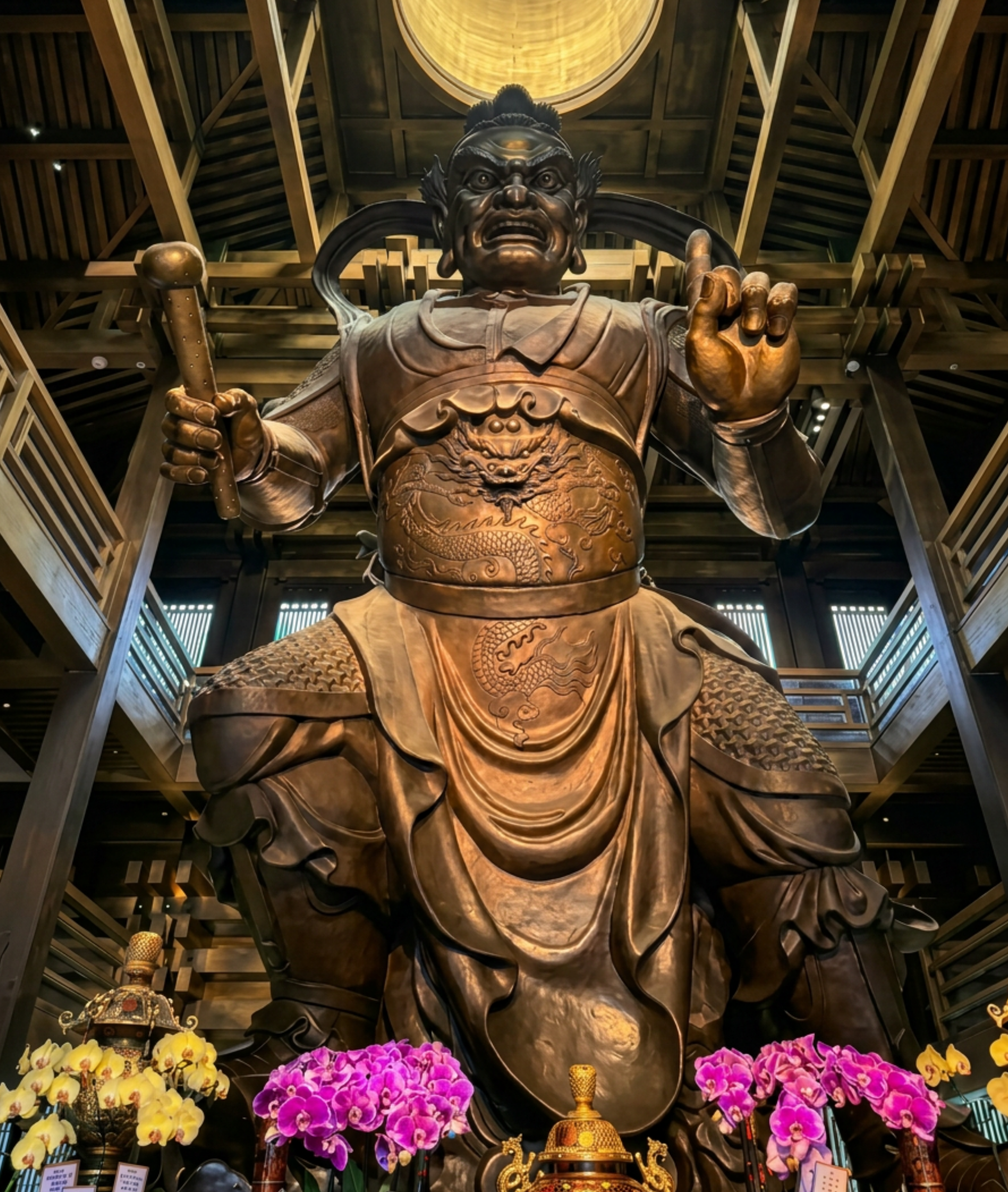
Because of its position at the southern terminus of the Grand Canal, Xiangji Temple historically served as the first stop for pilgrims arriving in Hangzhou by boat — the first temple visible from the water, where travellers would disembark, rest, and pay their respects before continuing on to Lingyin and Tianzhu.
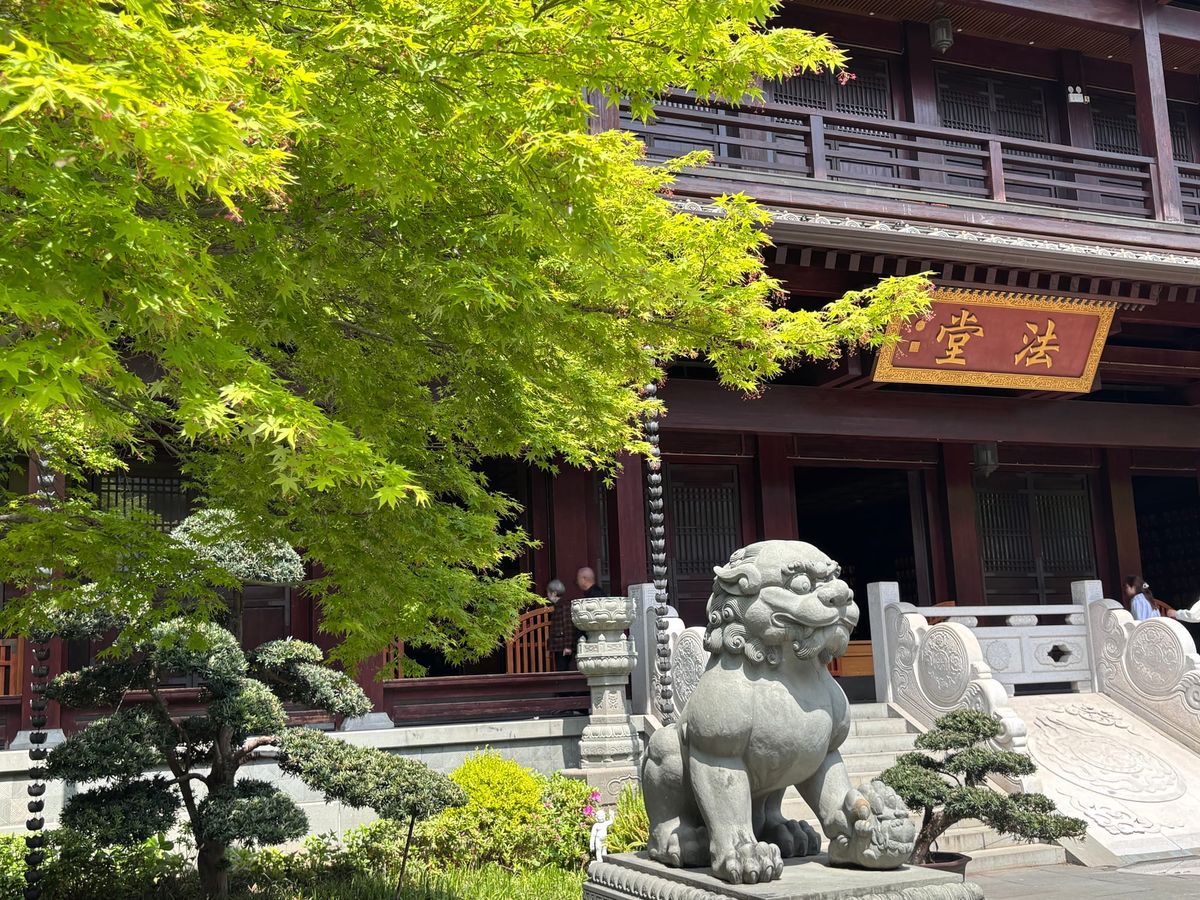
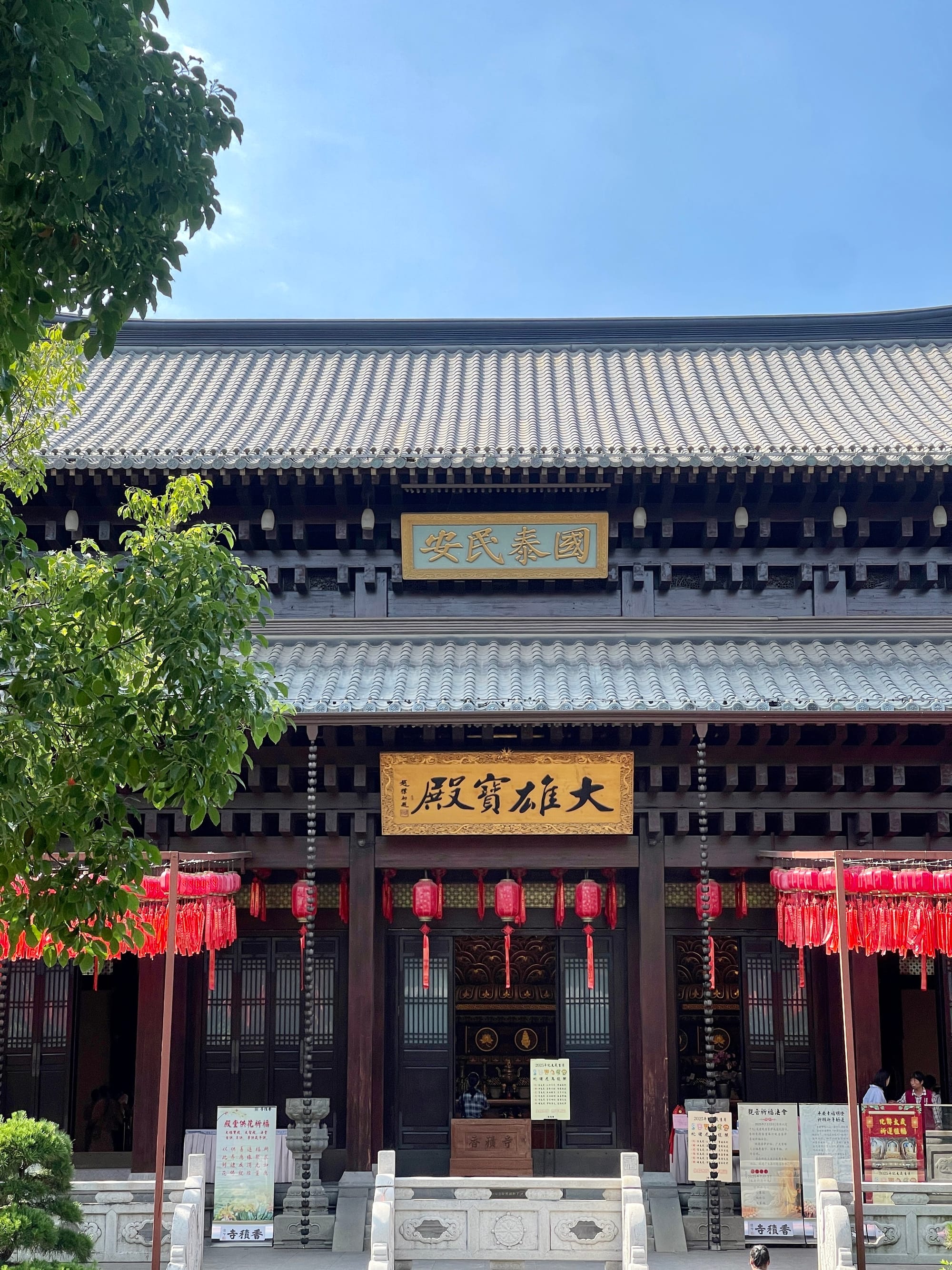
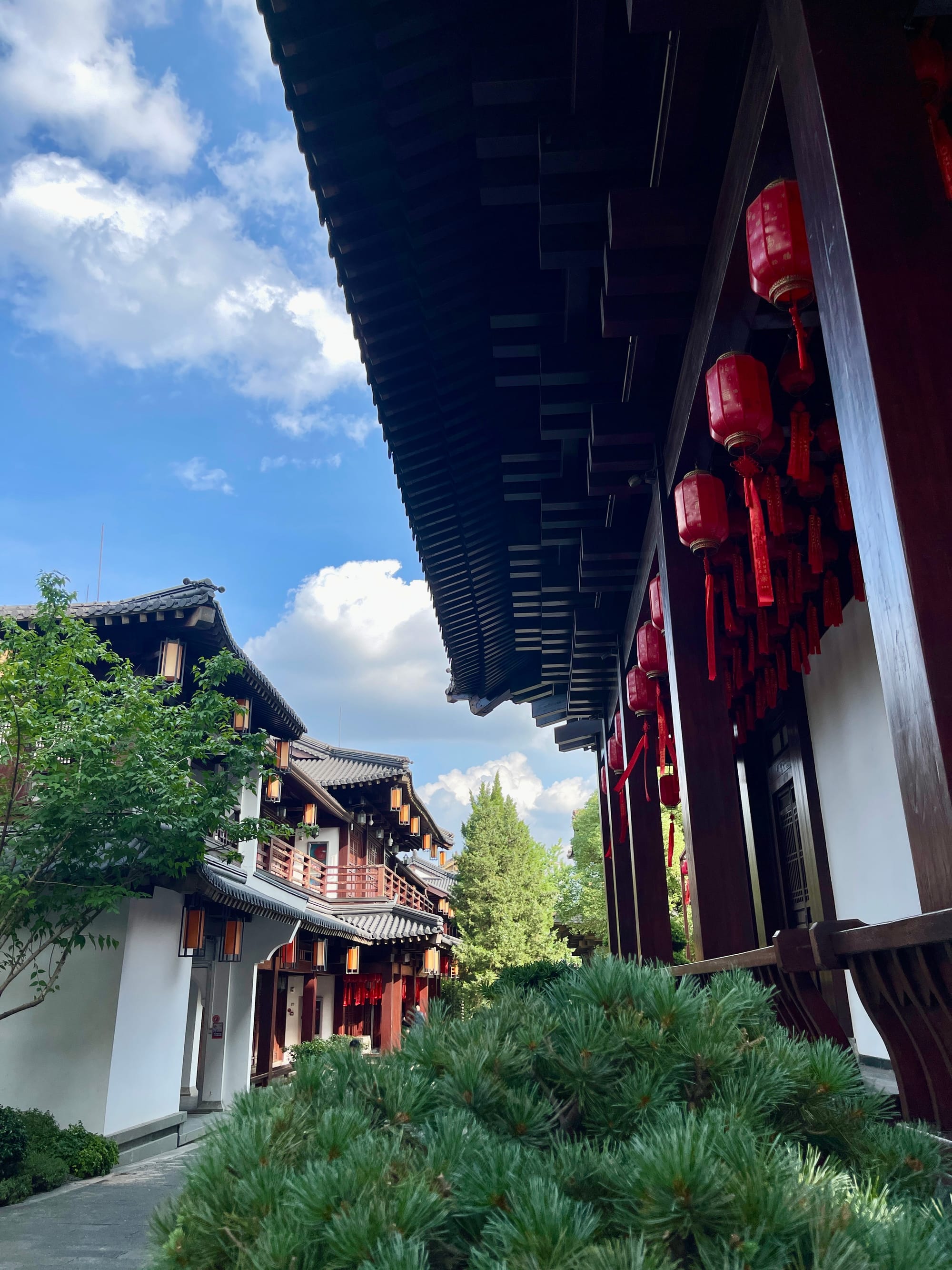
Reconstructed in 2009, the temple keeps its traditional Hangzhou form — upturned eaves, a classical five-hall axis — but executes it almost entirely in copper: some 400 tonnes of it, in the pillars, tiles, and thresholds, so that everything the eye lands on gleams rather than weathers.
Logistics & Booking Guide
How to Find It
Grand Canal Boat: For the most authentic historical arrival, take the public Grand Canal Water Bus Line 1 from Wulinmen Wharf (武林门码头) and get off at Xinyi Fang (信义坊). From there, it's a pleasant short walk along the scenic canal bank (passing through Dadao Road Historic Block) to reach Xiangji Temple (香积寺) and the nearby Shengli River Food Street (胜利河美食街).
Metro: Take Line 3 to Xiangji Temple Station (香积寺站). Exit C leads directly to the temple, roughly a 5-minute, 400-metre walk.
Visual Cue: Look for the temple's copper-clad halls — eaves, pillars, and roof tiles finished almost entirely in gleaming, dark-patinated metal, unlike any other temple roofline in the city.
Taxi Address: 杭州市拱墅区香积寺巷1号香积寺 (Xiangji Temple, No. 1 Xiangji Temple Lane, Gongshu District, Hangzhou).
Admission and Booking
Tickets: RMB 20. Tickets can be purchased instantly at the courtyard entry gate window. No advance booking required.
Hours: Open daily, 08:00–17:00 (last entry 16:30).
Photography: Permitted throughout the outdoor courtyards. Photography and flash are strictly prohibited inside the main halls facing the altars.
Insider Tips
Audio Guide: Bilingual plaques outside each hall do the explaining, which is useful here — the temple follows a classical hall sequence, but its dedicated shrine to the Kitchen God, unusual in a main axis, is easy to walk past without knowing what you're looking at.
Cultural Insight: The temple holds a highly popular Kitchen God send-off ceremony every Lunar New Year, serving as a primary cultural hub for Hangzhou's local culinary workers and nearby neighborhood dining scenes.
Food & Drink Recommendations
1. Around the Temple: Vegetarian Experience
Inside the temple grounds, a small counter serves the original bowl — thin noodles in a savoury, unsweetened broth topped with ginkgo nuts, carrot, tofu skin, and nameko mushroom, light enough not to weigh you down even in summer. It's ¥18 a bowl, refills included. Order the vegetarian "roast goose" (¥10) alongside it — a dried-tofu preparation that somehow tastes convincingly of the real thing, though it runs salty for some palates.
For the fuller experience, 香积素食 (Xiāngjī Sùshí) occupies a basement space just beside the temple grounds — a 200-plus-dish buffet that draws a younger, more curious crowd than the average temple canteen, with playful vegetarian takes on salmon and abalone alongside a mini hot-pot bar. Lunch runs 11:00–14:00, dinner 17:00–20:00. Around ¥138–158/person.
妙醍醐 (Miào Tíhú), right at the temple's exit, is the older and considerably cheaper option — a no-frills canteen at around ¥20 a head, serving noodles, marinated dried tofu, and vegetarian roast goose. Good for a quick, unfussy stop rather than a destination in itself.
Order This
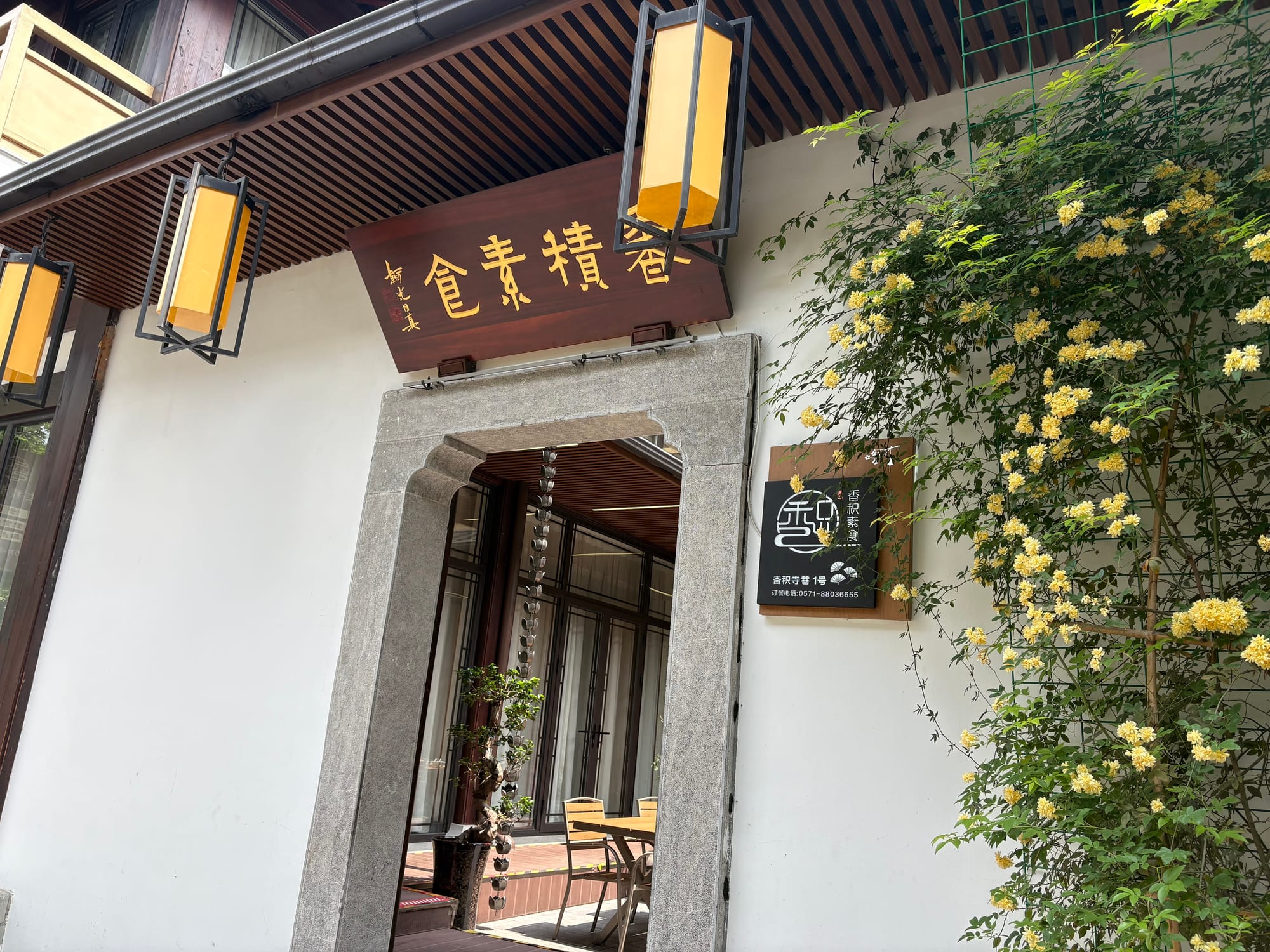
2. Outside the Temple Gates: Canal-Side Dining & Tea Breaks
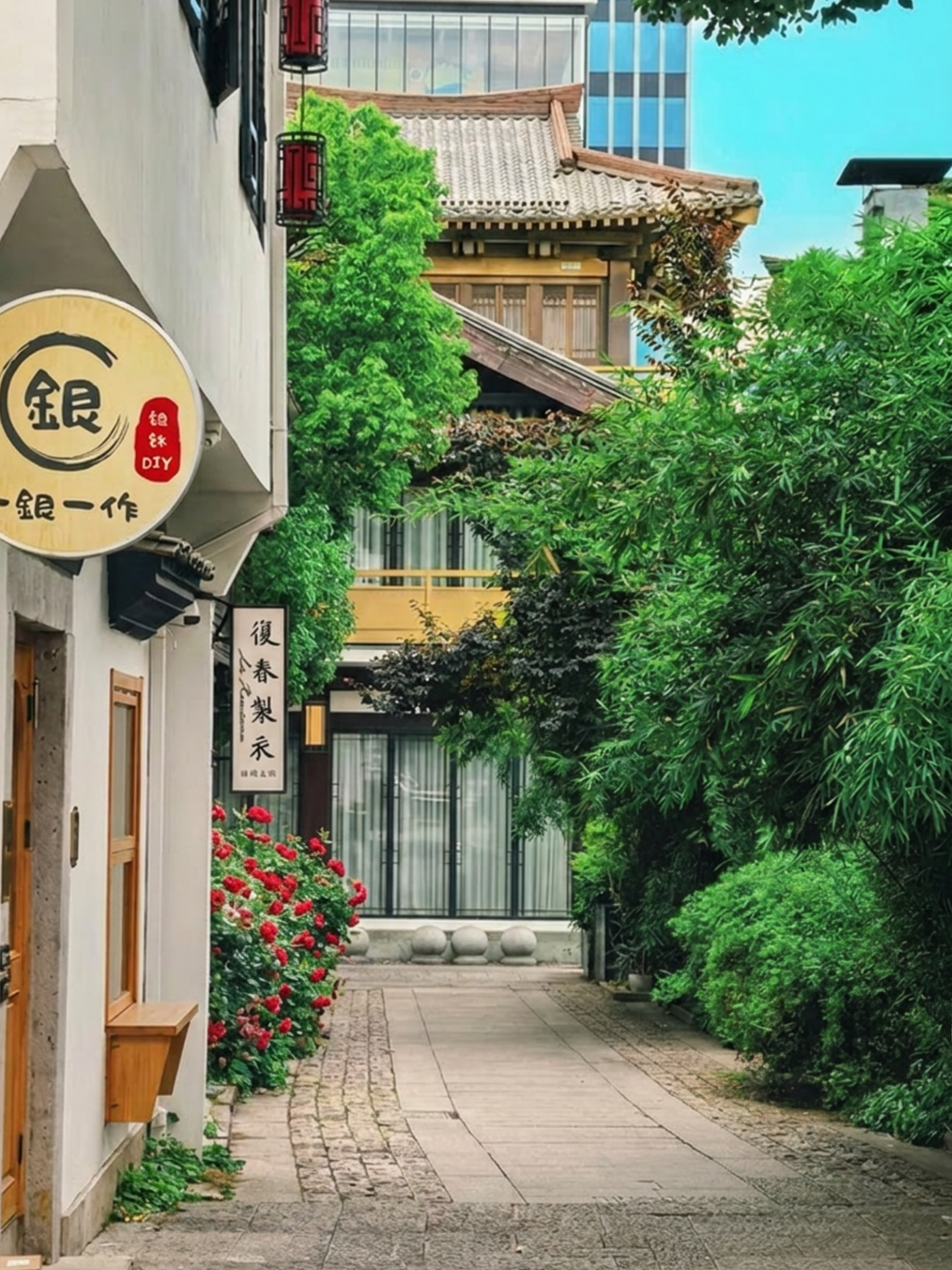
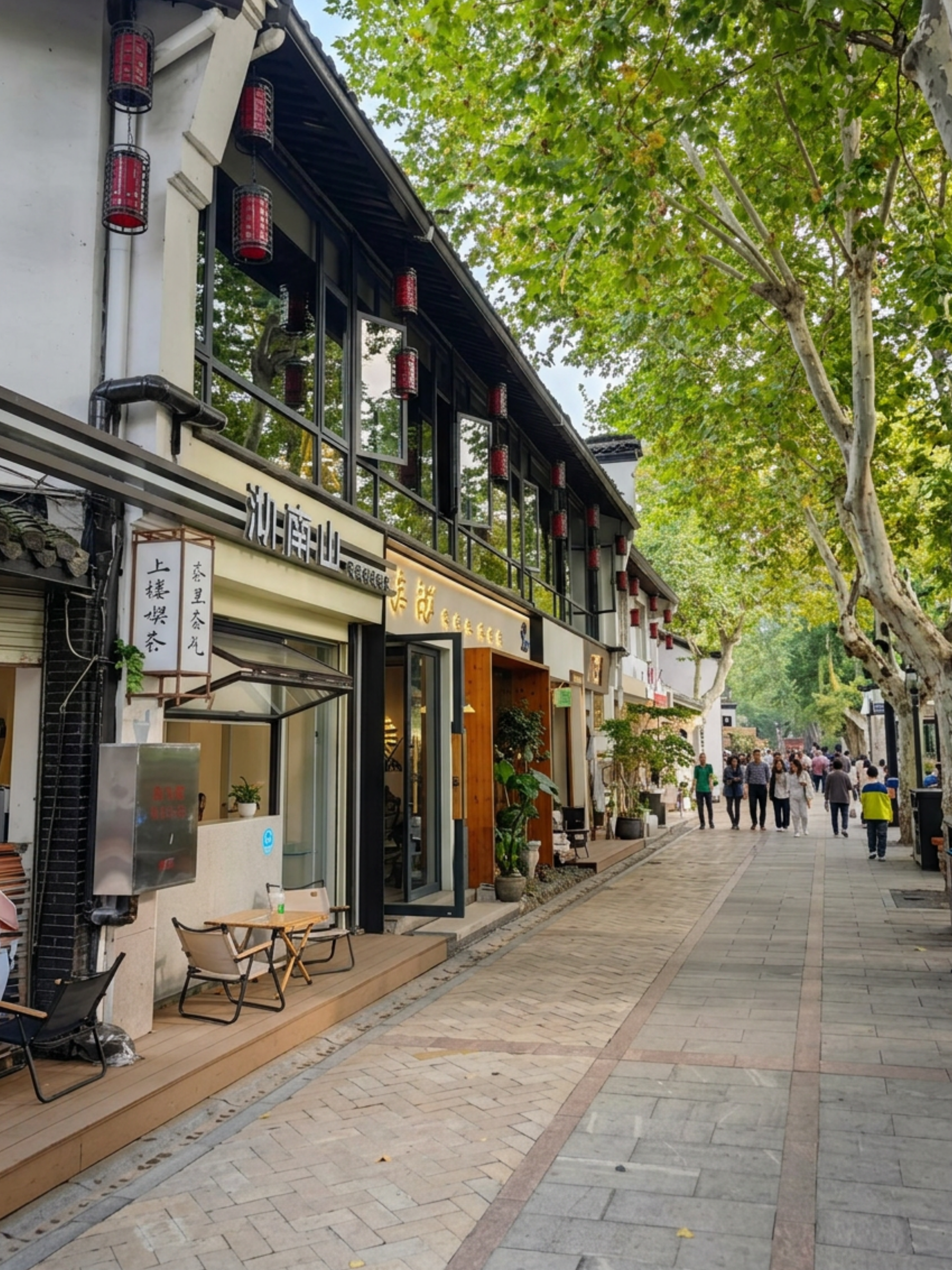
If you want a more relaxed sit-down meal after exploring, step out of the temple gates into the historic Grand Canal neighbourhood. Along the canal in the Dadao Road Historical District (大兜路历史街区), restored canal houses now hold a mix of private-kitchen restaurants and casual eateries, nearly a hundred in total.
A ten-minute walk south, Shengli River Food Street (胜利河美食街) picks up where Dadao Road leaves off — a livelier night market strip with over 30 restaurants and stalls, better suited to a late, unfussy dinner than a quiet one.
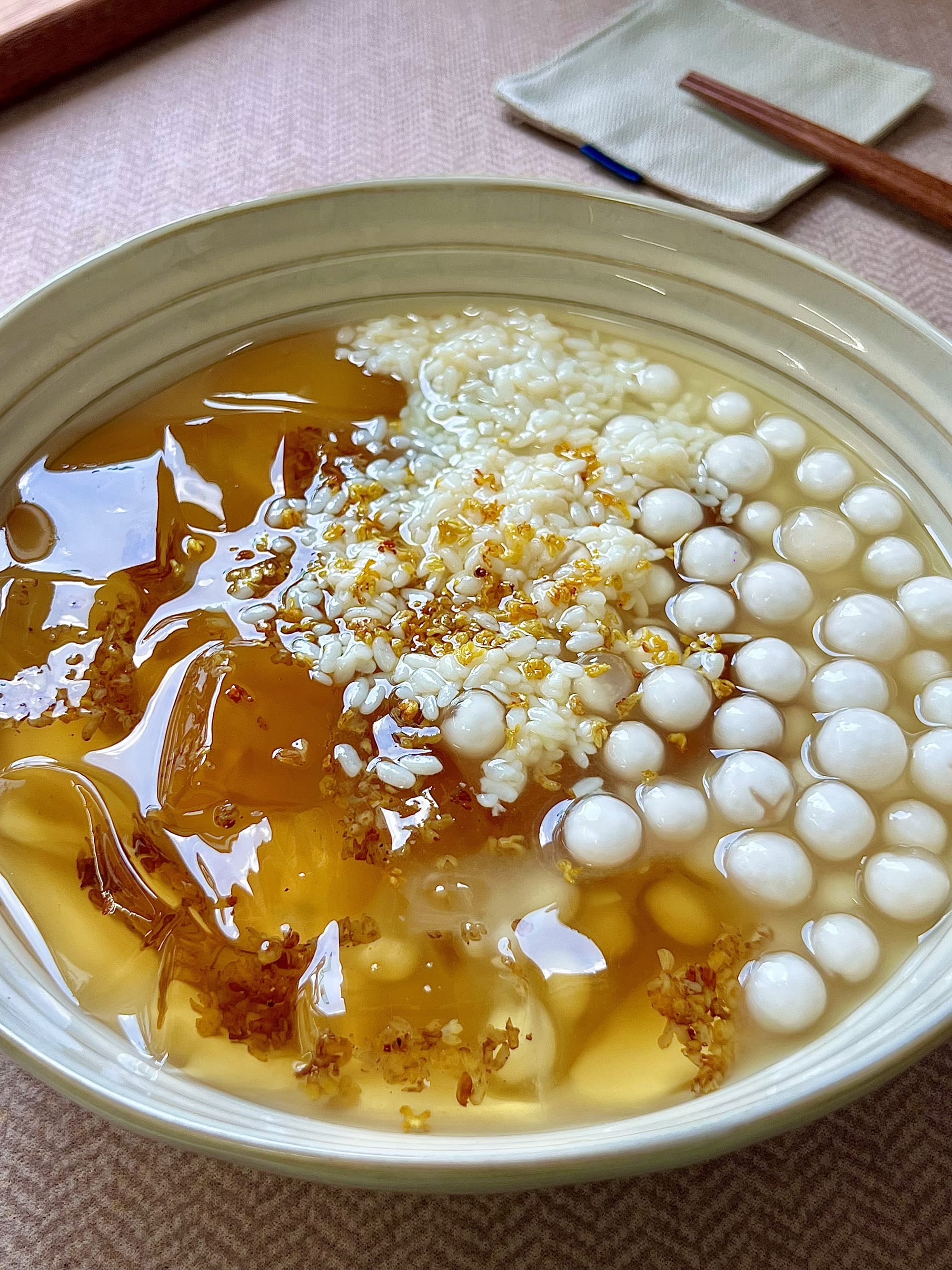
For something sweet, look for two Hangzhou staples: osmanthus rice cake (桂花糕), a soft steamed cake carrying the city's signature autumn-blossom flavour, and fermented rice wine soup (酒酿小圆子), a warm, lightly sweet broth of glutinous rice balls in fermented rice wine — the kind of unhurried, old-Hangzhou dessert this canal district was built for.