The Society That Never Needed Divorce
What happens when romantic love is an unstable foundation for a family?

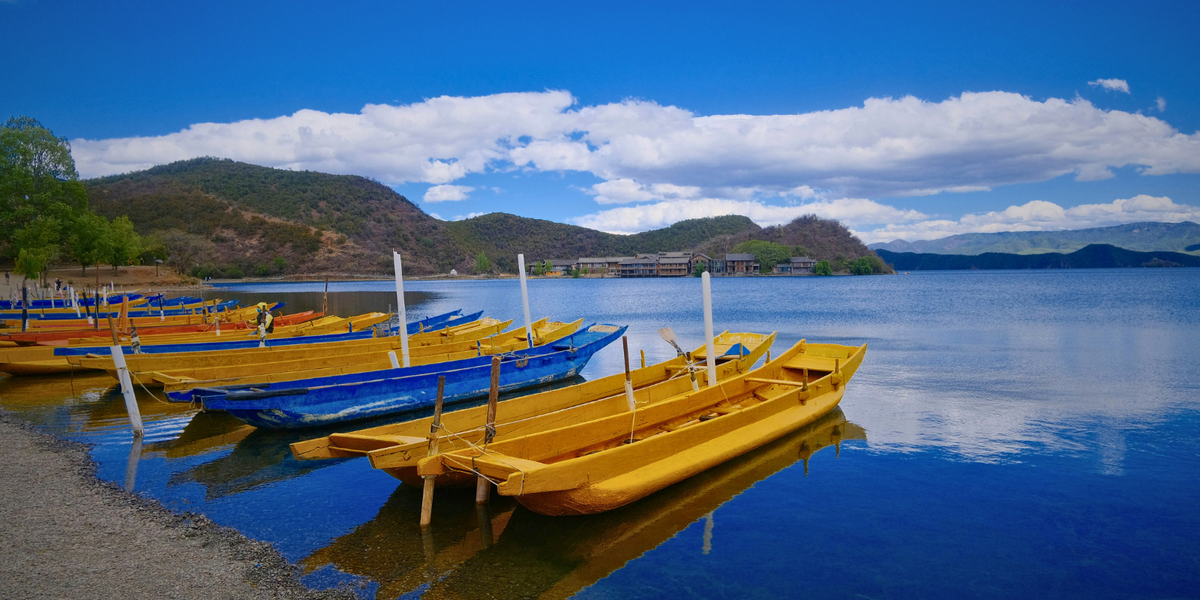
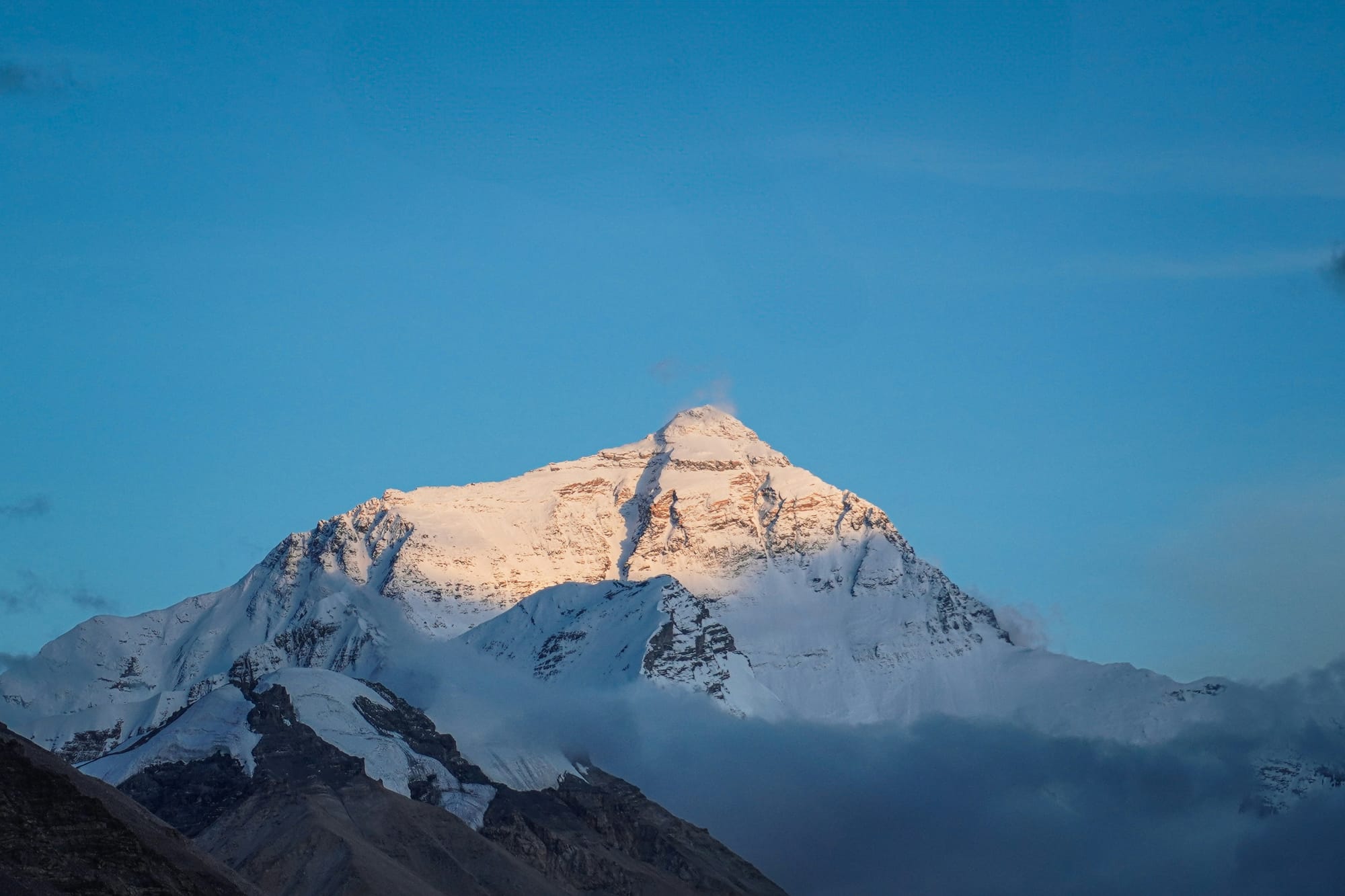
At 2,700 metres in the Hengduan Mountains of northwest Yunnan, the Mosuo people have spent several centuries solving a problem that currently preoccupies sociologists, therapists, and divorce lawyers across the post-industrial world: what happens when romantic love is an unstable foundation for a family?
Their answer — refined over generations, stress-tested by empire upheavals and mass tourism — is to never build on that foundation in the first place.
The Arrangement
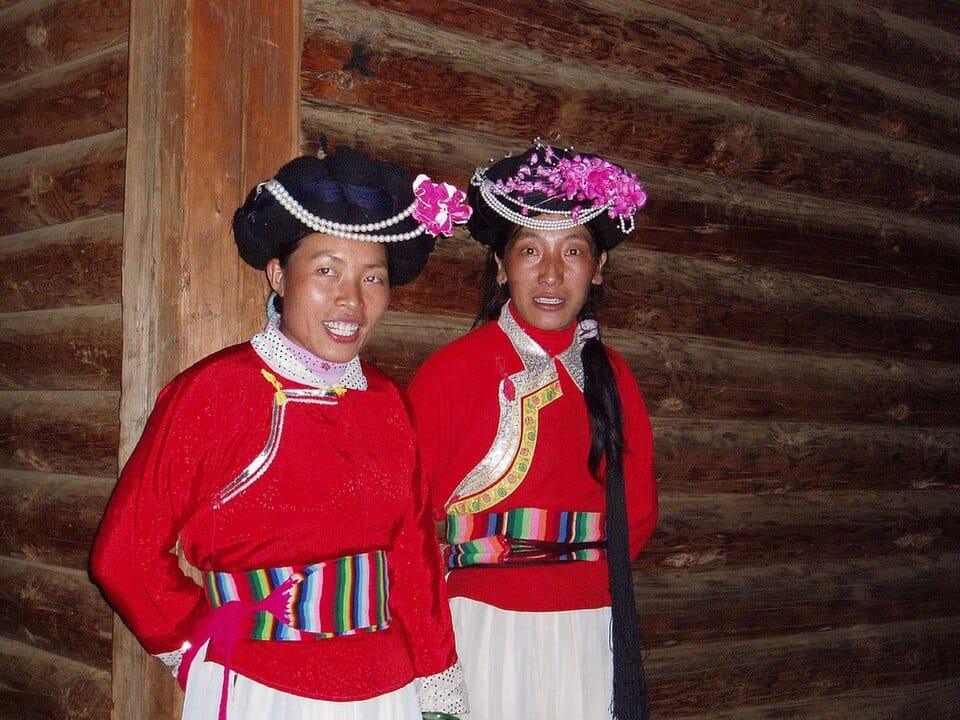
The Mosuo are China's last matrilineal society.
Property passes through the female line. Children are raised within the mother's household. The mother's brothers, not the biological fathers, carry the practical responsibilities of parenthood.
And crucially: men and women do not marry, do not cohabit, and do not share assets.
What they practice instead is sese — walking marriage.
A relationship begins at a festival or gathering, develops quietly over time, and if it deepens, the man visits the woman at her home at night, leaving before dawn.
Both partners remain rooted in their own maternal households. The relationship is sustained by nothing except mutual feeling. When feeling ends, so does the arrangement — cleanly, without litigation, without a custody hearing, without anyone losing their home.
The popular misreading of this — and it is widespread, including within China — is that walking marriage implies sexual license. The Mosuo Museum director is unambiguous in correcting it: the vast majority of Mosuo people have one walking marriage partner for life.
Overlapping relationships carry serious social consequences. Public intimacy does not happen. There is a governing ethic the Mosuo call shame culture — not shame as pejorative, but as a disciplined boundary between the private and the shared.
Romance belongs to the individual. The family belongs to everyone.
The Working Logic
The Mosuo family structure is best understood not as a romantic arrangement but as an institutional one.
Modern marriage bundles several distinct functions into a single contract: emotional partnership, shared property, childcare, and long-term financial security.
The fragility of that bundle is now well-documented — when the emotional component fails, the entire structure unravels, often with significant collateral damage.
The Mosuo separated these functions before the bundle ever formed. The matrilineal household — spanning multiple generations, sometimes exceeding a hundred members — provides the financial security, the childcare, and the social safety net.
Romance provides the intimacy, the fire. Each does what it is actually suited to do.
The closest structural analogy in Western terms is not a family at all. It is a perpetual trust: a legal instrument specifically designed to preserve assets and protect dependents across generations, insulated from the volatility of individual relationships within it.
The Mosuo built this into daily life, without lawyers.
When we look at the raw mechanics of how these two systems handle day-to-day survival, the structural divergence becomes starkly clear:
| The Structural Audit: Mosuo vs. Modern Marriage | ||
|---|---|---|
| Institutional Function | The Modern "Bundle" | The Mosuo Model |
| Childcare & Support | Biological parents (2 anchors) | Maternal clan (Multi-generational) |
| Financial Assets | Joint marital property | Permanent matrilineal household |
| When Romance Fails | Total structural collapse | Emotional shift only; home stays intact |
Each household operates around two anchoring figures: the grandmother, who holds spiritual and moral authority, and the dabu — a role closer to chief operating officer than matriarch — who manages finances, allocates labour, and maintains the household's equilibrium.
Running a large Mosuo household, the museum director observes, carries roughly the complexity of managing a mid-sized company.
What The Mountains Kept Out
The Hengduan Mountains did not create Mosuo culture, but they preserved it.
While Confucian doctrine — requiring women to transfer entirely into their husband's lineage upon marriage — consolidated its hold over the Chinese plains, the mountain terrain was sufficiently remote to limit its reach.
What reads from outside as isolation is, in historical terms, selective insulation.
The Mosuo also sat astride the Ancient Tea Horse Road, the trade route connecting Yunnan to Tibet. Men traveled it for months; women managed the land, the stores, and the household economy in their absence.
The culture developed a clean division: women held the permanent assets, men moved through the world. The base never shifted. The culture never drifted.
An Antidote To Modern Marriage's Fault Lines?
Lugu Lake today carries the complications of four decades of tourism. Walking marriage rates, once near-universal, now sit somewhere between forty and seventy percent depending on the village.
Young Mosuo who study or work in cities often return with registered marriages. Some families hold a legal certificate alongside the traditional arrangement. Others have moved to conventional nuclear households entirely.
Most Mosuo families regard all three as legitimate. Doctrinal purity is not the point. Household stability is. Whatever keeps the extended family coherent and its members provided for is, by Mosuo reckoning, the correct model for that family at that time.
This pragmatism may be the most instructive thing about the culture — more instructive, even, than the walking marriage itself.
An alternative model?
The Mosuo family model provides a permanent social/emotional safety net, contrasting sharply with the structural fragmentation of much of the post-industrial world:
- 1 in 6: Global population experiencing chronic social isolation (WHO).
- 871,000: Annual deaths attributed to loneliness-related health complications.
Source: WHO Commission on Social Connection (2025)
In a period when most societies are reckoning seriously with loneliness, falling birth rates, and the inadequacy of the nuclear family as a care structure, the Mosuo model offers a provocation: that the family configurations we treat as natural today are, in fact, choices.
And that other choices, made carefully and sustained over generations, produce outcomes that are by measurable standards — social cohesion, elder care, child welfare, rates of domestic conflict — at least as good, if not better.
Meet The Locals
To get up close and personal to the Mosuo community, go to their spiritual home: Lugu Lake. The shoreline is dotted with Mosuo villages — Daluoshui, Lige, Xiaoluoshui on the Yunnan side; Mukuai, Shekuai, Gesa on the Sichuan side.
Here, the lake is not a backdrop. It is the center of a life that has unfolded on its shores for more than a thousand years.
To understand how this philosophy breathes in the modern world, one has to travel to its geographic heart.
Lugu Lake is a five-hour drive north of Dali, or accessible by small regional aircraft to Ninglang. (For those short on time, small regional aircraft fly to Ninglang, an hour's shuttle from the shore.)
The lake at dawn, before the tour boats, still looks like the edge of the known world.
— Mandarin Unpeeled

![[Quiz] Find the China City for How You Actually Want to Travel Right Now.](https://storage.ghost.io/c/73/63/7363a138-5ebf-4ec5-bfdf-0956583c3258/content/images/size/w600/2026/09/Image-Sep-2--2026-at-03_59_42-PM.png)