Shangri-La: Manufacturing Paradise

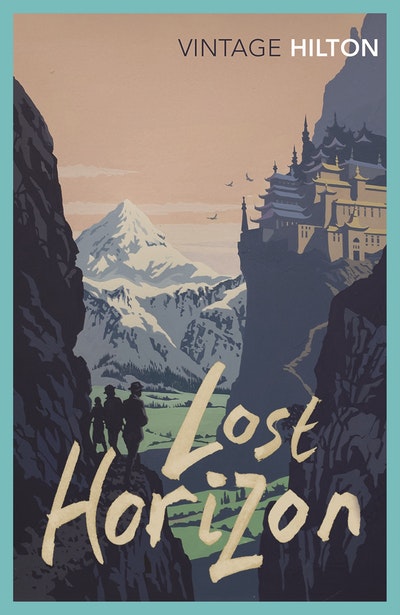
In 1933, a British novelist named James Hilton invented a place.
He called it Shangri-La — a Himalayan valley of impossible peace, where Tibetan monks lived for centuries and the outside world's noise never arrived.
Lost Horizon became a bestseller. Hollywood made it a film. Franklin Roosevelt named his presidential retreat after it.
The word entered the English language as shorthand for paradise.

Hilton never went to China.
He wrote the book in four weeks, drawing on National Geographic dispatches filed by Joseph Rock — an Austrian-American botanist who spent 27 years in the mountains of southwest China, filing vivid reports from a world most Westerners had never seen. Rock's photographs and field notes gave Hilton his raw material. Hilton gave the world a myth.
For seventy years, the myth had no fixed address.
But that was about to change.
The Contest
In the mid-1990s, a quiet competition broke out across Yunnan, Sichuan, and Tibet. Multiple counties, eyeing the tourism potential of Hilton's legacy, began making academic and cultural cases that their valley was the real Shangri-La.
The contest was part scholarship, part 'land grab', and entirely fascinating.
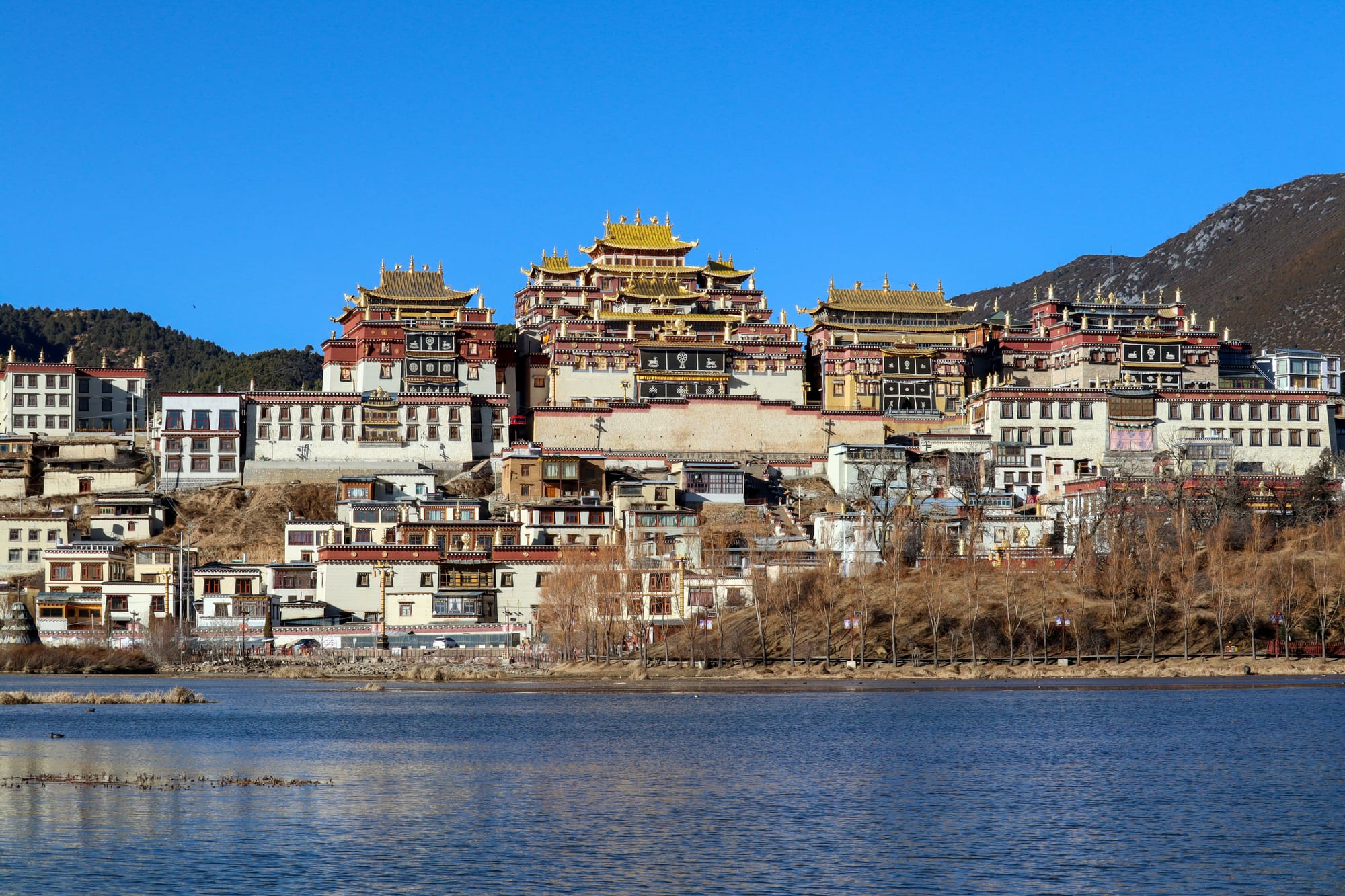
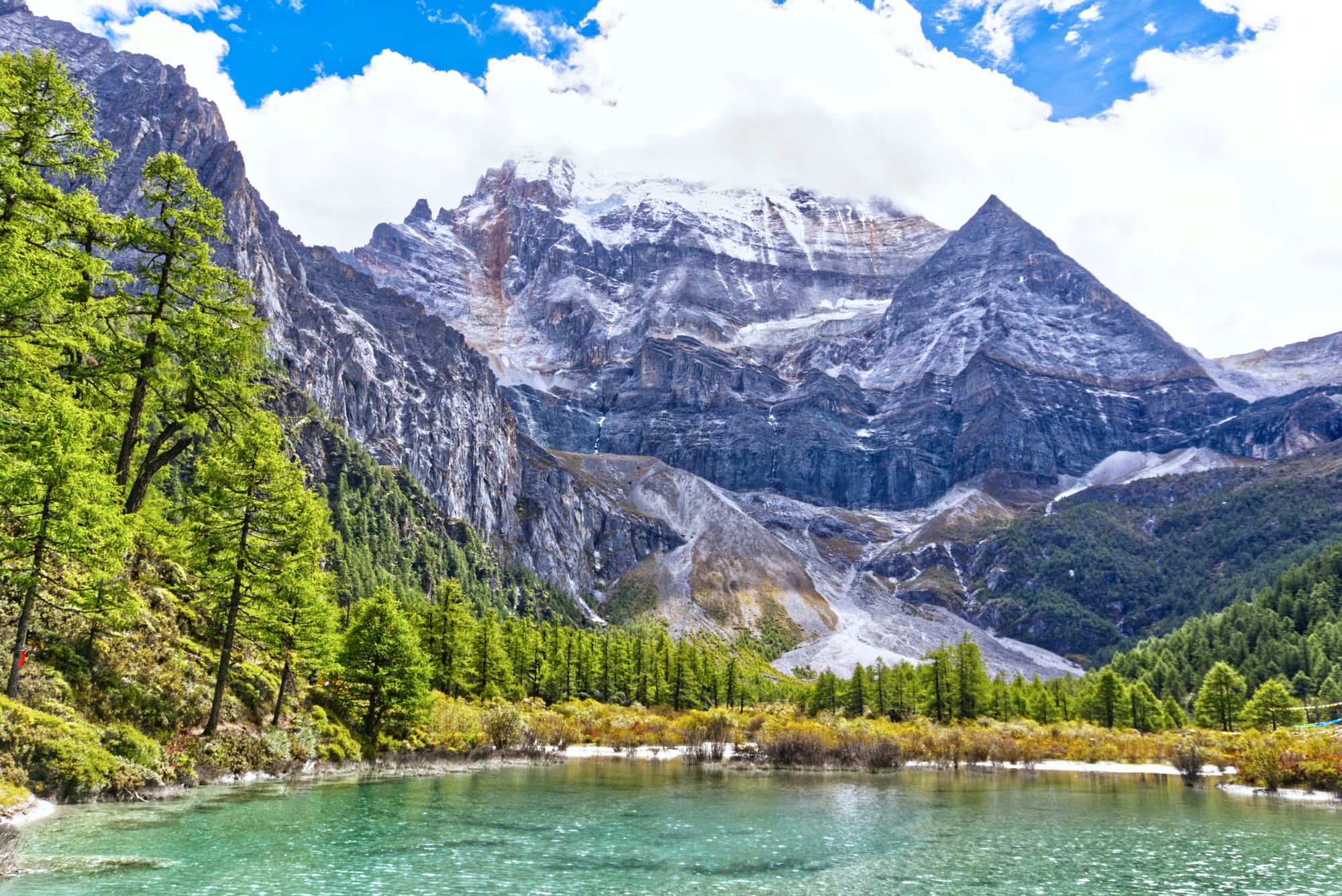
The contestants: Tibet, Zhongdian (Yunnan), and Yaning (Sichuan), each staking a claim to Hilton’s legendary valley.
Yunnan moved fastest.
In 1997, the provincial government announced that the fictional paradise was, in fact, a small Tibetan plateau town called Zhongdian.
Four years later, in December 2001, Beijing made it official: Zhongdian was formally renamed Shangri-La. A county of 160,000 people had acquired one of the most recognized place names in the English language overnight.
A fictional place had been made real by administrative decree.
It worked. Tourists arrived in their millions.
Shangri-La: A Name That Built an Industry
Diqing Prefecture, Yunnan — Total visitor arrivals (millions)
Data note: All figures are from official Diqing Bureau of Statistics and Diqing Culture & Tourism Bureau records. The series begins at 2002 — this is the earliest year in the Diqing Statistics Bureau's published domestic visitor dataset; no official figure for 2000 or 2001 is available in disaggregated public records. The 2025 figure (33.47m) covers January–November only, per a November 2024 government press conference.
What You'll See In Paradise
The rebranding could have produced a theme park. In places, it has.
The old town — Dukezong (独克宗古镇), one of the largest surviving Tibetan settlements in Yunnan — was devastated by fire in 2014, rebuilt rapidly, and now carries the slightly too-smooth patina of recent reconstruction.
The prayer wheel at its centre is said to be the world's largest. The lanes are full of guesthouses and yak butter tea served to schedule.
But step past the commercial perimeter and the landscape reasserts itself with force.
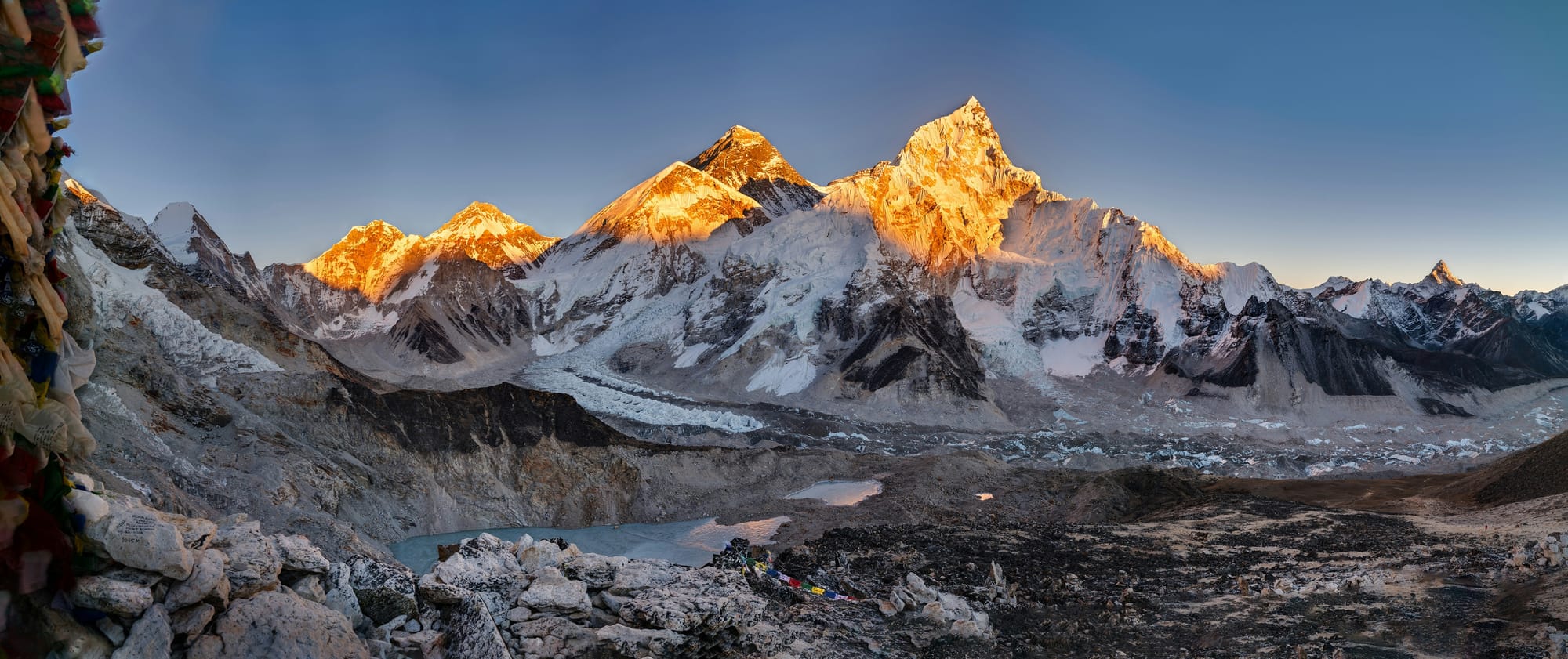
At 3,200 metres, the Shangri-La plateau is vast and cold and startling. Pudacuo National Park (普达措国家公园) — one of China's first to meet international standards — protects a terrain of alpine lakes, old-growth forest, and grassland that genuinely earns the word pristine. Songzanlin Monastery (松赞林寺), the largest Tibetan Buddhist monastery in Yunnan, sits above the city like a small fortified city of its own, its golden rooftops catching the high-altitude light in a way that no camera quite resolves.
The surrounding landscape — the Hengduan Mountains (横断山脉), the deep river gorges where the Yangtze, Mekong, and Salween run roughly parallel within 80 kilometres of each other — a UNESCO world heritage site- is among the most dramatic on the continent.

This is the terrain that shaped the Tea Horse Road and put a natural barrier between lowland China and the Tibetan world.
It does not disappoint.
Where the Dutch Flower Auction Went East
Before you fly to Shangri-La, consider stopping in Kunming — and setting an early alarm.
On the outskirts of the city, the Dounan Flower Market opens before dawn. It is the largest cut flower trading hub in Asia, processing somewhere in the region of 70 percent of China's domestically grown blooms.
Millions of stems arrive daily in bamboo baskets, are sorted, auctioned in minutes, and loaded onto refrigerated trucks and cargo flights headed for Singapore, Bangkok, Tokyo, and Beijing.
The Netherlands built the model; Yunnan perfected the volume.
The market operates with the controlled intensity of a commodities exchange, which is more or less what it is. Watching a buyer work the floor — moving fast, judging quality by touch and instinct, closing dozens of transactions in an hour — is to watch a form of expertise that bears no resemblance to anything Hilton imagined when he invented the provincial dreamscape of Shangri-La.

It is Yunnan's other export: not the idea of paradise, but the raw material of beauty, priced by the stem and shipped overnight.
Together, Dounan and Shangri-La are the same story told twice. Yunnan took what the land gave it — flowers and landscape — and sold both at industrial scale.
Claim Your Paradise
The obvious critique of Shangri-La — that it is a fiction dressed as a destination, a marketing exercise wearing cultural clothing — is not wrong. But it is incomplete.
The terrain is real. The monasteries are real. The Tibetan Buddhist culture that Hilton glimpsed through Rock's dispatches and rendered into myth is a living thing, navigating modernity on its own terms.
The question Shangri-La poses to the visitor is the same one it has always posed: what are you actually looking for, and is it here?
For the documentary maker, that tension — between the manufactured myth and the lived reality underneath it — is the story. For the business traveller with a day to spare, Pudacuo and Songzanlin offer the kind of recalibration that no airport lounge provides. For the first-time traveller to China, simply let the scenery awe and inspire.
But no matter who you are, Shangri-La is a useful lesson in how the country operates: pragmatic, culturally confident, and entirely unbothered by the irony of naming a real place after a fictional one.
[Getting There]
Flights connect Shangri-La's Diqing Airport directly to Kunming, Chengdu, and Lhasa. Go in spring or autumn. Spring offers wildflowers and autumn provides clear skies, colorful foliage, and is ideal for viewing Meili Snow Mountain.

Acclimatize before you walk fast: Shangri-La town sits at an altitude of approximately 3,300 to 3,380 meters (about 11,000 feet).
And read Lost Horizon on the plane (if that's your cup of tea) — not as a guide, but as evidence of what a myth, carefully managed, can build.
🎙️ Listen: insert description
XXXXXXXXXXXXXXXXXXX
— Mandarin Unpeeled 🍊