Quanzhou
Where Ancient Trade Winds Built the City of World Religions
Quanzhou is a city where global diversity is etched directly into its thousand-year DNA. Once known as Zaiton, it stood alongside Alexandria as one of the world's greatest medieval ports—a booming trade center of the Song and Yuan dynasties that Marco Polo and Ibn Battuta once marveled at.
Granite-paved streets, the sharp aroma of bubbling ginger duck (姜母鸭) and sweet peanut paste drifting from open kitchens; the tactile chill of smooth, oyster-shell walls (haokecuo) under your hand; the delicate, flute-heavy drone of Nanyin classical music echoing from leafy temple courtyards; and the bright, vibrant colors of fresh floral garlands (zanhuawei) pinned onto local women's hair. It is a living, multi-faith sanctuary where Taoist incense, Buddhist chant, Islamic architecture, and classical Southern Min heritage are used, prayed in, performed, and eaten every single day.
- THE EXPERIENCE
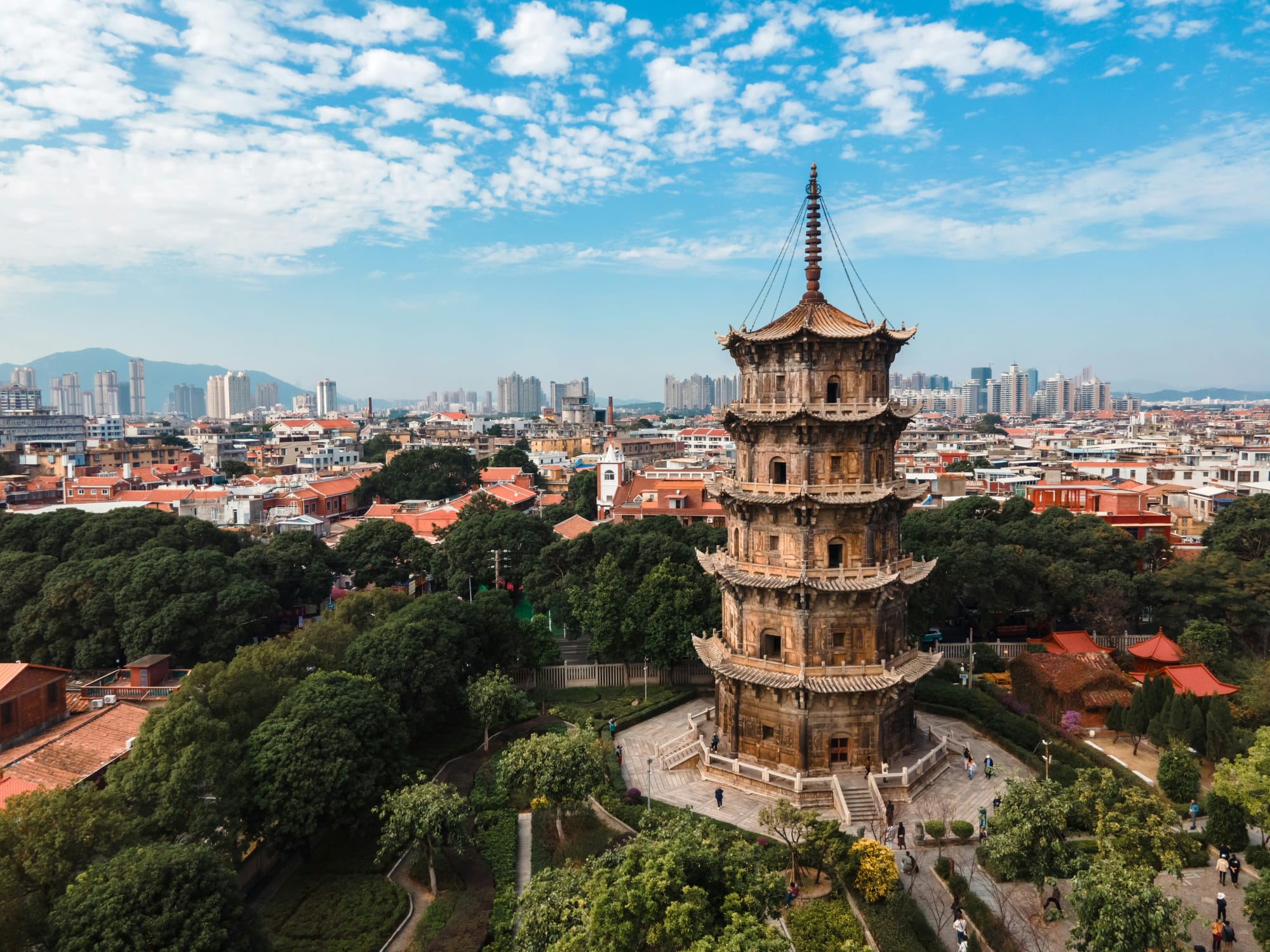
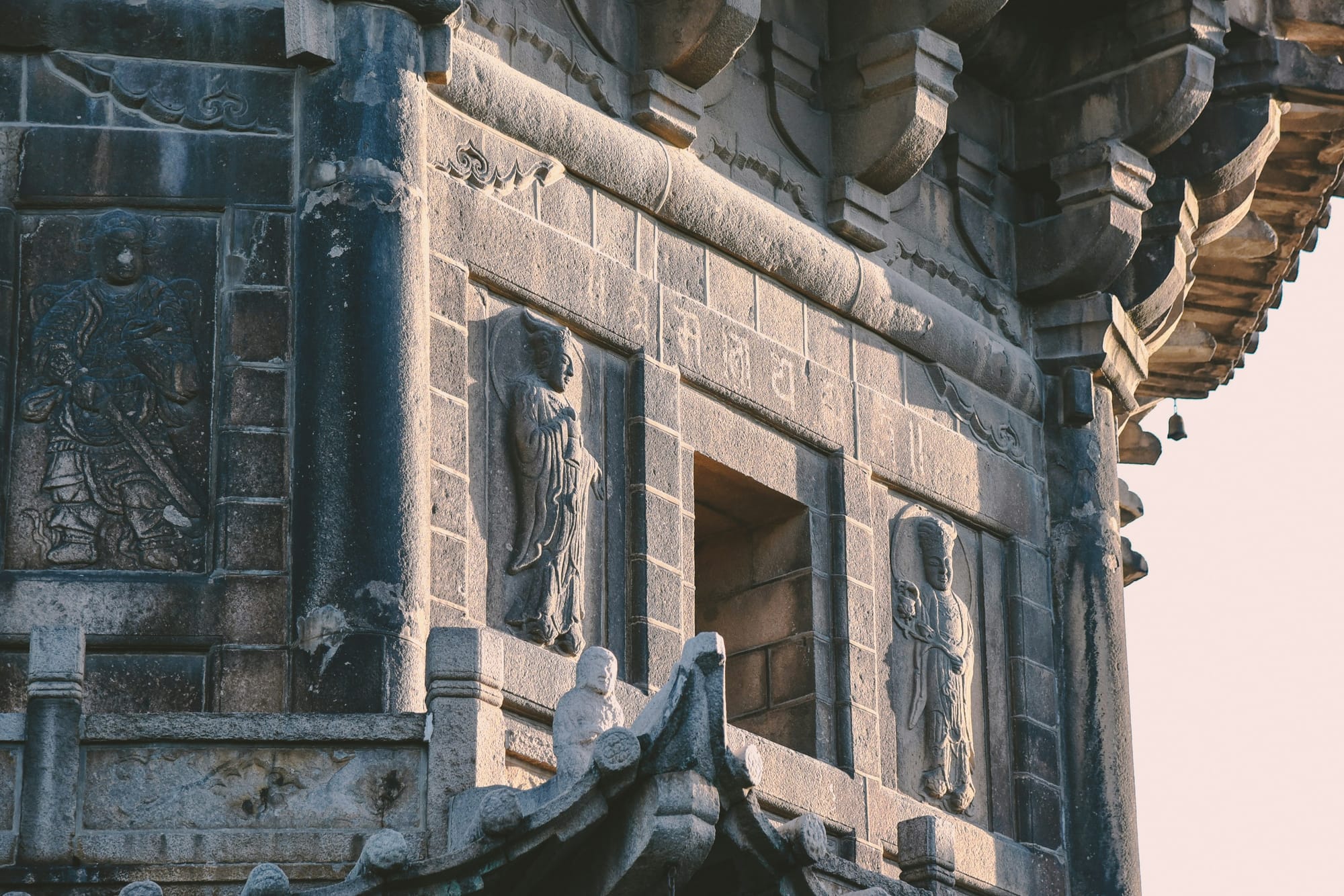
Kaiyuan Temple & The City of World Religions (开元寺与众神之城) anchors the ancient center. As Fujian’s largest Buddhist temple, its iconic Twin Stone Pagodas incorporate carved Hindu reliefs, while a five-minute walk brings you to Qingjing Mosque (清净寺)—one of China's oldest surviving Islamic shrines—and the constantly bustling Guan Yue Temple (关岳庙), where rows of worshippers pray and draw fortune sticks.
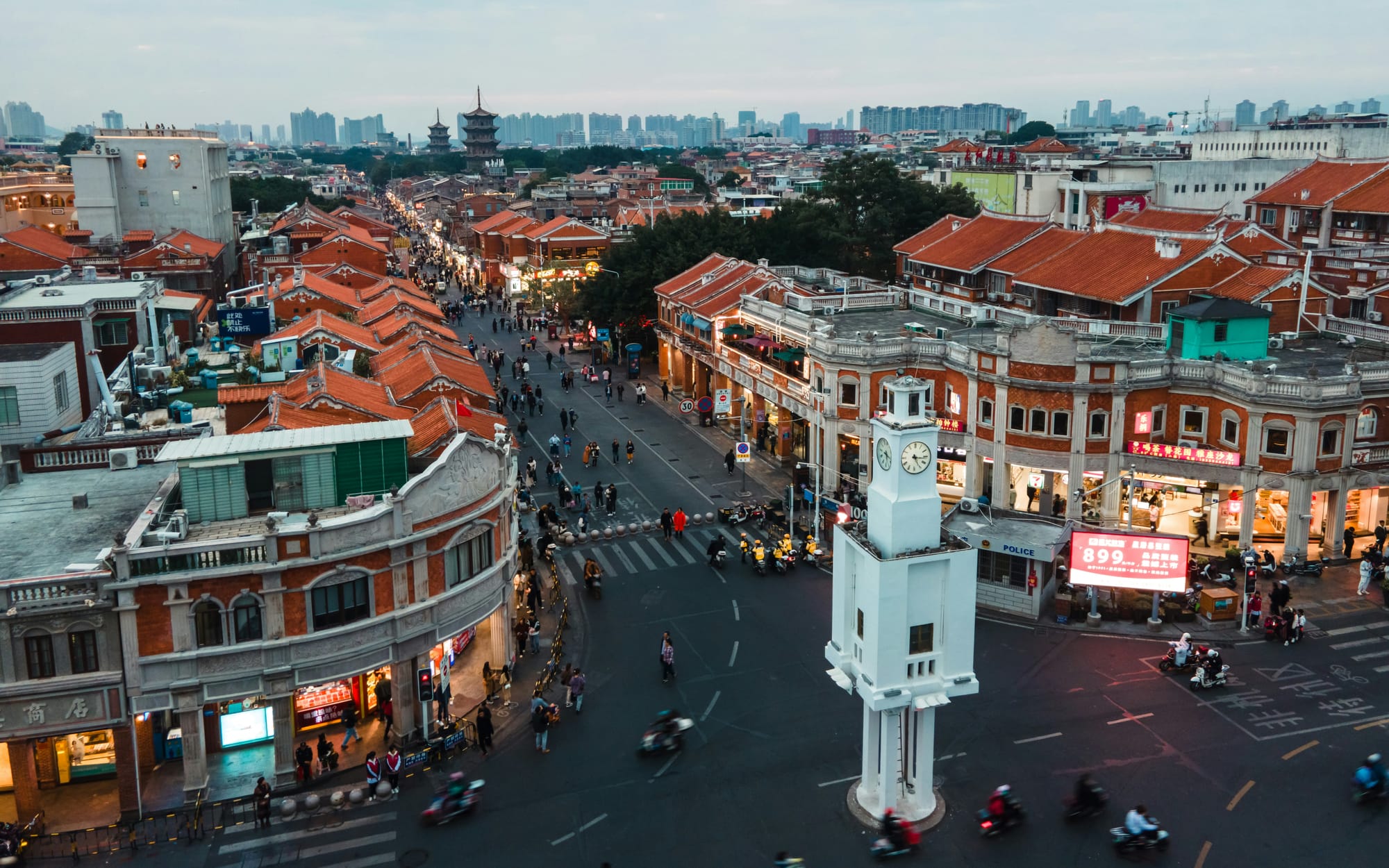
West Street, Zhongshan Road & Historic Alleys (西街与中山路) forms the beating pedestrian heart of the ancient town. Walk shaded arcade streets (qilou), snack on Yafu spring rolls and sweet peanut cakes, and hop on "Xiaobai" open-air electric shuttles to zip seamlessly between Confucian temples, hidden alleyways, and night markets.
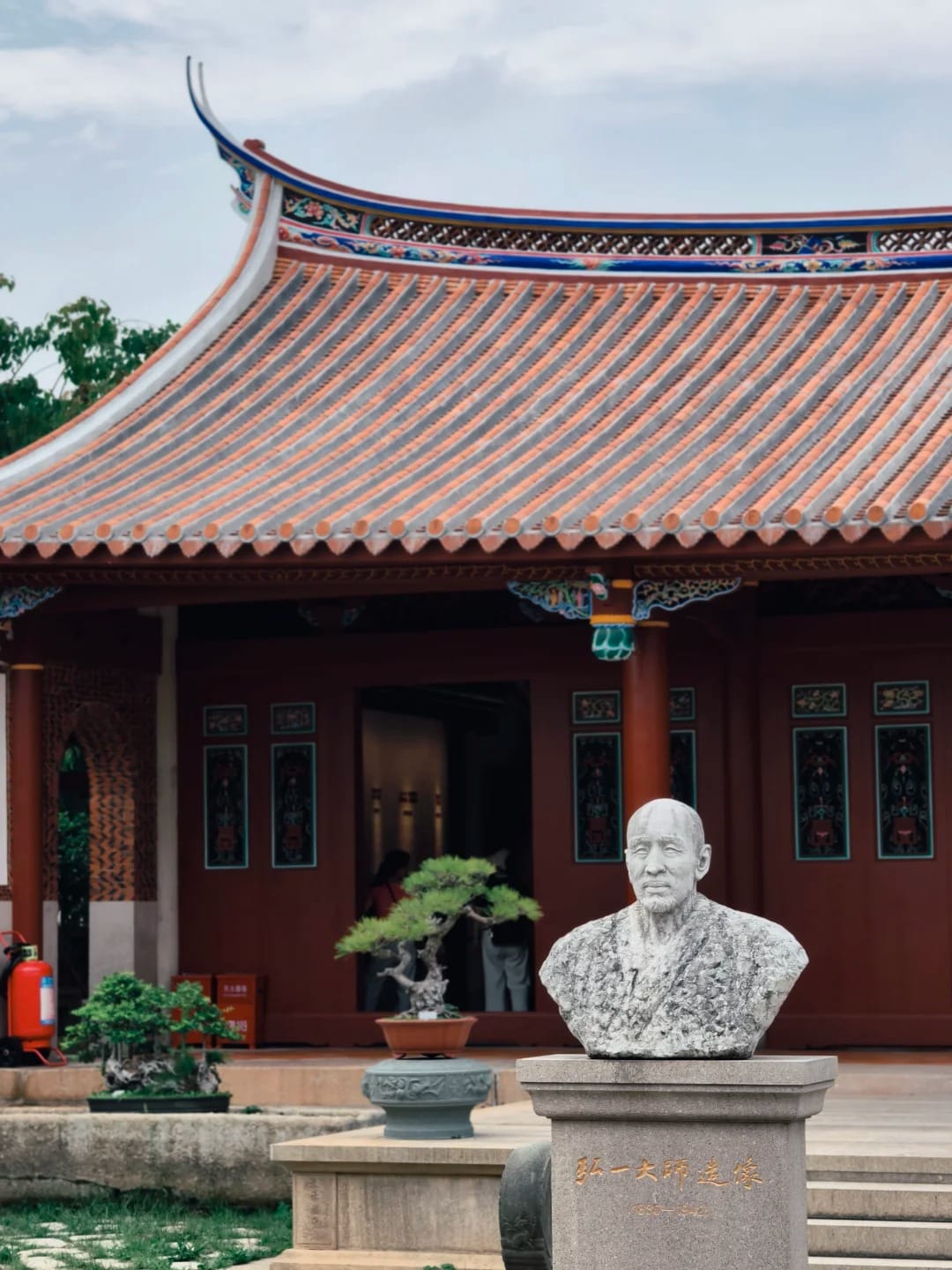
Puppetry, Nanyin & The Living Stage (提线木偶与南音) showcases Quanzhou's status as China's only city to hold all three UNESCO intangible cultural heritage categories. At the Quanzhou Puppet Theater, watch puppeteers manipulate fine silk strings— a technique unique to Quanzhou's string puppetry tradition. Then catch a contemplative performance of Nanyin — one of China's oldest surviving musical traditions, often called a "living fossil" of Chinese music, dating back over a thousand years.
Mianxianhu, Ginger Mother Duck & Meat Zongzi (面线糊、姜母鸭与烧肉粽) defines Quanzhou's culinary rhythm. Start your day with Mianxianhu at historic spots like Shuimen Guazi (水门国仔), slurping silky-smooth rice-thread soup loaded with oysters, vinegar pork, and offal, then feast on savory Ginger Mother Duck (姜母鸭) cooked in clay pots with sesame oil and old ginger.
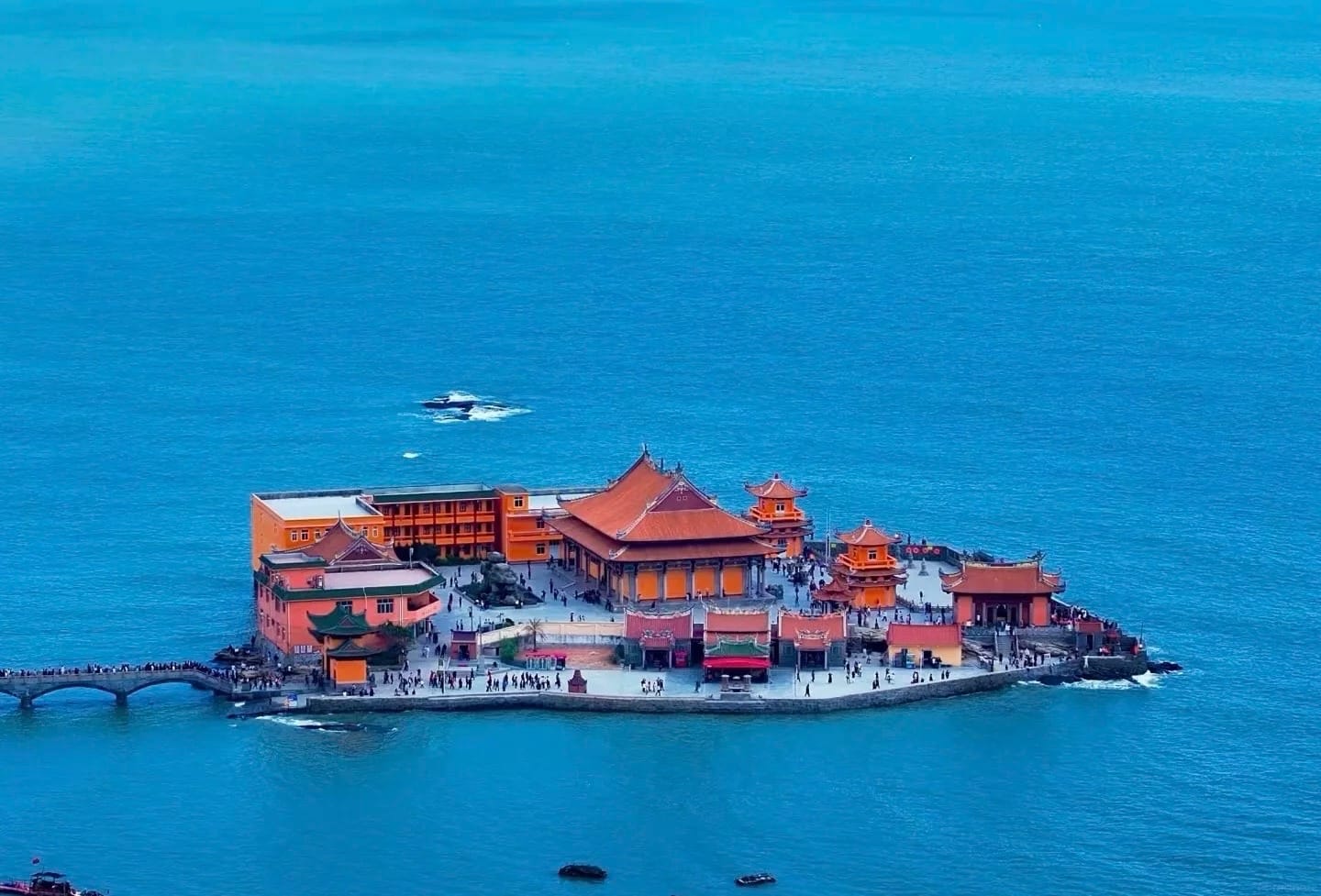
Luojia Temple & Shishi Golden Coast (洛伽寺与石狮黄金海岸) offers Quanzhou’s most surreal coastal sight — a temple built directly on sea rocks, appearing to float at high tide. Watch the sunset from the temple, then walk the long beach and boardwalk of Shishi Golden Coast for a taste of everyday southern Fujian fishing-town life. Free, open all day; about an hour by taxi from central Quanzhou.
- BEST FOR
Travelers exploring Fujian or Guangdong who crave a deeply authentic cultural and culinary deep dive beyond coastal megacities.
History buffs, lovers of religious and architectural heritage, serious food pilgrims seeking legendary Southern Min street eats, and anyone interested in living cultural legacies like puppetry, ancient music, and traditional coastal folk attire.
- MAY NOT BE FOR YOU IF
You require modern subway networks or ultra-fast city rail — Quanzhou has no urban metro system; navigating the historic core relies on walking, taxis, or hailing open-air "Xiaobai" electric shuttles.
You are looking for a sleek, polished tourist resort — the ancient city is a working, residential community where modern life, old markets, and active places of worship sit tightly packed together rather than manicured for display.
- HOW LONG?
2–3 days: Spend 1.5 days exploring Quanzhou’s historic core—visiting Kaiyuan Temple, walking West Street and Zhongshan Road, slurping Mianxianhu for breakfast, catching a puppet show, and dining on clay-pot ginger duck. Experience the local floral hair tradition (zanhuawei) and and reserve extra time for the ancient stone bridges and tea houses along the river.
- GETTING THERE
By Air: Quanzhou Jinjiang International Airport (JJN) handles domestic routes and select regional flights, equipped with international arrival services and currency exchange centers. Alternatively, fly into Xiamen Gaoqi International Airport (XMN) and take a 30-minute high-speed train to Quanzhou.
By High-Speed Rail: Quanzhou Railway Station sits on the coastal high-speed train line, connecting directly to Xiamen (30 mins), Fuzhou (1 hour), and Hong Kong West Kowloon (~4 hours).
- PAIRS WELL WITH
Xiamen, 30 minutes south by high-speed rail, for Gulangyu Island's concession architecture, coastal cycling, and coffee culture · Fujian Tulou (福建土楼), a 2.5-hour drive inland, for UNESCO-listed Hakka rammed-earth clan fortresses · Wuyi Mountains (武夷山), 2 hours north by high-speed rail, for tea plantations, sandstone peaks, and bamboo rafting.
If visiting during autumn or early winter, plan around the regional Minnan Intangible Heritage Cultural Week. Foreign credit cards (Visa/Mastercard) can be linked directly to Alipay or WeChat Pay for seamless payments on local "Xiaobai" shuttles and at street-food stalls.
Mid-summer (July through August) brings intense heat, high humidity, and occasional typhoons, making late autumn through winter a far more comfortable time to visit.