Dunhuang
The most sacred Buddhist cliff on the Silk Road
Dunhuang sits at the far western tip of the Hexi Corridor, a narrow passage of oasis and gravel plain squeezed between the Qilian Mountains to the south and the Mazong Mountains to the north. To the west lies the Taklamakan, one of the world's most forbidding sand deserts.
Since the Han dynasty (206 BCE to 220 CE) established a commandery here, this has been the throat of the Silk Road — where merchants, monks and envoys from east and west once crossed paths, leaving behind a thousand years of cave murals, the crumbling rammed-earth walls of Yumen Pass, and the beacon towers of Yangguan.
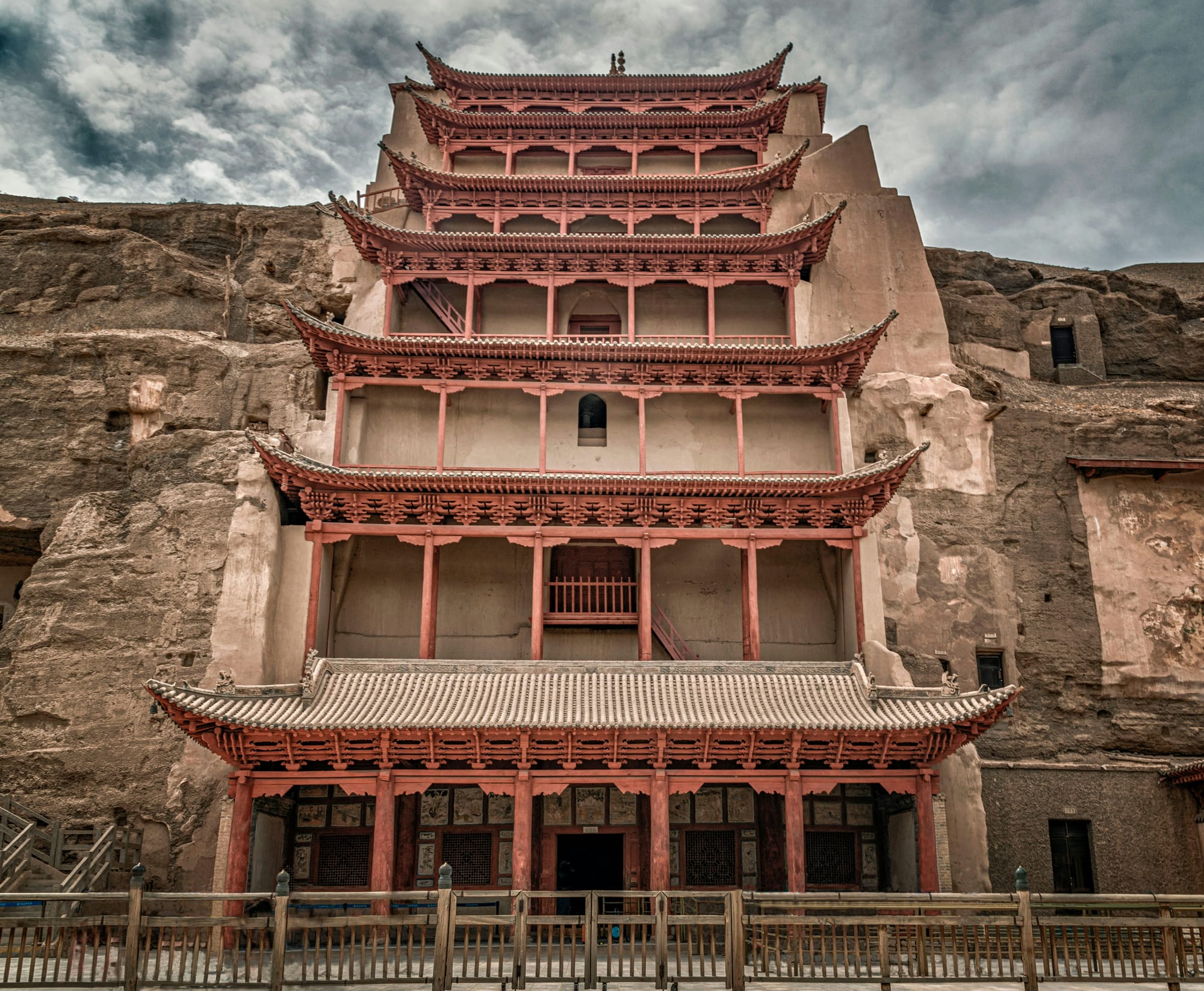
In 366 CE, a wandering monk named Lezun claimed a vision of a thousand Buddhas on a nearby cliff face and carved the first cave— the beginning of what would become one of the most significant concentrations of Buddhist art anywhere on Earth.
735 caves
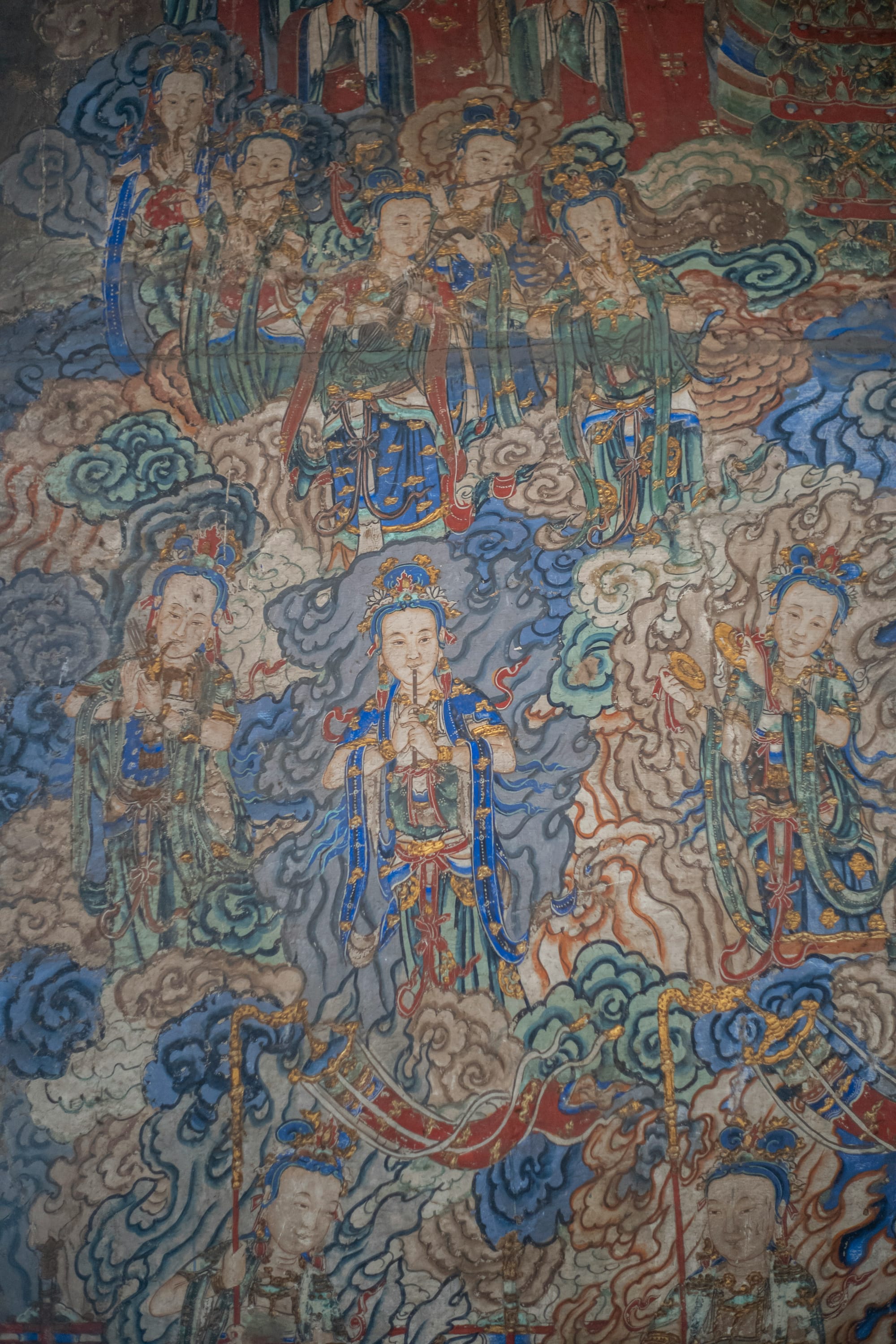
At Mogao, carved between the 4th and 14th centuries — 45,000 square metres of murals, over 2,000 painted sculptures
- THE EXPERIENCE
Mogao Grottoes is Dunhuang's soul — 735 caves carved over a thousand years, beginning with a 4th-century monk's vision of a thousand Buddhas in golden light. Inside: a nine-story Buddha, flying apsaras, a reclining Buddha drenched in colour, murals that have survived since before most of Europe's cathedrals existed. Advance booking is essential — tickets go fast, so plan this one a month out.
See also: Longmen Grottoes (for imperial grandeur), Yungang Grottoes (Silk Road roots), Tianlongshan Grottoes (Refined elegance)
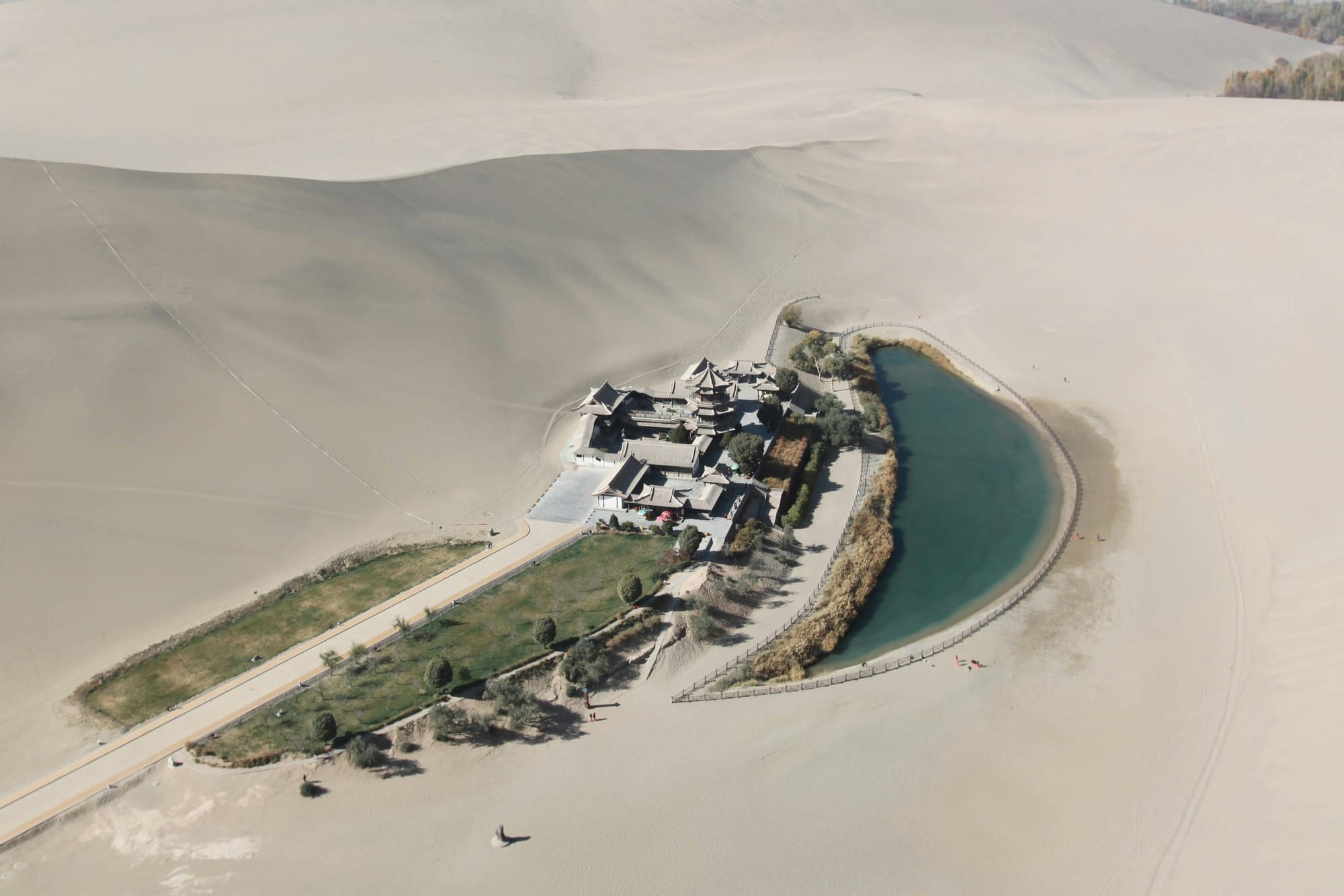
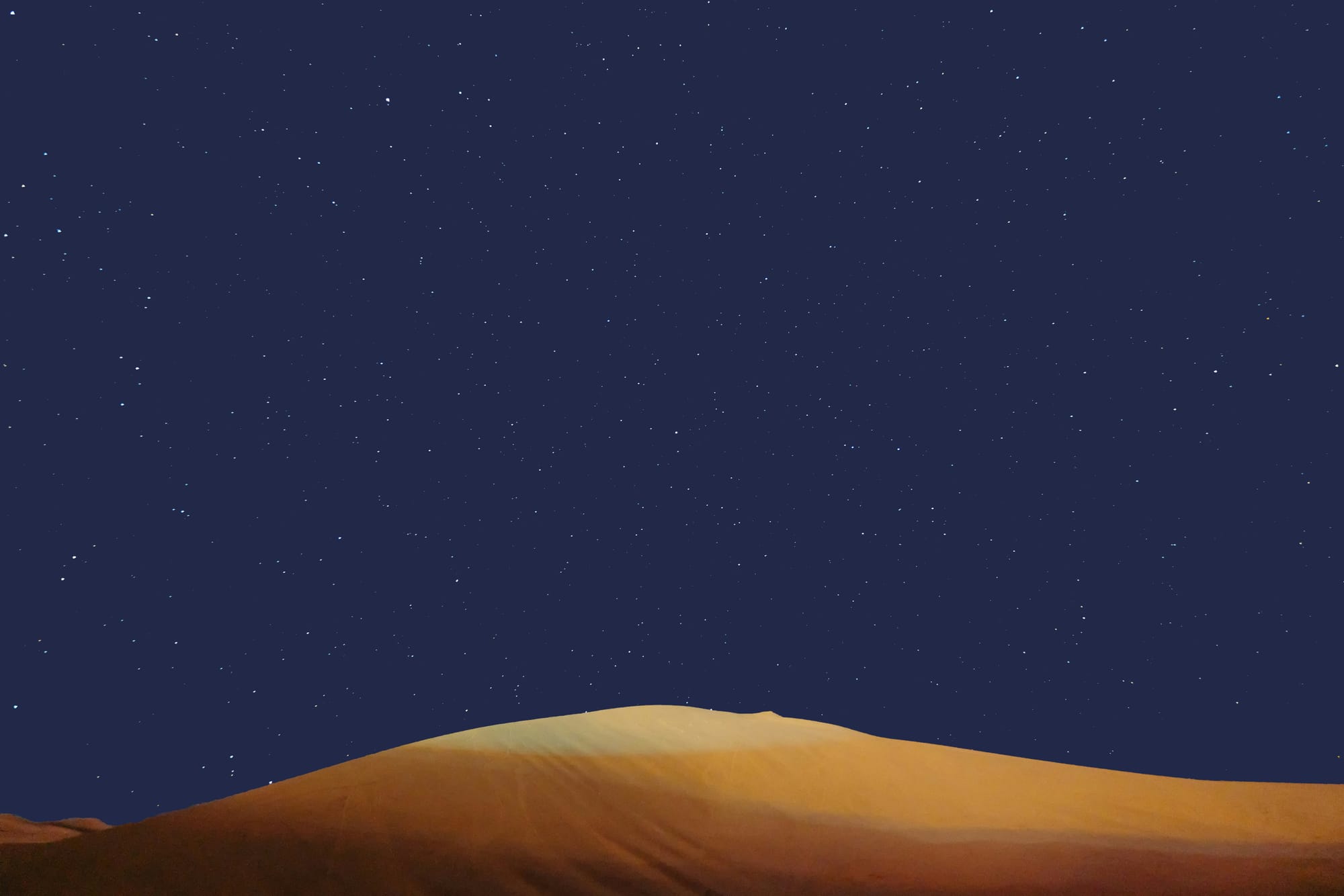
Mingsha Shan and Crescent Lake are where you unwind — climb a dune at sunset as the whole gobi turns gold, a sliver of jade-green lake curled in the sand below, then lie back after dark for a sky thick with stars and almost no light pollution to dull them.
The West Line strings together a full day of real desert history — a crumbling beacon tower at Yangguan, rammed-earth ruins at Yumen Pass, a stretch of Han-dynasty Great Wall standing alone in open wasteland, and Yardan's wind-carved rock formations glowing gold at sunset. Best done as a single, unhurried day trip.
What to Eat: Donkey meat with yellow noodles— chewy hand-pulled noodles under braised donkey meat so tender it barely needs chewing. Poplar-braised flatbread lets lamb and bread slow-cook together in one pot until the bread's soaked through with broth. Wild chive beef patties are the night market's best-kept secret. And apricot-skin water, simmered from dried apricots and herbs, is the drink that actually cools you down.
- BEST FOR
Buddhist art and mural painting. Desert landscape— dunes, sunset, a truly dark night sky. History that carries real physical weight — a crumbling pass, a beacon tower, a Han-dynasty wall standing in open wasteland.
- MAY NOT BE FOR YOU IF
You want a spontaneous trip — Mogao's best ticket tier sells out in minutes, and requires advanced planning. You're not prepared for real desert extremes — summer ground temperatures above 50°C and air can get extremely dry.
You want everything walkable or bus-connected — the West Line has no public transit at all, so a shared or private car is the only way to see it.
You want a destination close to China's heartland — Dunhuang sits in China's far northwest, reachable only via Lanzhou by direct flight or an onward 5-hour train.
- HOW LONG?
3–4 days: one for Mogao Grottoes, one for Mingsha Shan and Crescent Lake , one full day for the West Line, with a spare day as buffer against Mogao's booking window.
- GETTING THERE
Dunhuang Mogao International Airport sits 13km from the city, with direct flights from Beijing, Shanghai, Xi'an and Lanzhou; an airport shuttle runs ¥10 every 20 minutes, or a taxi for ¥30–40. More commonly, fly into Lanzhou first, then take the roughly 5-hour train to Dunhuang (¥320 second class) — overnight trains were added for the 2026 summer season.
- PAIRS WELL WITH
Jiayuguan, a few hours by train, for the Great Wall's western terminus · Zhangye, further along the Hexi Corridor, for the Danxia rainbow mountains · Lanzhou, your most likely transit point, for Gansu's capital, famous beef noodles and the Yellow River
Book Mogao's A-class ticket the moment the 30-day window opens — it routinely sells out within minutes in peak season (April–November), especially during summer and national holidays. If you miss it, the B-class backup ticket is real but noticeably thinner. Visit November–March instead for half-price tickets and more caves open (8 becomes 10–12) with a fraction of the crowds. Stay near Shazhou Night Market for easy food and a quick retreat from the midday heat, and book accommodation early in peak season — prices can triple. Best months overall are May–June and September–October for cooler weather and less dust; July–August is hot but brings the best fruit season.