Deshou Palace 南宋德寿宫遗址博物馆
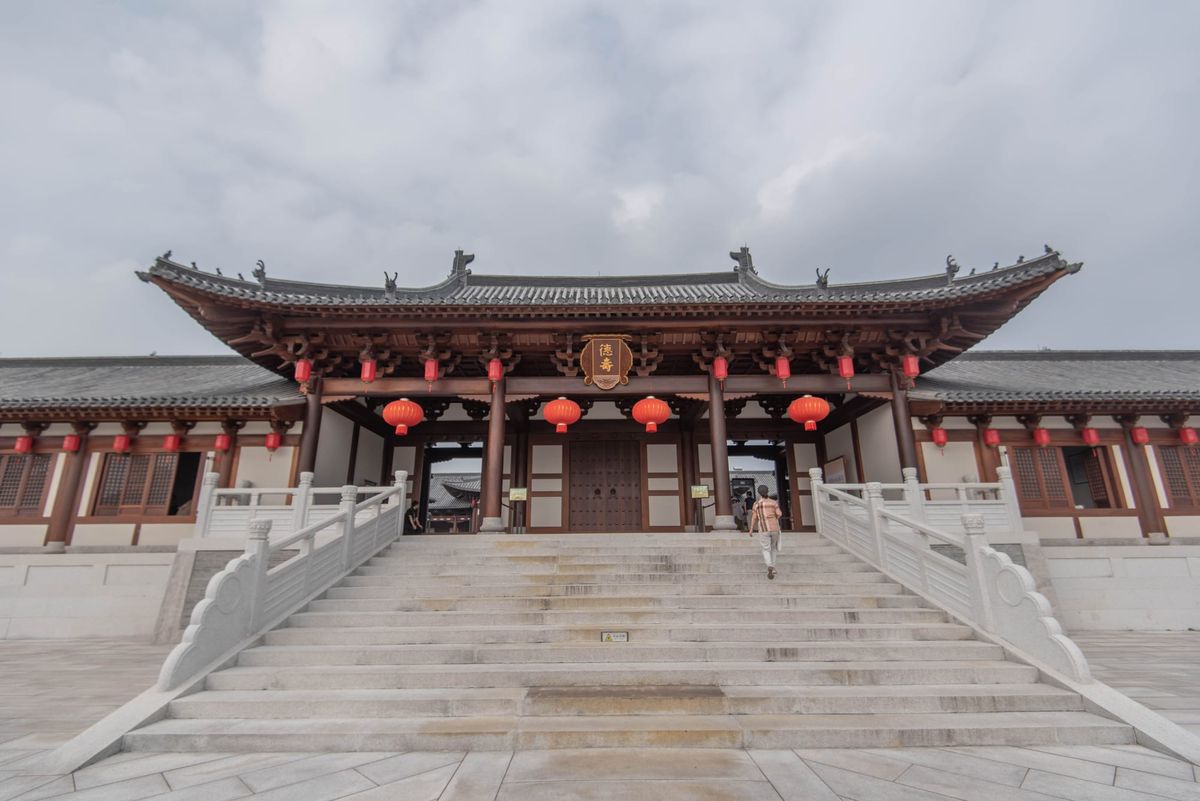
The Emperor's Retreat from Power.
Built as a retirement residence for Song Emperor Gaozong after his abdication in 1162, and subsequently used by Emperor Xiaozong.
Excavated across four archaeological campaigns and opened to the public in late 2022, it is still relatively unknown for international visitors.
Part ruins museum, part immersive reconstruction, with digital installations that restore the palace's great hall to something approaching its original state.
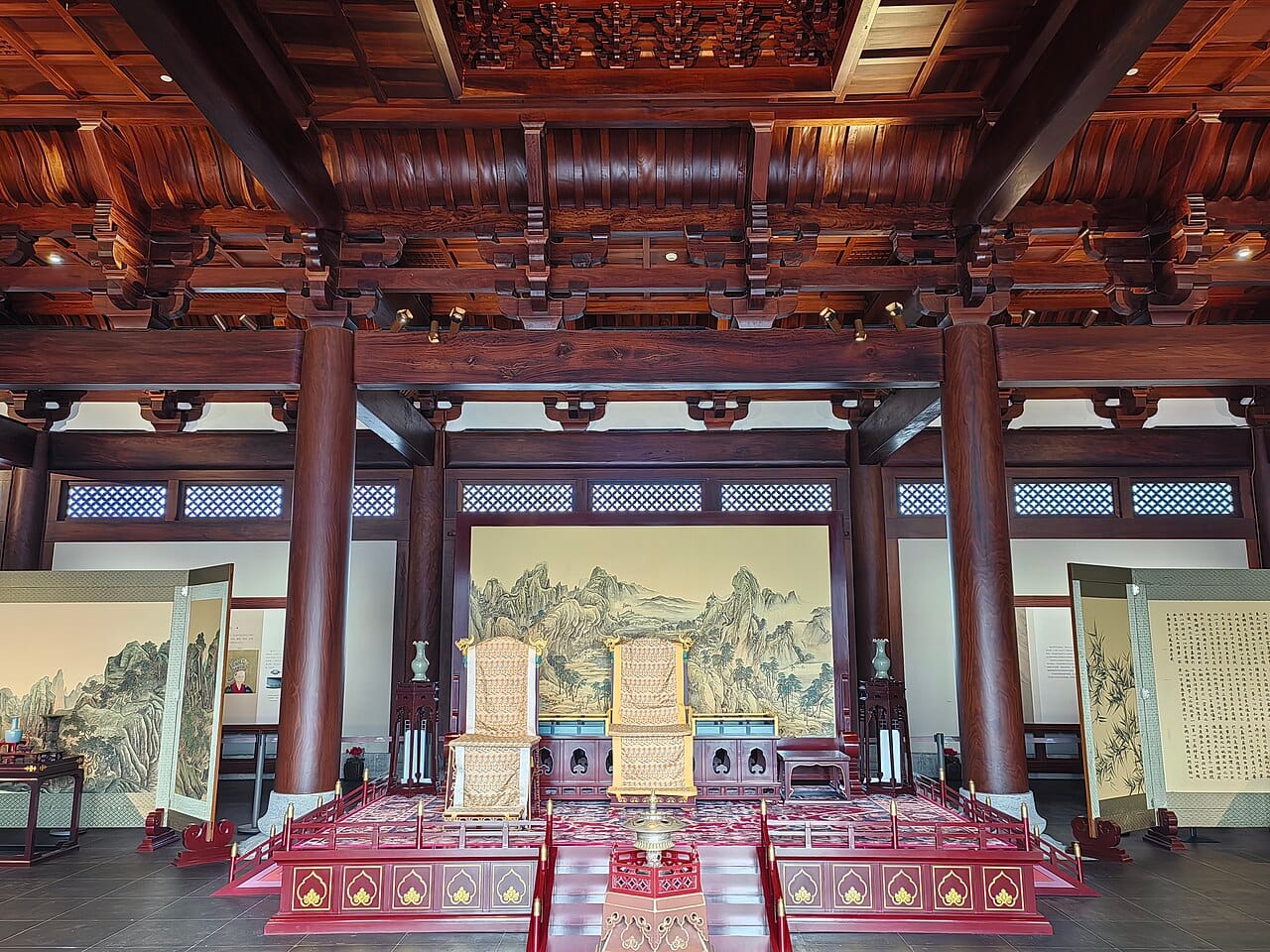
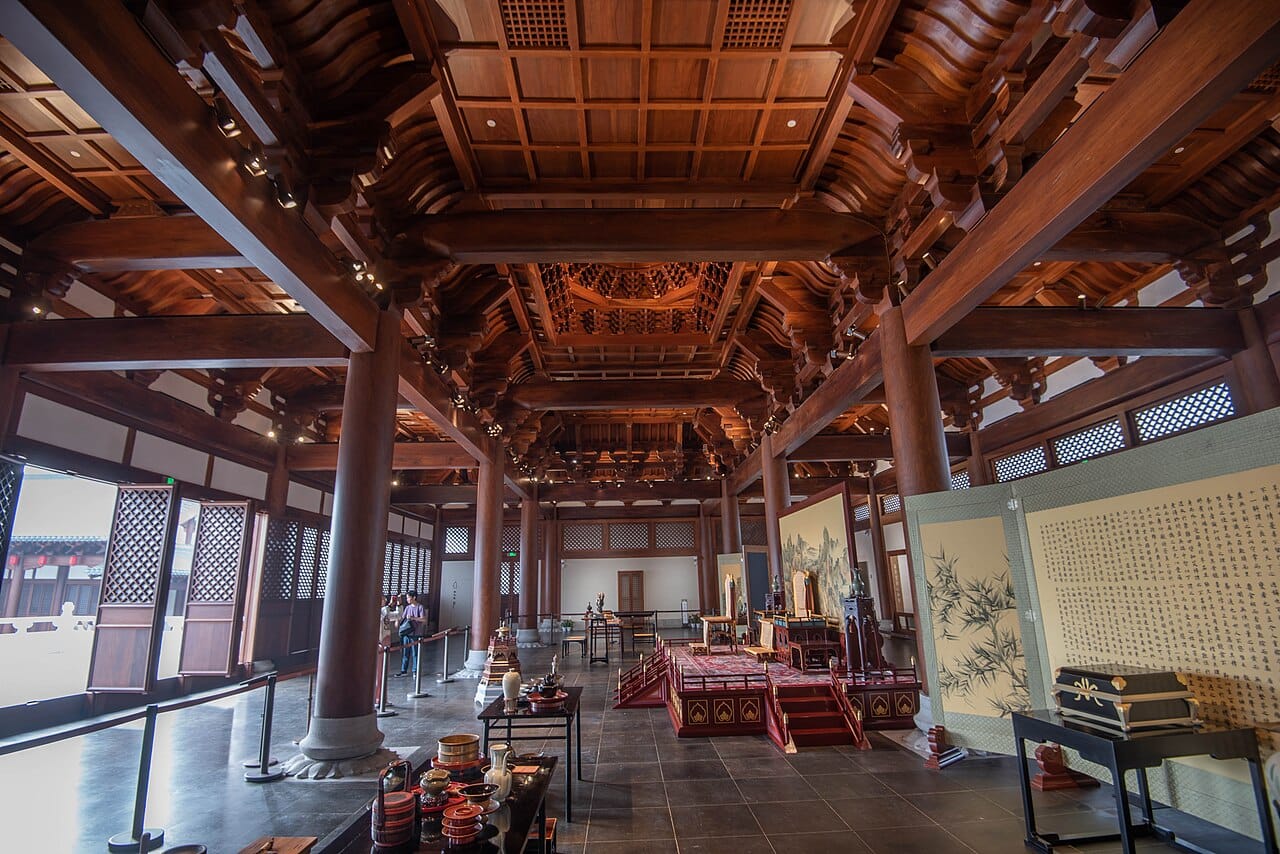
The reconstructed main hall of the museum. Image: Left: Yumeto, Right: N509FZ / Wikimedia Commons / CC BY-SA 4.0.
Logistics & Booking Guide
How to Find It
Metro: Line 5 or 7 to Jiangcheng Road (江城路站). Exit via Exit C, then continue toward Wangjiang Road(望江路) to reach the entrance.
Visual Cue: Look for a contemporary museum building set back from the street with a large forecourt. The entrance signage reads 南宋德寿宫遗址博物馆 in Chinese characters. Note that there is no prominent English signage on the exterior.
Taxi Address: 杭州市上城区望江路228号南宋德寿宫遗址博物馆 (Southern Song Dynasty Deshou Palace Site Museum, No. 228 Wangjiang Road, Shangcheng District, Hangzhou).
Admission and Booking
Tickets:Free entry. On weekdays, walk in directly with ID — no booking required. On weekends and public holidays, reserve up to three days ahead via the museum's official WeChat account (search 南宋德寿宫遗址博物馆, tap "参观预约").
Hours: Open Tuesday to Sunday, 09:30–17:00 (last entry 16:30). Closed Mondays except on public holidays.
Photography: Allowed throughout the grounds, but flash, selfie-sticks, and tripods are strictly prohibited. Videography requires prior official permission.
Insider Tips
Dress Code: The museum enforces a strict footwear policy. Visitors wearing sandals or flip-flops will be denied entry at the gate.
Audio Guide: Highly recommended. Scan a QR code at arrival to rent a smart guide supporting twelve languages (including English) that triggers automatically via location sensors as you approach each exhibit.
Planning: Weekend and national holiday reservation slots fill up almost immediately. Secure your WeChat booking exactly three days in advance to guarantee access.
Food & Drink Recommendations
The culinary scene surrounding the Deshou Palace ruins mirrors the neighborhood’s unique architectural pivot, bridging the refined, artistic dining codes of the Southern Song imperial court with the comforting, rustic flavors of old Hangzhou’s historic street gates.
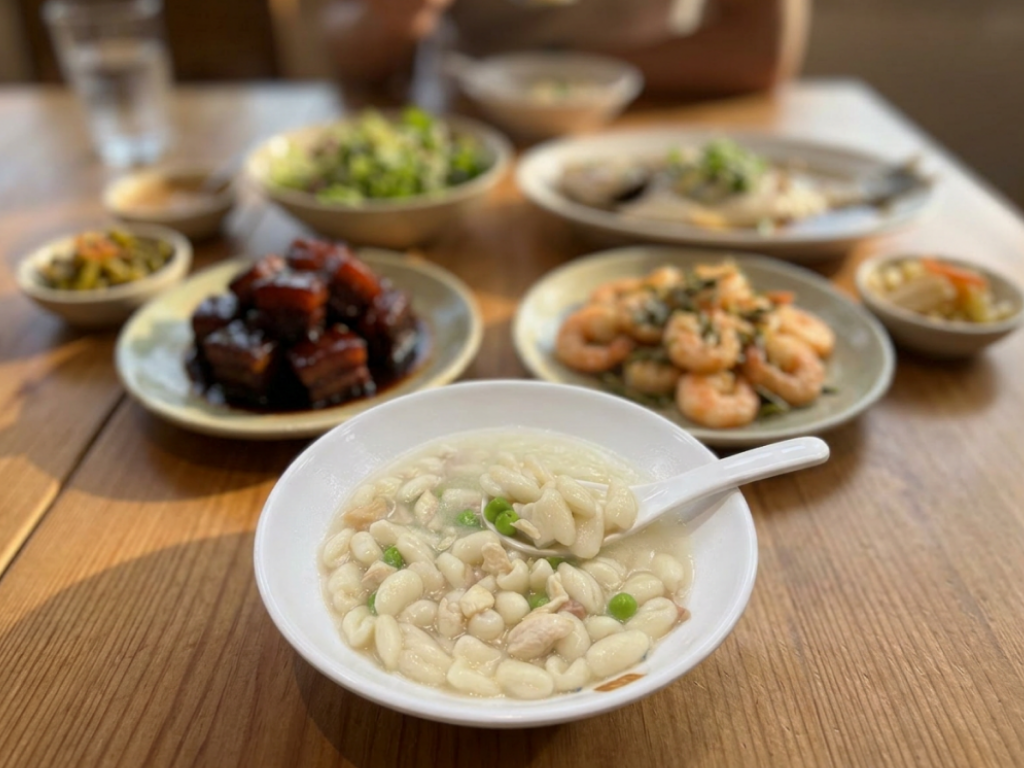
1. The Midday Break: "Cat's Ear" Pasta (猫耳朵 — Māoěrduō)
A short walk brings you to Qinghefang and the old Imperial Street, where Zhiweiguan (知味观, est. 1913) and older neighbourhood eateries still serve 猫耳朵 — thumb-shaped pasta dumplings in a clear, savoury broth.
The dish itself isn't native to Hangzhou; it began as a northern Chinese noodle, common across Shanxi and Shaanxi. How it landed here is tied to a legend involving the Qing dynasty's Qianlong Emperor visiting West Lake, and has been a Hangzhou fixture for over a century.
Taste and texture: Don't let the name put you off. Mao er duo is skilled work: each piece is shaped by pressing a small square of wheat dough against a flat surface with the thumb, curling it into a tiny shell.
Boiled to a light snap and dropped into clear chicken broth, the bowl arrives garnished with diced ham, shredded chicken, dried scallop, shrimp, bamboo shoots, and a scatter of peas or greens. The concave shape does what good pasta always does — holds the broth.
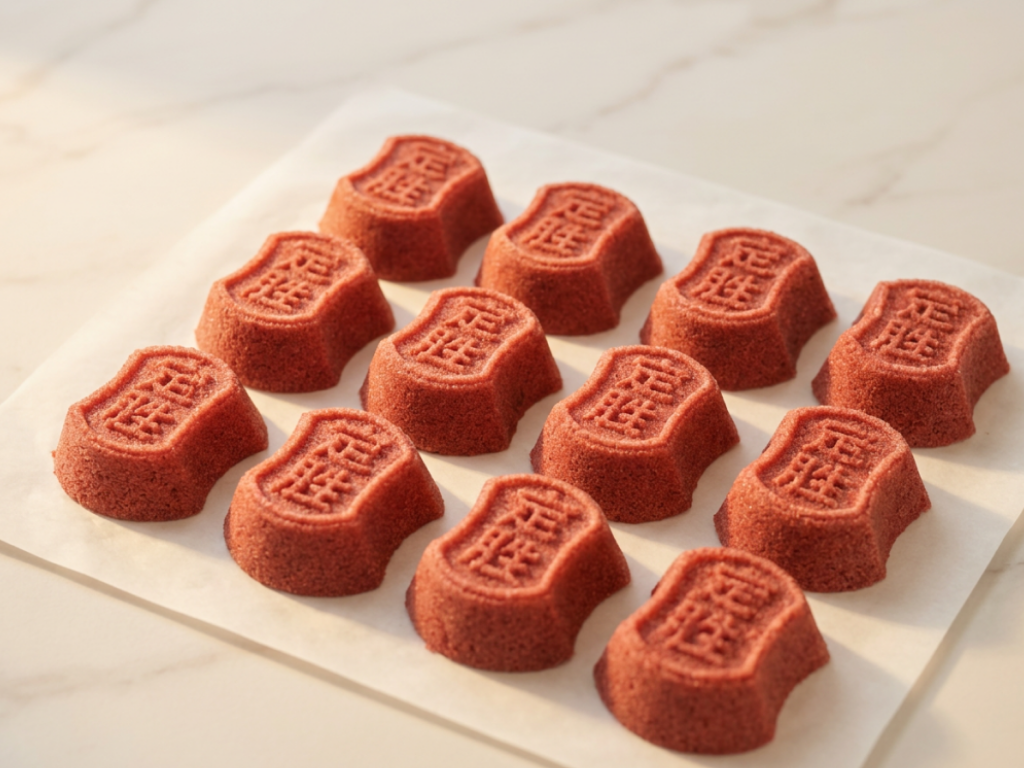
2. The Sweet Detour: The Victory Cake (定胜糕 — Dìngshèng Gāo)
The name tells the story. According to local legend, Hangzhou residents made these small, silver-ingot-shaped rice cakes to press into the hands of soldiers leaving for the front — 定胜, meaning "certain victory."
That the gesture survived eight centuries is not entirely a matter of folklore, either: the Southern Song text Mengliang Lu records the tradition directly, giving the legend real historical footing rather than just staying power. You'll find them near Qinghefang and the old imperial quarter, sold from bamboo steamers, still warm.
Taste and texture: Dingsheng gao is made from glutinous rice flour and rice flour, shaped in a wooden mould into a form somewhere between a silver ingot and a lotus petal. The filling is red bean paste or sweetened rose — sometimes both.
The exterior is soft and faintly sticky, with a clean, lightly sweet finish. It is not rich. It is not complicated. It is the kind of thing you eat standing up, outside, and immediately want another.
Flavor Guide
Osmanthus & red bean (桂花豆沙 — Guìhuā dòushā) — floral, lightly fragrant
Matcha (绿茶 — Lǜchá) — clean, gently bitter
Durian (榴莲 — Liúlián) — for the committed