270 Million Years for a Cup of Coffee — Care for One?
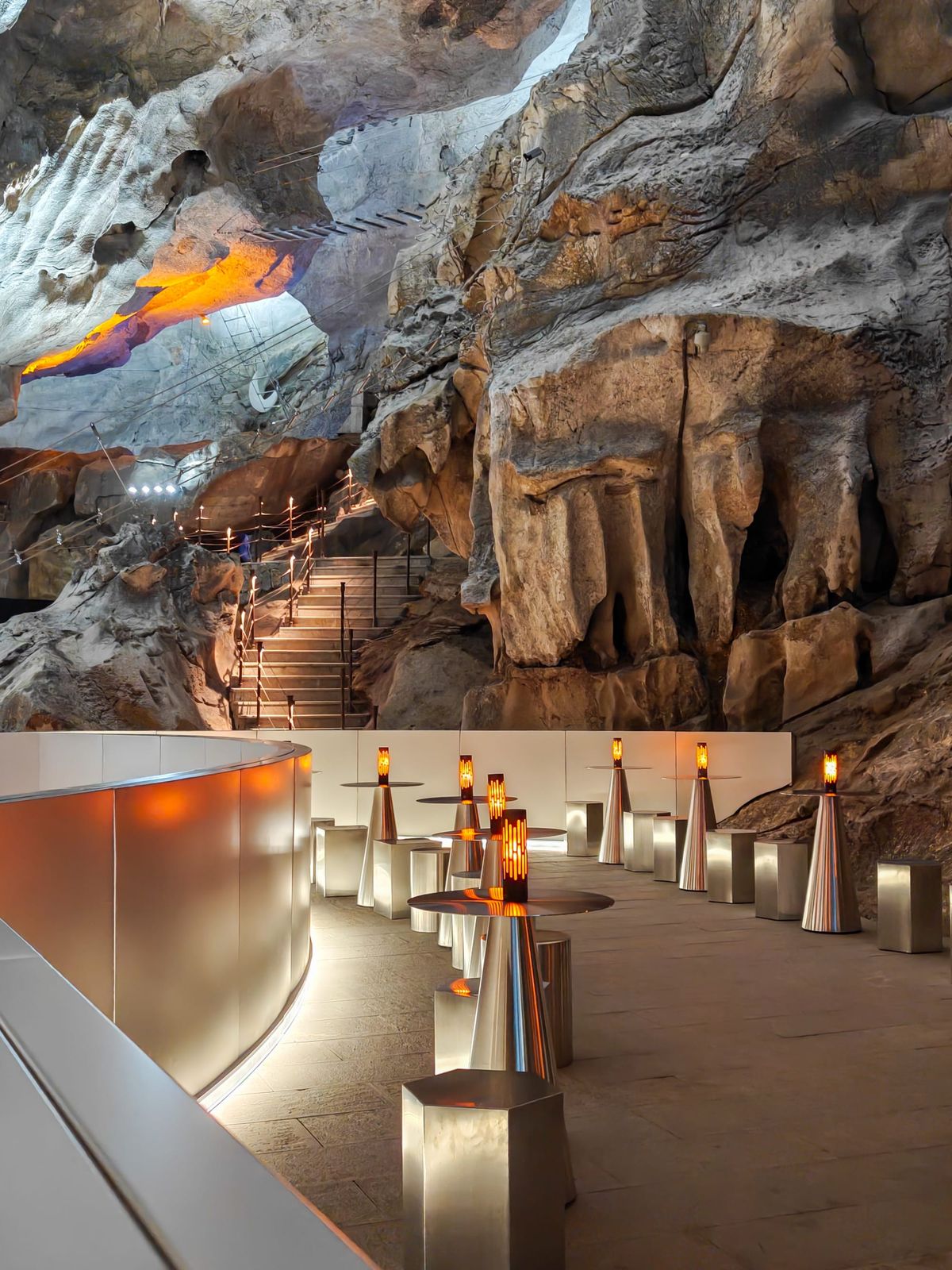
Yán Coffee at Chuiyun Tongtian River, Tonglu — a train ride from Shanghai, closer still from Hangzhou

What connects a foundational Greek philosopher, China’s ancient mountain hermits, and the glittering shopping avenues of Seoul? It all leads back to the cave.
We’ve all been to a "hole in the wall"—that modest, plain-looking spot you expect nothing from, only to be blown away by what’s inside.
“Ninety minutes outside Hangzhou, or a quick high-speed train ride from Shanghai, the phrase becomes literal.”
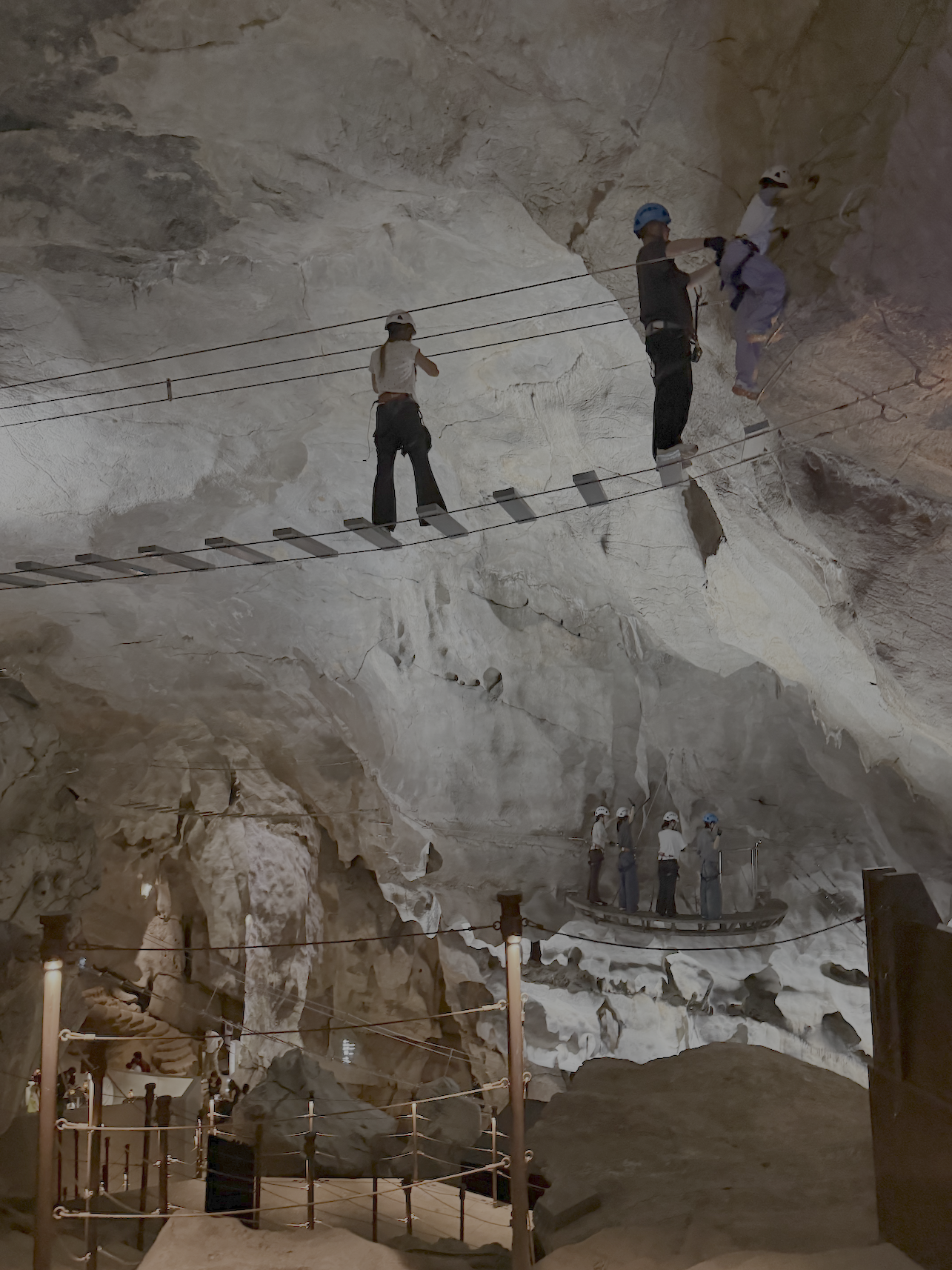
It is, quite simply, a hole in an actual wall of rock. And yet, travelers from across the country are flocking here to strap into climbing harnesses, venture deep into prehistoric limestone, and order a flat white.
The Allure of the Dark
Humans have been drawn into caves since the dawn of our species. Initially, they offered primal refuge from the outside elements. Over millennia, however, many major cultures transformed the subterranean realm into something far more profound: a realm of transformation.
Plato’s Allegory of the Cave
Constructed as a foundational philosophical exercise to explain the strict limits of human perception and physical reality.
The Pythian Oracle
Priestesses channeled divine prophecies directly through a subterranean fissure in the ancient limestone rock.
The Cave of Hira
The solitary mountain retreat where Prophet Muhammad received his very first divine revelations.
"The Grotto-Heavens"
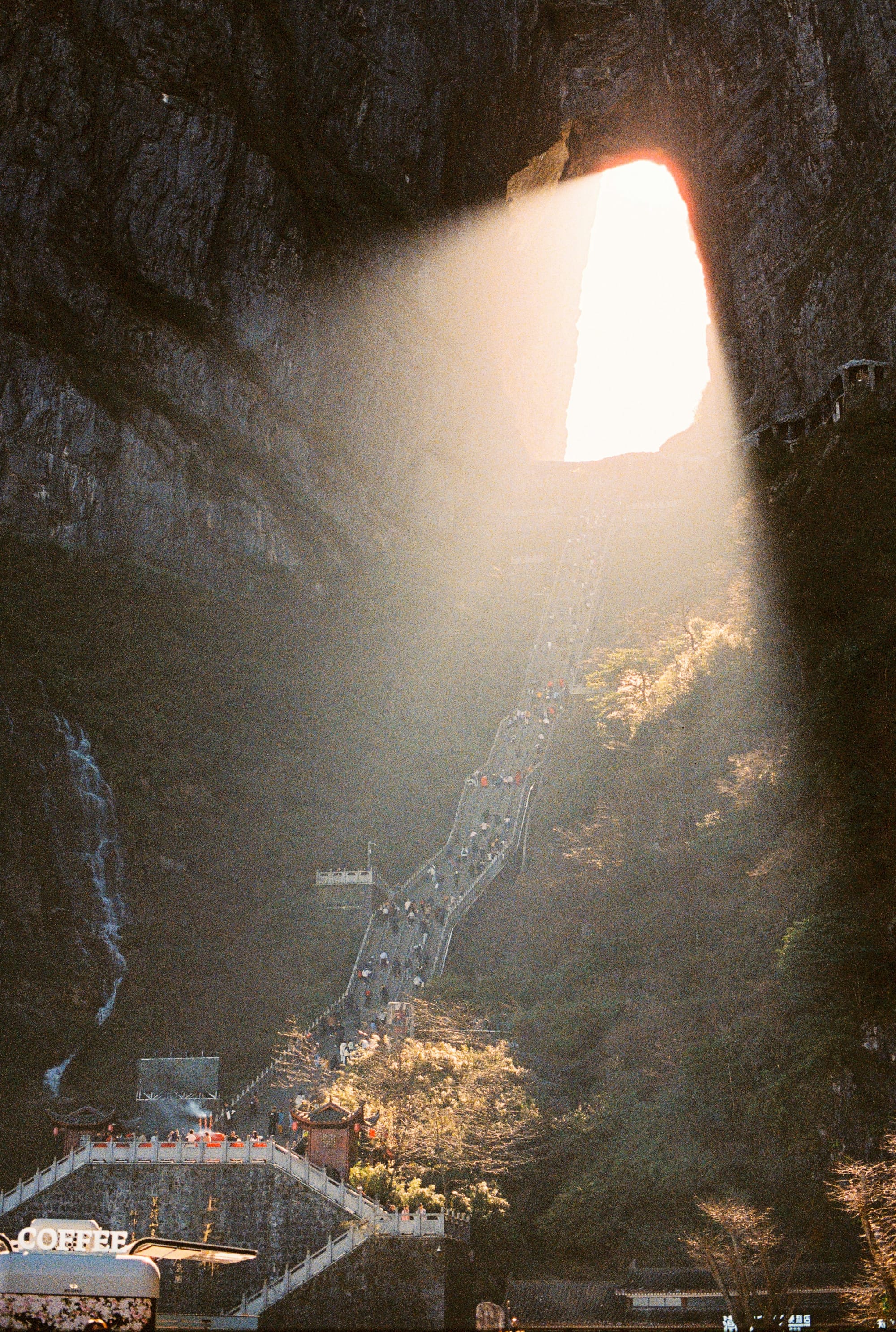
In China, the cave became the ultimate sanctuary for enlightenment. Where seekers or mountain hermits (yǐnshì 隐士) sought escape from the chaos of society, they retreated to the depths of the earth.
Daoism—China’s indigenous philosophy centered on living in harmony with the natural order (the Dao)—viewed nature as a living, energetic body.
Daoist scholars created a formal, mapped catalog of sacred geography known as Dòngtiān Fúdì (洞天福地) — the "Grotto-Heavens and Blessed Lands" — cataloging networks of sacred caves believed to be portals to hidden paradises and spaces of transcendent clarity.
From Cavern to Modern City Streets
This idea is woven directly into the Chinese language.
The character for cave, 洞 (dòng), originates from a root signifying water forcing its way through solid rock, carving out a path.
It is the exact same character used in compound words like "insight" (洞察 dòngchá, cave + observation)—literally "seeing straight through the rock to the core truth."
The Anatomic Evolution of 洞
Water forcing its way through solid rock, carving out an organic subterranean path.
To examine, scrutinize, or look deeply into the nature of a thing.
Literally: "Seeing straight through solid rock to the core truth."
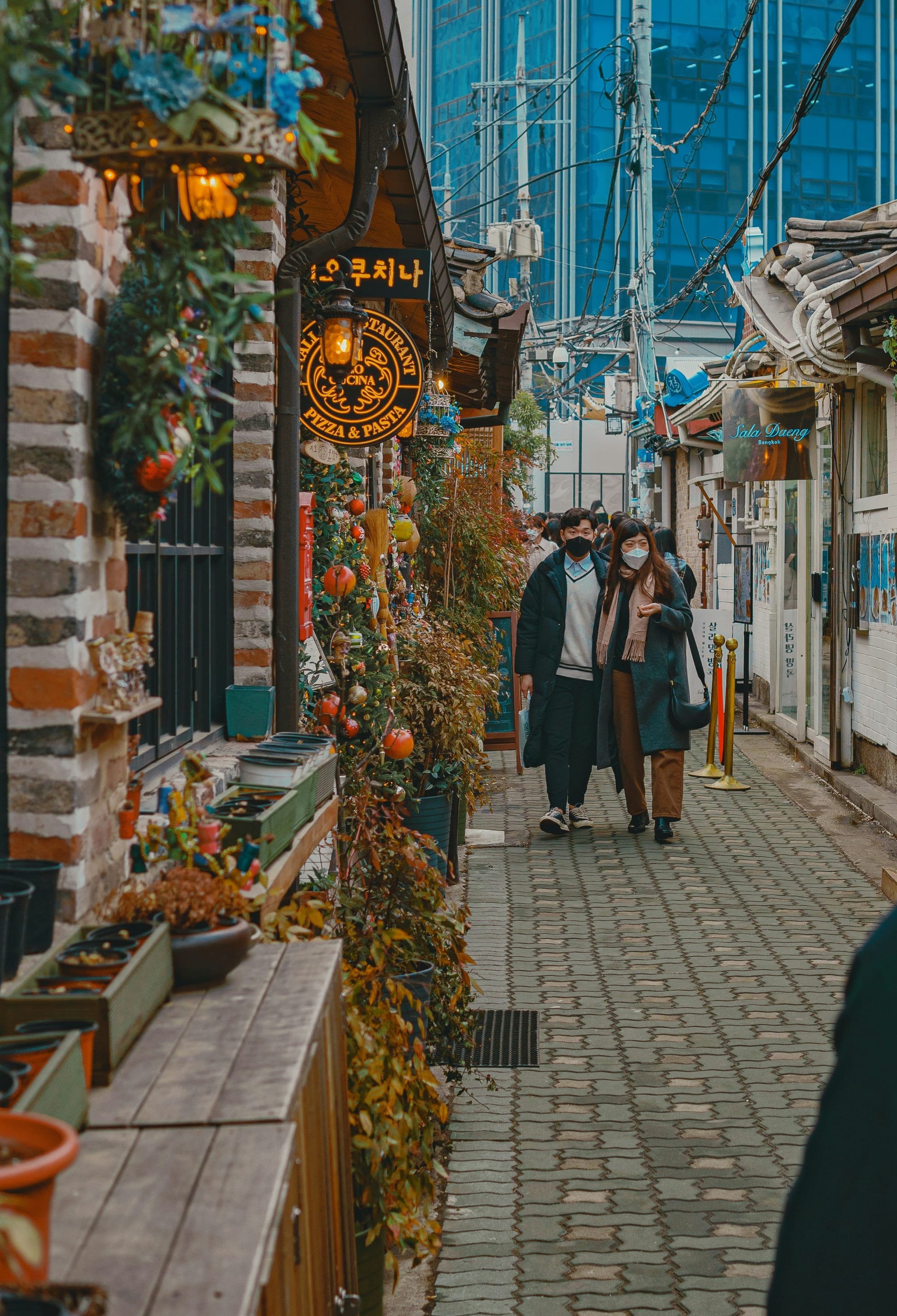
Centuries ago, this same character migrated into Korean, hardening into dong (동) — the everyday word for a municipal neighborhood or district. The logic: a sheltered community, tucked into a protective fold in the land.
The Migration from Rock to Neighborhood
Water forcing through rock → Sheltered Cavern
A sheltered fold in the land → Municipal District
Not many people standing in the boutiques of Cheongdam-dong or the street-food stalls of Myeong-dong know this today. But for anyone who does, standing there takes on a deeper, almost mythical weight — as if some thread still ran back to the people who first called a cave home.
Modern Man’s Subterranean Playground
Nestled deep inside a 270-million-year-old limestone cave sits Yan (岩"Rock") Cafe.
While cave cafés have been popping up in southwestern China, this spot is an extraordinary geological anomaly. Most of Guangxi (Guilin) and Yunnan are famous for karst formations, but Zhejiang province is almost entirely hard granite and volcanic rock. Finding a massive, hollowed-out, dripping limestone cave system here is a rare gift of natural history.
What turns this from a quick coffee run into an undeniable day trip is how you get there. You don’t just stroll up to a counter—the journey is the destination.

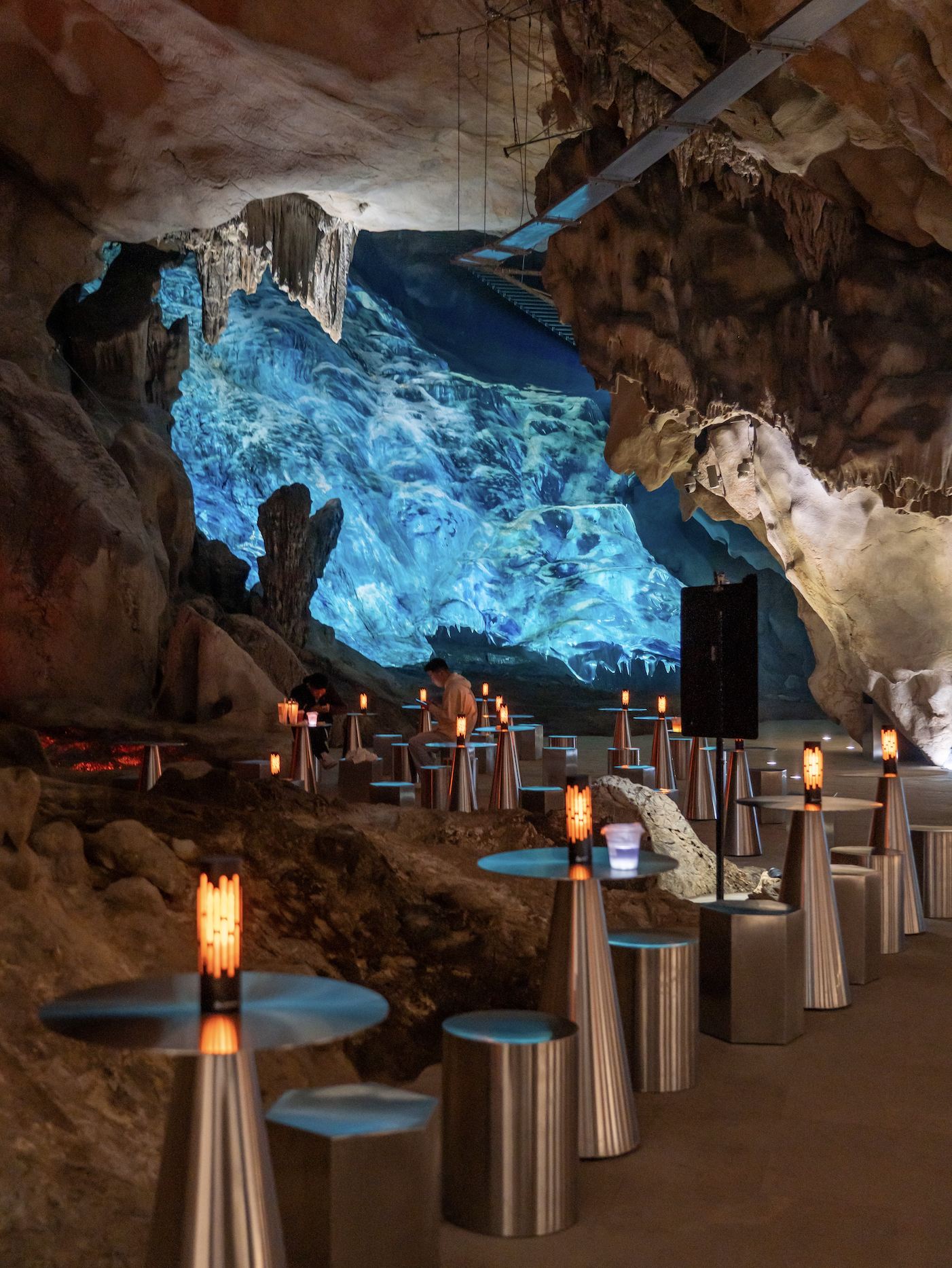
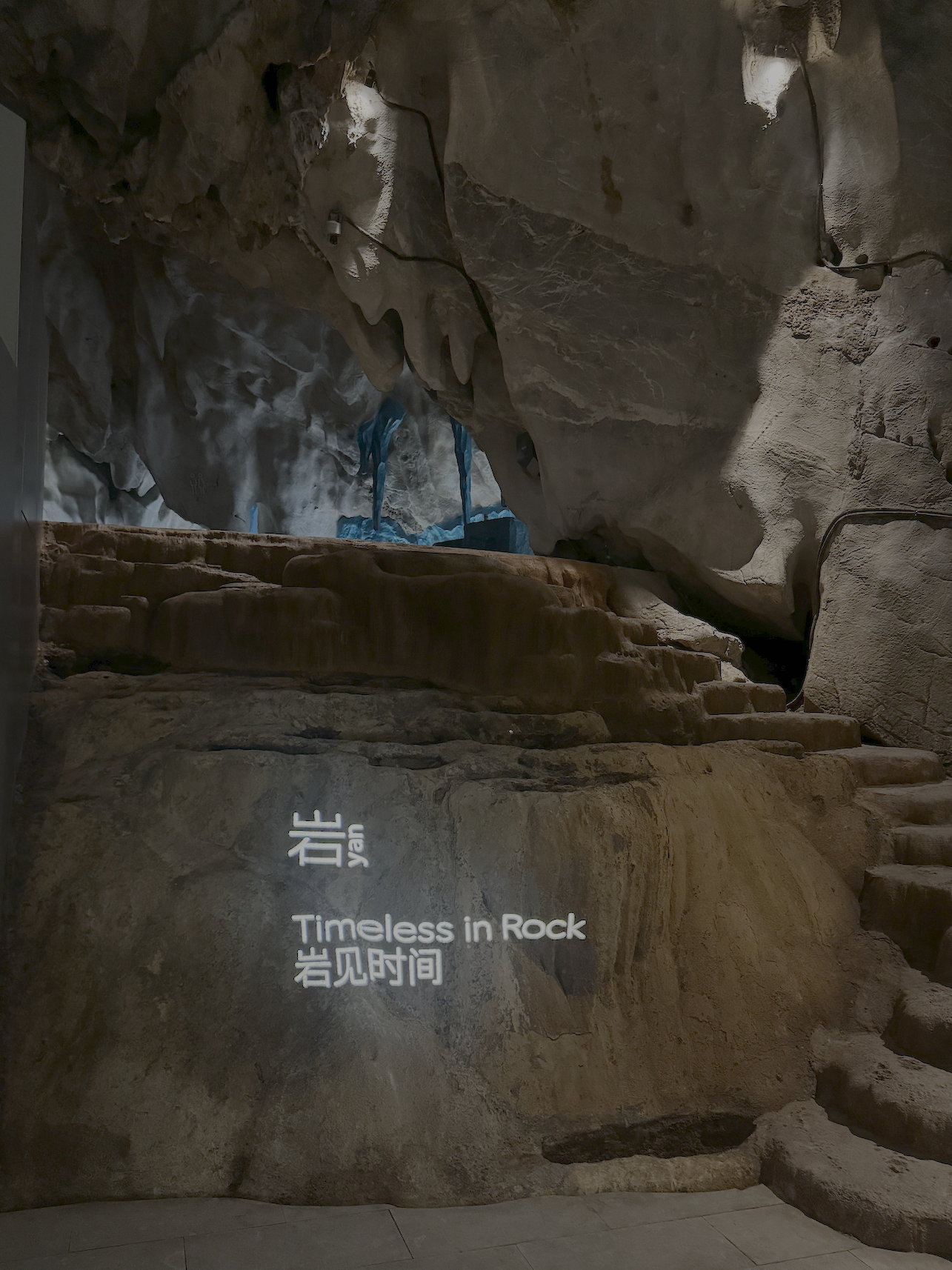
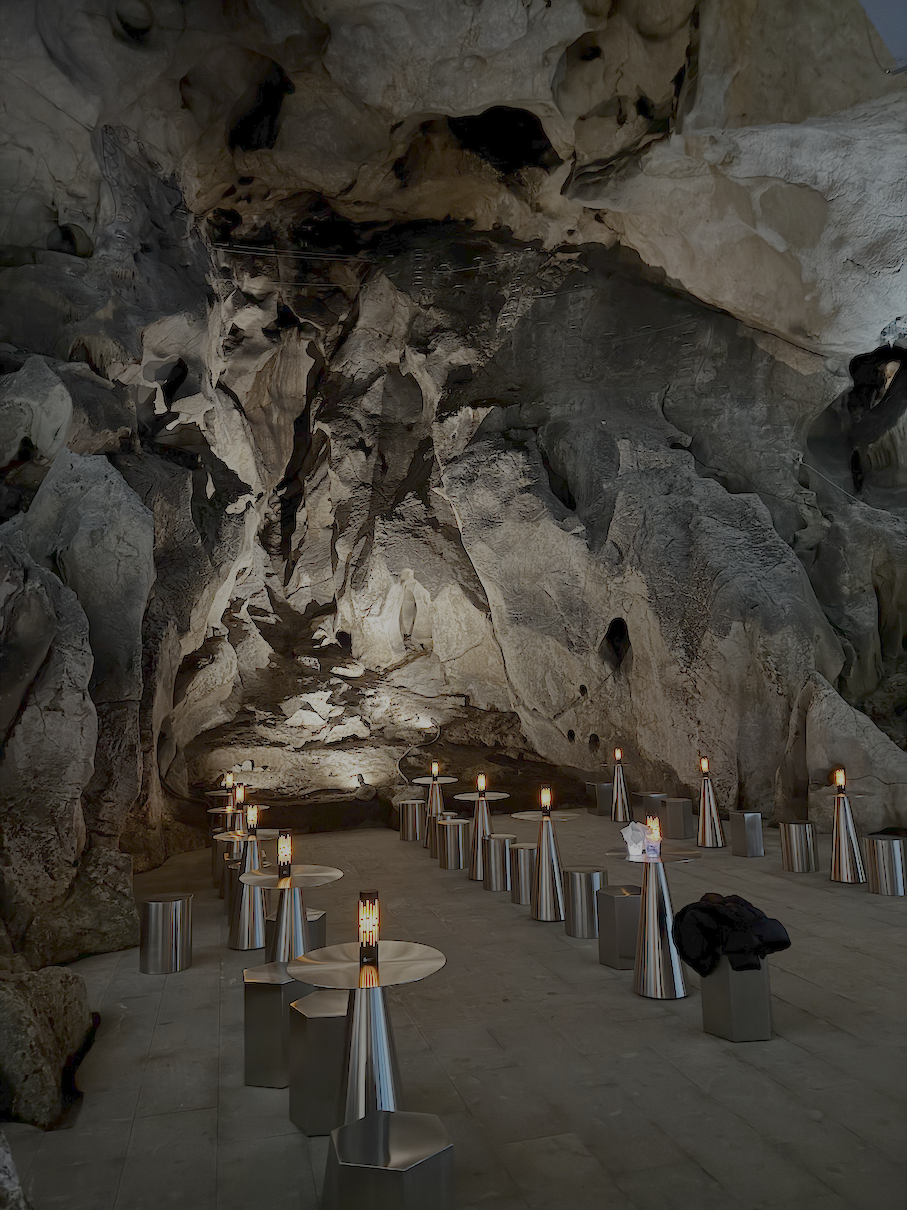
📍 Logistics & Travel Details (Click to Expand)
Address & Destination:
浙江省杭州市桐庐县瑶琳镇东琳村
Chuiyun Tongtian River Scenic Area (垂云通天河景区), Donglin Village, Yaolin Town, Tonglu County, Hangzhou, Zhejiang Province.
How to Get There:
- From Hangzhou (Fastest): ~1.5 hours by car/taxi. Alternatively, take the High-Speed Rail from Hangzhou East/West to Tonglu Station (~30 mins), followed by a 40-minute taxi to the park.
- From Shanghai: Direct High-Speed Rail from Shanghai Hongqiao to Tonglu Station (~1.5 to 2 hours). From Tonglu Station, take a 40-minute taxi straight to the scenic area.
What to Wear & Pack:
- Footwear: Sturdy sports or hiking shoes only (no sandals, open toes, or heels).
- Clothing: Fitted sportswear. Avoid skirts, dresses, or loose scarves that can catch on climbing carabiners. Light-colored or white outfits pop best against the dark cave rock in flash photos.
- Hygiene & Accessories: Bring a hair liner or cap if you prefer one under the shared climbing helmets. Tie back long hair and secure loose glasses/jewelry.
-Mandarin Unpeeled


![[Quiz] Find the China City for How You Actually Want to Travel Right Now.](https://storage.ghost.io/c/73/63/7363a138-5ebf-4ec5-bfdf-0956583c3258/content/images/size/w600/2026/09/Image-Sep-2--2026-at-03_59_42-PM.png)