West Lake 西湖
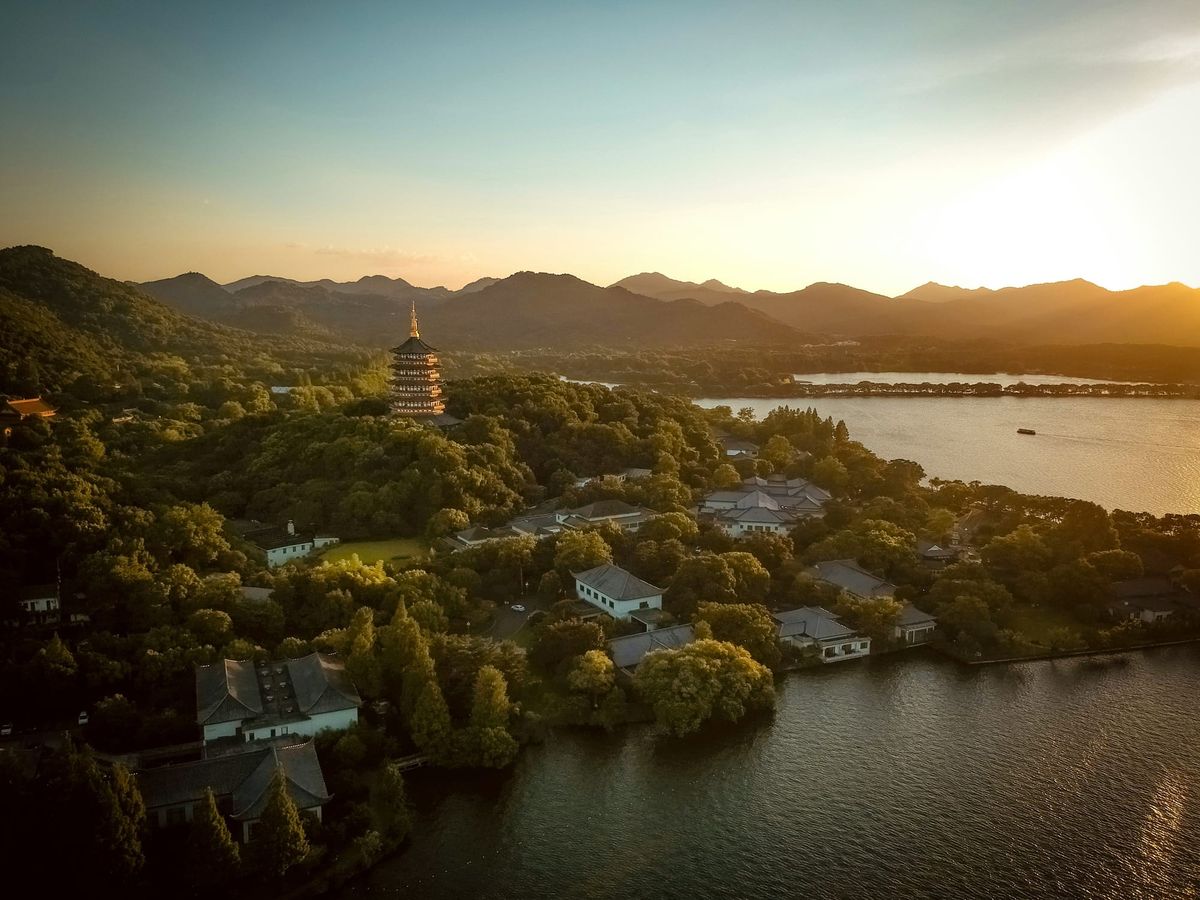
When Poetry Became Architecture.
It is easy to dismiss West Lake as ‘just a lake’. Maybe a stunning one, but nonetheless, just a lake.
But for those in the know, it would be like saying that the Parthenon is just a collection of ancient stones.
The cultural back story is what makes West Lake, and what makes the pagodas, bridges, sculptures scattered all around on the lake trail legible.
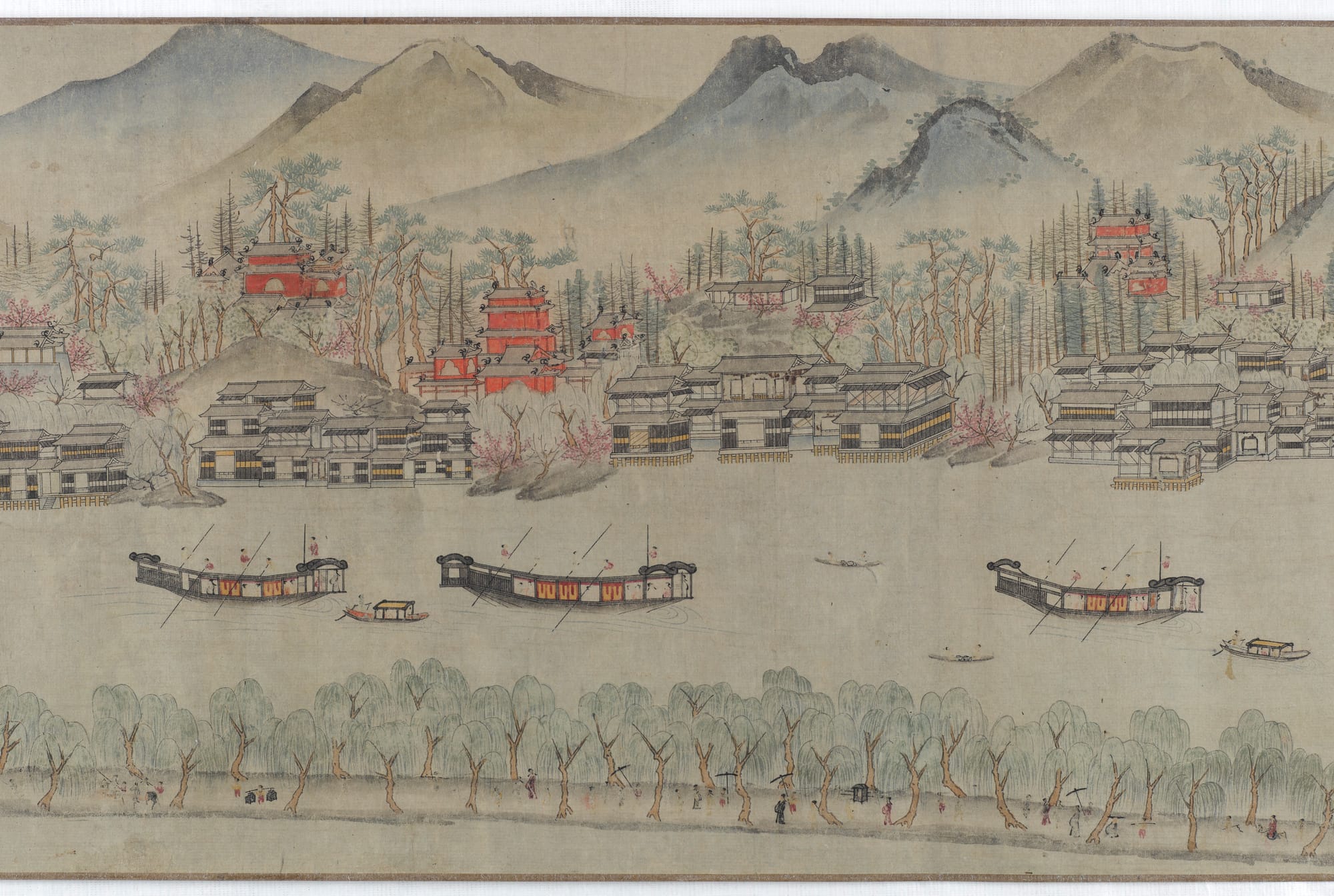
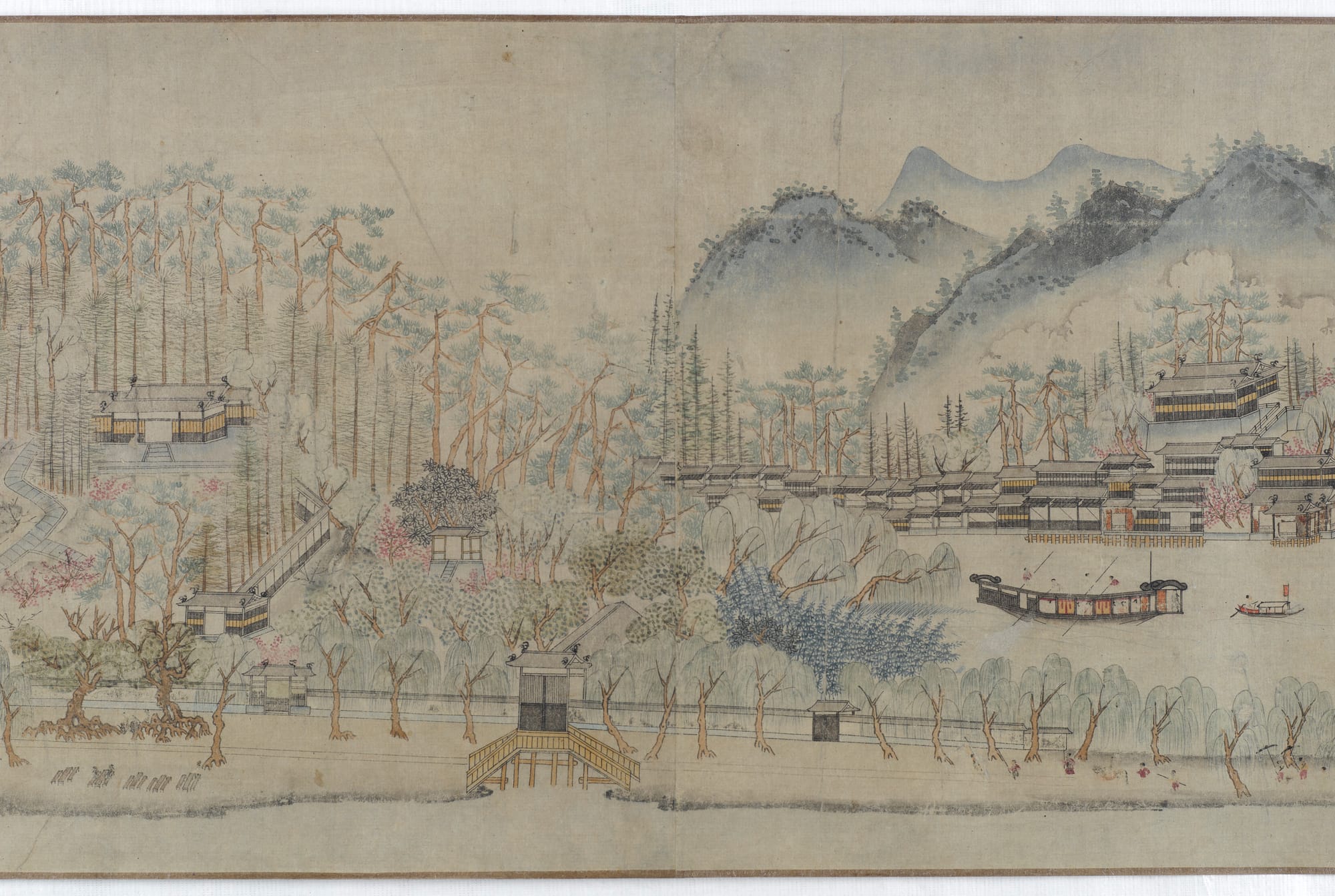
Anonymous (formerly attributed to Li Song). Scenic Attractions of West Lake (西湖清趣圖). 14th century (Late Yuan or early Ming dynasty). Handscroll; ink and color on paper. Image courtesy of the Freer Gallery of Art, Smithsonian Institution, Washington, D.C.: Gift of Charles Lang Freer, F1911.209.
Originally a lagoon, West Lake did not come into existence until the 8th century, when the marshy expanse was dredged by government officials.
Over the century, a succession of scholar-officials came to Hangzhou, each leaving their signature with projects that marry practicality with artistic aesthetics.
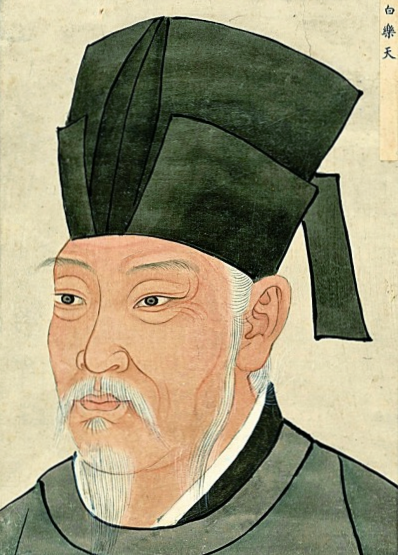
West Lake’s topography is entirely inseparable from its literary history. Two of China’s most celebrated literary icons literally sculpted the water:
Bai Juyi (Tang Dynasty): The Leonard Cohen of Tang poetry, serving as governor, raised an essential causeway for local agricultural irrigation. Su Dongpo (Song Dynasty): Constructed a magnificent walkway lined with willows and flowering trees—still the most elegant stroll in the city today. His brilliant anti-silting project involved anchoring three stone pagodas in the southern waters, inadvertently creating the lake's most iconic landmark.
This concentration of literary talent in governance was no coincidence. China’s ancient civil service examination (科举 — Keju) heavily favored artistic and literary genius. Crafting flawless rhymed prose was the prerequisite for holding public office, creating a colorful, deeply scholarly era where administrative duties and romantic artistic pursuits were seamlessly intertwined.
Painters, poets, and emperors composed the view with the same precision applied to a scroll: pavilions positioned to be seen from certain angles, willows planted to frame the water in certain seasons, the surrounding hills preserved as the ink-wash backdrop that made the whole composition cohere.
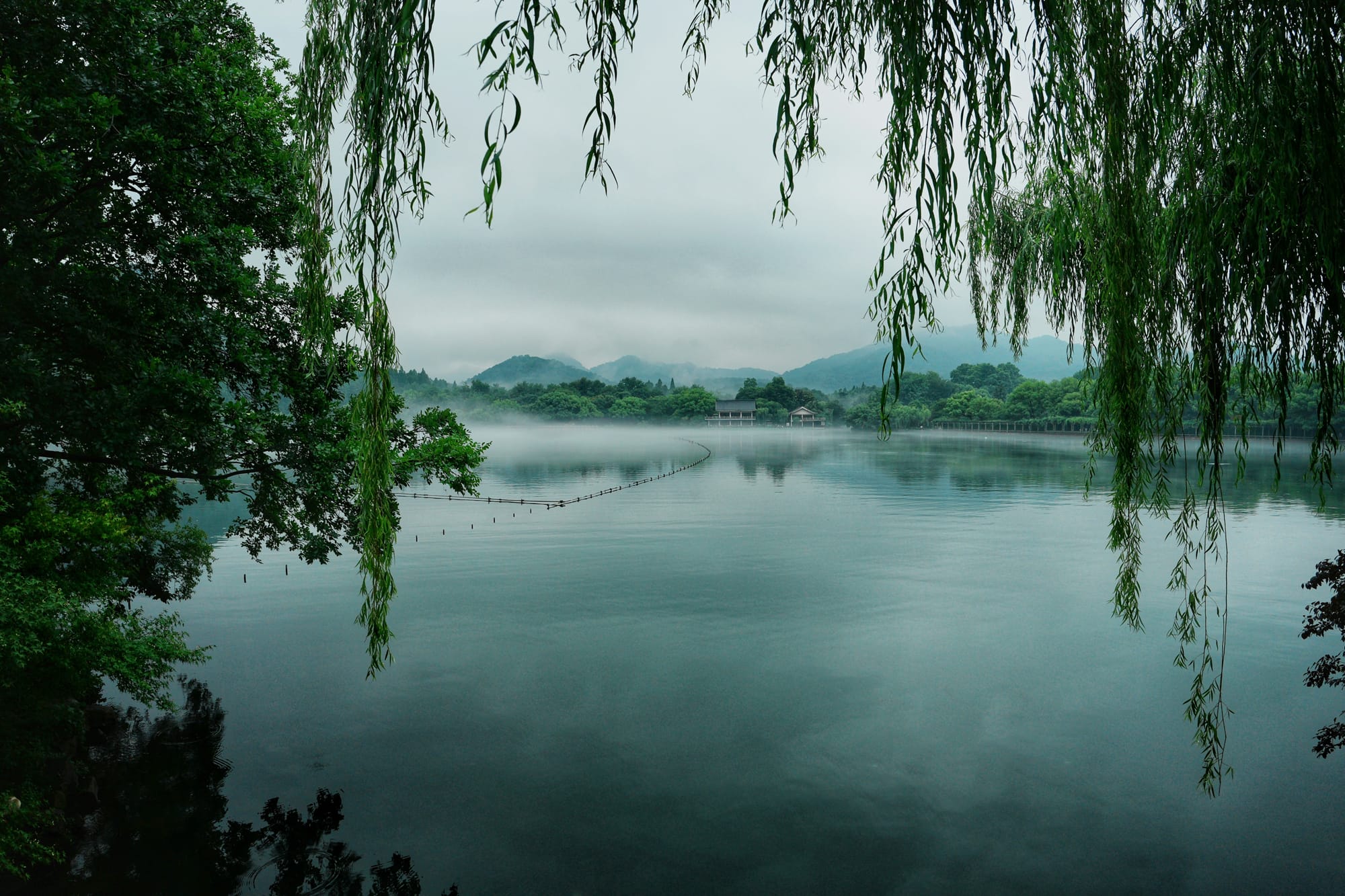
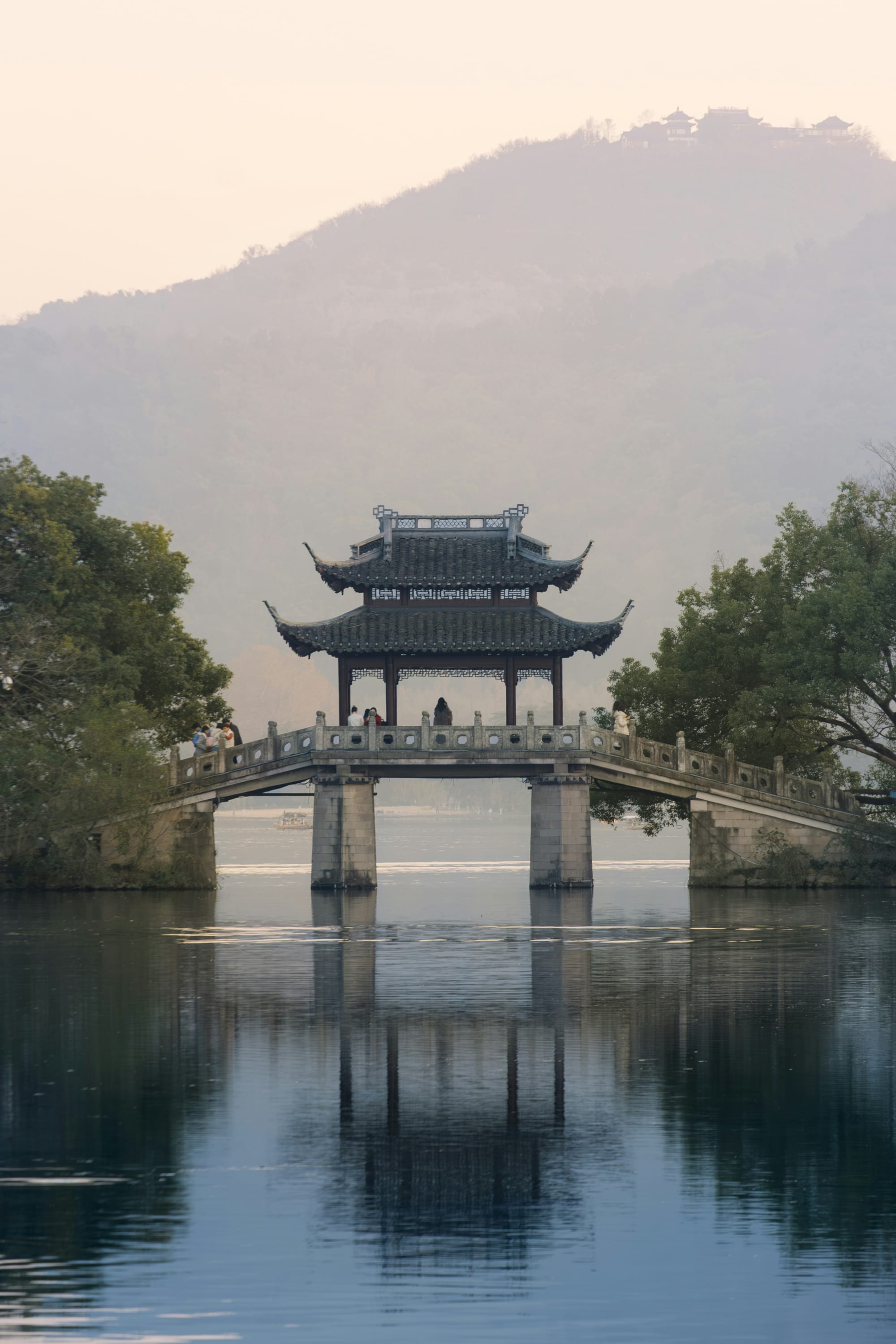
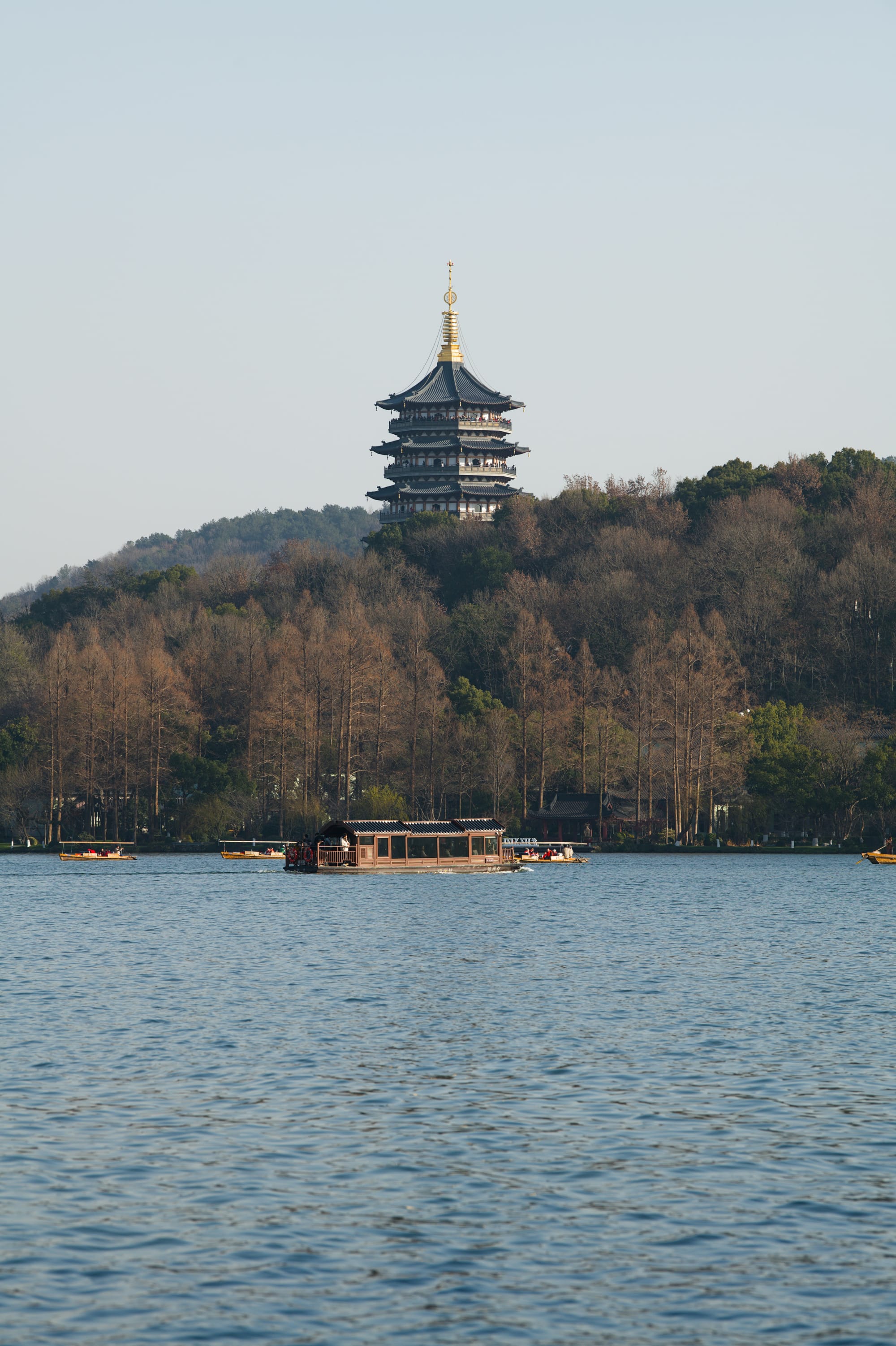
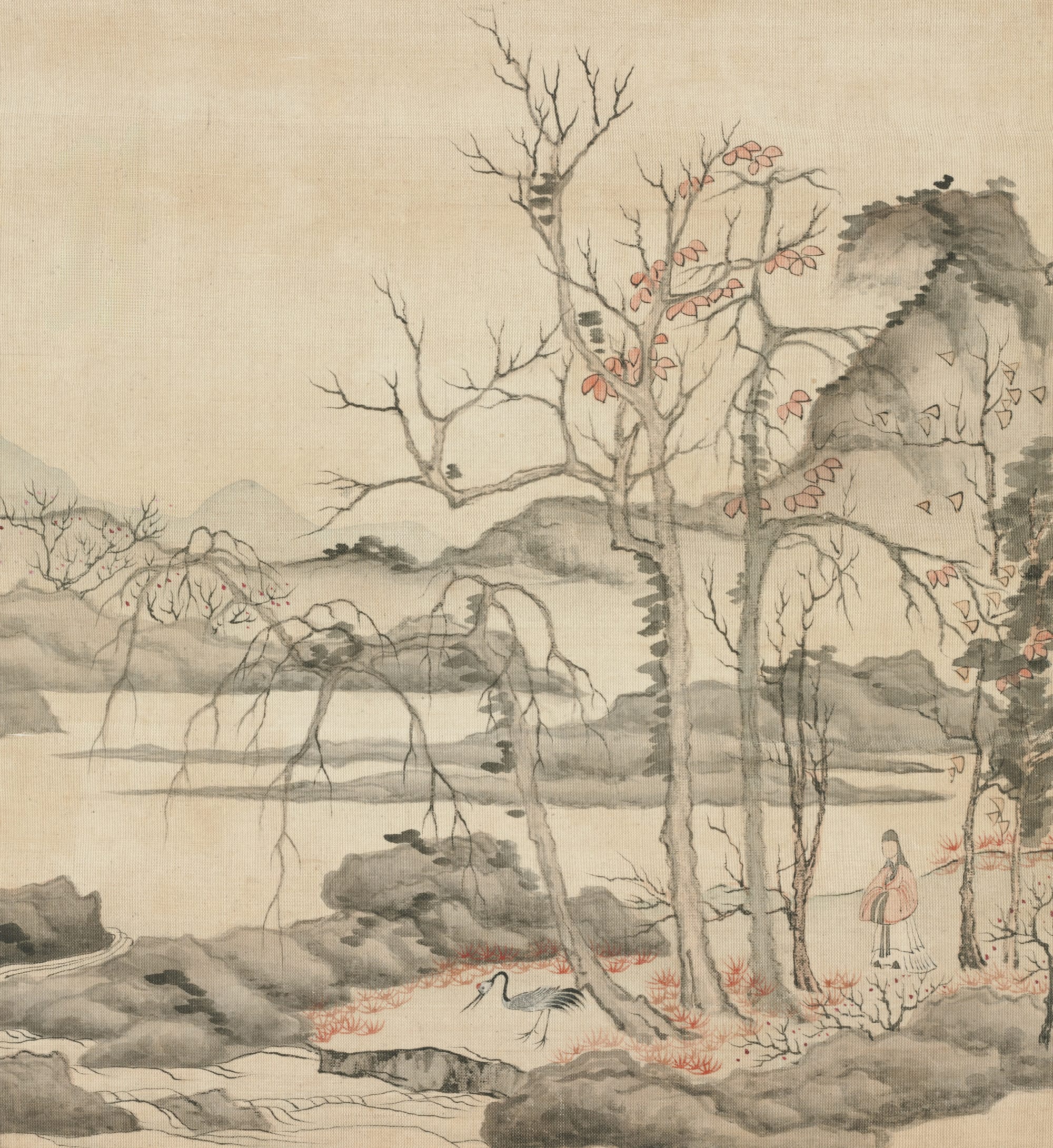
What they were building toward was shānshuǐ (山水) — the classical ideal of mountain and water in harmony, the landscape not as wilderness but as philosophy made visible.
Getting Your Bearings
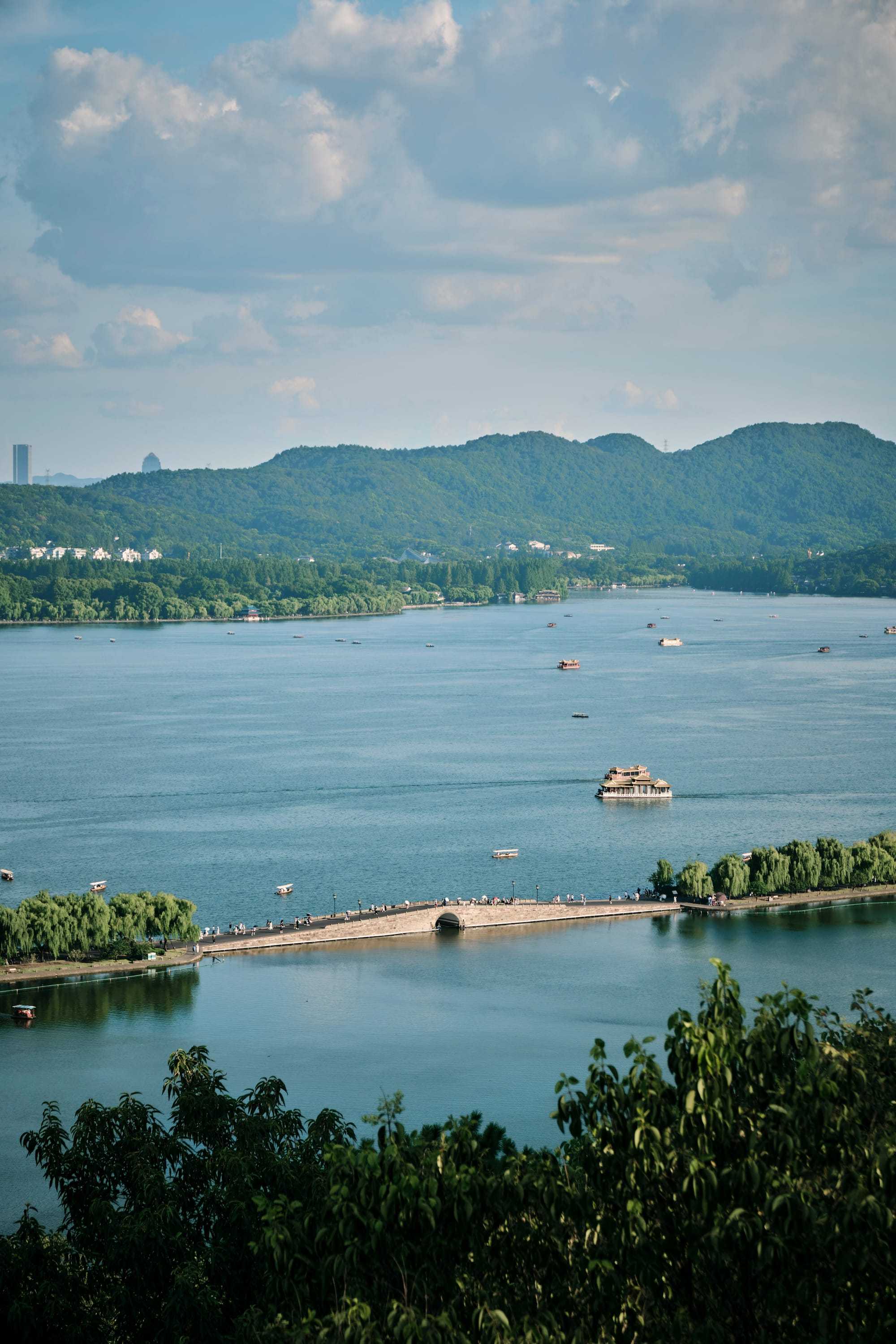
West Lake is larger than it feels from the shore.
The water surface covers roughly 6.4 square kilometres, with the full perimeter coming in at around 15 kilometres — about 9.3 miles — three sides enclosed by wooded hills, one side facing the city.
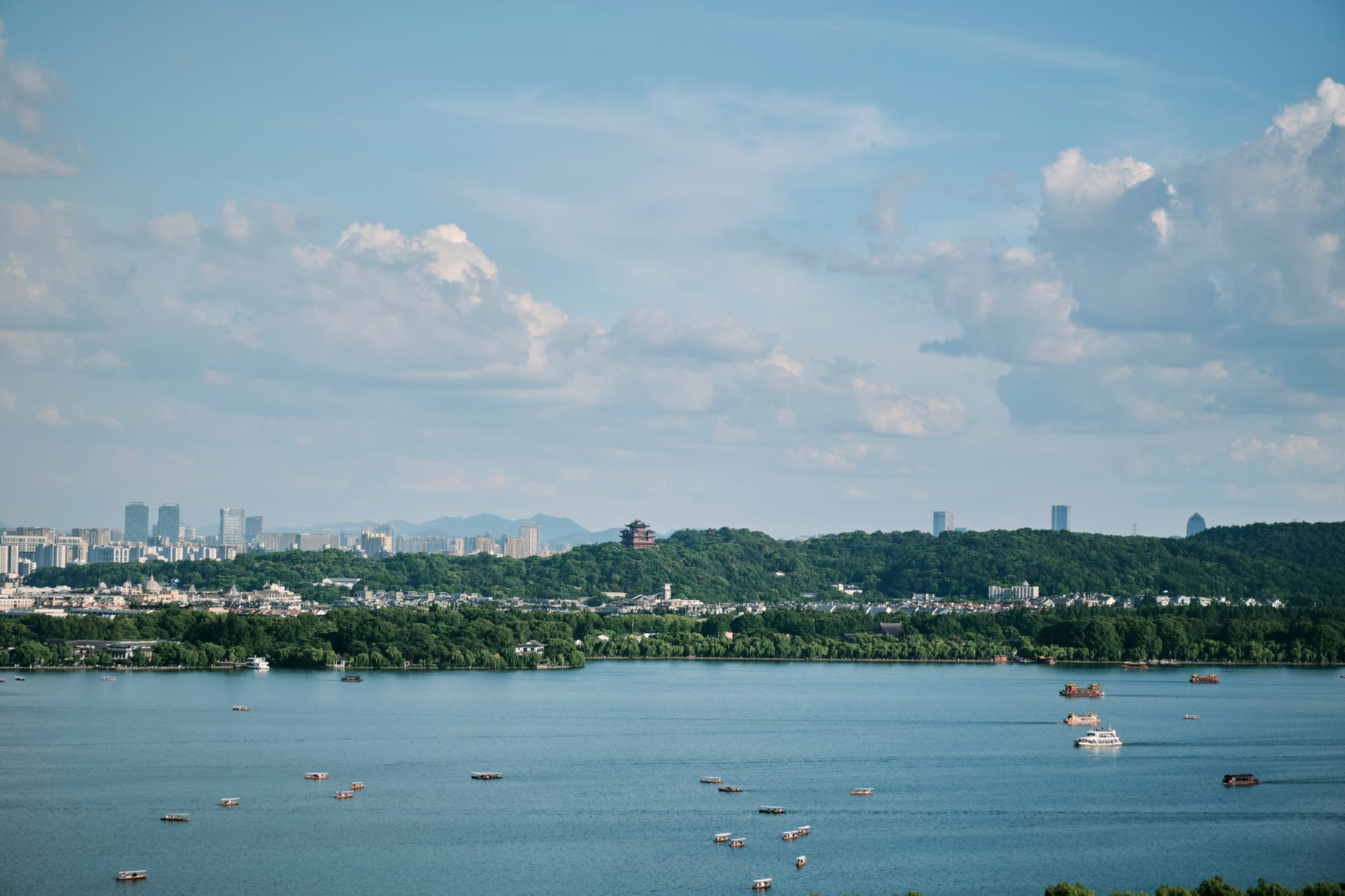
A brisk walker completes the standard lakeside loop in around two hours. Most visitors, sensibly, do not walk it all.
By Electric Cart
The easier approach is the 环湖观光电瓶车 (huánhú guānguāng diànpíng chē) — the open-air electric sightseeing cart that runs a continuous loop around the lake. The full circuit takes around 70 minutes.
Queue, board, and scan to pay once on the vehicle. Tickets are valid for a single, one-way journey only — if you disembark mid-route, the ticket is automatically voided and a new one must be purchased to continue.
There are two types of carts: the standard cart runs ¥10 per segment or ¥40 for the full loop; a wooden "fang gu che" (仿古车, antique-style cart) costs ¥20 per segment or ¥80 for the full loop.
Operating hours vary slightly by season — check current times before boarding.
By Boat
West Lake Boat Piers (西湖游船码头, Xīhú yóuchuán mǎtóu) are scattered around the shoreline.
The main cluster runs along the Hubin (Lakeside) strip, at the First, Second and Fifth Park piers, with additional boarding points at Flower Harbour (花港观鱼, Huāgǎng Guānyú), the Broken Bridge (断桥, Duànqiáo), and Qianwang Shrine (钱王祠, Qiánwáng Cí), among others.
The Sixth Park pier mainly offers rowboat rentals.
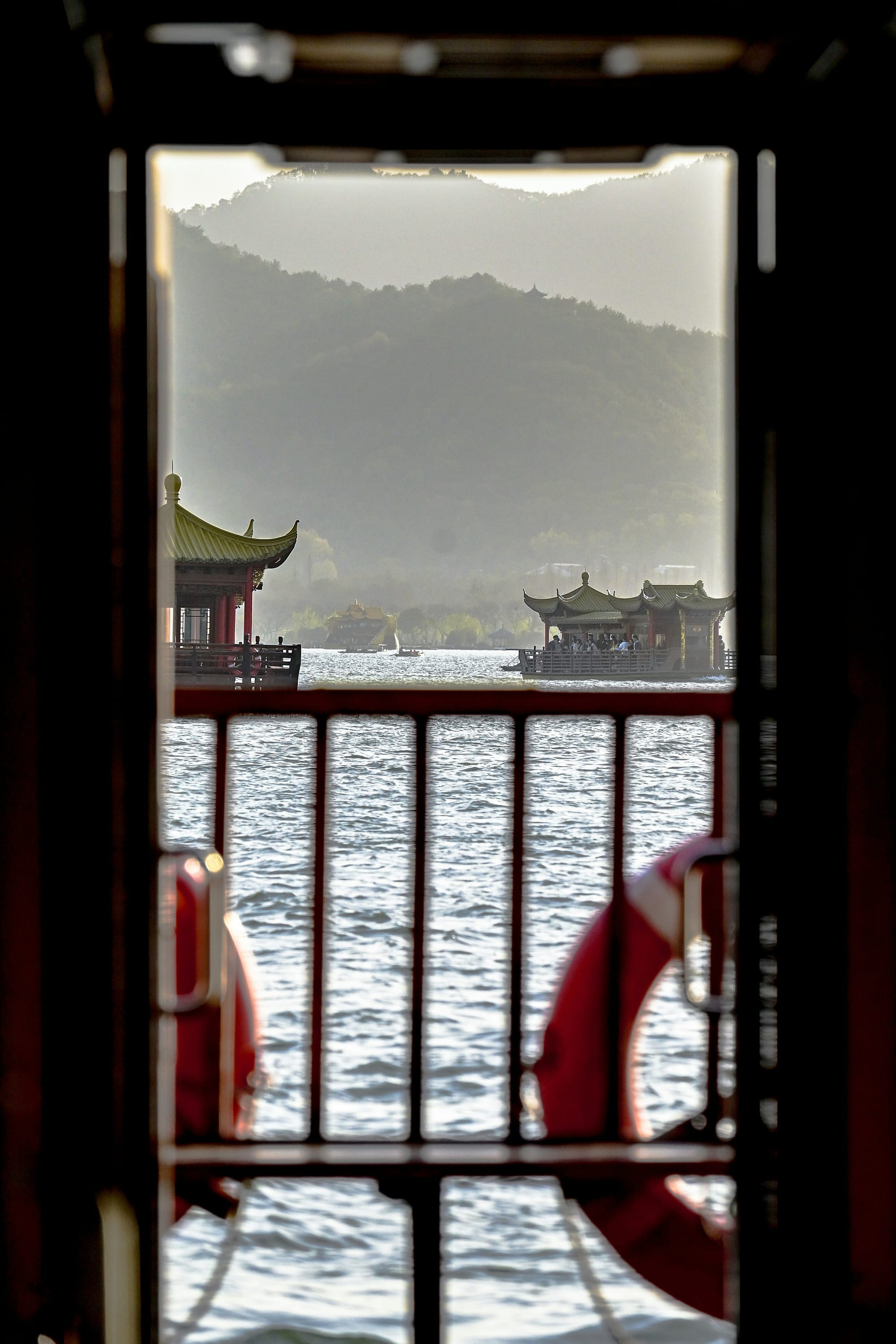
The Classic Lake-Circle Cruise (环湖游览线 Huánhú Yóulǎn Xiàn) is a hop-on, hop-off water bus that calls at ten piers around the full circuit. It departs from First Park Pier (亭湾骑射).
Tickets are priced per segment at ¥6–8, with a full-circuit pass at ¥70.
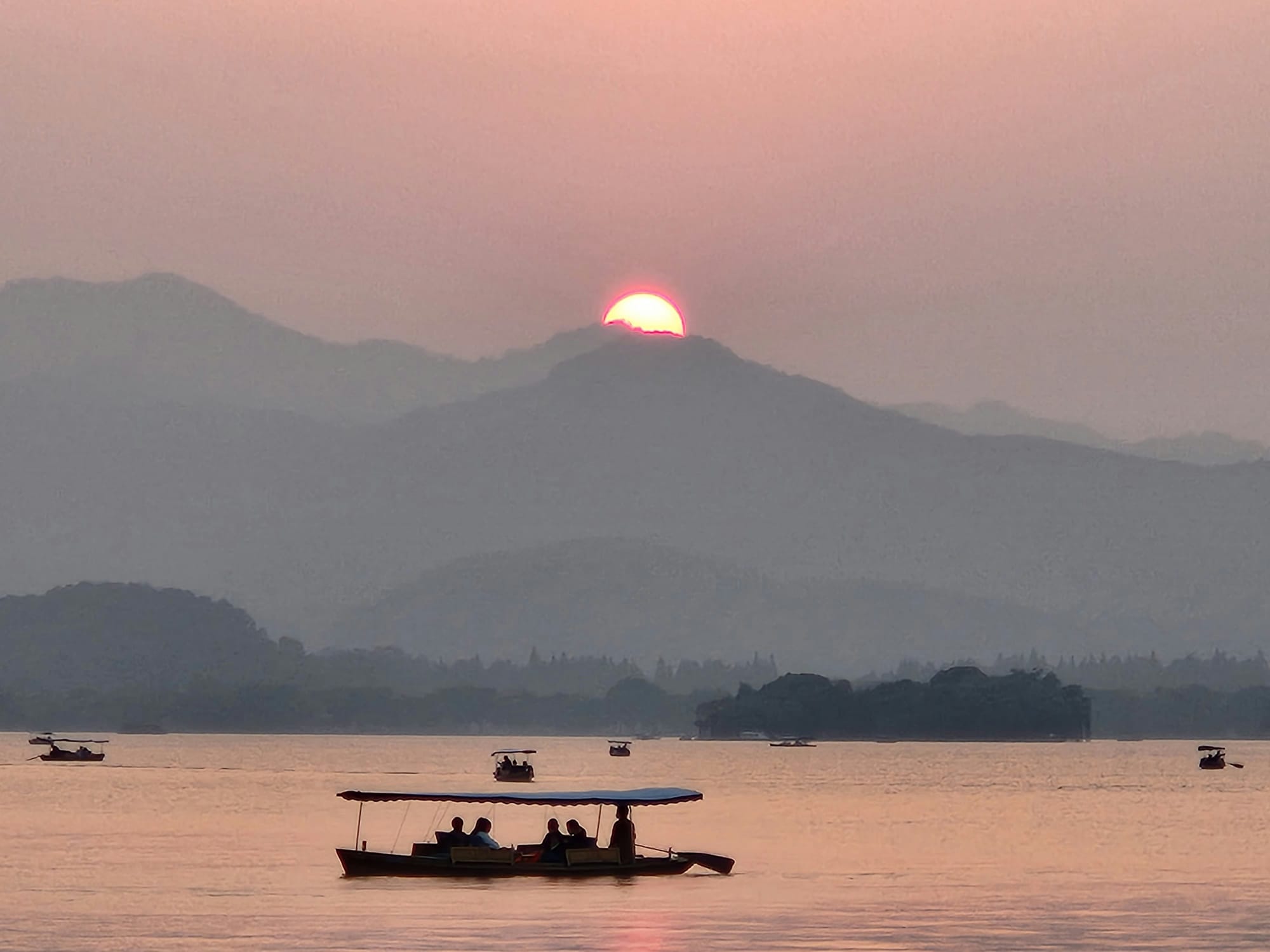
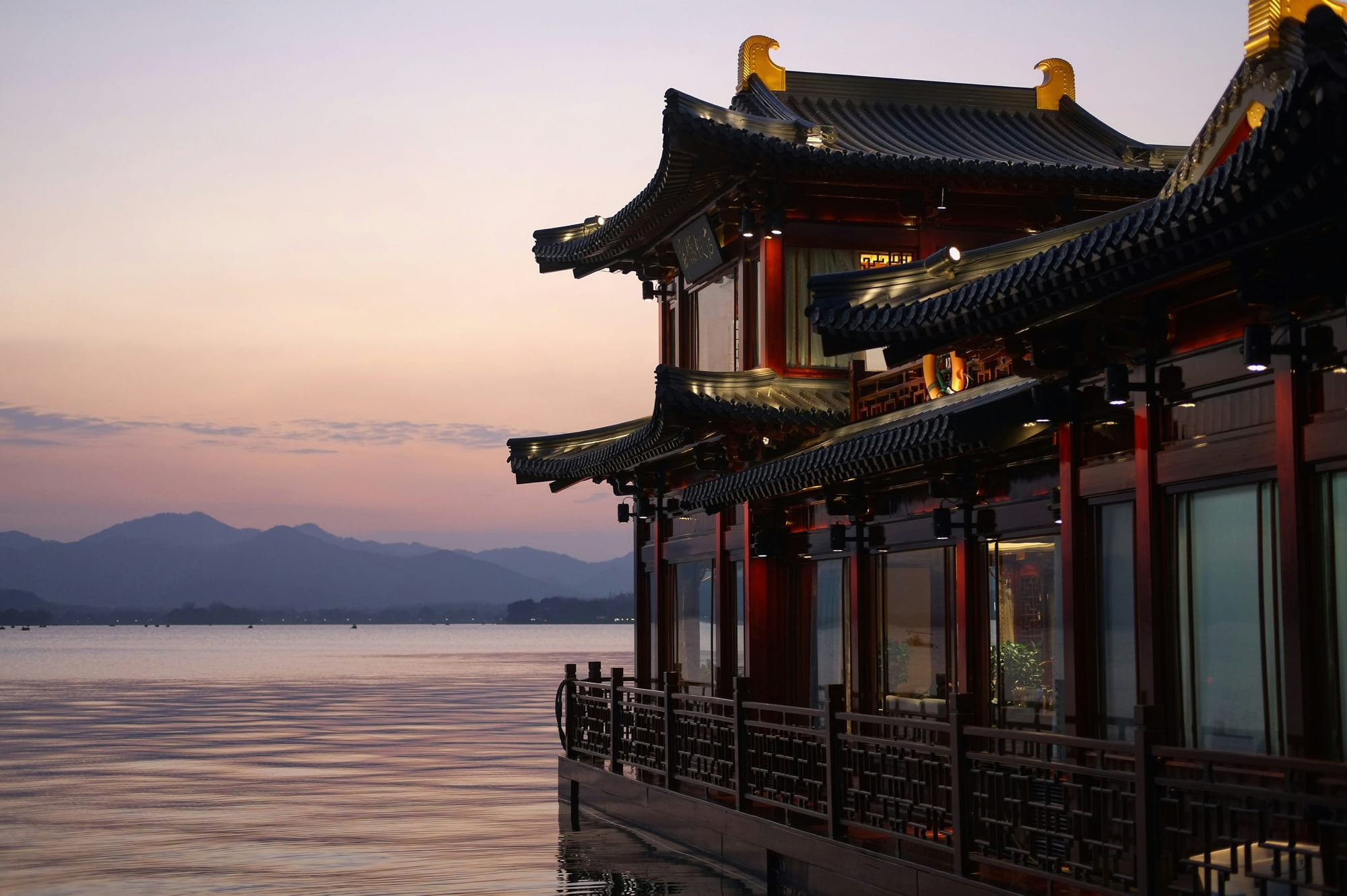
The crucial difference from the electric cart: you can disembark at any stop along the way, but each ticket is valid for one continuous ride on the vessel you boarded. Once you step off, that journey ends — there's no transferring to a later boat on the same ticket.
Other Boat Services
| The Experience | Journey Details |
|---|---|
| Islet Tour 上岛游 (Shàngdǎo Yóu) | Takes you directly to the Three Pools Mirroring the Moon (三潭印月, Sān Tán Yìng Yuè) islet. You can board and disembark at different piers, and islet visit time is unlimited. Priced from ¥55–70. |
| Lake Cruise 环湖游 (Huánhú Yóu) | A continuous, non-stop scenic circle tour of the lake on a large, often luxurious boat. Passengers remain on board without getting off, eventually returning back to the same starting pier. Priced around ¥50. |
| Hand-Rowed Boat 手划船 (Shǒuhuá Chuán) | A private excursion on a small vessel with its own dedicated boatman or boatwoman, rowed entirely in the traditional hand-powered way. Priced around ¥150/hour. |
|
Self-Paddle / Drive Boat
自划船 / 自开船 (Zìhuá / Zìkāi Chuán) |
Smaller recreational boats you paddle or pilot entirely yourself. Options are restricted to select, designated zones. Priced around ¥30/hour (self-paddle) or ¥20-¥30 per half-hour (self-drive electric). |
The Ten Scenic Views Of West Lake 西湖十景
First formalised during the Southern Song dynasty and refined over the centuries, the Ten Scenes of West Lake became the canonical way of experiencing Hangzhou's most celebrated landscape.
Each pairs a specific place with a fleeting moment of season, weather, or light, transforming the lake into a living gallery of Chinese aesthetics.
Many of the viewpoints are surprisingly easy to miss. Arrive knowing where to look and why each scene mattered, and West Lake reveals itself not simply as a beautiful lake, but as one of the most enduring cultural landscapes of Chinese civilisation.
Spring Dawn on the Su Causeway
苏堤春晓 (Sū Dī Chūn Xiǎo)
Spring morning on the Su Causeway
The lake awakening softly after winter
What it is: A long, tree-lined causeway crossing the western side of the lake that defines the "classic West Lake" image. It is an atmospheric landscape of low-hanging mist over the water, weeping willow branches moving gently in the breeze, distant pagodas, and soft birdsong. To see it at its best, you must catch it at dawn when the light filters low through the trees.
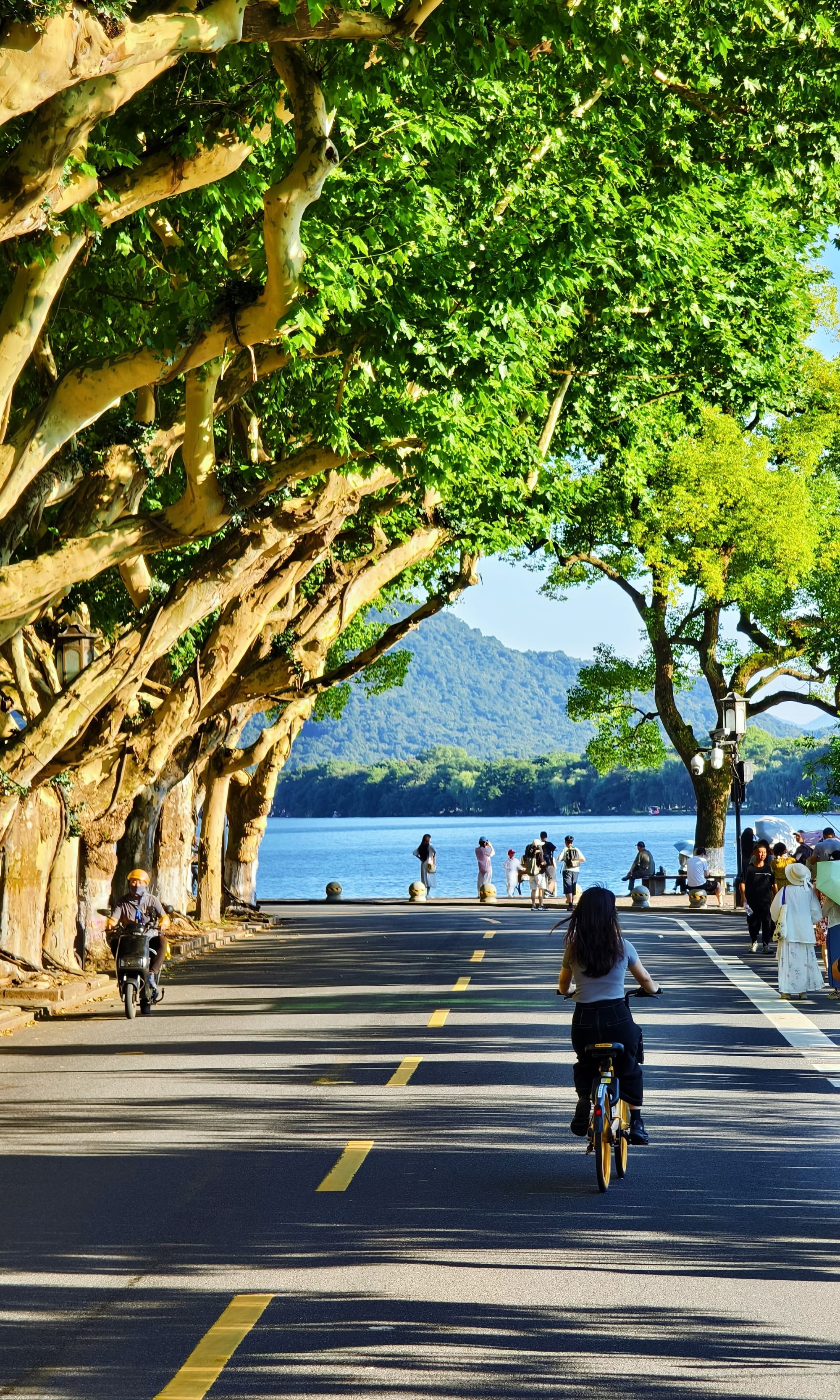
The causeway runs north-south across the western water.
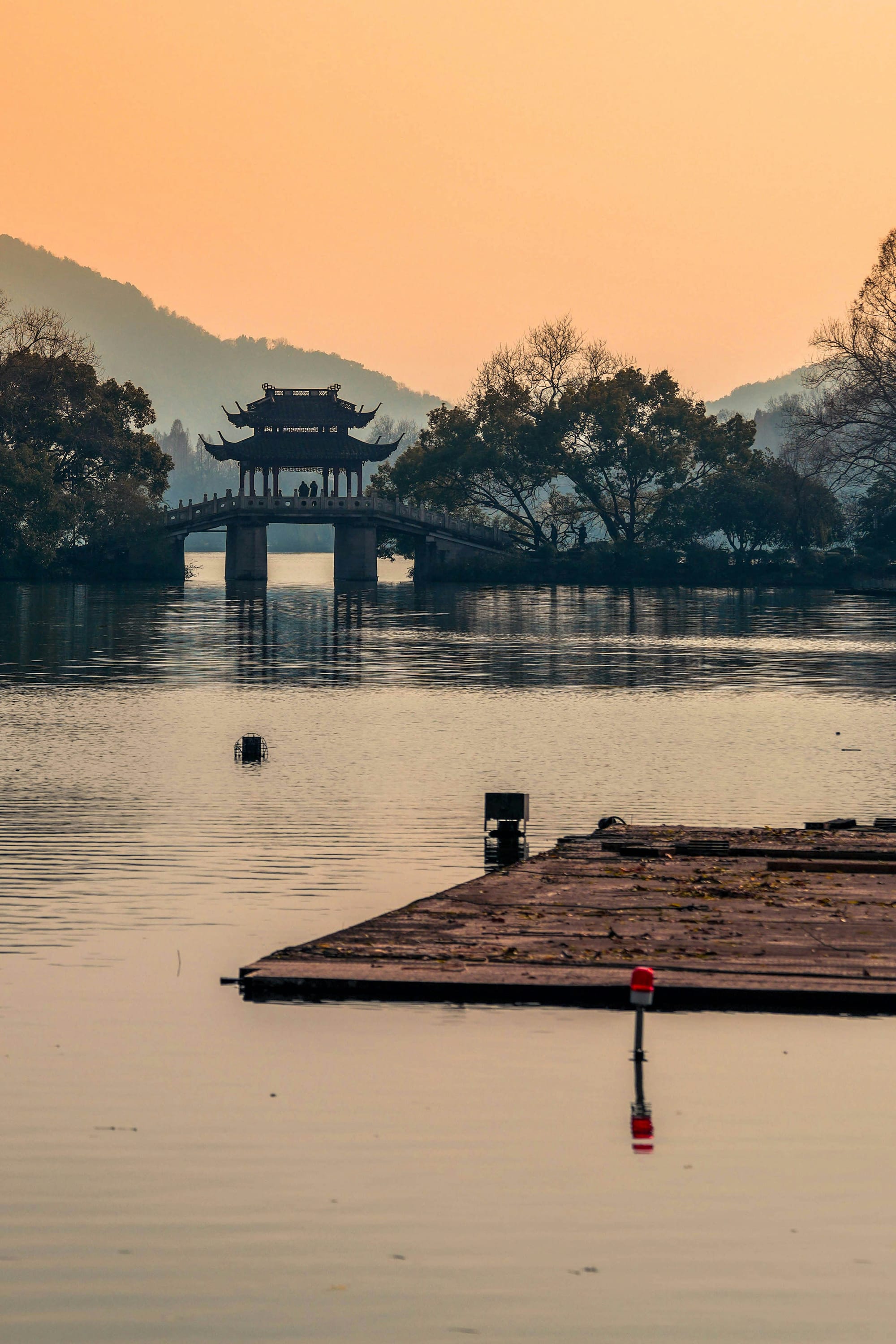
Look for the physical stone tablet inscribed with “苏堤春晓”— it stands at the south end of Yadi Bridge (压堤桥), one of the six bridges spanning the causeway.
Tell a taxi driver to take you to 苏堤 (Su Causeway).
You will know you are in the right place when you are walking along a broad, pedestrian-only stone pathway built over the water with willow trees weeping over both sides.
The best way to experience it is to stroll leisurely on foot or rent a bicycle nearby.
- Early spring (March–April)
- Exact sunrise or very early morning
“请问苏堤春晓怎么走?” (Qǐngwèn Sūdī Chūnxiǎo zěnme zǒu? — "Excuse me, how do I get to Spring Dawn on Su Causeway?")
Breeze-Ruffled Lotus at Quyuan Garden
曲院风荷 (Qū Yuàn Fēng Hé)
Wind in the lotus at Quyuan Garden
Summer breeze moving across lotus blossoms
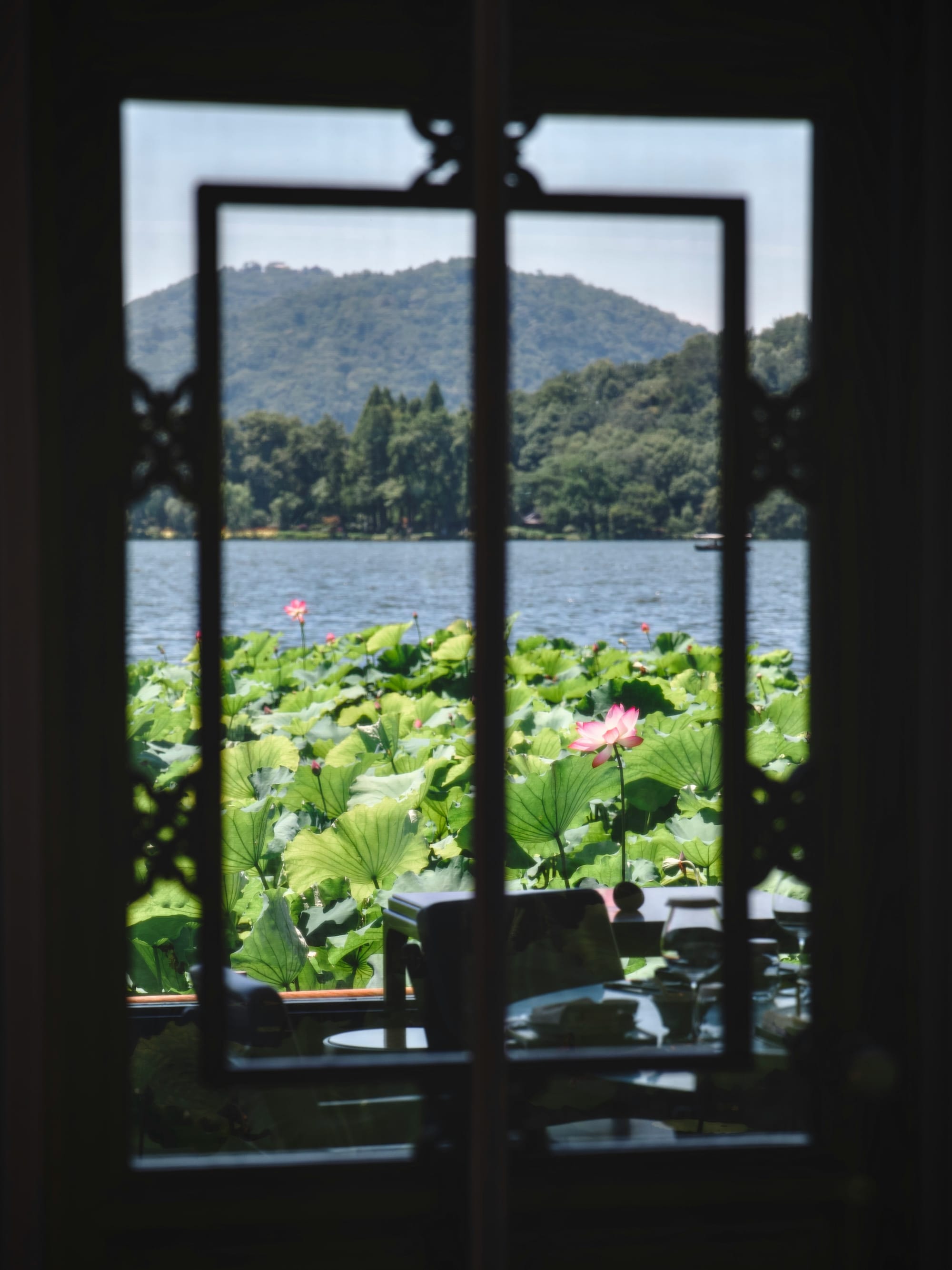
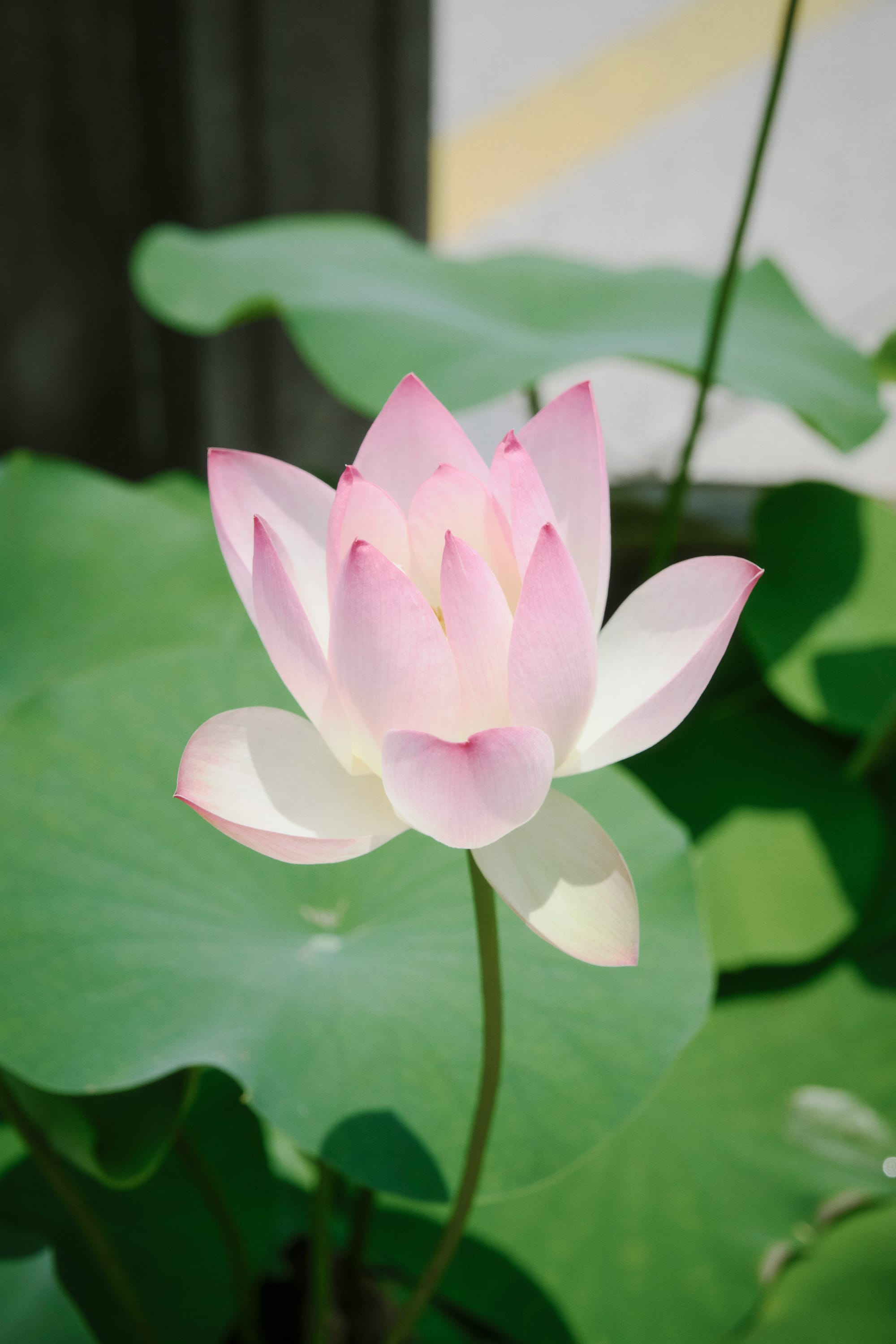
What it is: A stunning aquatic lotus park hugging the lake shore. Originally home to a Southern Song Dynasty government winery, the area is celebrated for the way the crisp summer breeze carries the sweet scent of blooming lotuses alongside the cool moisture of the water. It offers an immensely subtle, elegant landscape experience.
Locate the expansive park grounds at the northwest side of West Lake.
You have found it when you see vast lotus ponds woven together by low-lying wooden walkways and zig-zag boardwalks.
In mid-summer, the heavy fragrance of the blooms will give the location away before the scenery even comes into view.
Direct your taxi driver to 曲院风荷 (Quyuan Fenghe).
The ideal way to experience the garden is to wander slowly along the winding boardwalks built right over the lotus leaves.
- Summer (June–August)
- Early morning or late afternoon
“请问曲院风荷怎么走?” (Qǐngwèn Qūyuàn Fēnghé zěnme zǒu? — "Excuse me, how do I get to Breeze-ruffled Lotus at Quyuan Garden?")
Autumn Moon over the Calm Lake
平湖秋月 (Píng Hú Qiū Yuè)
Autumn moon above a peaceful lake
Moonlight dissolving into still water
What it is: This legendary vantage point on West Lake is famous for celebrating the Mid-Autumn Festival, a traditional Chinese holiday where families gather to appreciate the year's fullest, brightest moon as a symbol of reunion.
The spot owes its name to a brilliant prank by a witty Ming-dynasty scholar. Encountering a group of pretentious poets here, he poked fun at them by writing a four-line description of the gorgeous, moonlit scenery that hid a secret code in plain sight. By reading only the very first character of each line, the words spelled out *Ping-Hu-Qiu-Yue*.
This view celebrates silence, reflection, and moon-gazing culture. At night, the lake becomes entirely mirror-like, and the moon seems suspended perfectly between sky and water.
Use the bustling eastern shore of West Lake as your starting anchor, beginning at Hubin Road (湖滨路)—the main lakeside pedestrian boulevard directly fronting the Grand Hyatt Hangzhou. With the water on your left, walk north along the shore for roughly fifteen minutes until the path leads you onto the Bai Causeway (白堤), a wide pedestrian dyke cutting straight across the lake.
Walk the entire length of this causeway. As you reach the very end of the path, you will hit Solitary Hill (孤山). Pinghu Qiuyue sits immediately to your right at this intersection, directly on the water's edge.
To confirm you have arrived, look for a traditional, open-air pavilion extending over the lake housing a stone stele with characters carved by Emperor Kangxi himself. Alternatively, you can take a taxi directly to 平湖秋月 (Pinghu Qiuyue). Arrive near sunset and stay into the quiet evening.
- Autumn (September–November)
- Clear nights close to a full moon
“请问平湖秋月怎么走?” (Qǐngwèn Pínghú Qiūyuè zěnme zǒu? — "Excuse me, how do I get to Autumn Moon over the Calm Lake?")
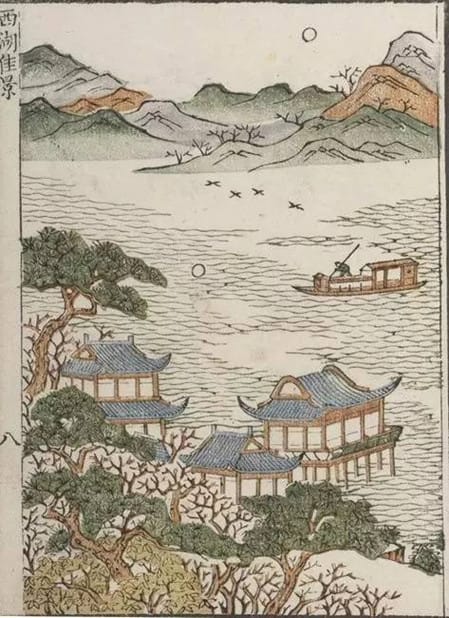
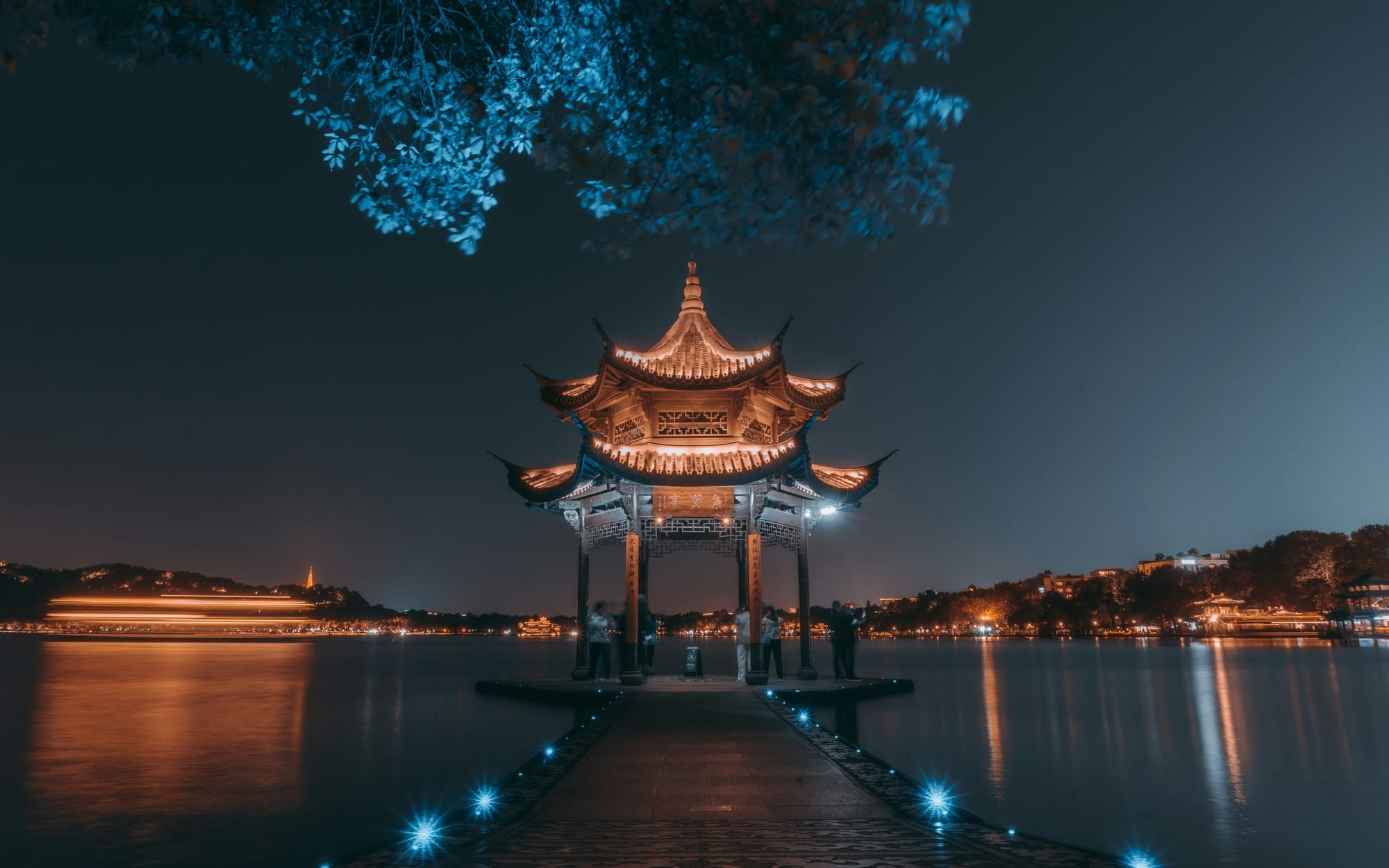
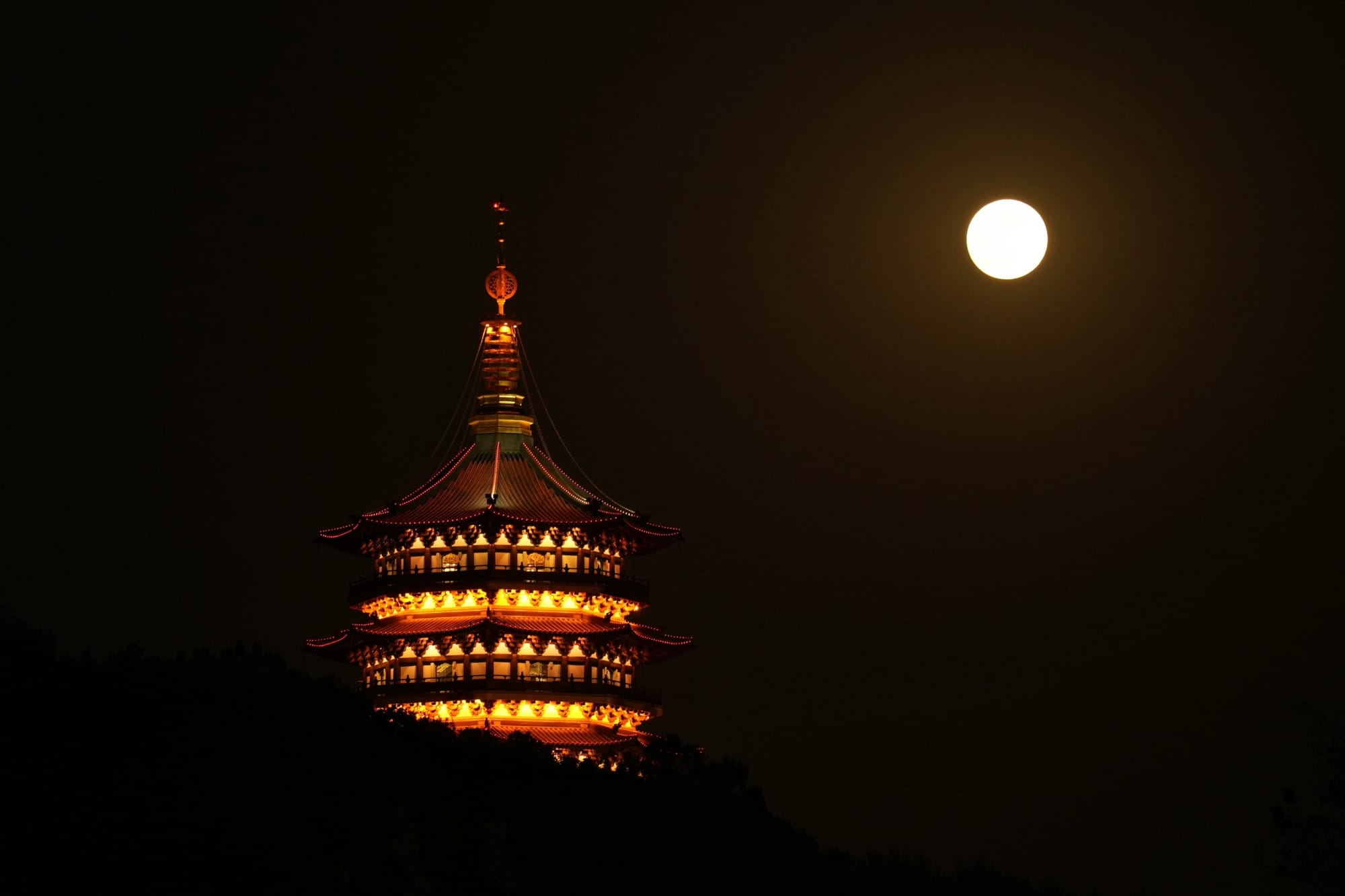
Far left: “Autumn Moon over the Calm Lake” (Pinghu Qiuyue), from Beautiful Scenery of West Lake, 1750. Woodblock print.
Remnant Snow on the Broken Bridge
断桥残雪 (Duàn Qiáo Cán Xuě)
Remaining snow on Broken Bridge
Snow half-melted, half-remembered
What it is: Situated at the eastern gateway of the Bai Causeway, this stone arch is celebrated for a fleeting winter illusion: as the midday sun melts the snow on its exposed ridge, the bridge appears visually severed against the still water.
In folklore, this is the stage for *The Legend of the White Snake* (白蛇传), China’s epic of forbidden, enduring romance. It was on these stones, beneath a shared paper umbrella, that the immortal snake-turned-woman first met her mortal lover. For the discerning traveler, the physical architecture is merely a backdrop; the real destination is the cultural memory of a thousand-year-old love story that still defines the romantic imagination of the landscape. Walk slowly across it, ideally on a morning with light fog or snow.
The Broken Bridge is where Hangzhou's urban grid meets West Lake. Located at the northeastern corner of the water—at the direct junction of Beishan Road (北山街) and Hubin Road (湖滨路)—the stone arch forms the unmistakable eastern gateway to the Bai Causeway (白堤).
You cannot miss it. At the foot of the bridge, a grand pavilion houses the imperial stone stele carved with Emperor Kangxi’s calligraphy (断桥残雪), confirming you are standing at the exact nexus of the winter view and the myth.
- Winter (December–February)
- Early morning immediately after a snowfall
“请问断桥怎么走?” (Qǐngwèn Duànqiáo zěnme zǒu? — "Excuse me, how do I get to the Broken Bridge?")
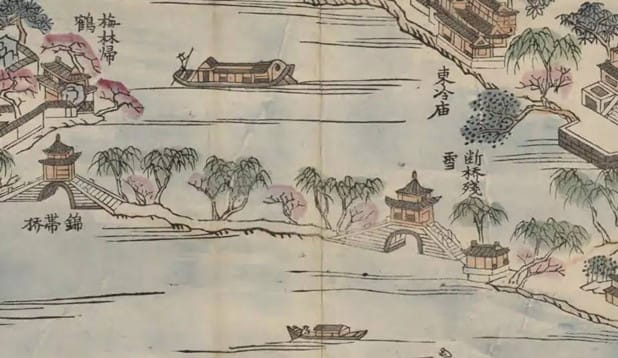
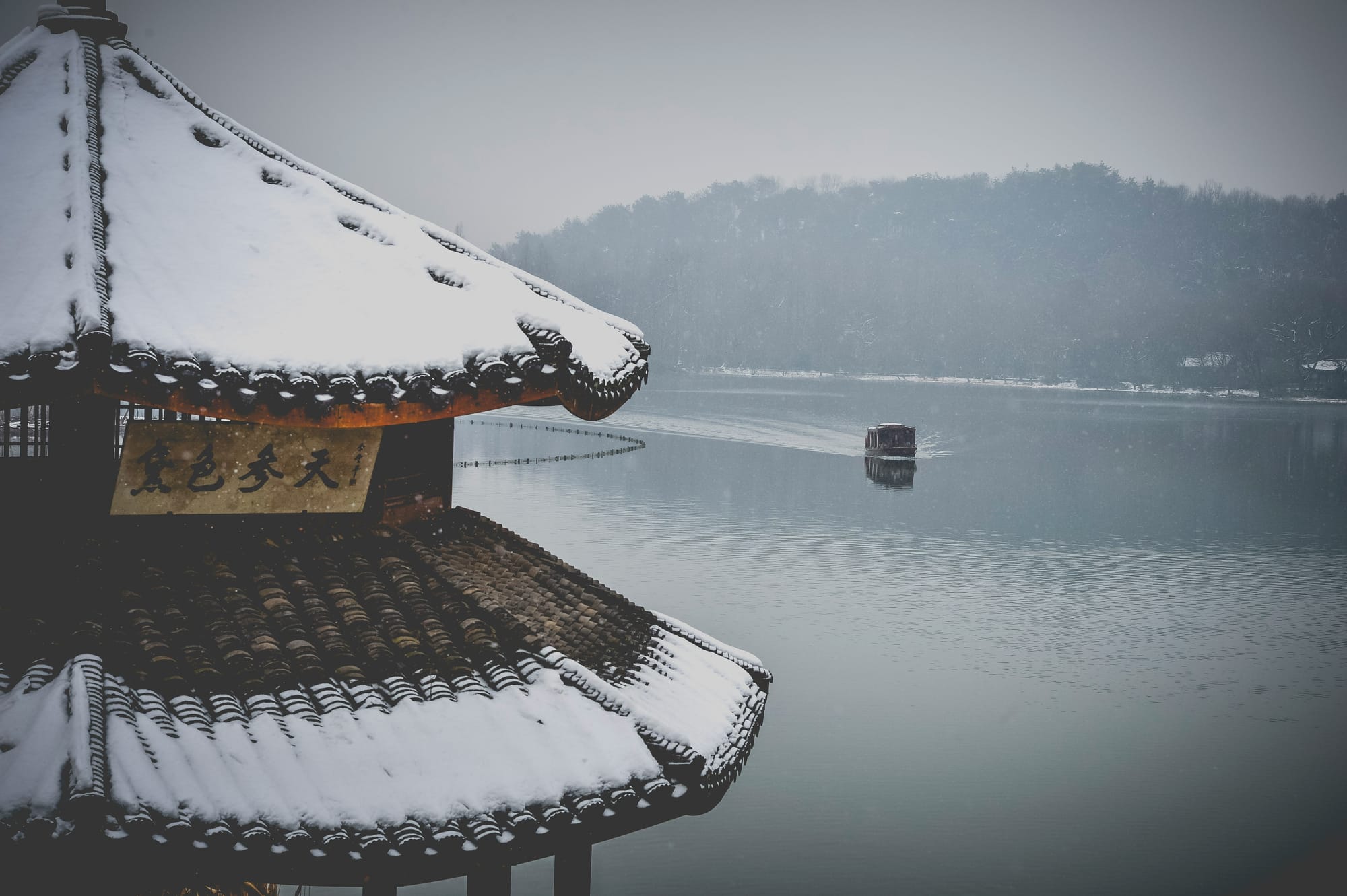
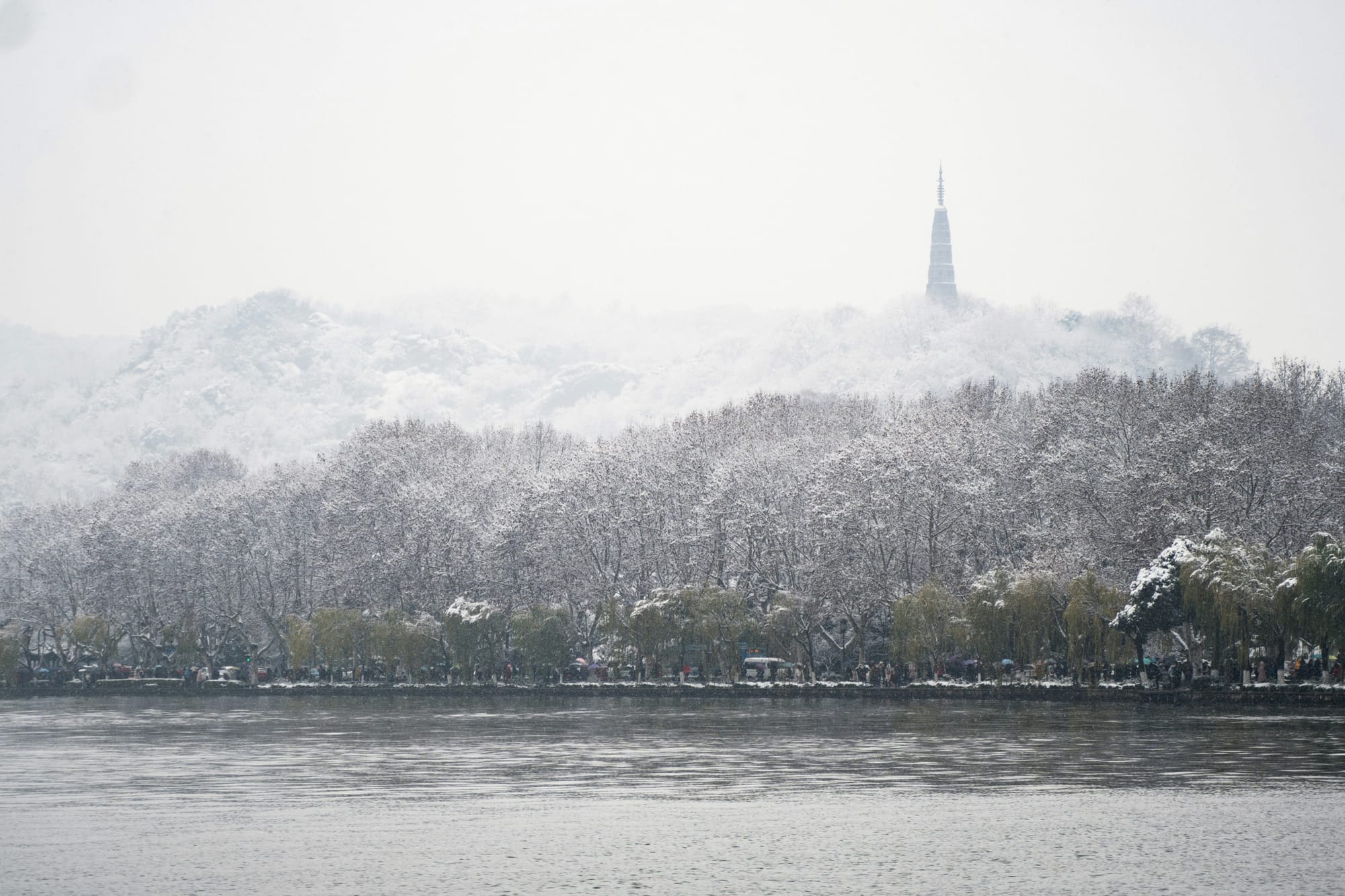
Far left: "Remnant Snow on the Broken Bridge" (Duanqiao Canxue) and Jindai Bridge, from Beautiful Scenery of West Lake, 1750. Woodblock print.
Orioles Singing in the Willows
柳浪闻莺 (Liǔ Làng Wén Yīng)
Hearing orioles among willow waves
Birds singing through flowing willow branches
What it is: This scene perfectly encapsulates classical Chinese garden aesthetics: movement, sound, softness, and the sheer vitality of spring.
Originally an Imperial court garden, this vast lakeside park is home to thousands of willow trees, including weeping, silver, and lion-tail varieties. When the spring breeze rolls off the lake, the cascading green canopy sways in unison, creating the visual illusion of rolling emerald waves. Hidden deep within this rustling green layer are flocks of wild orioles whose bright, melodic songs slice beautifully through the wind.
Located along Nanshan Road (南山路) on the southeastern shore of the lake, the park sits directly opposite the creative campus of the China Academy of Art.
The entry path is marked by a prominent park gateway. Once inside, you can confirm your arrival by locating the imperial stone stele housed in a traditional open-air pavilion, bearing Emperor Kangxi’s brushed calligraphy: 柳浪闻莺.
- Spring (Mid-March–Late April)
- Early morning (06:00–08:00) for unadulterated bird song
“请问柳浪闻莺怎么走?” (Qǐngwèn Liǔlàng Wényīng zěnme zǒu? — "Excuse me, how do I get to Orioles Singing in the Willows?")
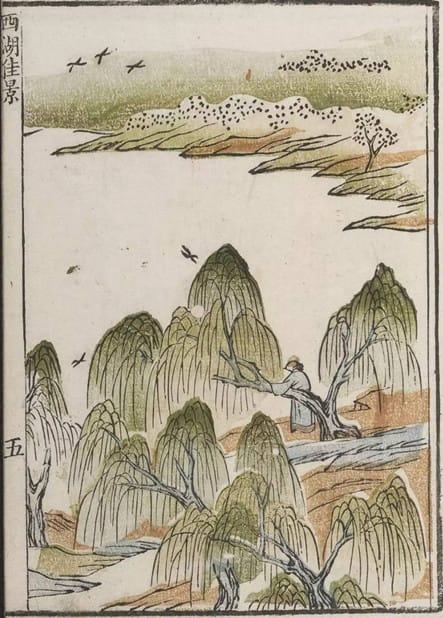
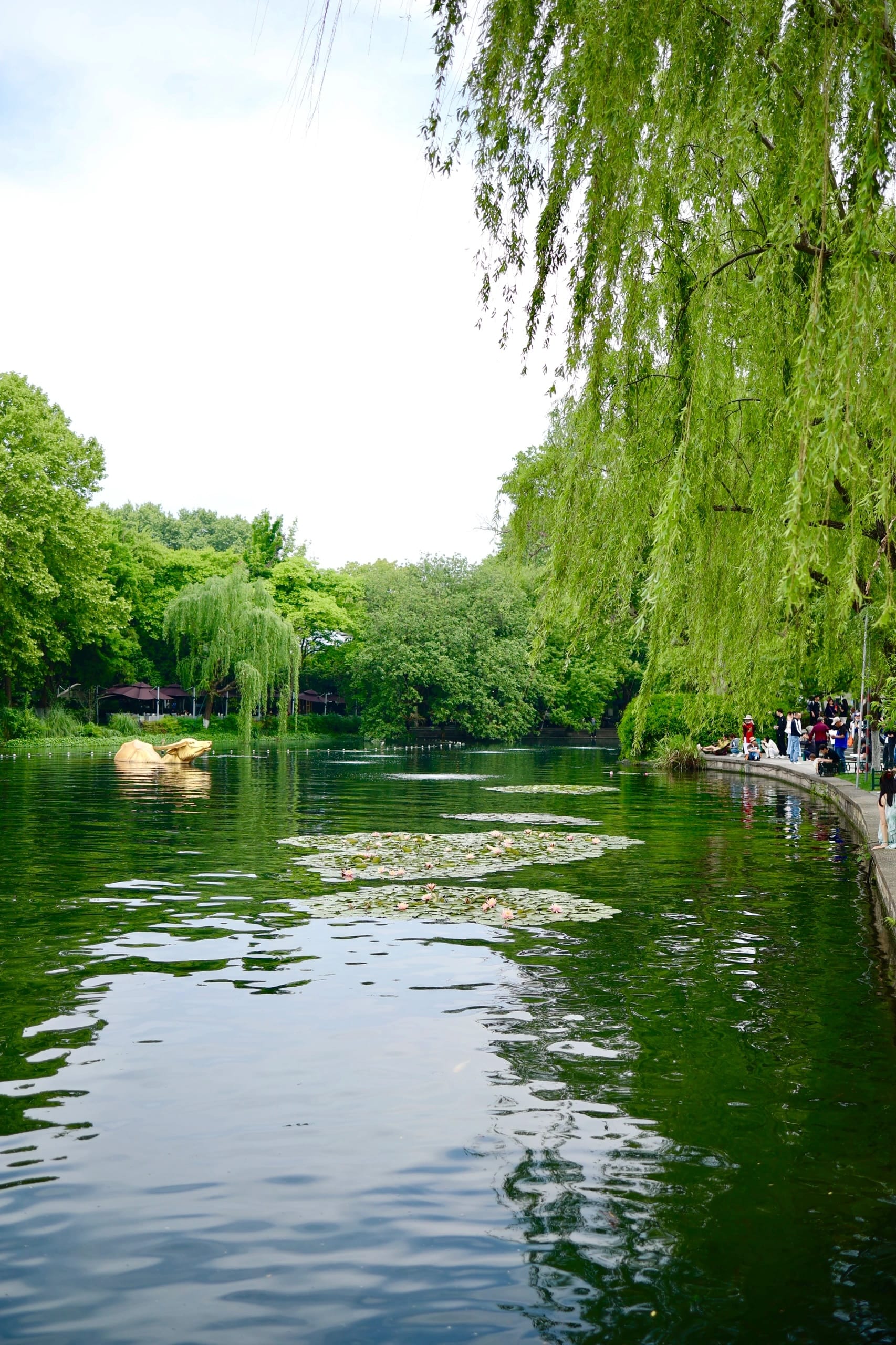
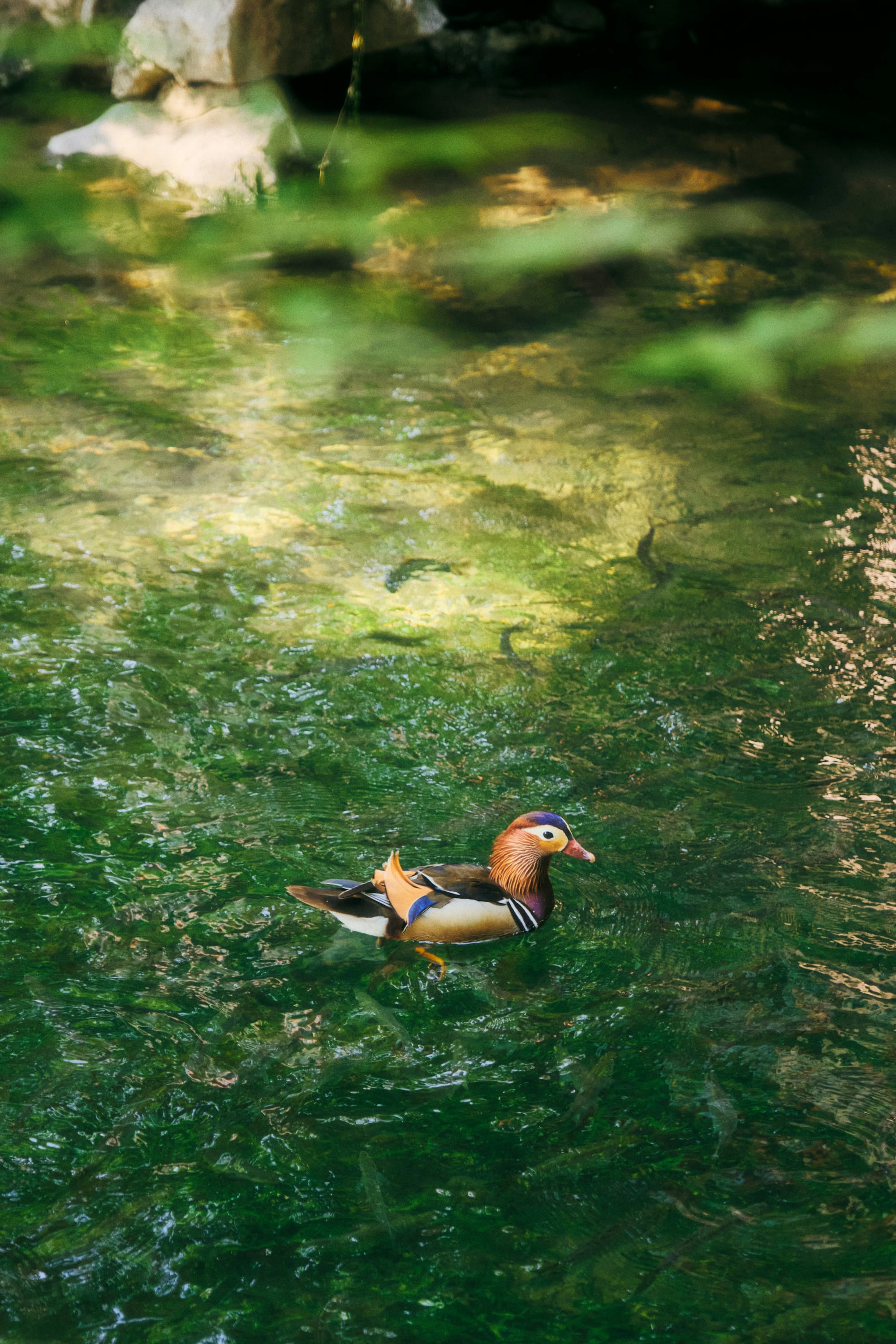
Far left: "Orioles Singing in The Willows" (Liu Lang Wen Ying) and Jindai Bridge, from Beautiful Scenery of West Lake, 1750. Woodblock print
Viewing Fish at Flower Harbor
花港观鱼 (Huā Gǎng Guān Yú)
Watching fish at Flower Harbor
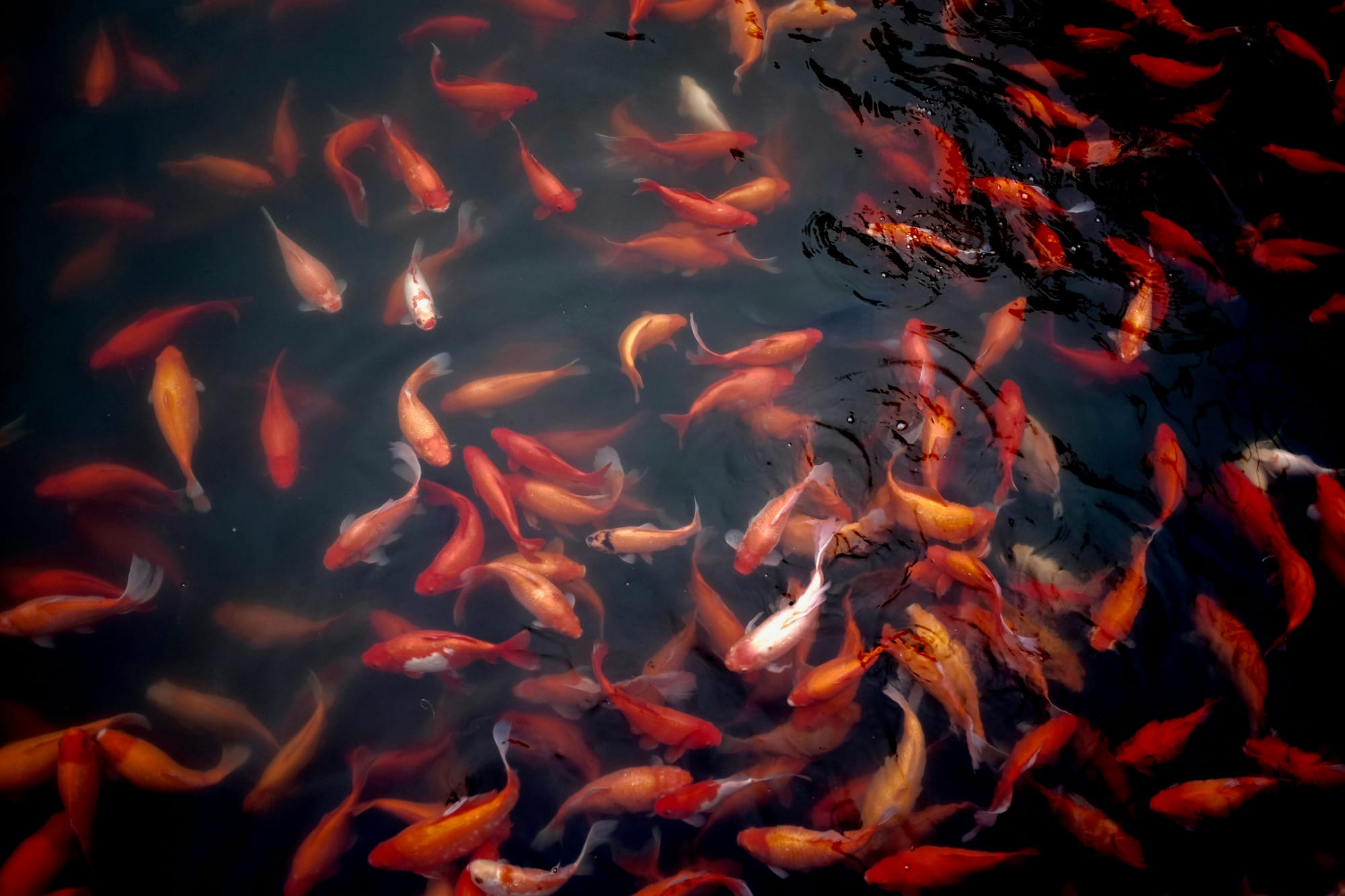
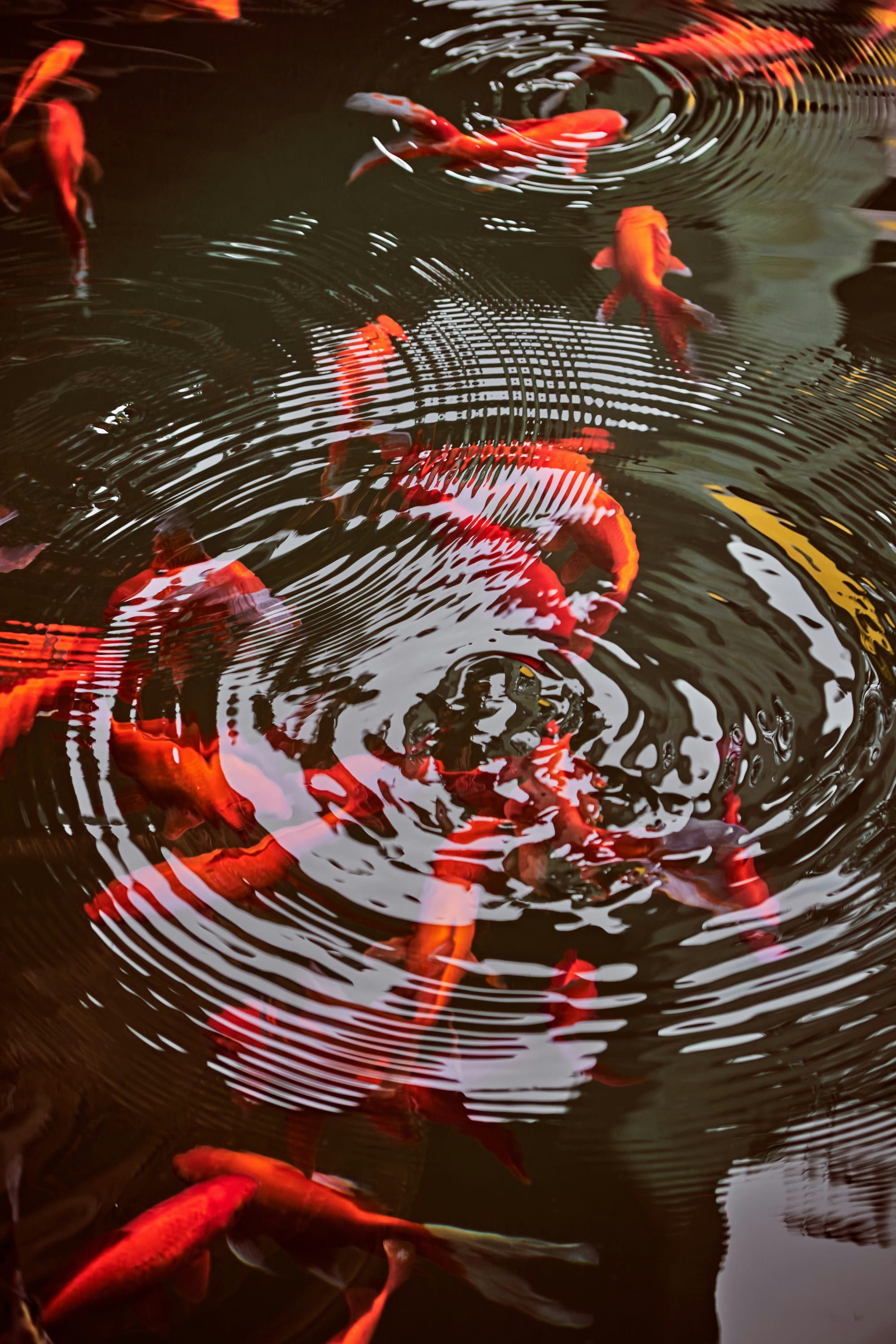
Petals falling into the stream, surrounded by darting red carp
What it is: Originally founded as a sprawling private garden during the Southern Song Dynasty, this scenic park is famous for its vibrant peony groves and an interconnected network of freshwater streams.
The undisputed crown jewel of the grounds is the Red Carp Pond (红鱼池). Visitors from all over the world come here to step across low-set stone footbridges and watch thousands of dense, brilliantly coloured koi fish assemble at the water's edge the very instant a footprint approaches.
The park sits squarely at the southern terminal end of the Su Causeway (苏堤), neatly sandwiched between the main expanse of West Lake and the smaller Inner West Lake.
Pedestrians walking directly off the Su Causeway will find the East Gate to be the most direct point of entry, while those arriving via taxi can head to the South Gate on Nanshan Road. If you are hiring a private car or driver, use the West Gate on Yanggong Di (杨公堤) where dedicated vehicle parking is available.
Once inside the gates, follow the pathway signs toward the Red Carp Pond. Look over the water for the traditional open pavilion housing the historic stone stele carved with Emperor Kangxi’s imperial brush strokes: 花港观鱼.
- Spring (April–May)
- Mid-morning, when the peonies are open and dropping petals into the water
“请问花港观鱼怎么走?” (Qǐngwèn Huāgǎng Guānyú zěnme zǒu? — "Excuse me, how do I get to Flower Harbor?")
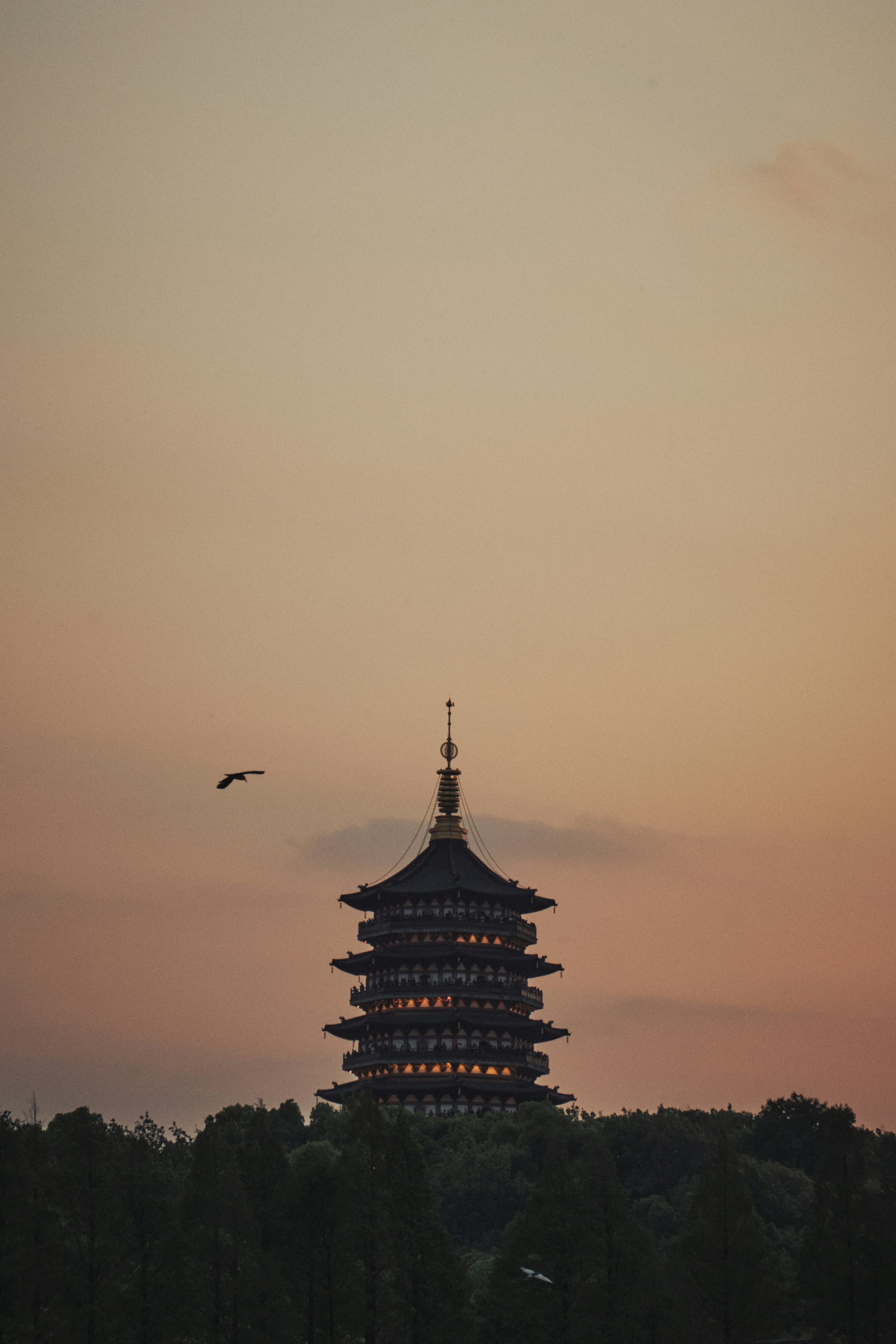
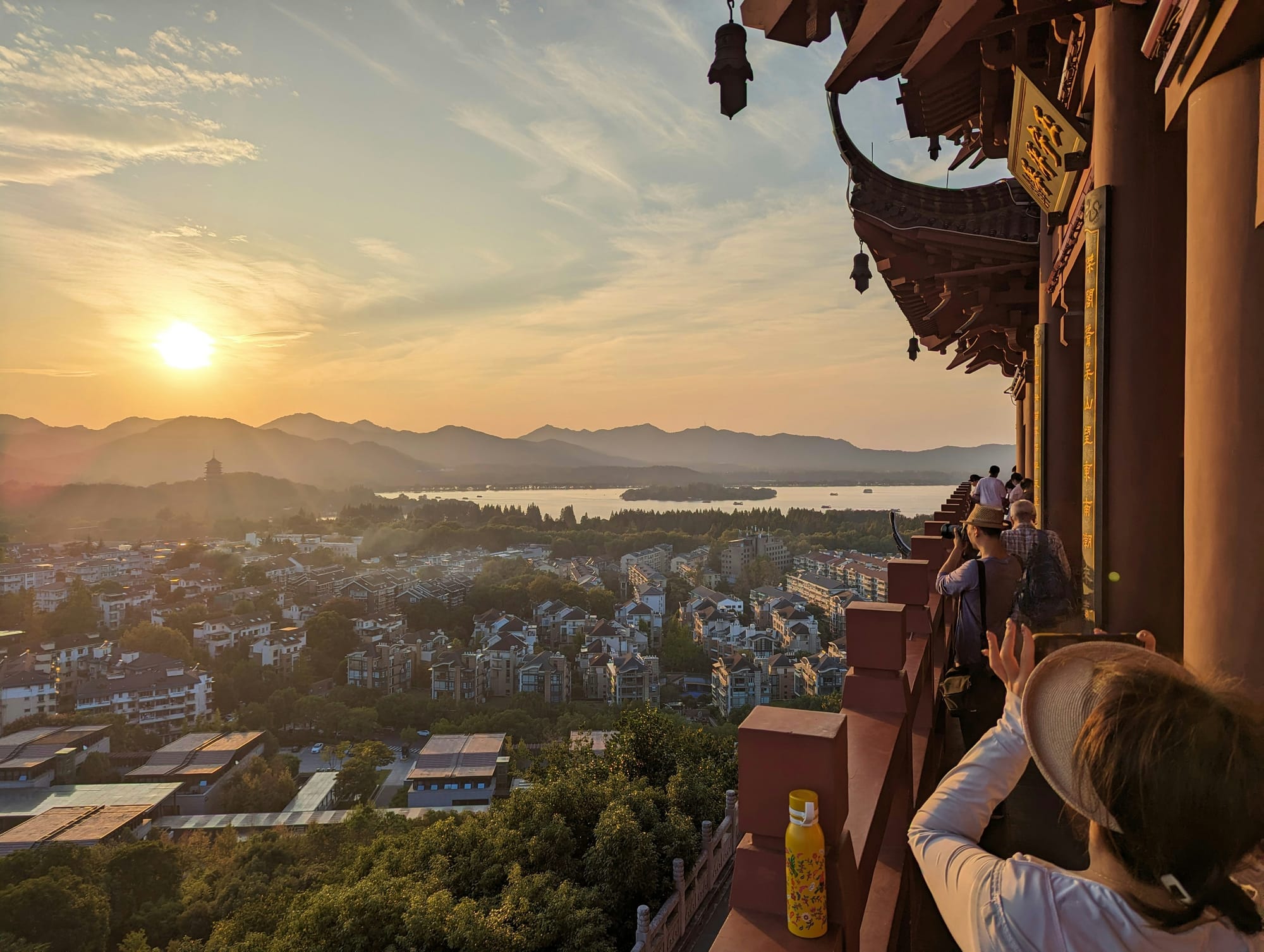
Leifeng Pagoda in the Evening Glow
雷峰夕照 (Léi Fēng Xī Zhào)
Sunset glow on Leifeng Pagoda
Bronze ridges catching the last crimson light
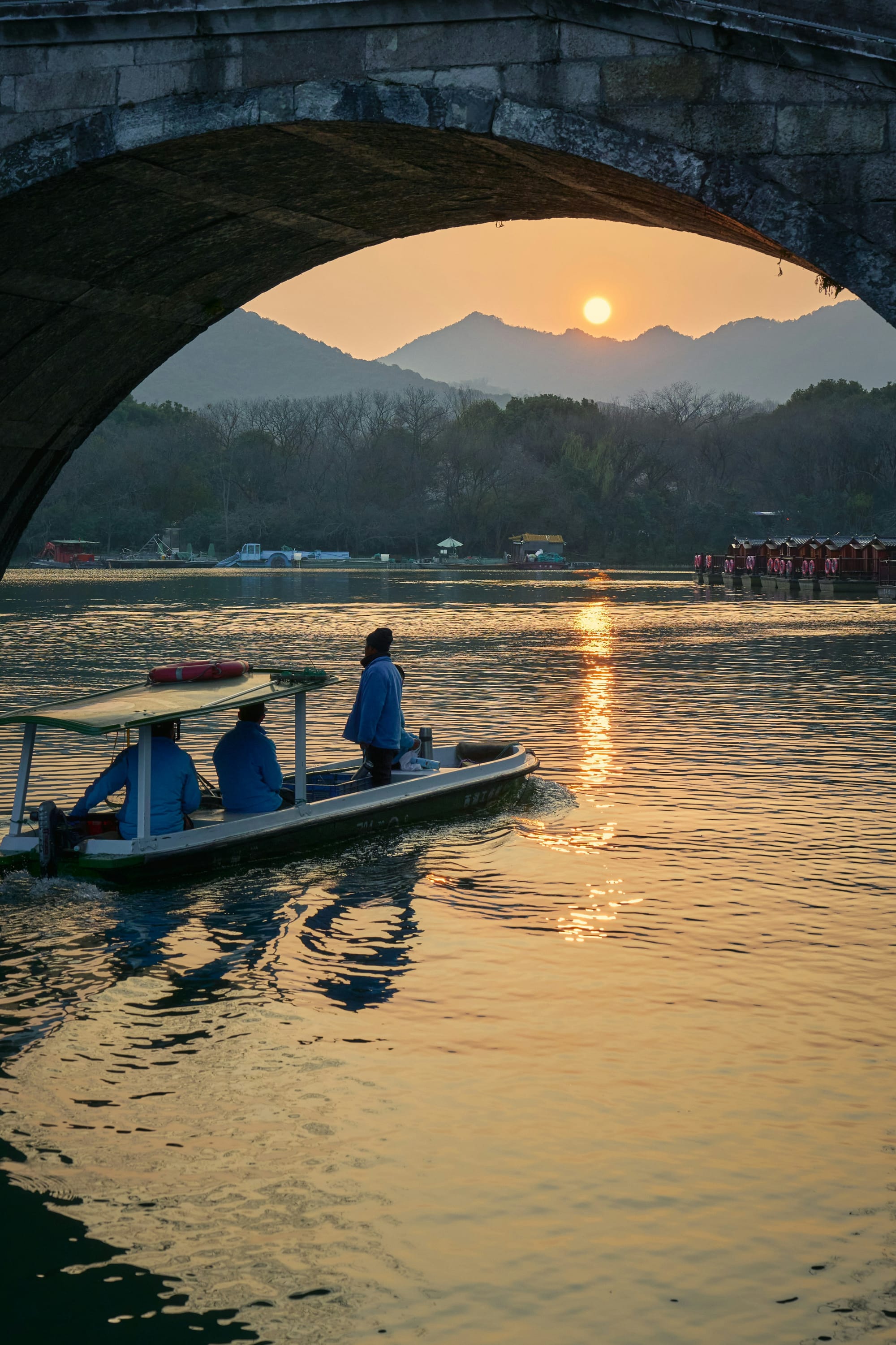
What it is: Originally constructed in 977 AD, this landmark is celebrated for a striking optical phenomenon that occurs when the setting sun hits the pagoda's metal lines, casting a deep, shimmering crimson glow across the water. In Chinese folklore, the pagoda’s underground vaults serve as the eternal, tragic prison for the mythical Madame White Snake.
Though the original ancient brick tower dramatically collapsed in 1924, it was magnificently rebuilt in 2002 as a modern copper-clad structure with a built-in elevator. Take the lift directly to the top observation deck to look north across the vast lake layout just as the sun dips below the mountains.
The monument stands proudly on Sunset Hill right along Nanshan Road (南山路). It sits directly across the street from the grand entrance of Jingci Temple (净慈寺). Tell your driver to head to 雷峰塔 (Leifeng Pagoda), enter the street-side ticket gates, and purchase admission (RMB 40, concessions apply). From there, a central hillside escalator takes you directly up to the base of the tower.
Pro Tip for Photographers: To capture the pagoda cleanly from the outside rather than standing on it, walk slightly east to Changqiao Park (长桥公园). It is completely free to enter and offers the premier vantage point for framing the architectural silhouette reflecting perfectly into the lake against the sunset.
- Autumn (September–November)
- 30 minutes prior to local sunset
“请问雷峰塔怎么走?” (Qǐngwèn Léifēngtǎ zěnme zǒu? — "Excuse me, how do I get to Leifeng Pagoda?")
Twin Peaks Piercing the Clouds
双峰插云 (Shuāng Fēng Chā Yún)
Twin peaks piercing the clouds
A landscape concept preserved across centuries
What it is: Originating in the Southern Song Dynasty, this scene features the dramatic view of South Peak (南高峰) and North Peak (北高峰)—two mountain summits flanking the western side of West Lake, separated by about 5 kilometers.
Historically, the focus of this view was not the peaks themselves, but the two grand pagodas that once crowned their summits. When heavy fog and low clouds filled the valley, these structures appeared to pierce right through the mist. Today, the pagodas are gone—the North Peak pagoda was ruined by 1652, and the South Peak pagoda was struck by lightning during the Ming Dynasty. Though only the archaeological foundations remain, the "Twin Peaks" lives on as a powerful landscape philosophy, with the natural peaks continuing to anchor the horizon.
Despite the missing pagodas, the historic viewing location remains unchanged. Head northwest of the lake to the intersection of Lingyin Road (灵隐路) and Hongchun Bridge (洪春桥).
To confirm you are at the exact spot established by royalty, look for the open-air stone pavilion off the side of the road. Inside stands an imperial stele bearing Emperor Kangxi’s 1699 calligraphy for 双峰插云 (the current monument is a faithful replica re-erected in 1980 based on the original).
- Spring or Early Summer (April–June)
- Early morning or immediately following a heavy rain shower
“请问双峰插云观景台怎么走?” (Qǐngwèn Shuāngfēng Chāyún guānjǐngtái zěnme zǒu? — "Excuse me, how do I get to the Twin Peaks Piercing the Clouds viewing deck?")
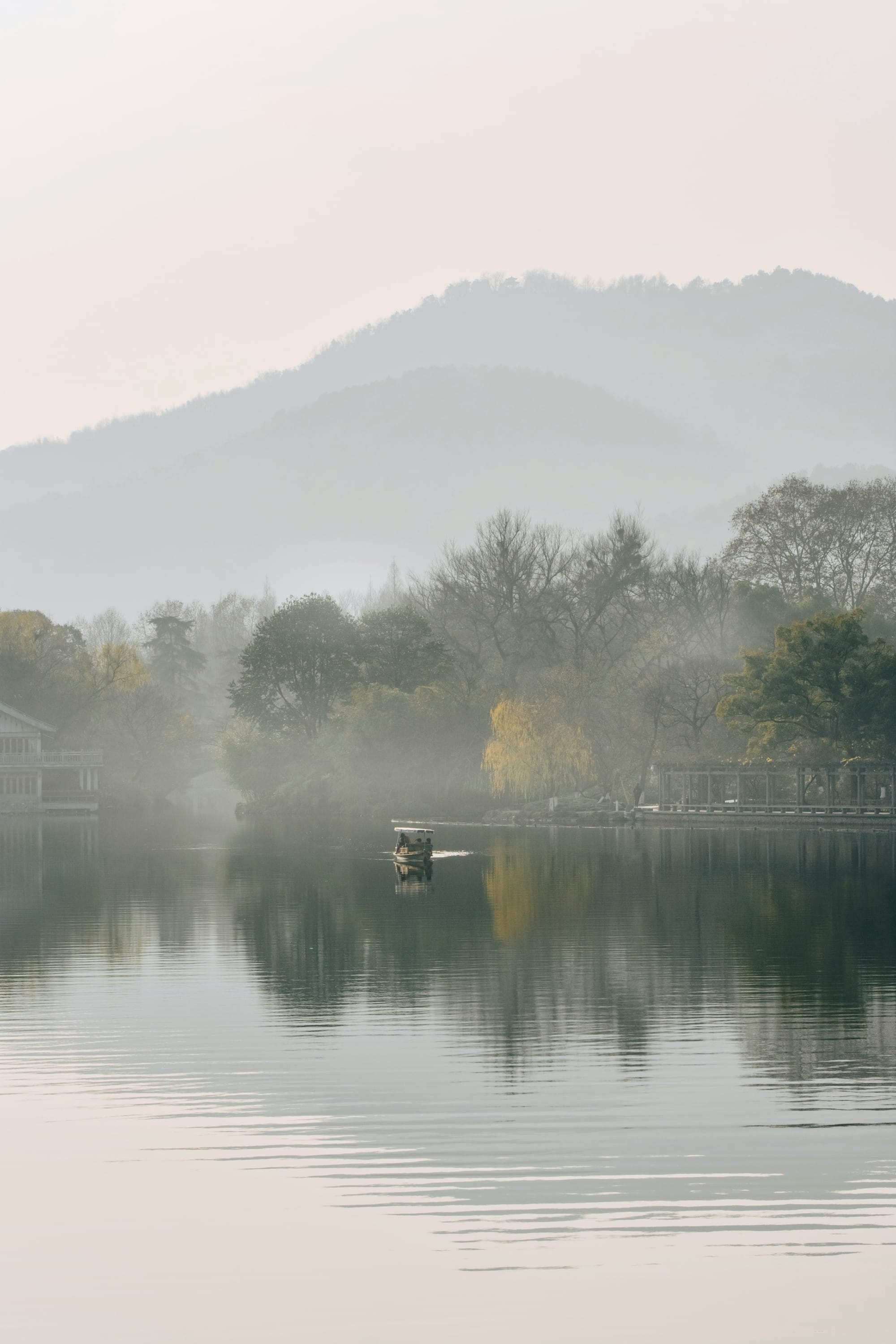
Evening Bell at Nanping Hill
南屏晚钟 (Nán Píng Wǎn Zhōng)
Nanping Hill Evening Bell
Deep resonance signaling the transition to night
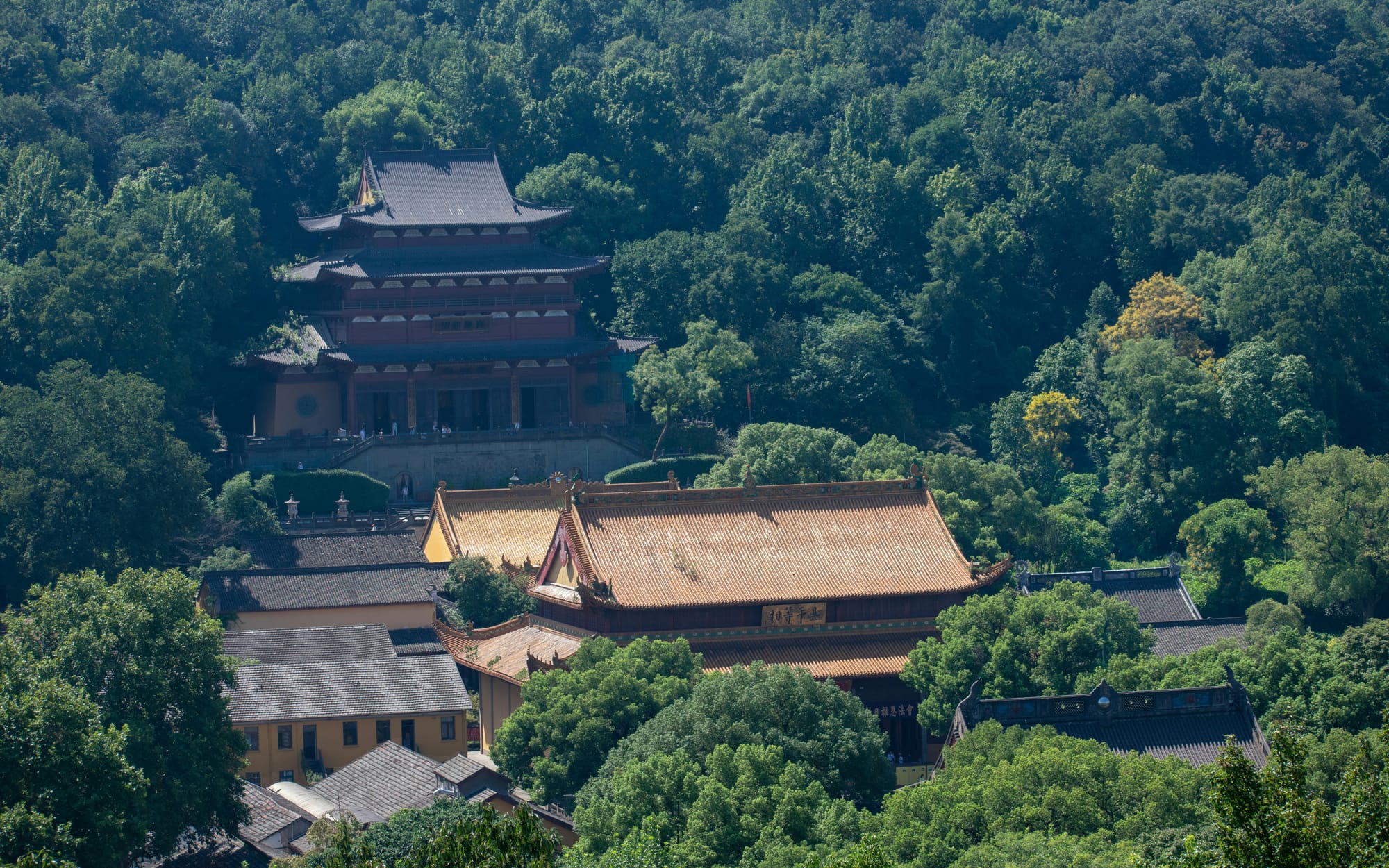
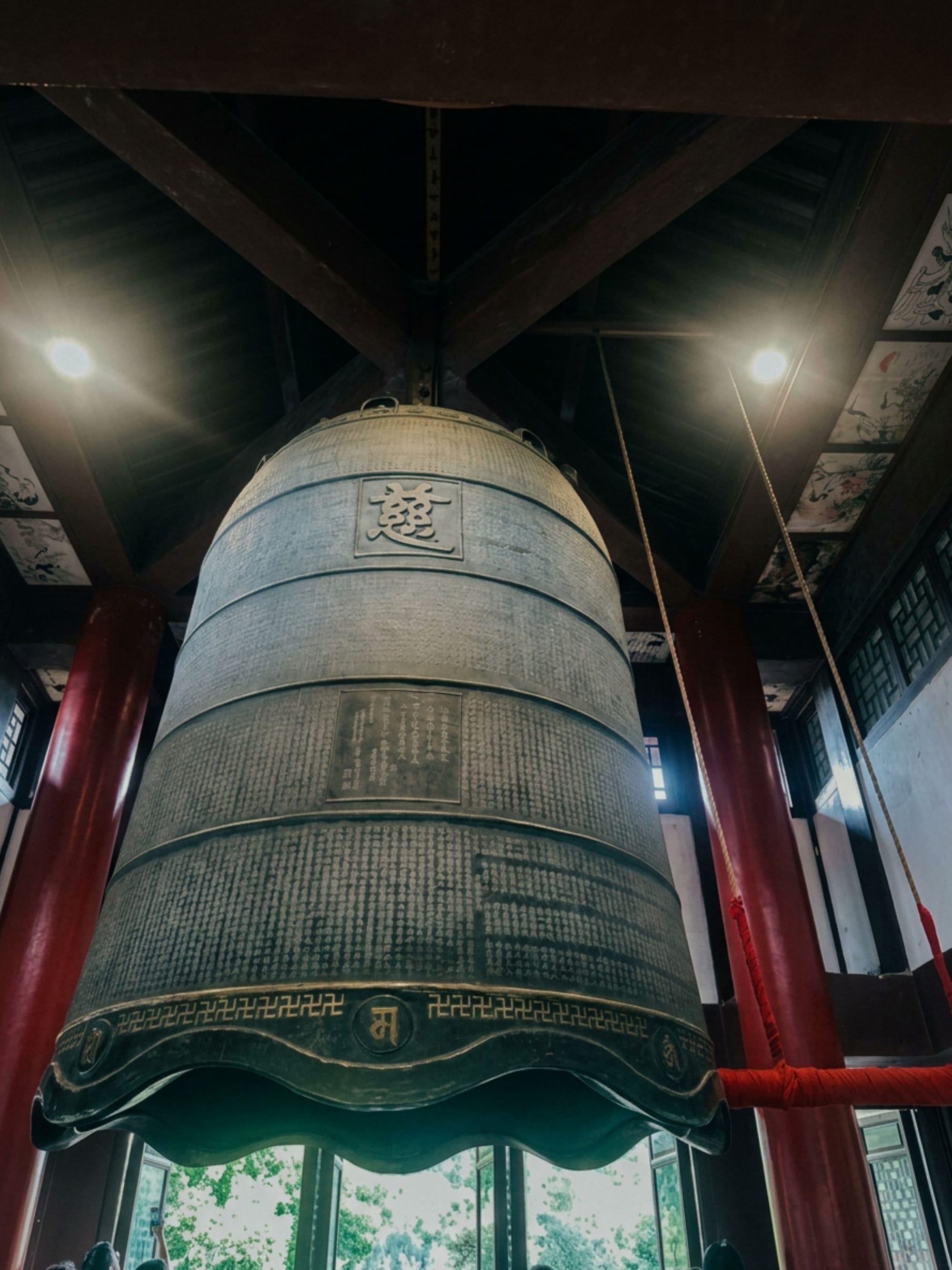
What it is: Located on the southern shore of West Lake inside the historic grounds of Jingci Temple (净慈寺), this scene is an entirely sensory, acoustic landscape experience. The steep hill standing directly behind the temple acts as a massive natural amplifier, reflecting and echoing the deep toll of the temple's 10-ton bronze bell across the entire lake basin to induce a state of profound spiritual calm.
During the daytime, visitors can step inside the courtyard to watch the monks ring the bell, or pay a small fee (RMB 10) to strike it themselves for good fortune (note that last public admittance to ring the bell is at 3:30 PM). As dusk falls, you can choose to stand quietly inside the bell tower courtyard or listen to the music drift softly across the open water from afar.
Jingci Temple sits directly along Nanshan Road (南山路56号), positioned directly opposite the main entrance facing Leifeng Pagoda. Outside the temple's primary gateway, you will find a stone pavilion sheltering the imperial stele carved with Emperor Kangxi's signature calligraphy: 南屏晚钟.
Purchase your ground entry ticket at the front gate (RMB 10, which thoughtfully includes complimentary incense sticks). Walk through the introductory hall straight into the main open courtyard; the historic, multi-tiered Bell Tower (Zhonglou) will be situated immediately on your right.
- Season: Beautiful year-round
- Time: Evening dusk, specifically at 20:00 daily to hear the monks strike the giant bell 108 times
“请问净慈寺怎么走?” (Qǐngwèn Jìngcísì zěnme zǒu? — "Excuse me, how do I get to Jingci Temple?")
Three Pools Mirroring the Moon
三潭印月 (Sān Tán Yìn Yuè)
Three pools reflecting the moon
Moonlight multiplied across still water
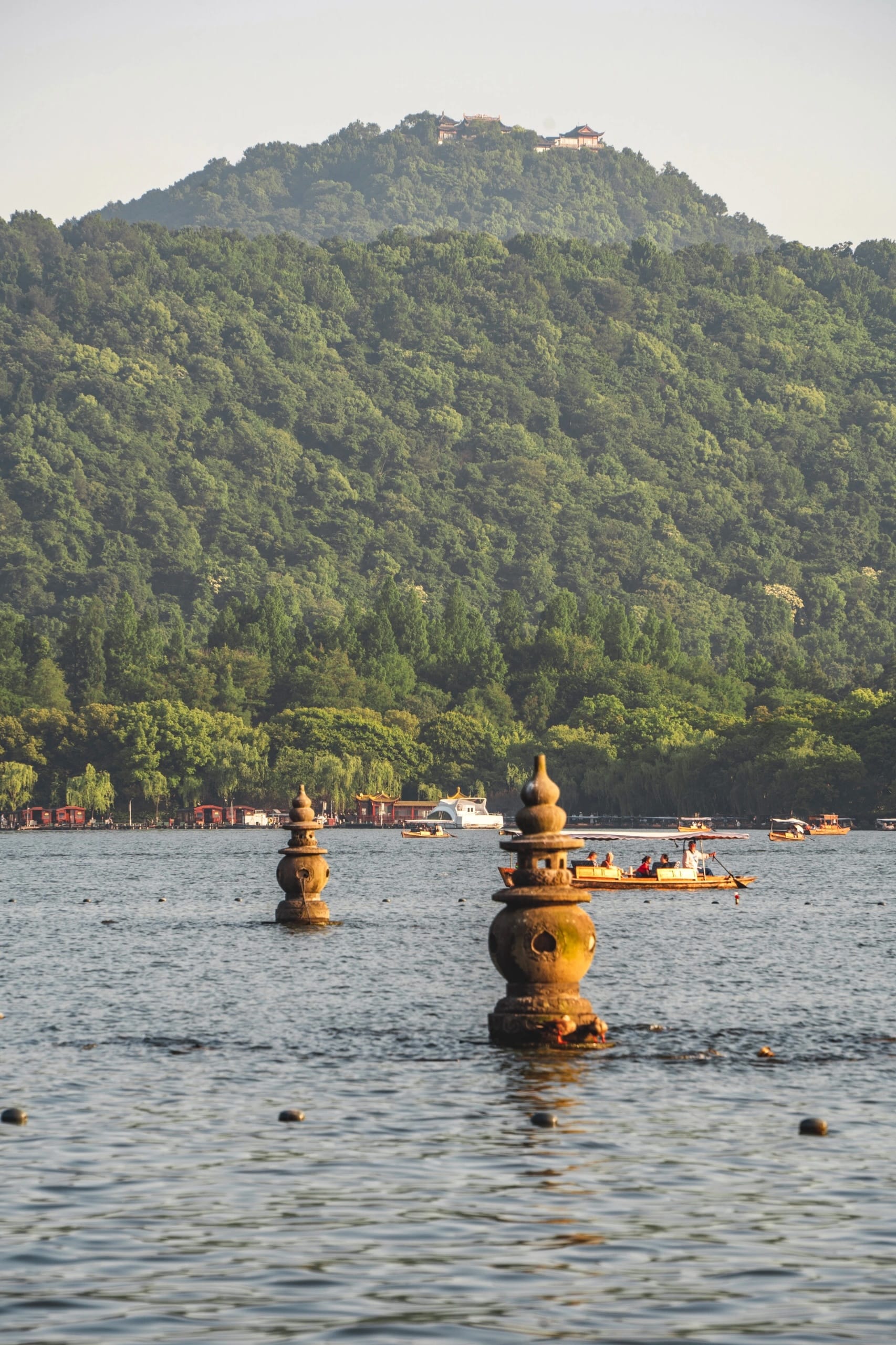
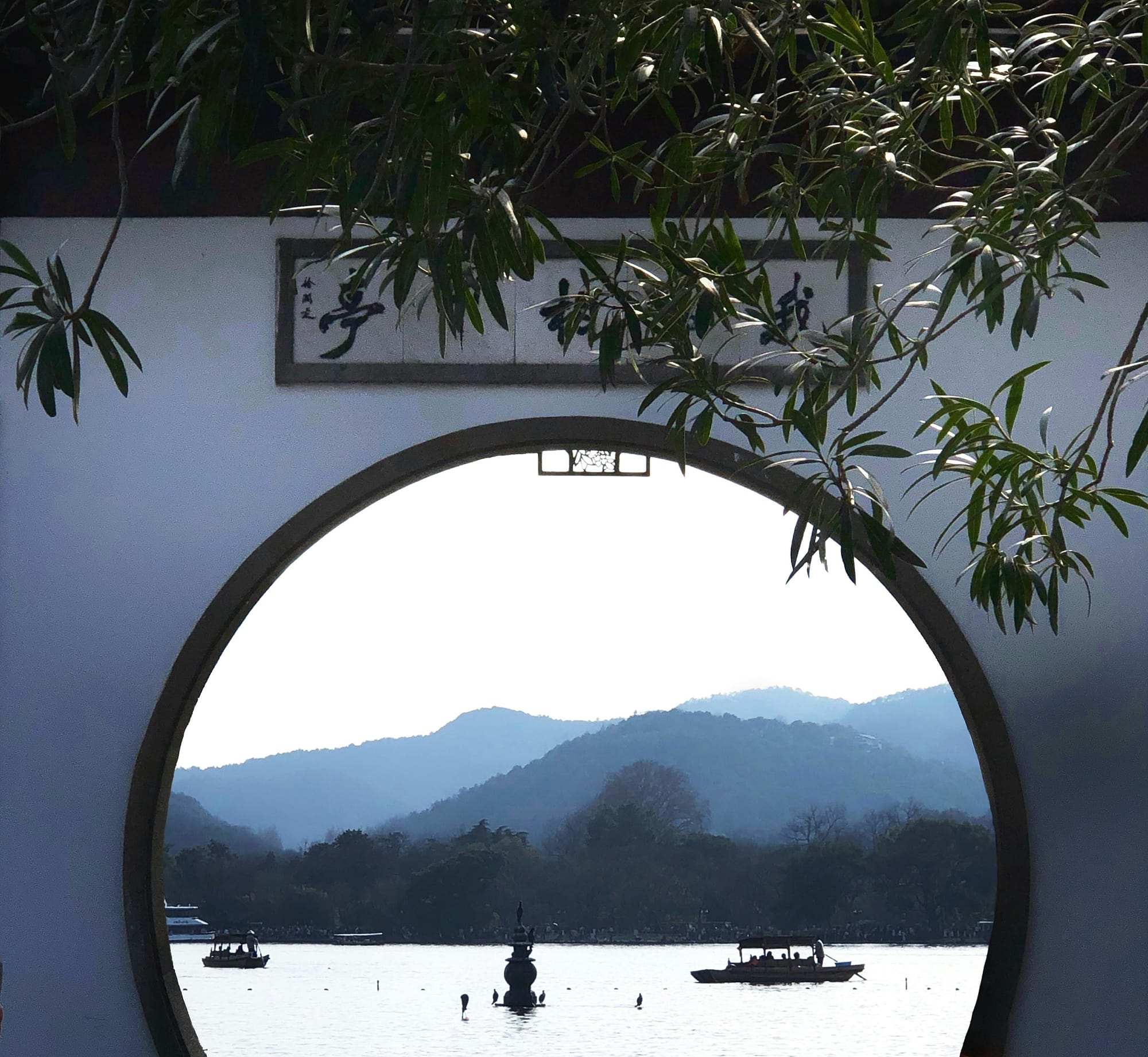
What it is: The three stone pagodas rising directly from the lake's southern shallows are immortalized on the reverse of China's one-yuan coin—making this, quite literally, the most widely circulated view in the country.
This iconic landmark actually began as an ancient engineering project. When the Song Dynasty poet-governor Su Dongpo dredged the lake in 1090, he anchored three water markers here to prevent local farmers from planting silt-inducing water caltrops. While those original boundary posts faded over time, the beautiful, hollow spherical pagodas you see today were re-established on those exact spots during the Ming Dynasty (1621).
Each pagoda is engineered with five circular openings. On the night of the Mid-Autumn Festival, thin paper is pasted over the holes and candles are lit within. The candlelight dances through the fifteen glowing apertures onto the dark water, mingling with the natural reflection of the full moon to create an unforgettable optical tapestry.
The pagodas stand just off the shores of Little Yingzhou Island (小瀛洲), which is accessible entirely by boat. Ferry boats depart continuously from several prominent piers around West Lake. The most practical options are Hubin Pier (湖滨码头) on the bustling eastern city shore, or Yue Miao Pier (岳庙码头) near the northern hills.
Purchasing a standard lake cruise ticket (approximately RMB 55–70, which includes round-trip boat transit and island admission) grants you access to walk the island's paths and view the triad of monuments at close range.
- Mid-Autumn Festival for the traditional candle-lighting look via special night cruise
- Summer nights, when the island and structural elements are fully illuminated
“请问去三潭印月的游船在哪坐?” (Qǐngwèn qù Sāntányìnyuè de yóuchuán zài nǎ zuò? — "Excuse me, where do I board the cruise boat to Three Pools Mirroring the Moon?")
Food & Drink Recommendations
While the West Lake area is geographically vast, its culinary identity orbits a single elegant idea: that dining here is as much about the view as it is about the food. For centuries, the best tables around the lake have offered not just dishes, but a sense of place — a philosophy sometimes described as "eating the landscape." The term itself may be informal, but the sentiment is unmistakable: a lakeside meal, in the right light, becomes part of the scenery itself.
1. The Iconic Lunch: West Lake Vinegar Fish (西湖醋鱼 — Xīhú cùyú)
To taste the definitive flavor of the lake, head to a traditional waterfront restaurant along the Solitary Hill (Gūshān) peninsula or the Nanshan Road shoreline. A masterpiece of clean, imperial-era seafood cookery, this dish is a true test of a chef's skill.
Taste and Texture: Traditionally made with freshwater fish, it's poached to a delicate texture where the meat barely flakes from the bone. It's then draped in a sleek, translucent glaze made from local black vinegar, ginger, and sugar. The result is a sharp, balanced sweet-and-sour contrast that highlights—rather than masks—the natural sweetness of the fish.
Insider Tip: Try it at high-end local institutions like Lou Wai Lou (楼外楼) on Solitary Hill or Zhi Wei Guan's Weizhuang (知味观·味庄) by Yanggong Causeway (杨公堤). The best restaurants keep their fish in clean, fresh-water tanks for a couple of days before cooking to remove any muddy river taste.
2. The Mid-Afternoon Ritual: Lotus Root Starch & Osmanthus Sweet Soup (西湖藕粉 — Xīhú ǒufěn)
As you walk the shaded dikes, you will spot historic tea kiosks and eateries around the lake. This classic Hangzhou snack, made from starch extracted from lotus roots grown in the region’s fertile riverlands, serves as the ultimate light refreshment for a long stroll.
The Ritual: Watch the vendor prepare it: they place a fine, chalky pink powder into a bowl, add a splash of cold water to dissolve it, and then instantly splash it with roaring, boiling water while stirring furiously.
The mixture magically transforms into a thick, beautiful, translucent amber jelly. It is topped with a sprinkle of crushed walnuts, dried cranberries, and a drizzle of fragrant, golden sweet osmanthus syrup (桂花酱). The texture is incredibly silky and soothing, while the floral scent of the osmanthus perfectly mirrors the natural aromas drifting off the lake.
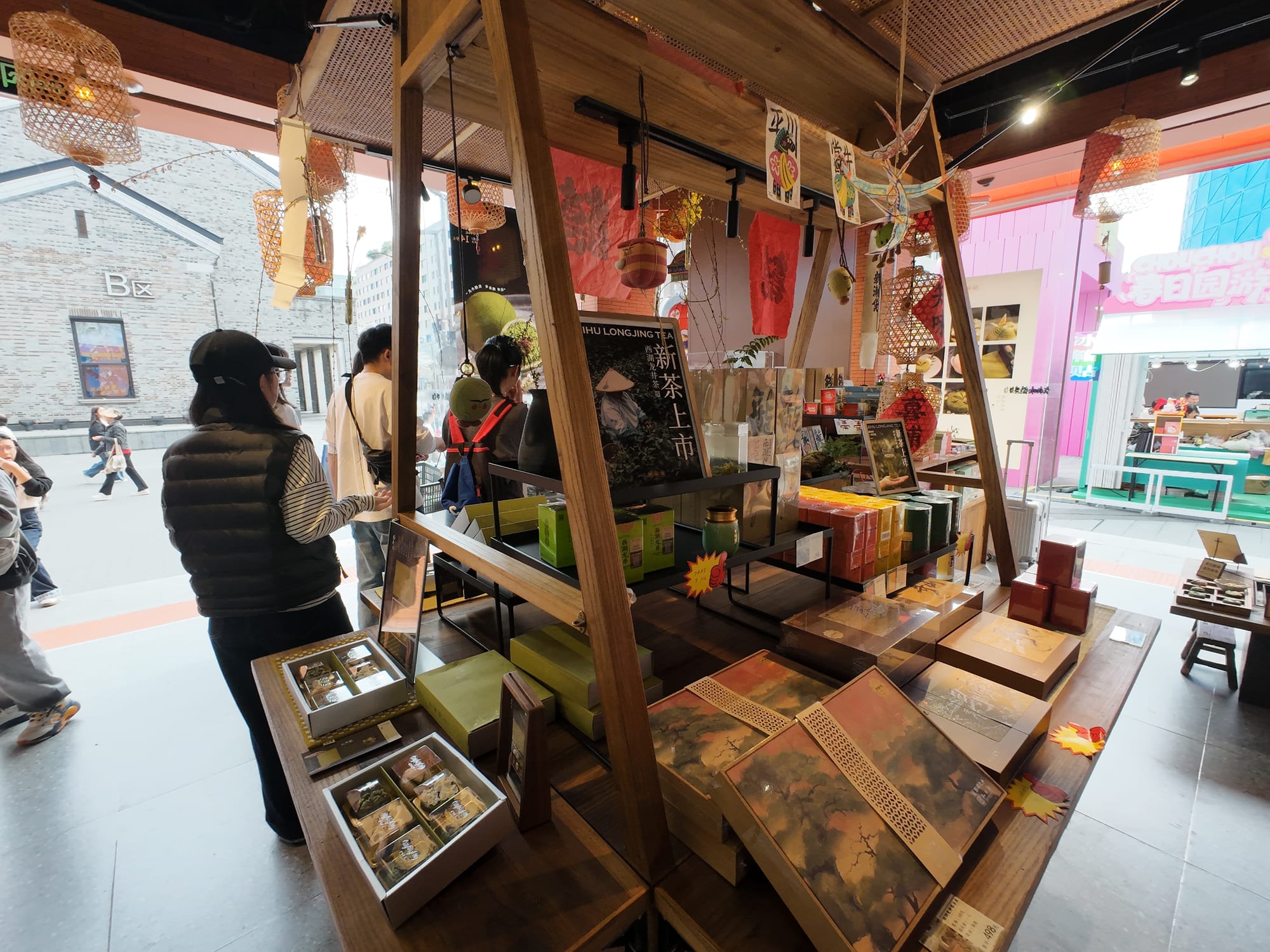
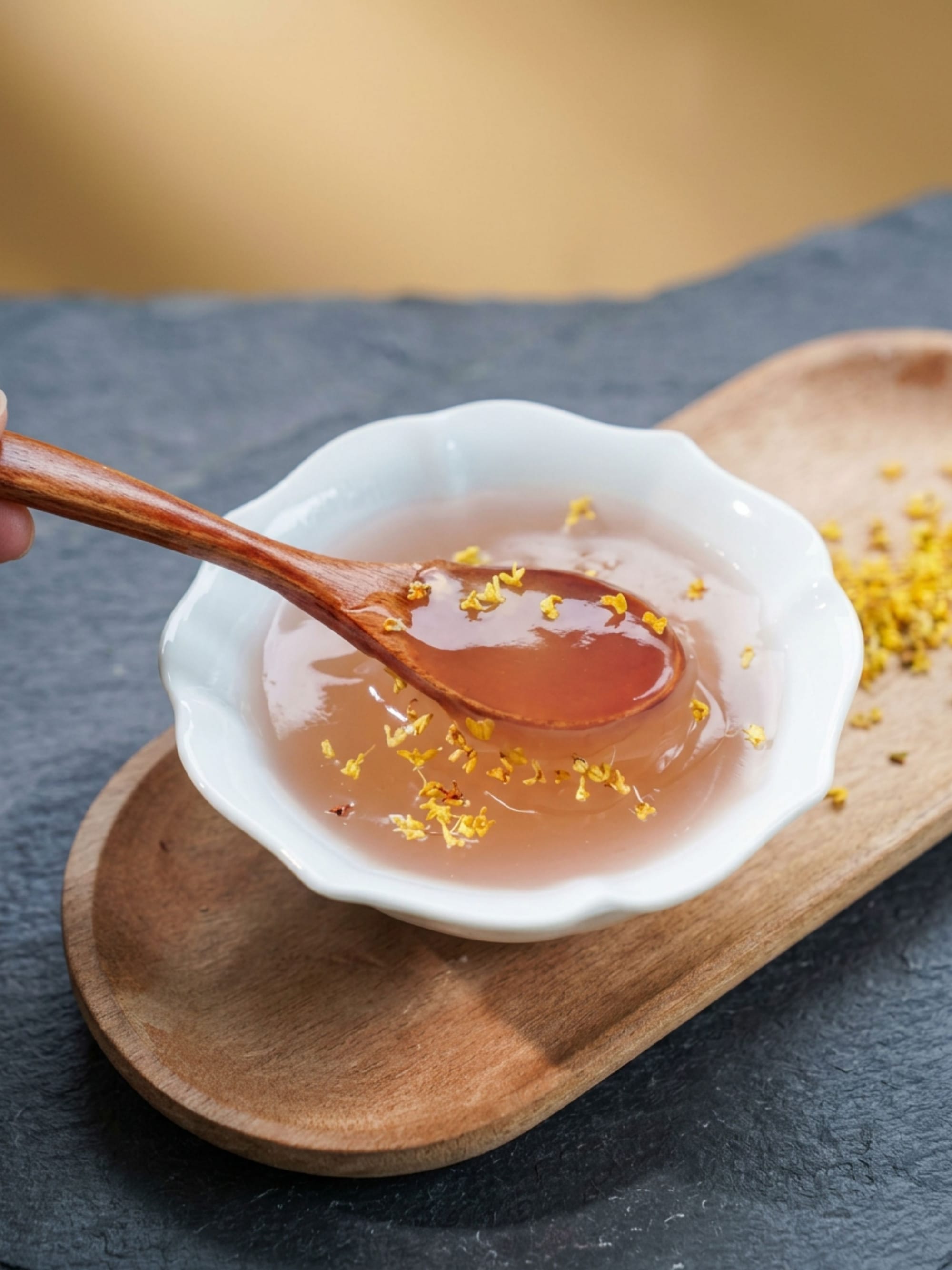
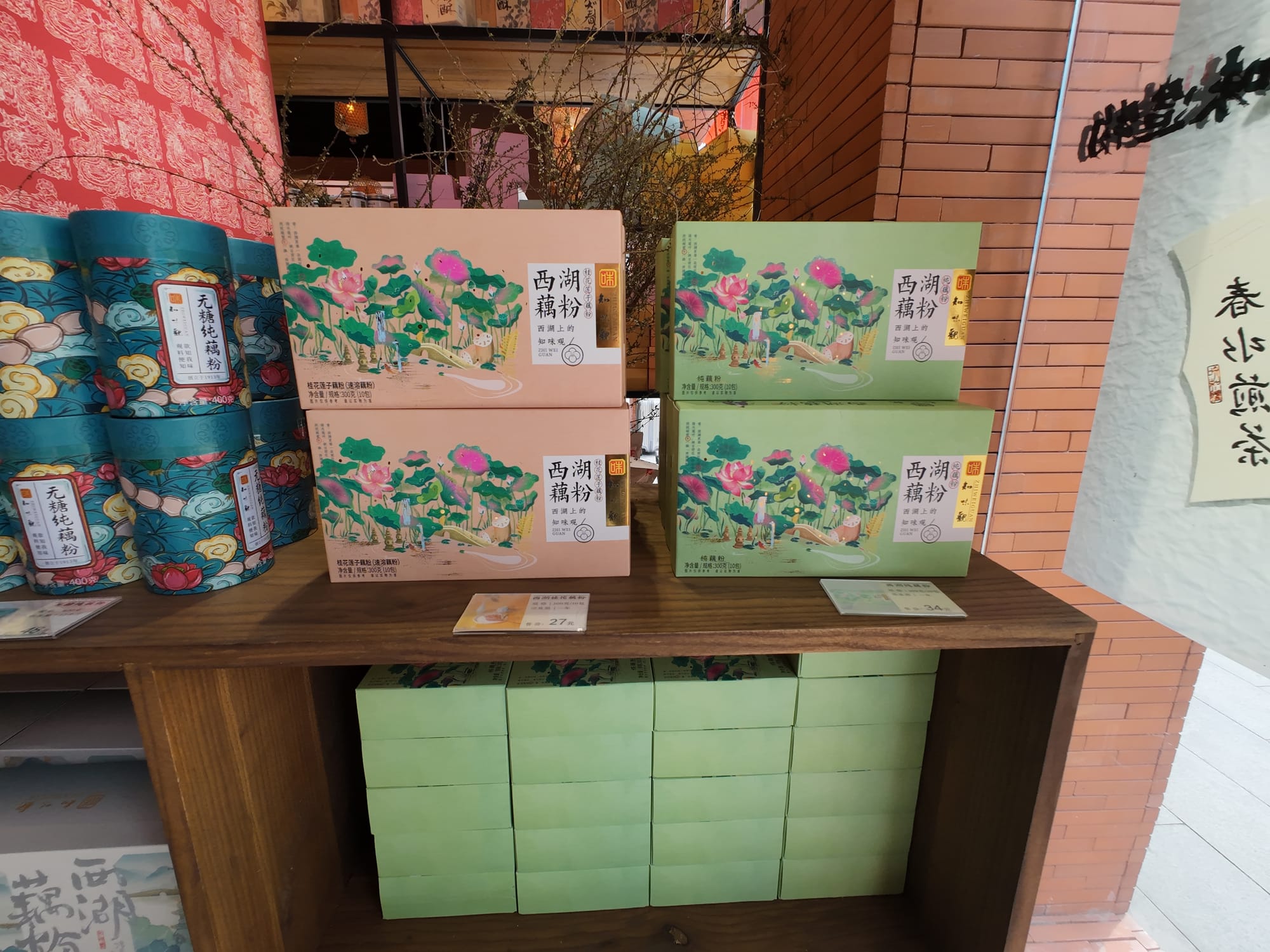
This famous local delicacy can easily be found in souvenir shops around town.
3. The Dinner Classic: Lady Song's Fish Broth (宋嫂鱼羹 — Sòngsǎo yúgēng)
To taste a dish with an 800-year-old imperial pedigree, find a table at a classic waterside restaurant along the lake. The story goes that in 1179, Emperor Gaozong tasted a fisherwoman's fish soup while cruising West Lake — and liked it so much that the dish has been a Hangzhou signature ever since.
Taste and Texture: Today's version is also known as "Crab-Cloud Soup" (赛蟹羹 — Sàixiègēng), because its texture and flavour are remarkably close to crab meat. The kitchen steams a fillet of mandarin fish or sea bass, then flakes the flesh into a silken broth enriched with slivers of Jinhua ham, bamboo shoots, shiitake mushrooms, and chicken stock. The result is a creamy, savoury soup with a gentle sour note from rice vinegar — light, comforting, and far more refined than its humble origins might suggest.
Insider Tip: Look for it at old-guard establishments like Lou Wai Lou (楼外楼) on Solitary Hill, Zhi Wei Guan (知味观), or Kui Yuan Guan (奎元馆). The best versions achieve a silky, almost velvety texture that justifies its imperial reputation — and makes it the perfect restorative after a long walk around the lake.