The City That Made Beauty from Loss
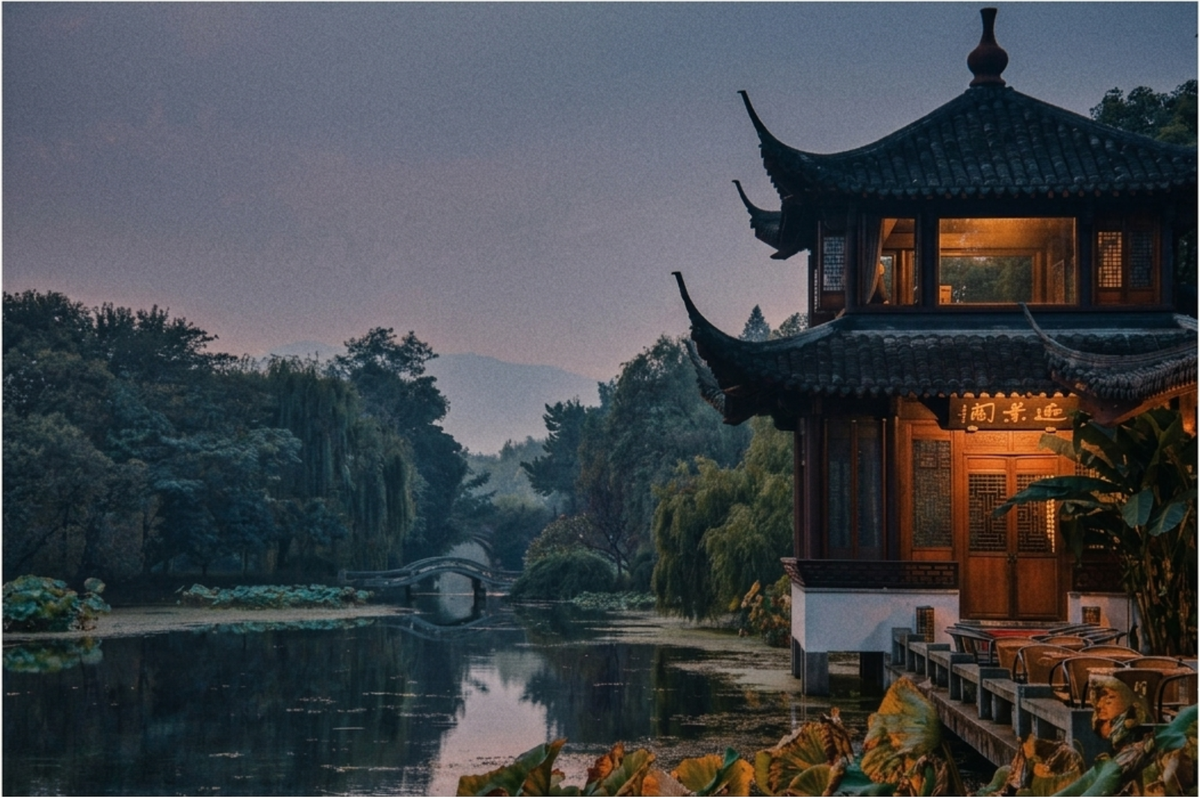
The Southern Song dynasty arrived in Hangzhou not by ambition but by necessity.
In 1127, the Jin dynasty seized the northern capital Kaifeng, captured the emperor, and drove the court south.
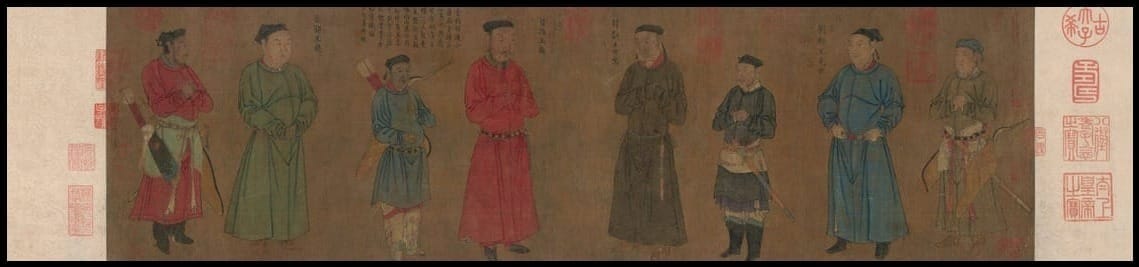
What followed—across 152 years, until the Mongols extinguished the dynasty in 1279—was one of history's more extraordinary cultural paradoxes: a civilisation in retreat producing some of its most enduring work.
The closest Western parallel is Renaissance Florence—except Hangzhou got there two centuries earlier, and under considerably harder conditions.
Florence's flowering came from mercantile confidence and expanding horizons. Hangzhou's came from loss: from a court that had surrendered half an empire and responded by turning what remained into something worth keeping.
This is not an unusual human pattern.
The Alhambra was built as the Reconquista slowly closed around Moorish Andalusia. Byzantine artists produced their most luminous mosaics across centuries of imperial contraction. Weimar Germany gave the world the Bauhaus between one catastrophe and the next.

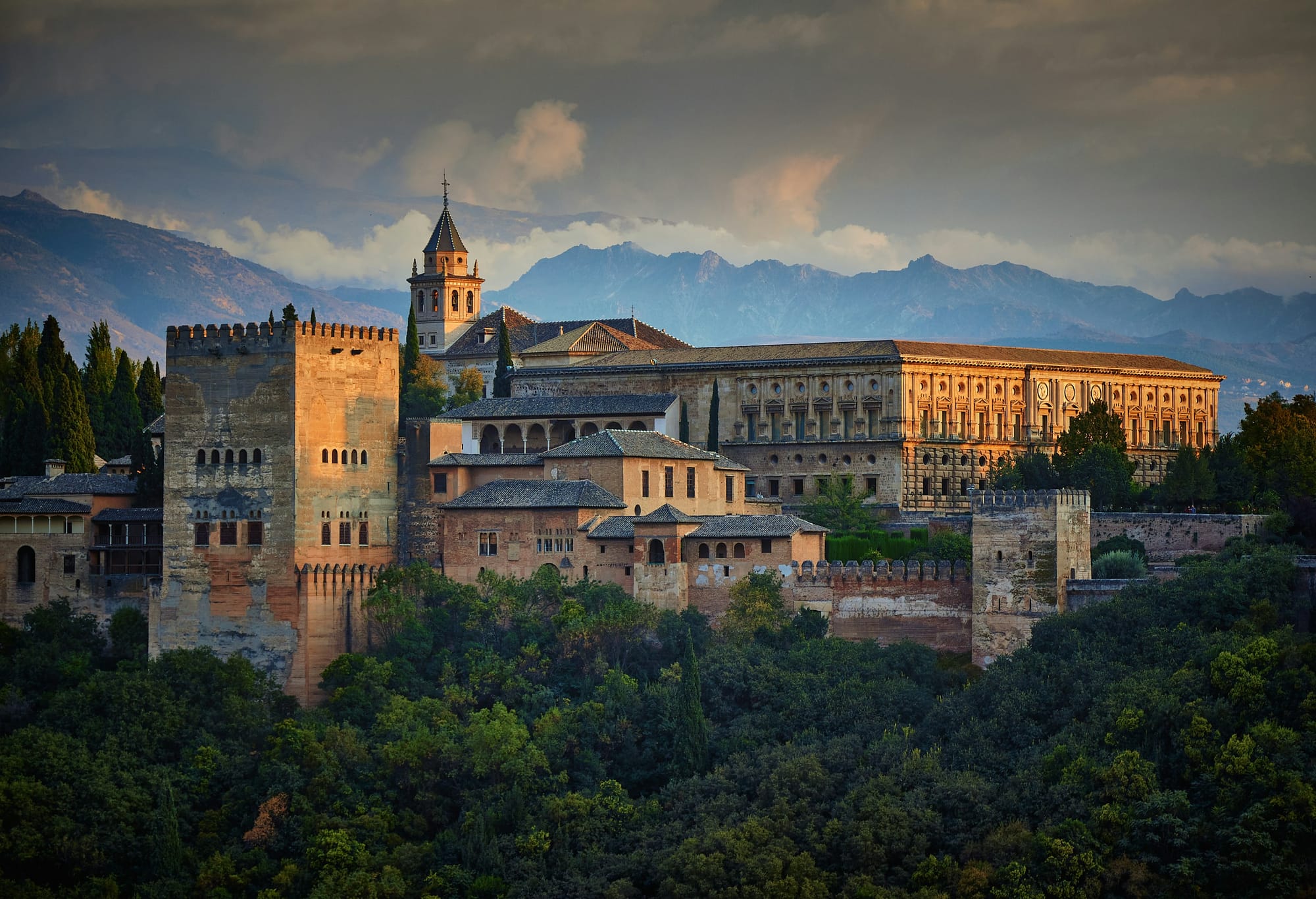

Great civilisations have never required comfortable conditions — only the human need to make meaning from what cannot be undone.
What the Southern Song made in Hangzhou is that kind of art.
The lake was not discovered — it was designed and engineered by poet-governors who understood that beauty was not decoration but necessity. The tea was not merely cultivated — it was elevated into a philosophy of attention. The gardens were not just landscaped — they were built as moral statements.

The poets were made governors, and the governors wrote poetry, because this was a civilisation that saw no meaningful distinction between aesthetic sensibility and the capacity to govern well.
The Paradox of Refinement and Might
The Southern Song made a deliberate civilisational choice: it demilitarised its elite.
Since the dynasty's founding in 960AD, power had been systematically reoriented from military commanders to civilian scholar-officials. The loss of the north only hardened that logic.
Through the Keju examination system, governance passed not only to generals but to poets, painters, and scholar-bureaucrats.
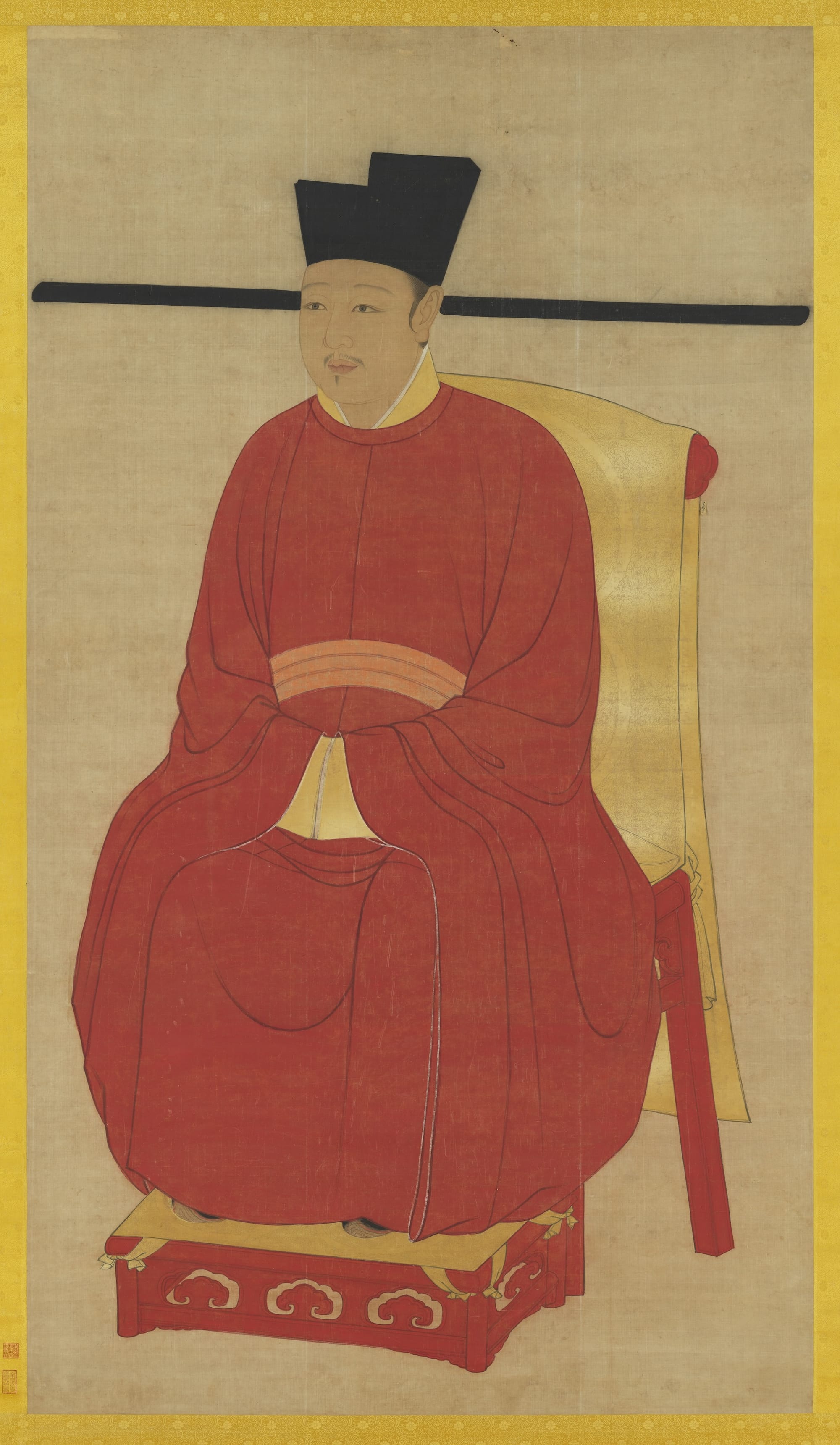
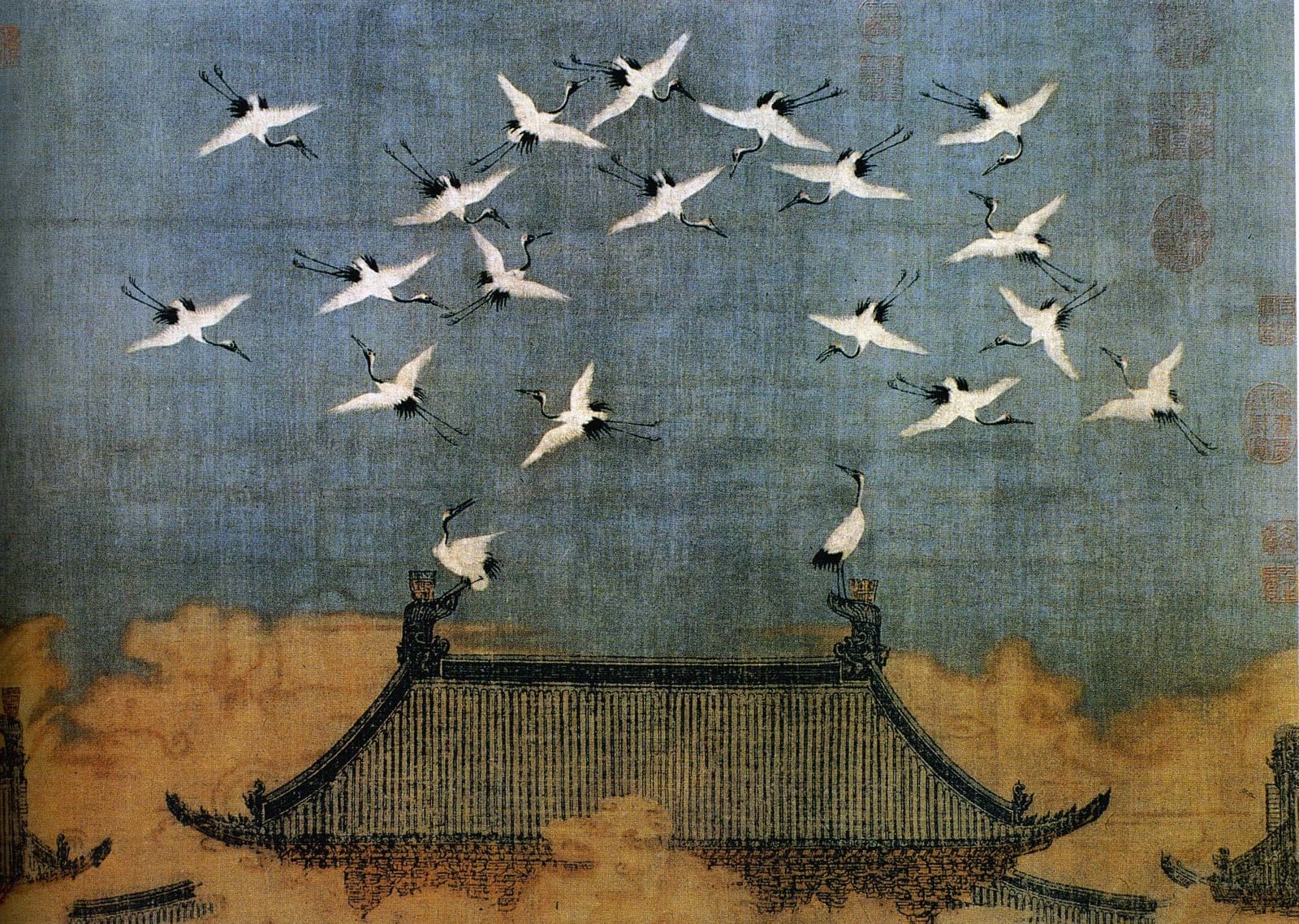
Left: Seated Portrait of Emperor Song Huizong, Northern Song dynasty (National Palace Museum, Taipei). Right: Detail from Auspicious Cranes (瑞鶴圖), painted by Emperor Huizong, 1112 (Liaoning Provincial Museum). Public Domain via Wikimedia Commons.
The result was one of the most prosperous, literate, and technically sophisticated societies the medieval world had seen — the inheritor and refiner of China's great inventions: printing, gunpowder, and the compass, each of which the Song deployed at a scale no previous dynasty had managed.¹
Yet Hangzhou existed in a world still being decided by violence.
While the Song elite were debating philosophy, drinking West Lake tea, and refining celadon ceramics, the Mongols on the steppe were perfecting the machinery of mass conquest.
The dynasty's maritime pivot — when the loss of northern territories and overland Silk Road access pushed the Song to build state-backed merchant fleets and establish Maritime Trade Bureaus (市舶司, Shibōsī) in Quanzhou and Guangzhou — created the most sophisticated seaborne trading network of the medieval era.
They exported porcelain, silk, and tea as far as Southeast Asia, India, and the East African coast.
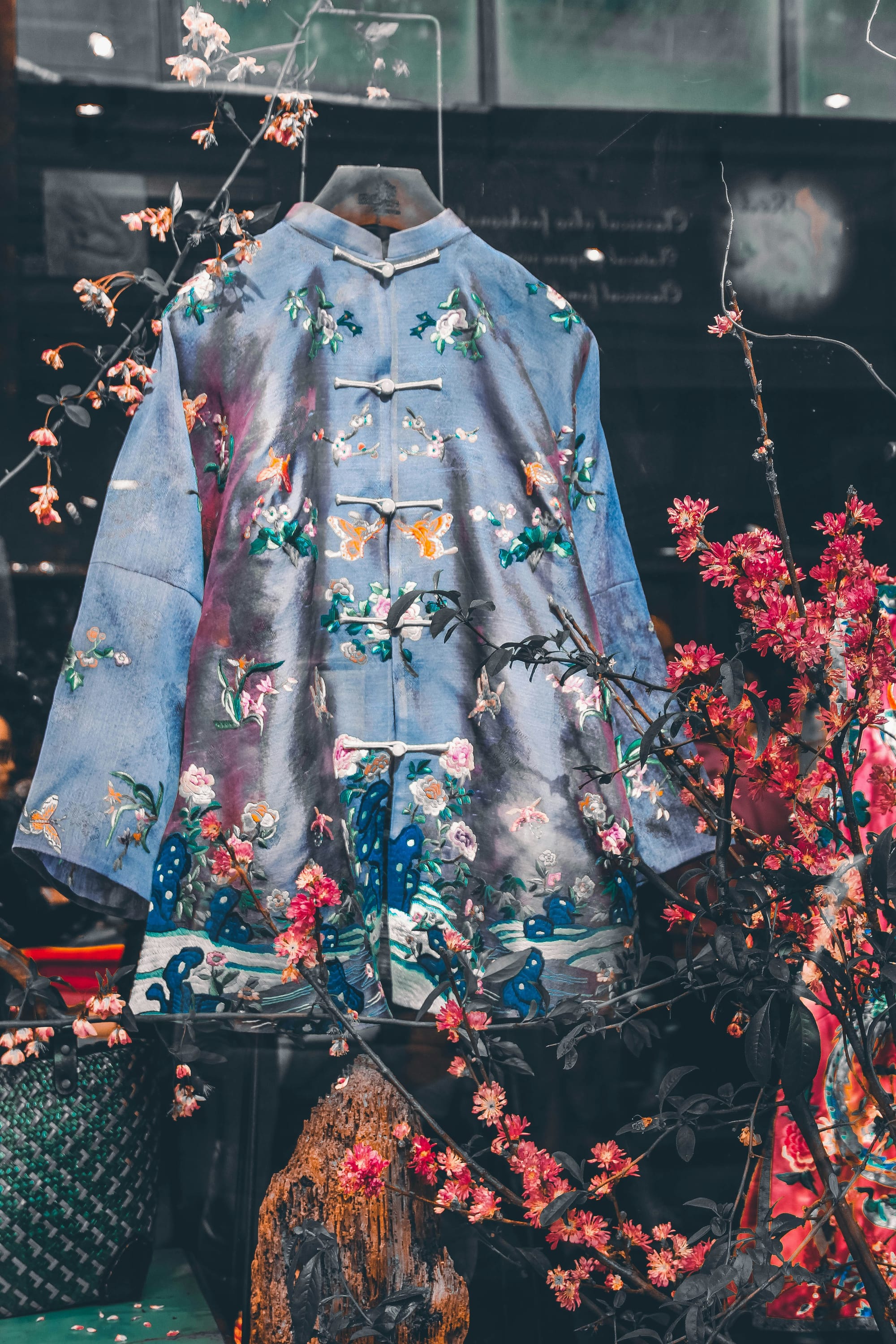
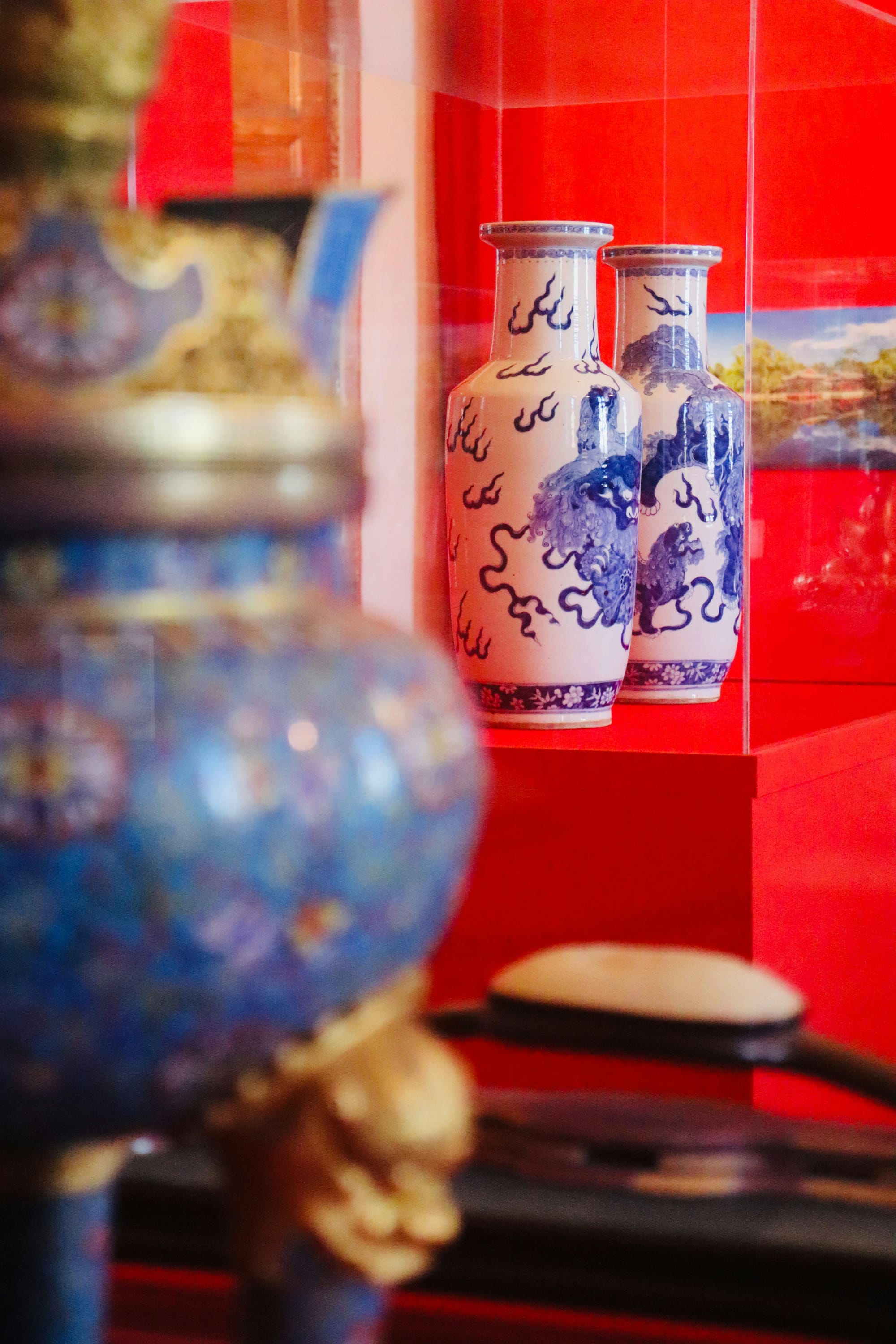
The maritime pivot has a loose parallel at the other end of the known world.
While the Southern Song was building its seaborne trading network, Venice was undergoing its own transformation — from regional port to naval and commercial empire, its power built on controlling Mediterranean shipping lanes rather than territory. Whether the two civilisations arrived at this conclusion independently or as part of a broader medieval shift in how wealth was generated is a question historians continue to debate.²
What is clear is that both, at roughly the same moment, understood that leverage lay in trade routes rather than land.
The Mongol conquest of 1276 ended the experiment. It was not merely a military defeat but a collision between a society organised around cultivation and commerce and one organised around conquest and mobility.
Hangzhou's soft power, for all its sophistication, had no answer to that.
What Remains
The dynasties that followed have been largely washed from Hangzhou's landscape by successive waves of history.
But Song poetry survives. Song aesthetics survive — in the philosophy of liúbái (留白, the art of negative space), in the architecture of the teahouse, in the particular way this city still frames a view rather than filling it.


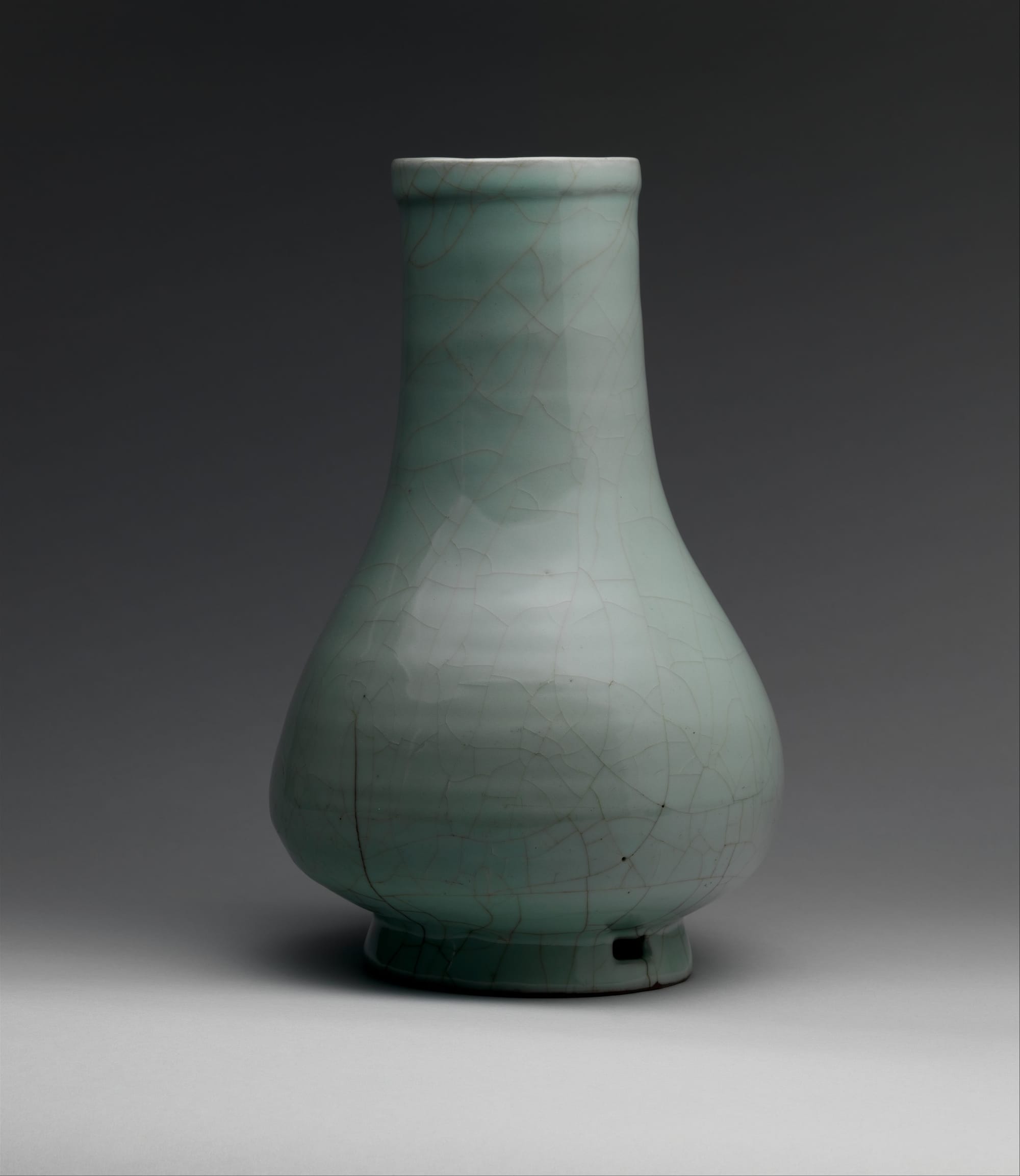
Far right: celadon glaze vase, produced exclusively for the imperial court in Hangzhou during the twelfth and thirteenth centuries. The unctuous glaze with subtle blue tone and icy crackles on these works is considered among the top achievements of Chinese ceramics. Image: Vase (Guan ware), Southern Song dynasty, 12th–13th century. The Metropolitan Museum of Art, Gift of Mrs. Samuel T. Peters, 1926. Public domain.
There is a particular quality to what grief produces when it is given enough time and enough intelligence.
The mist over West Lake is not accidental. It carries the specific emotional register of a court that had lost half its world and chose, consciously, to make the remaining half as beautiful, as refined, and as philosophically considered as possible.
That undercurrent — melancholy dressed as serenity, loss transmuted into aesthetic restraint — is what separates Hangzhou's atmosphere from every other city in China. You feel it, before you can name it.


The traces are still here: in the mountains, by the lake, in the laneways the city forgot to demolish.
They will outlast the next wave too.
¹ The Song dynasty's role in scaling and systematising China's technological achievements is well documented in Joseph Needham's Science and Civilisation in China (Cambridge University Press, 1954–2008), the definitive multi-volume study of Chinese scientific history.
² For the Southern Song maritime economy, see Shiba Yoshinobu, Commerce and Society in Sung China (University of Michigan, 1970). The Venice parallel is the author's editorial observation and not a direct historical equivalence.