Liangzhu Museum 良渚博物院
Gateway To One Of The World's Oldest Civilisations
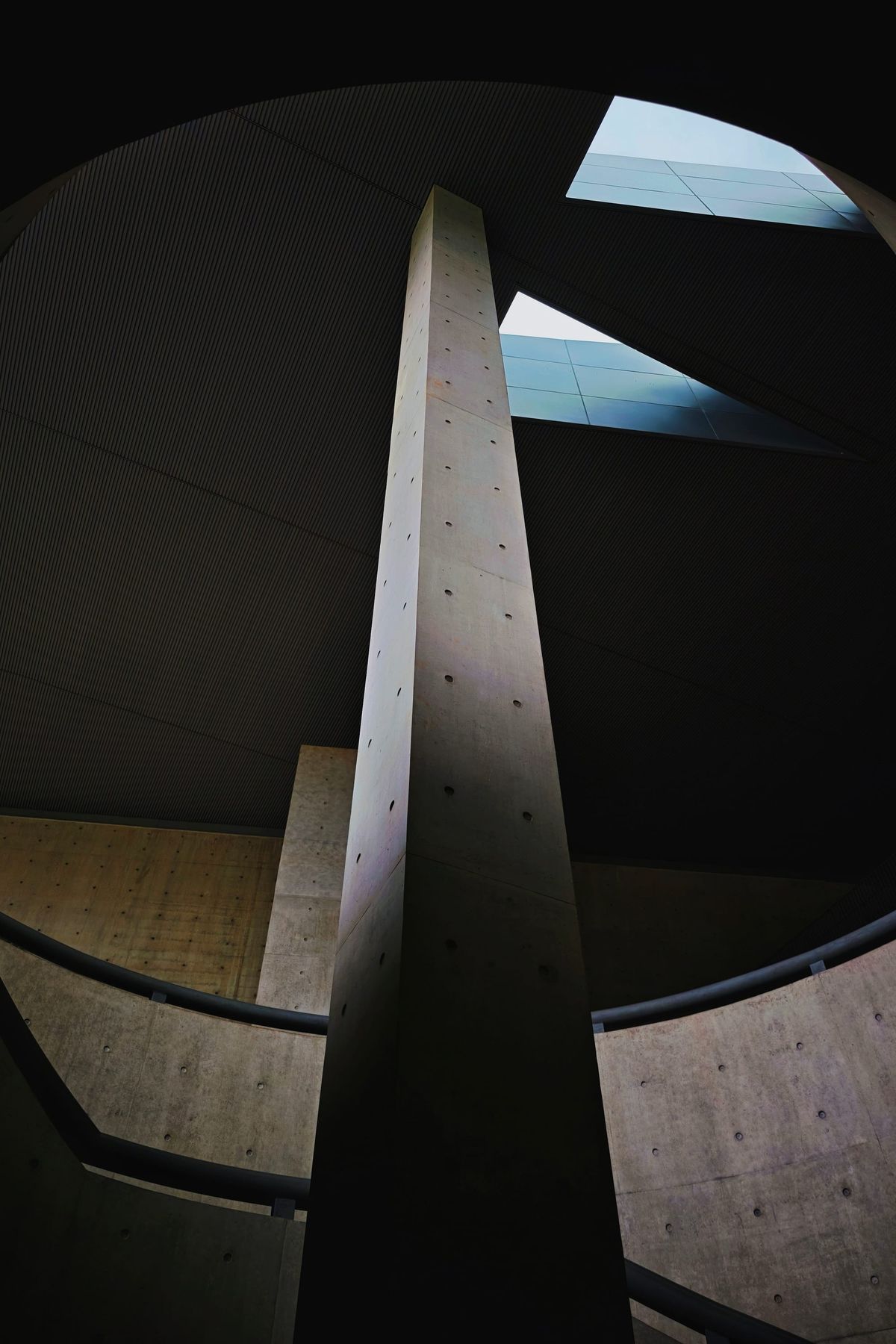
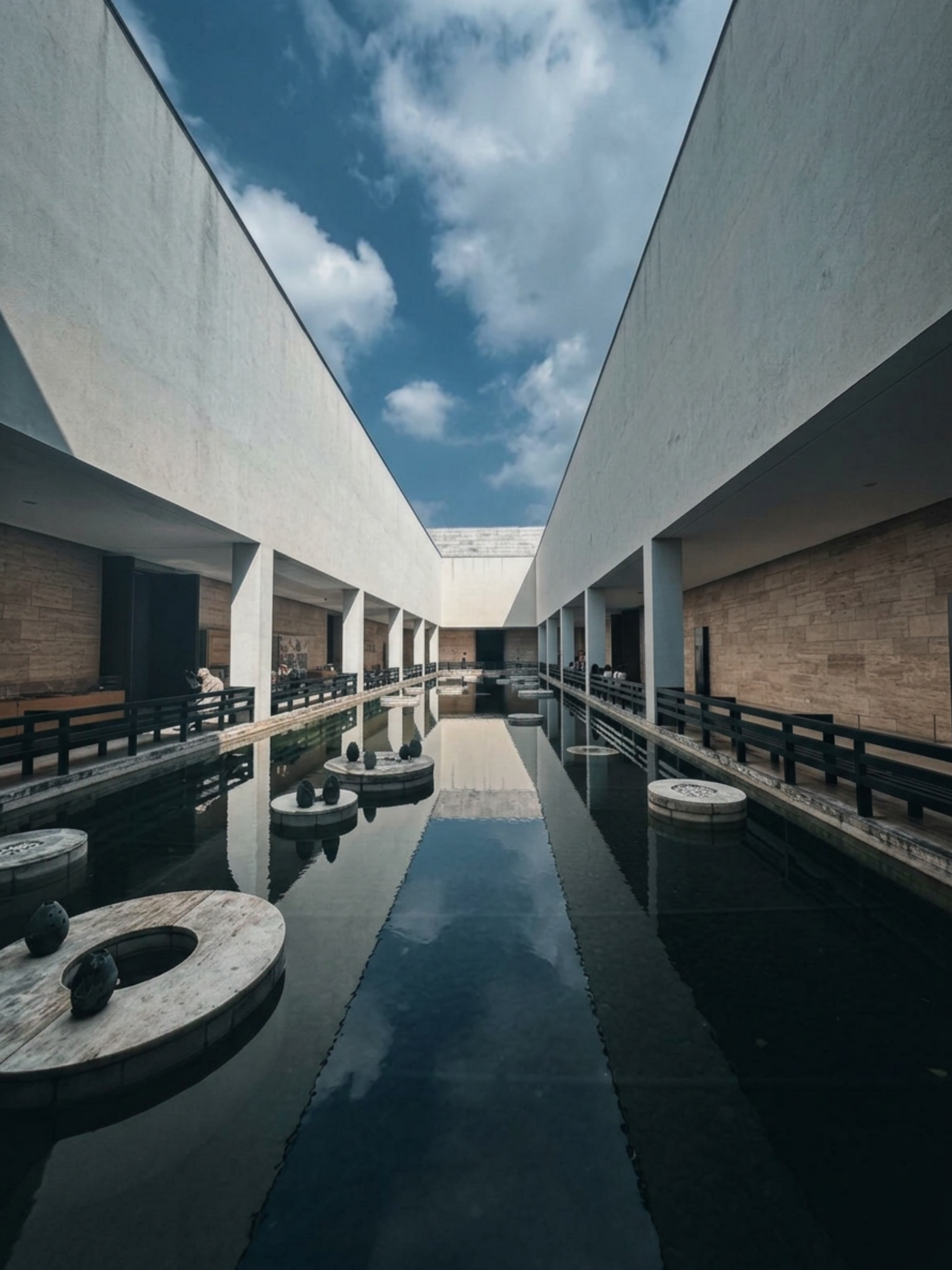
Designed by the acclaimed British minimalist architect David Chipperfield and opened in 2008, the Liangzhu Museum is a striking architectural masterpiece that serves as the narrative gateway to a forgotten civilization.
Chipperfield’s design mimics a series of rough-hewn jade blocks rising out of a peaceful lake, utilizing a minimalist palette of Iranian travertine stone.
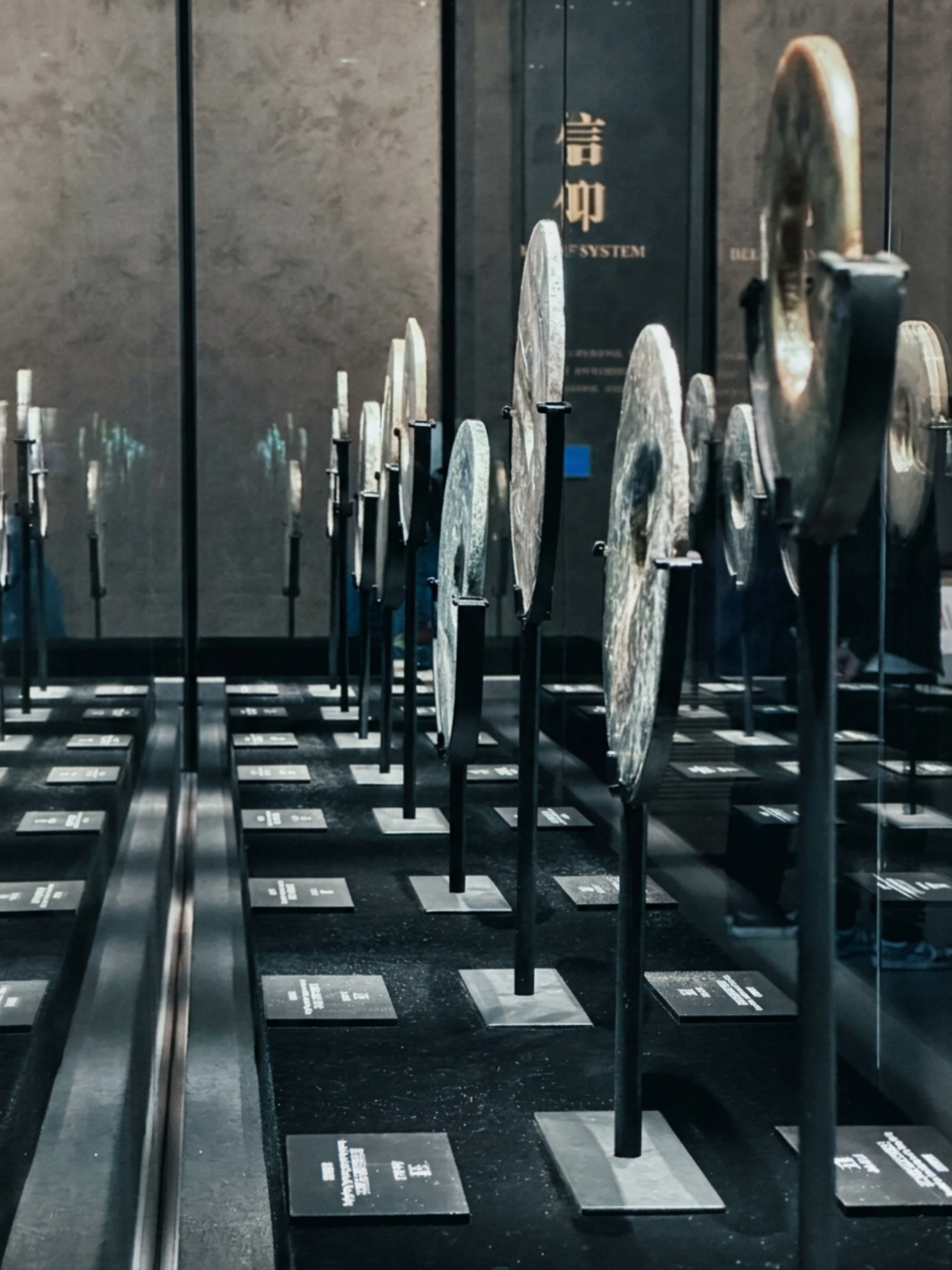
Inside, the galleries display the world’s most significant collection of mysterious, ritualistic jade carvings that defy modern understanding of Neolithic technological capabilities.
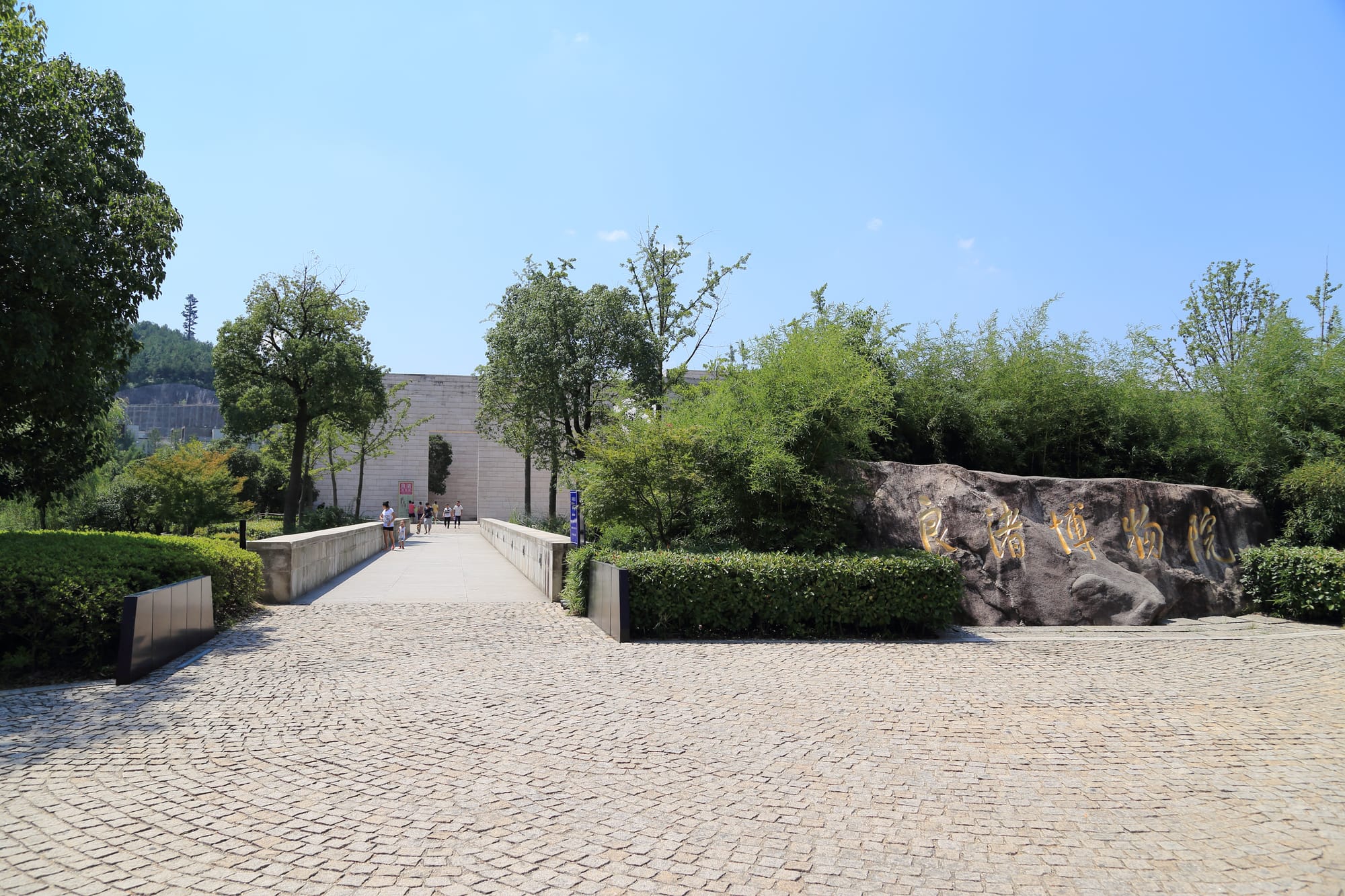
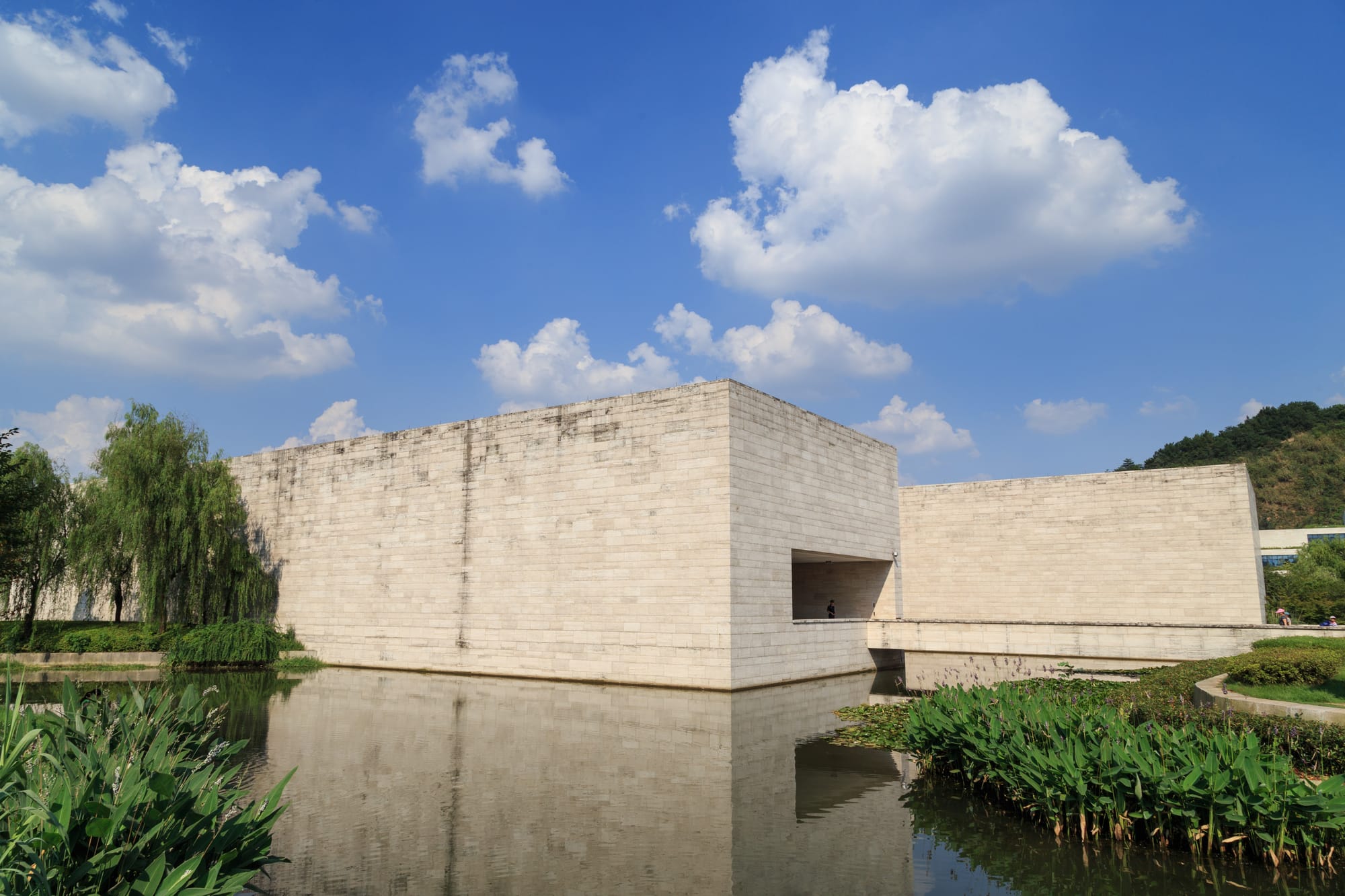
Image: Zhangzhugang via Wikimedia Commons / CC BY-SA 4.0
Logistics & Booking Guide
How to Find It
Metro & Bus: Take Line 2 to Liangzhu Station (良渚站). From the bus interchange outside the station, board a shuttle bus to Liangzhu Museum (良渚博物院). Several routes serve the museum, including 1222M, 1223M and 430M, depending on the time of day.
Look for a series of massive, windowless, geometric cream-colored stone blocks completely surrounded by an artificial lake and wild reeds. The entrance is accessed by walking across a minimalist concrete footbridge spanning the water.
Taxi To: 杭州市余杭区美丽洲路1号良渚博物院 (Liangzhu Museum, No. 1 Meilizhou Road, Yuhang District, Hangzhou).
The Archaeological Relationship: Museum vs. Ruins Site
The Liangzhu Museum and the actual Liangzhu Ancient City Ruins Park (良渚古城遗址公园) are two separate locations.
The Ruins Park — excavated city walls, dams, and burial mounds — sits five kilometres west of the Museum. Visit the Museum first; it builds the vocabulary needed to read the ruins. Whether the park warrants the extra half-day is a decision best made once you've been inside.
A dedicated shuttle bus connects Liangzhu Museum with the South Gate of the Archaeological Ruins Park every 20 to 30 minutes (currently routes 1222M and 428M).
Admission and Booking
Tickets: Free admission, but advanced booking is required. Reserve a timed entry slot via the official WeChat mini-program "良渚博物院" (Liangzhu Museum), up to 7 days in advance. Present your physical passport at the gates to verify reservation.
Hours: Open Tuesday to Sunday, 09:00–17:00 (Last entry at 16:30). Closed on Mondays (except national holidays).
Audio Guide
The cultural logic of a 5,000-year-old Neolithic site doesn't reveal itself easily — an English guide is worth the money. Two options, both arranged just past security: book an official English-language tour at the information desk in the main lobby (300 RMB, covering groups of up to 50), or rent a pair of AR glasses for a self-guided walk, with English among the supported languages.
Food & Drink Recommendations
Because the Liangzhu cultural zone sits well outside Hangzhou's urban center, you won't find standard city street food blocks.
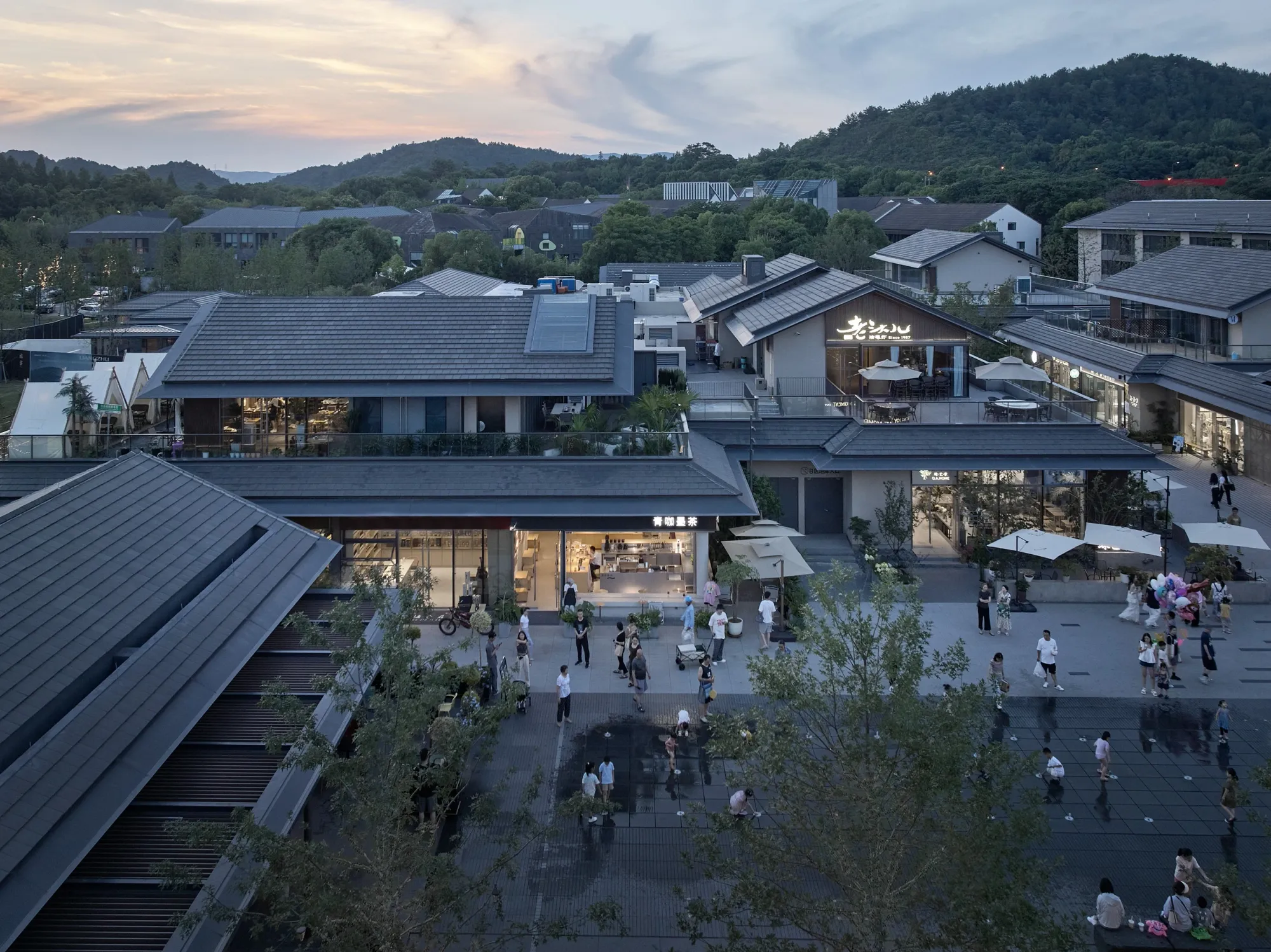
Instead, the area features a beautifully planned eco-community adjacent to the museum called the Liangzhu Culture Village (良渚文化村).
Look out for these two highly localized spots for lunch and a coffee/tea break:
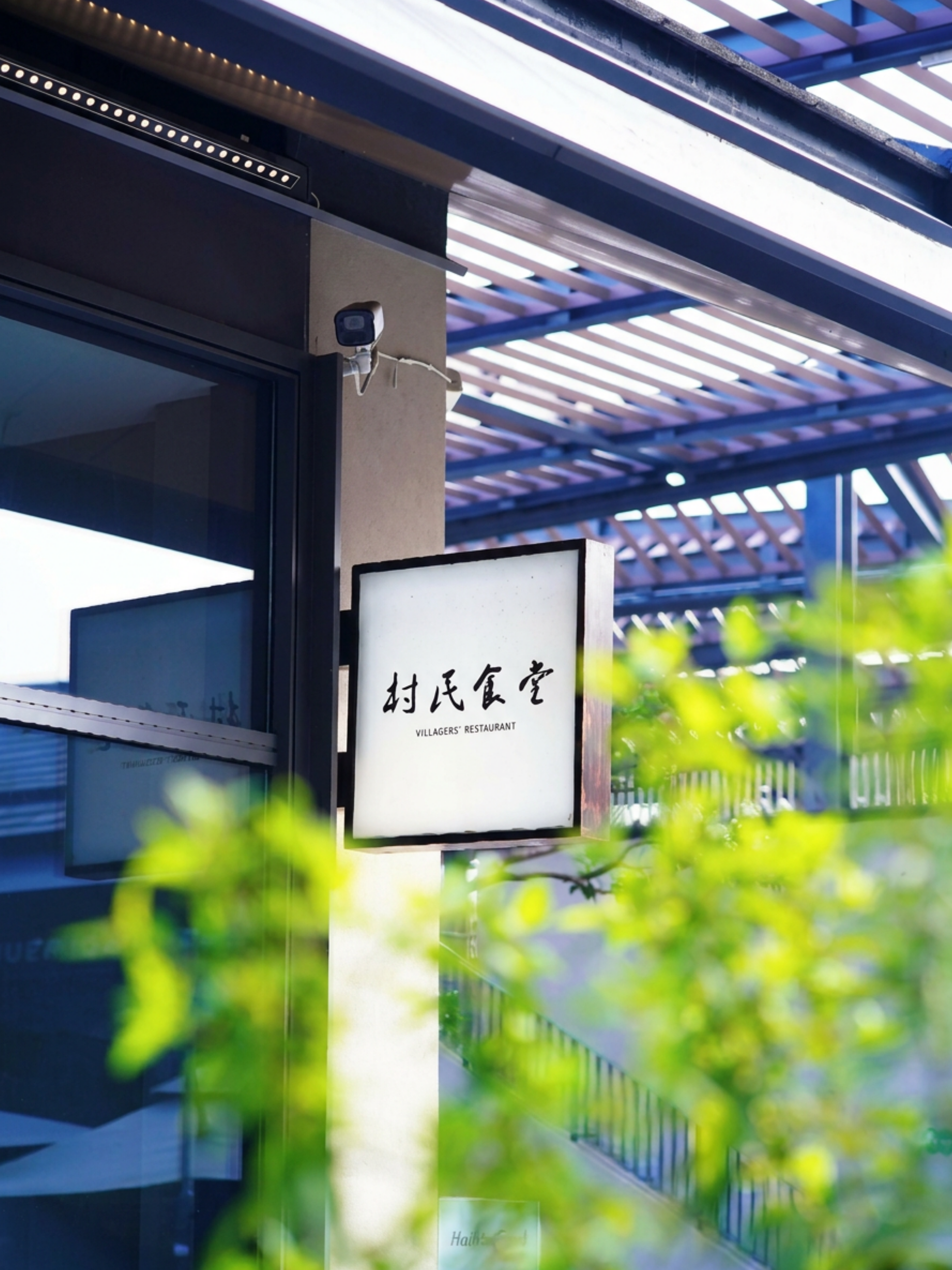
1. Lunch: Villager's Restaurant (村民食堂 — Cūnmín Shítáng)
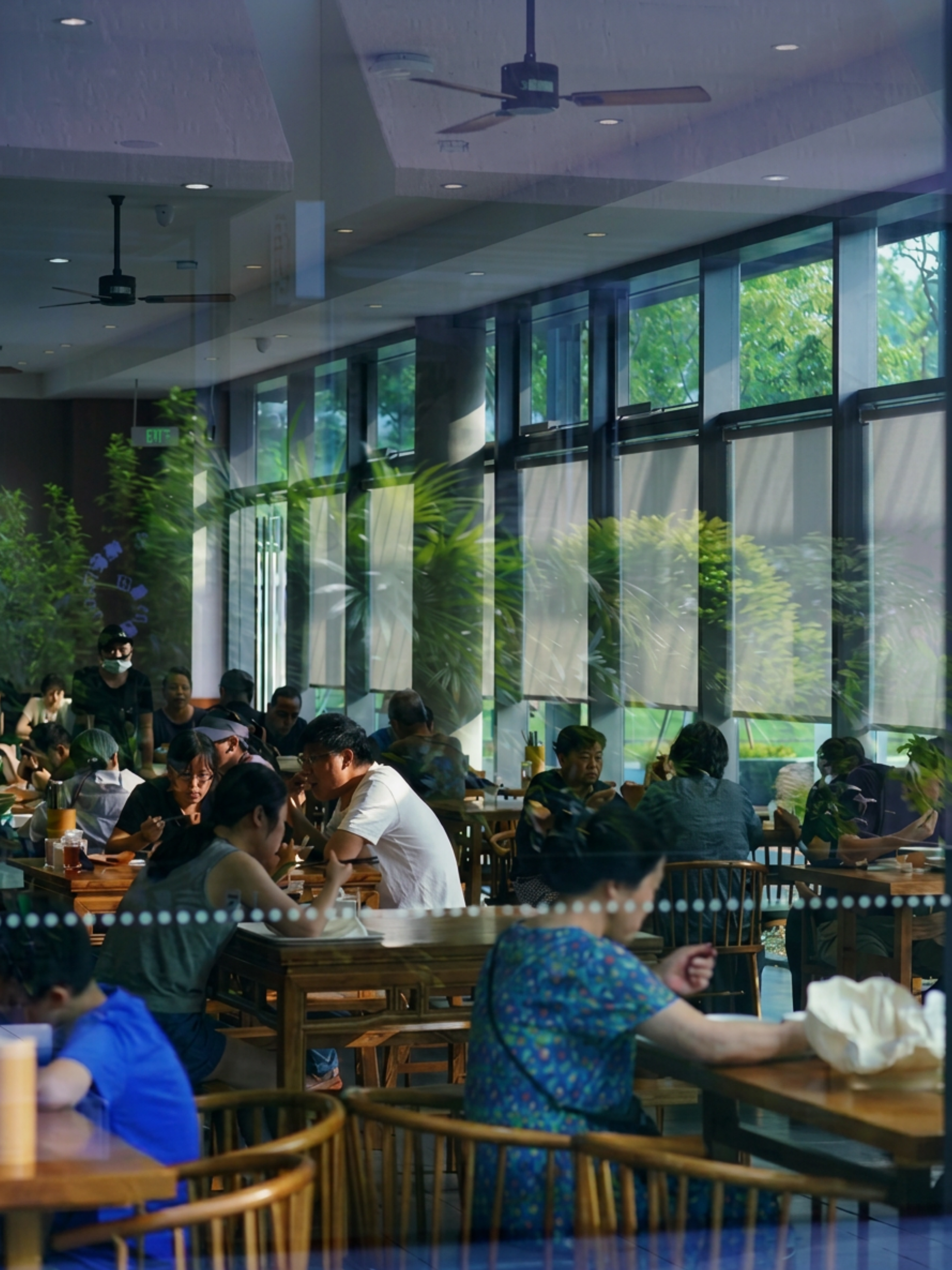
Located in the heart of the Culture Village center, this is a massive, beautifully architected communal dining hall that serves clean, nostalgic, farm-to-table local comfort food. It operates on an easy point-and-select system, making it incredibly friendly for foreign travelers who don't read Chinese.
What to order: The signature Big Meat Bun (大肉包) — fluffy steamed dough wrapped around a juicy pork filling — is a local breakfast staple and an easy place to start. For a more adventurous order, try the Savory Soy Milk (咸豆浆), a Hangzhou specialty topped with dried shrimp, pickled vegetables, and crispy crullers — it bears little resemblance to the sweet versions found elsewhere. Among the noodles, the Shredded Pork and Dried Bamboo Shoot Noodles (笋干肉丝拌面) offers a taste of the surrounding Yuhang hills in every chewy, savory bite, while the Braised Beef Brisket Noodles (牛腩拌面) is a richer, more filling option for lunch. Save room for the Pan-Fried Pork Buns (生煎包), crispy on the bottom and juicy within — best eaten hot and dipped in vinegar. Most items cost between 3 and 25 RMB, so it is easy to sample widely without breaking the bank.
2. Dessert & Coffee Break
Also close to the centre of the village is Yu Niao Ji 玉鸟集 (Birland), where a small cluster of cafés has become its own reason to visit.
MOJ Matcha is the address for matcha purists — lattes, mille-feuille, ice cream, all built around ceremonial-grade leaf, in a space that shares the neighbourhood's unhurried, editorial calm.
Around the corner, Qingka Moocha (青咖墨茶) is a café designed by the same architects who planned Birland itself: full-height glass doors slide back to blur the line between counter and plaza, and a circular open bar lets you watch pour-overs made from every angle.
A few steps on, EMoment (杭一末) draws a different crowd — freelancers and digital nomads who commandeer its tables every Thursday for informal co-working sessions that run more like a campus meet-up than a coffee break, with seasonal specials like the "Nongchao" series and a bill that rarely clears ¥45 a head.
A newer entrant, nemeno, opened in the district in mid-2026.