Honourable Mentions
A few more spots worth seeking out, depending on your route and what you’re in the mood for.
Alongside Liangzhu
If you are already making the trip to the Archaeological Ruins Park, these two sit minutes away and turn a half-day into a full one.
-国家版本馆 · National Archives of Publications, Hangzhou Branch
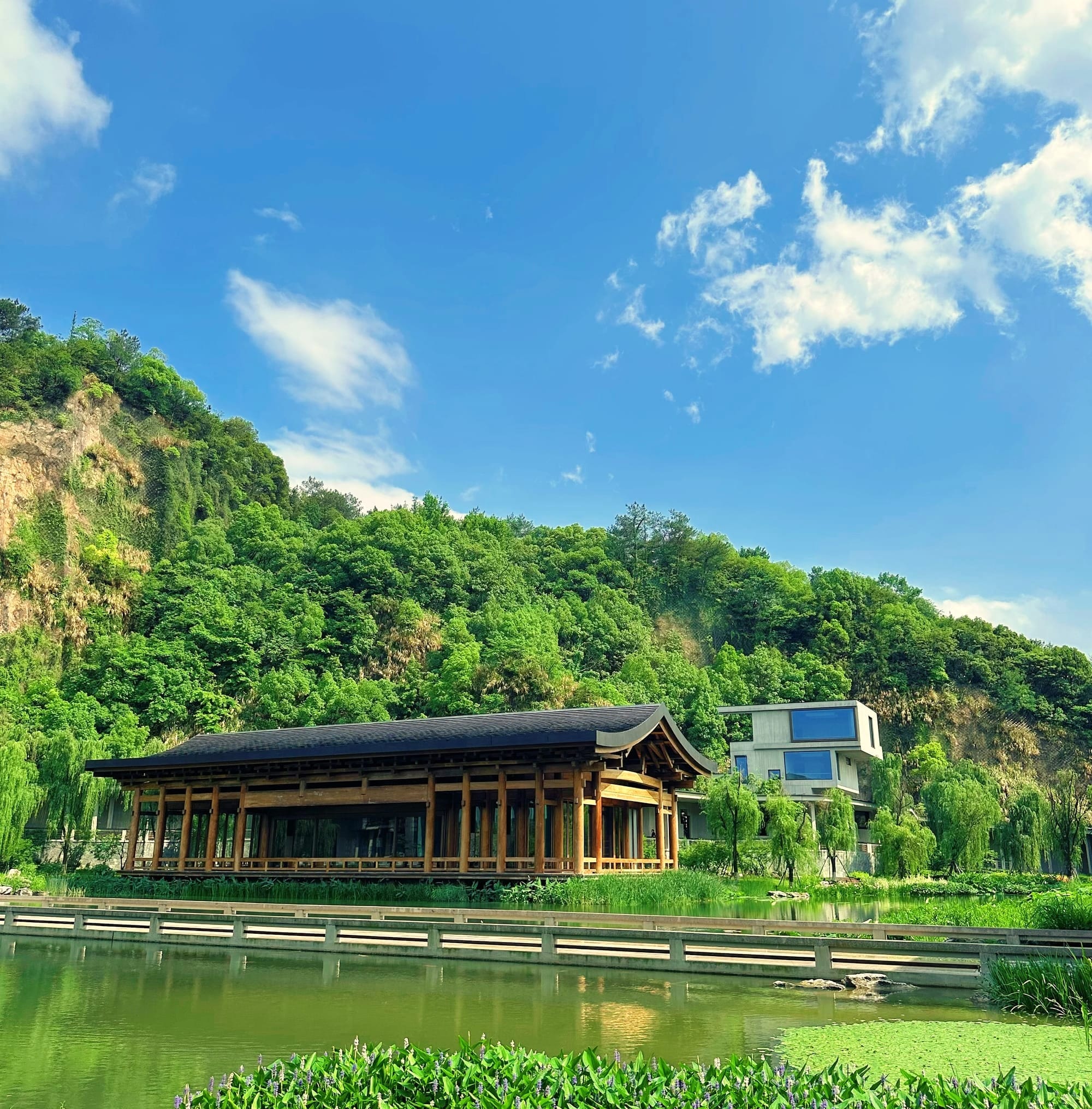
Locals call it Wenrun Ge (文润阁). Officially, it's a "seed bank of Chinese civilisation" — rare books, manuscripts, cultural artefacts held at the national level.
Unofficially, the building is the reason to come. Pavilions, courtyards, and a hillside library are arranged in a contemporary Song idiom, the whole complex reading like a landscape painting built at architectural scale.
Free entry, reservation required.
-玉鸟集 + 单向空间 · (Yùniǎo Jí) & OWSPACE
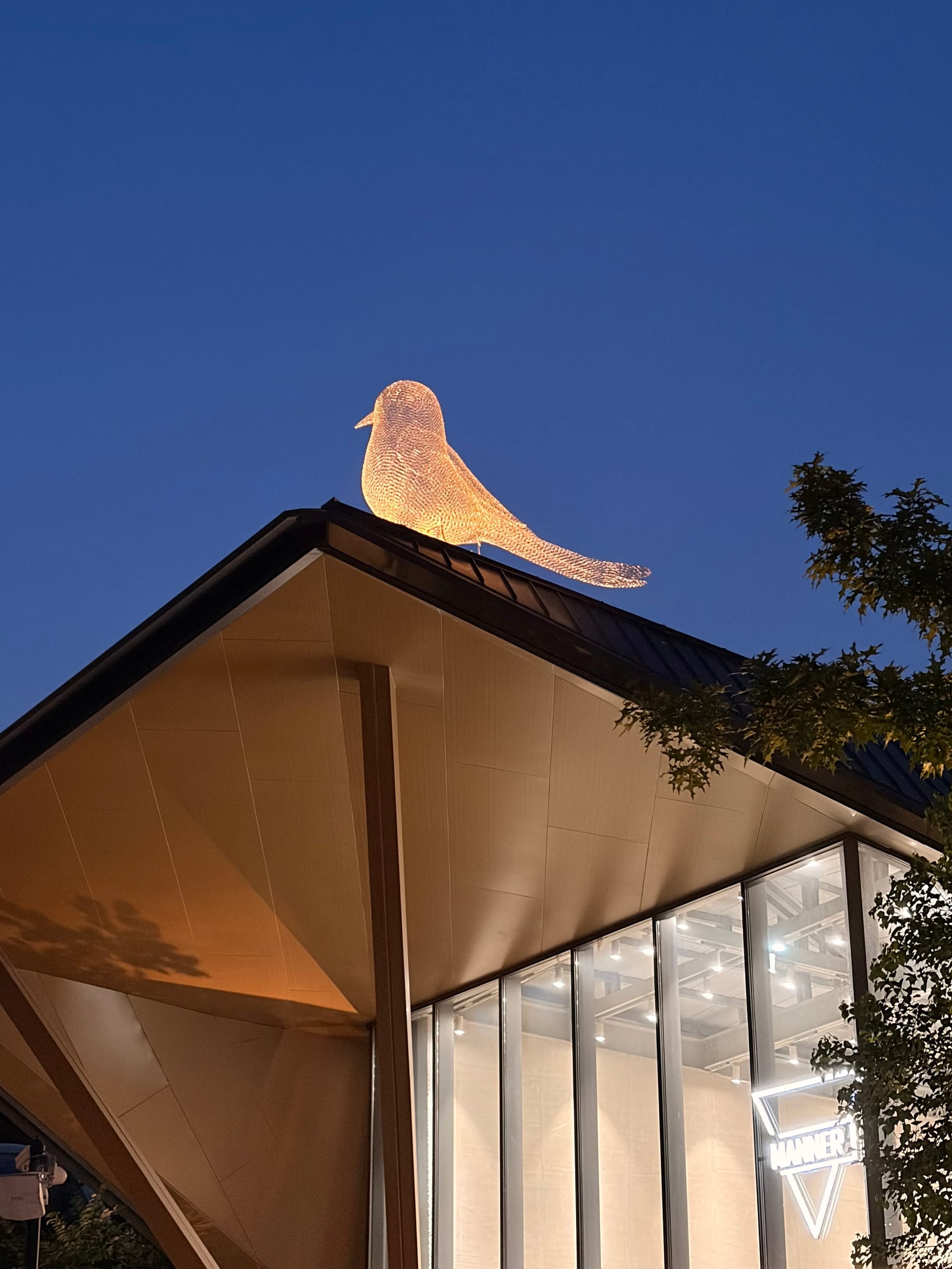
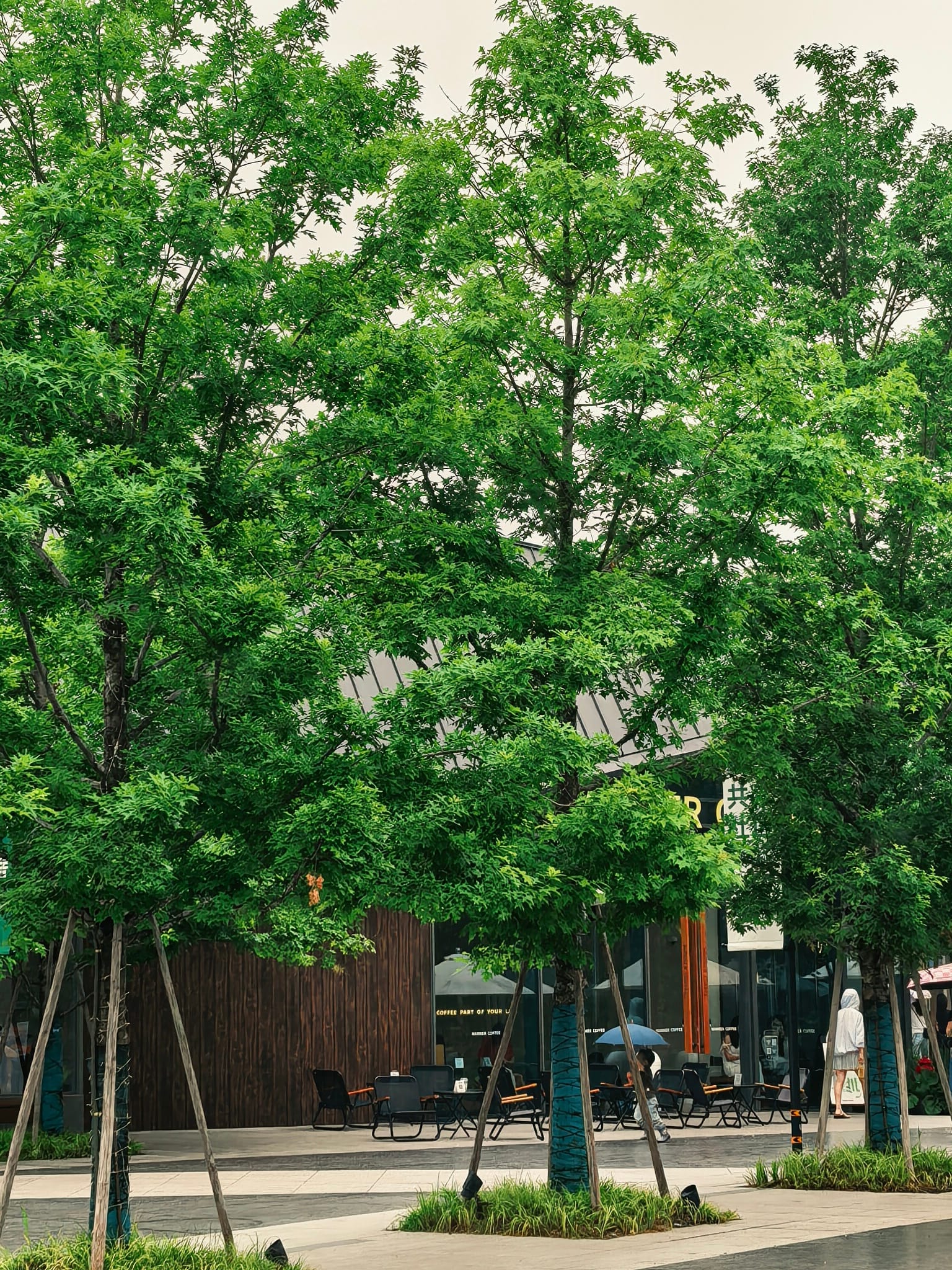
A short walk from the National Archives, Yuniaoji functions as Liangzhu Cultural Village's living room — independent bookshops, ceramics studios, cafés, lawns given over to family picnics.
Its anchor is OWSPACE, nicknamed Dacang ("Big Granary"), a bookshop and cultural space by architect Liu Yichun with a curved roof that pulls daylight deep into the interior.
Tadao Ando's Liangzhu Cultural Art Centre sits next door.
The real draw is the unhurried pace of the district around it — somewhere to eat, browse, and sit before heading back into the city.
Getting there: Take Metro Line 2 to Liangzhu Station, followed by a brief walk or local taxi ride.
Pairs naturally with the Liangzhu Archaeological Ruins Park for a cohesive, full-day excursion.
-玉湖美术馆 · Yohoo Museum
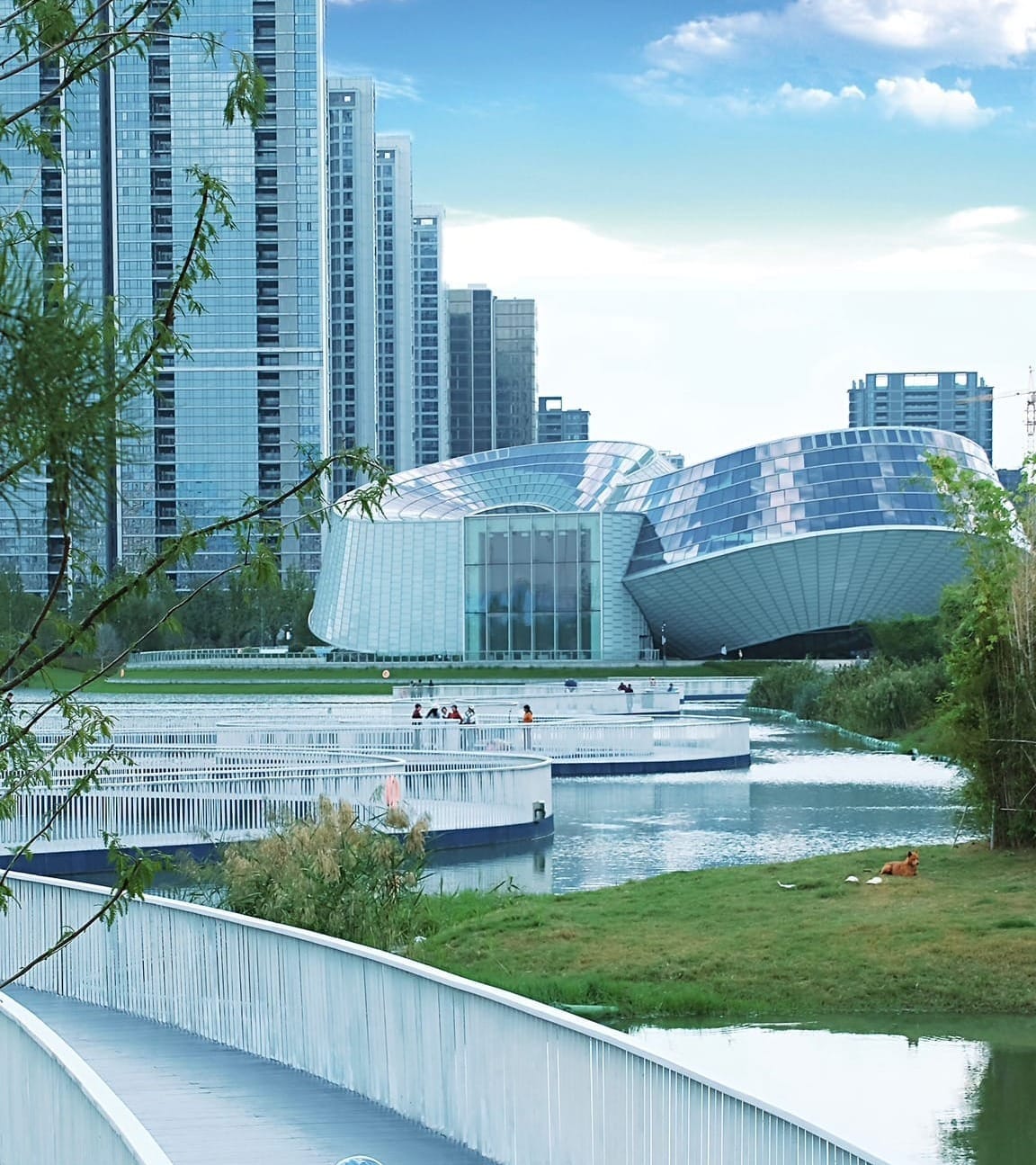
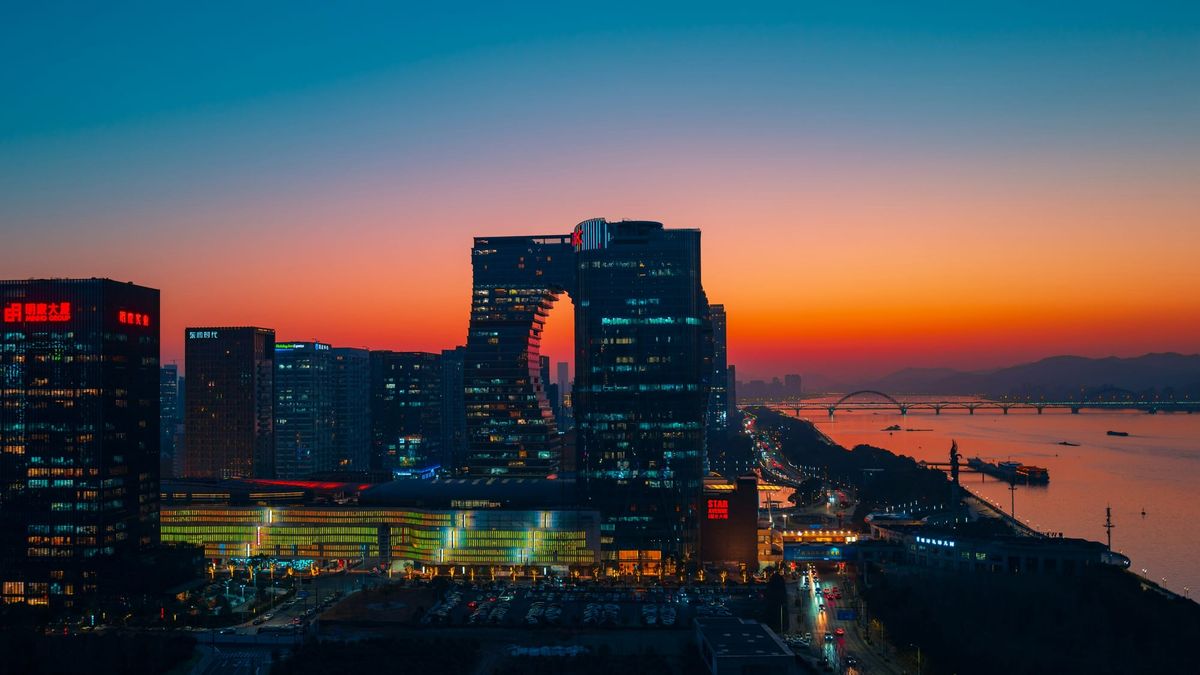
A double ring of jade-glass and aluminium, appearing to float on an island in the water south of Liangzhu New City's Yuhu complex.
The form is a deliberate citation: two interlocking discs recalling the bi — the jade rings unearthed from Liangzhu's own royal tombs, five thousand years old.
Designed by Aedas, the building shifts after dark under a 360° projection display, its glass skin catching light the way jade catches it in the hand.
It opened in 2025 with the China (Hangzhou) Art and Technology International Biennale, organised by the China Academy of Art — a first exhibition asking how technology reshapes culture, staged inside a building already asking the same question of a five-thousand-year-old material.
Fifteen minutes from the Liangzhu Archaeological Ruins Park, for those who want the ancient jade and its newest reflection in the same afternoon.
Around West Lake
Four sites within easy reach of the water. Three work any month of the year. One is best viewed during a two-week window.
-虎跑公园 · Hupao Park
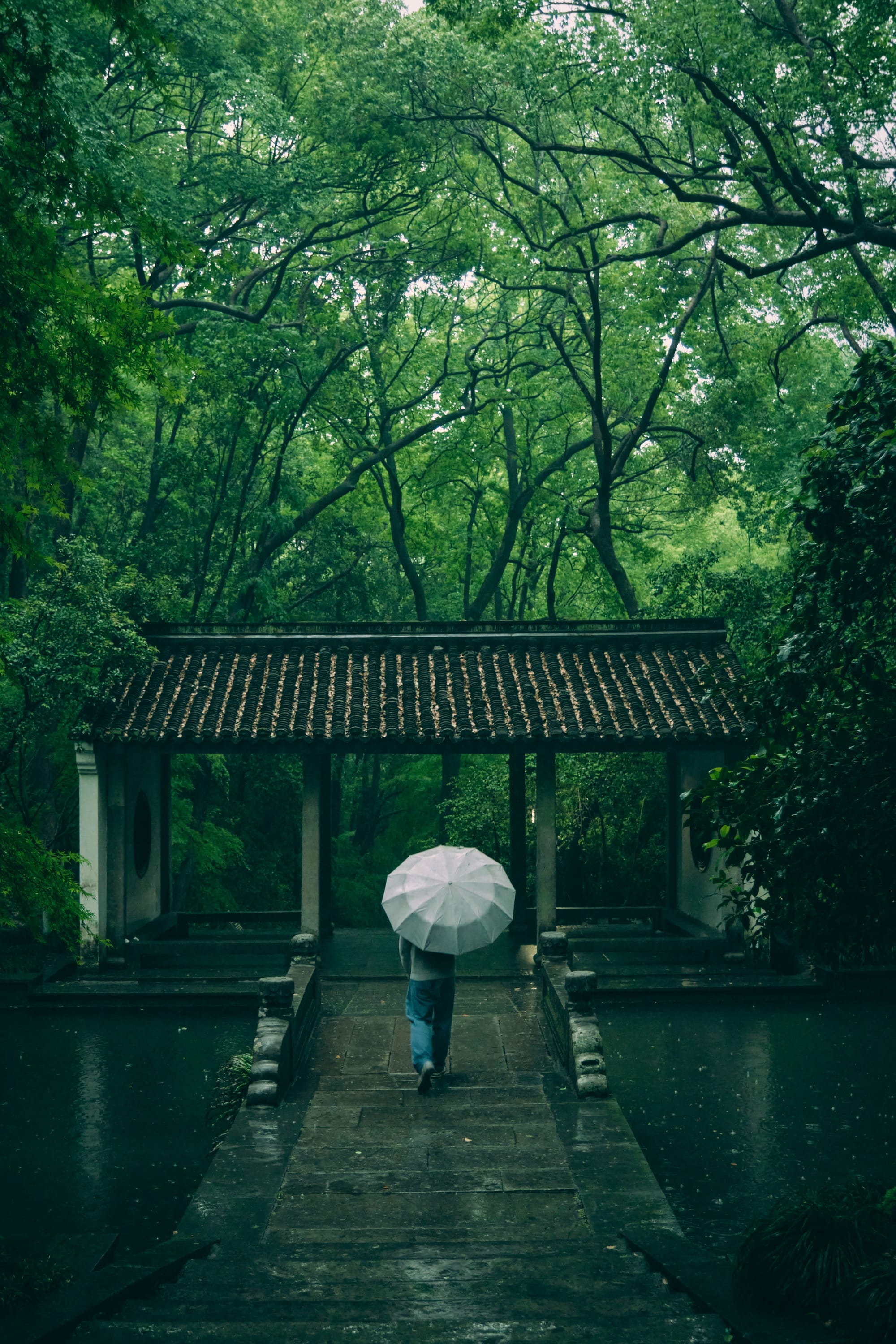
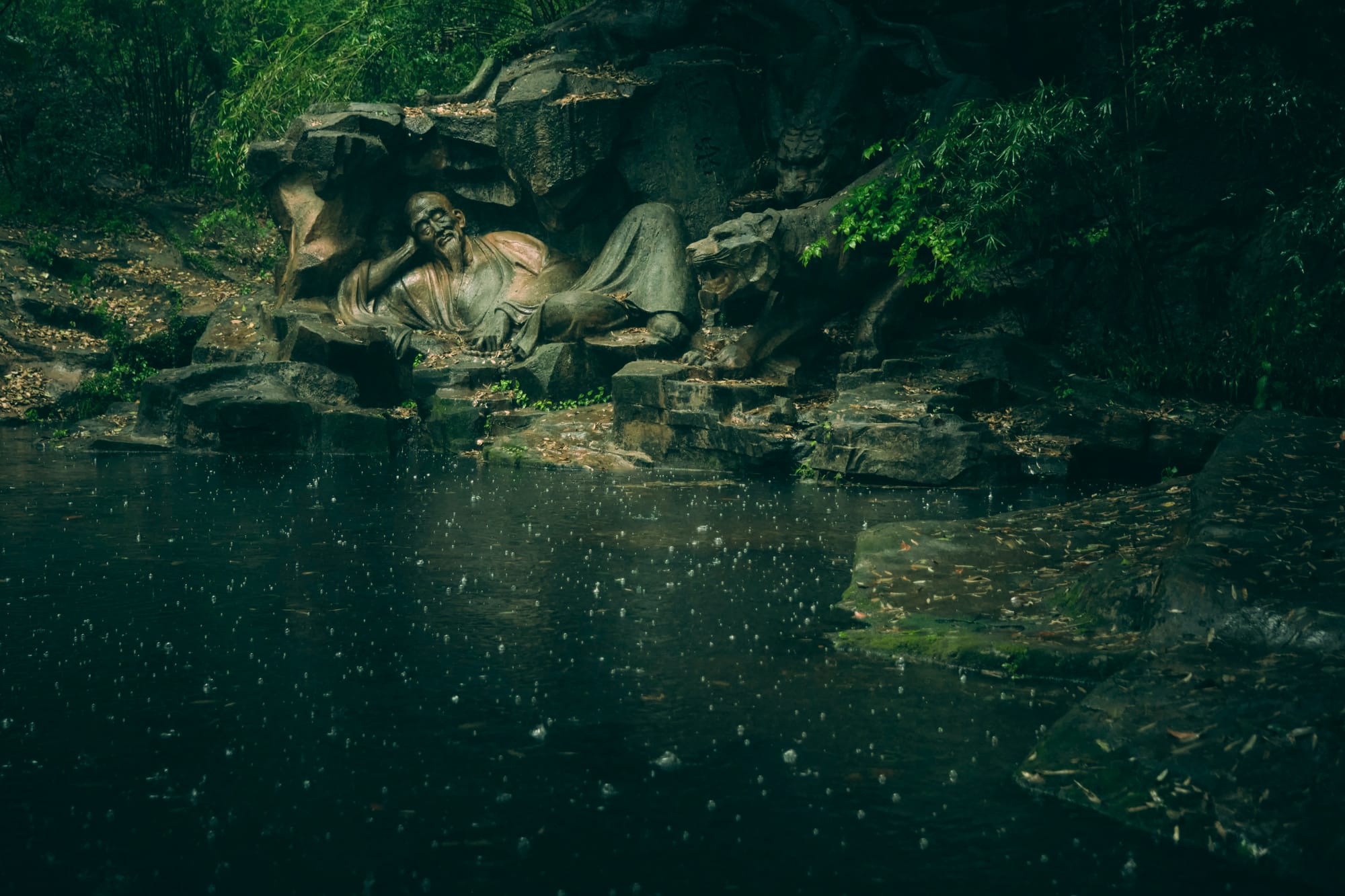
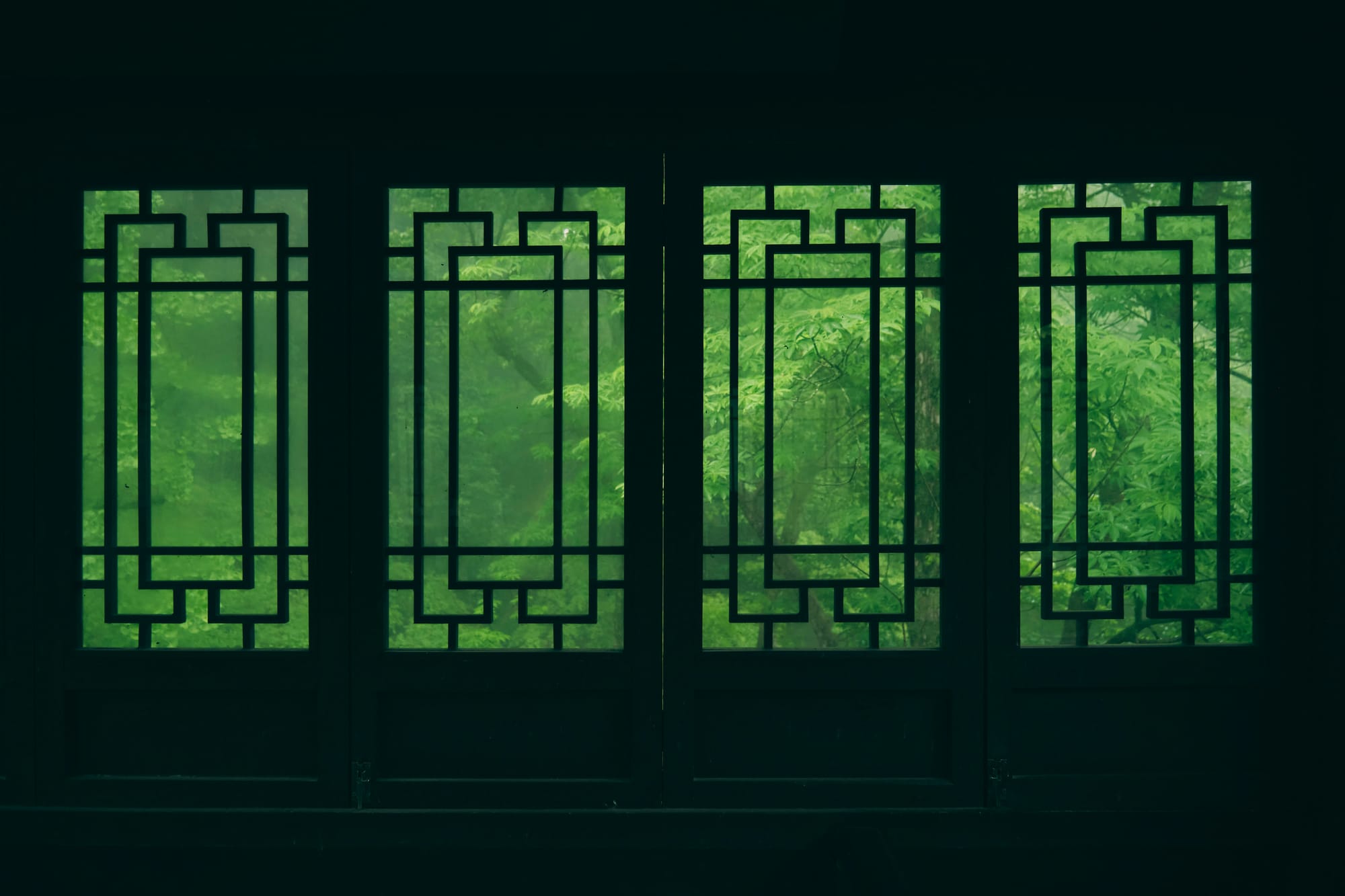
Hupao, or "Tiger Run" — named for a legend in which two tigers clawed open the ground to reveal a spring.
It's one of West Lake's three famous water sources, and by local consensus, the only correct match for Longjing tea — in Chinese tea culture, the water is judged as carefully as the leaf.
The park also holds the resting place of Jigong, the "Mad Monk" of Chinese folklore — a wine-drinking, meat-eating monk who broke every monastic rule yet was beloved for his compassion and trickster wit.
Nearby is the former retreat of Hong Yi, once one of China's most celebrated musicians and artists, who walked away from fame entirely to become one of the strictest monks of his generation.
Quiet, shaded, and rarely crowded — a five-minute walk from West Lake's edge, but a world apart from it.
-六和塔 · Six Harmonies Pagoda
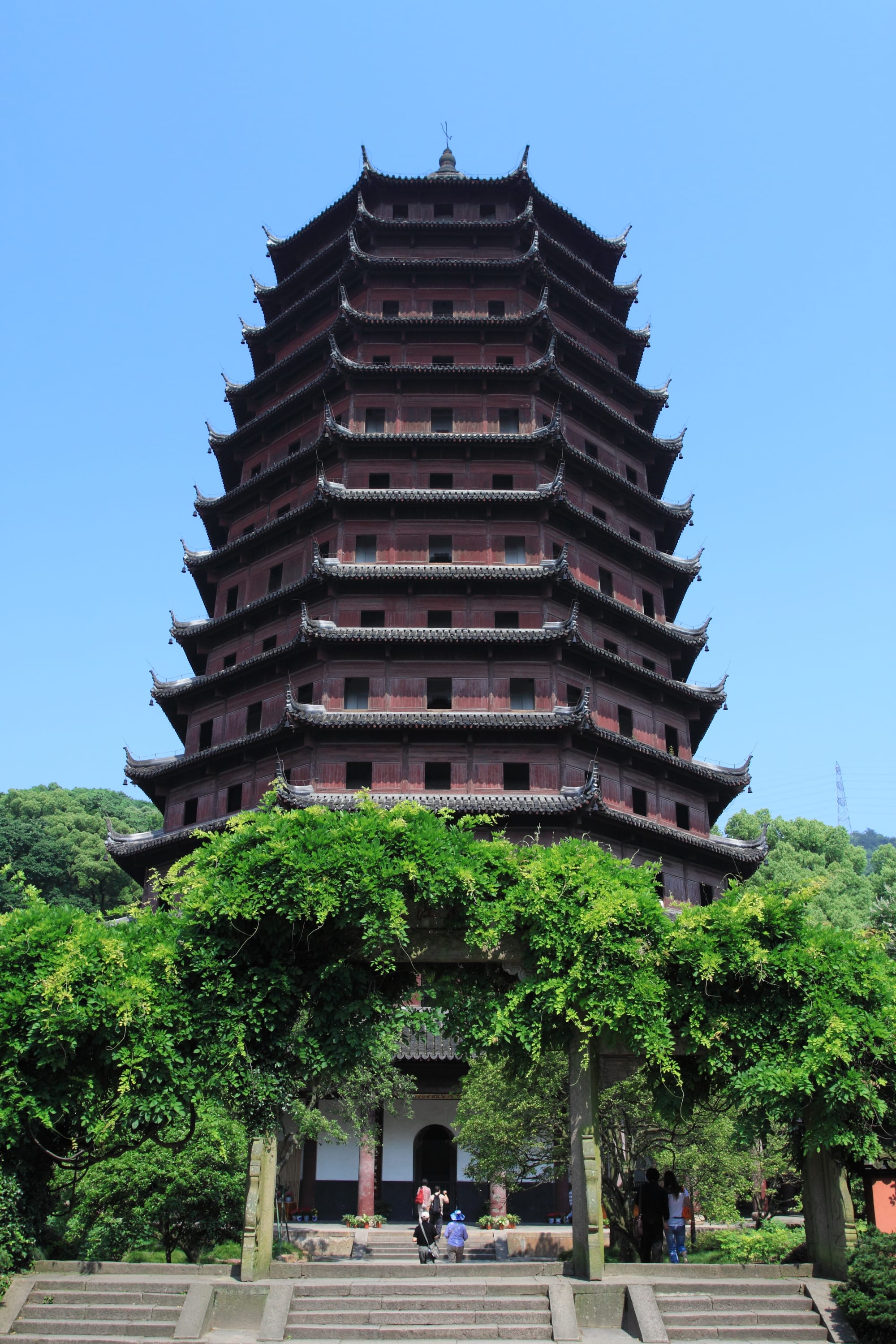
First built in 970 AD on the south bank of the Qiantang River, and still climbable today.
From the top: the river, and the Qiantang River Bridge, China's first combined road-rail crossing, completed in 1937.
The pagoda holds a legendary place in Chinese lore, acting as the setting for the climax of the epic Water Margin. It is here that Lu Zhishen—a character who reads like a Robin Hood-style "Little John" turned Buddhist monk—hears the famous thunder of the river’s tidal bore. In that roaring sound, the brute-turned-ascetic hears a prophecy fulfilled, finding a serene, sudden enlightenment on the pagoda steps just before his death.
History, engineering, and a view, in one stop.
-西泠印社 · Xiling Seal Society
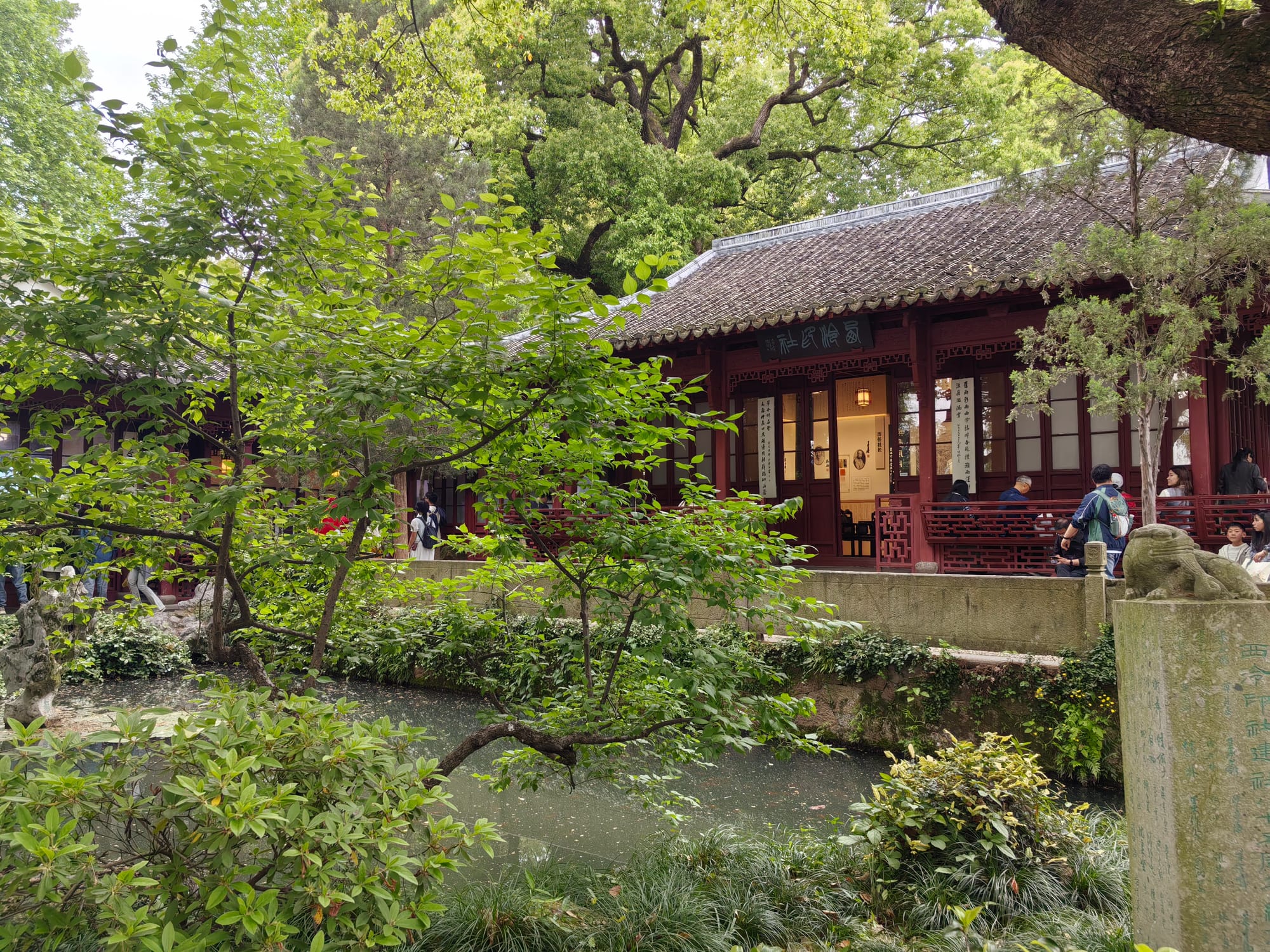
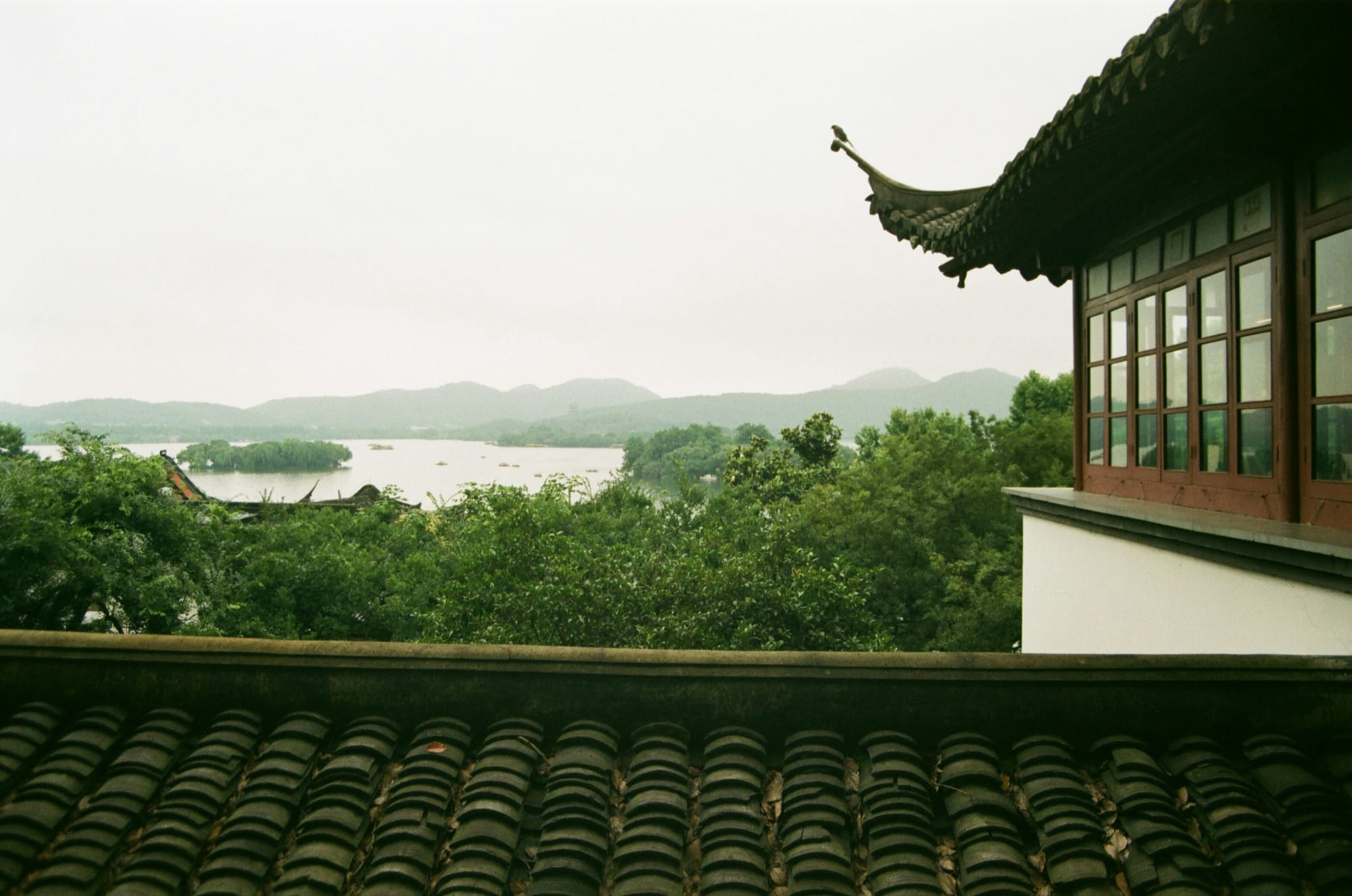
Founded in 1904, this is China's premier institution for seal carving (篆刻) and calligraphy — a serene garden of pavilions and stone carvings on Solitary Hill, worlds away from the West Lake crowds below.
Its founders were young artists devoted to preserving China's ancient inscriptions and seal-carving arts. The society is still thriving today, with over 500 members.
Highlights:
- The Four Springs (四泉): Yin Spring (印泉), Qian Spring (潜泉), Wen Spring (文泉), and Xian Spring (闲泉)— small ponds named for seal-related themes
- Huán Pǔ Jīng Lú (还朴精庐): A 1919 hall hosting seal-carving classes and cultural lectures
- The hilltop pagoda (华严经塔): Small and elegant, with a quiet view over West Lake
Solitary Hill also holds the Zhejiang Provincial Museum and Xiling Bridge — both worth a quick visit — and the Bai Causeway (白堤) connects directly to it.
-满觉陇 · Manjuelong — Best: Late September – Early November
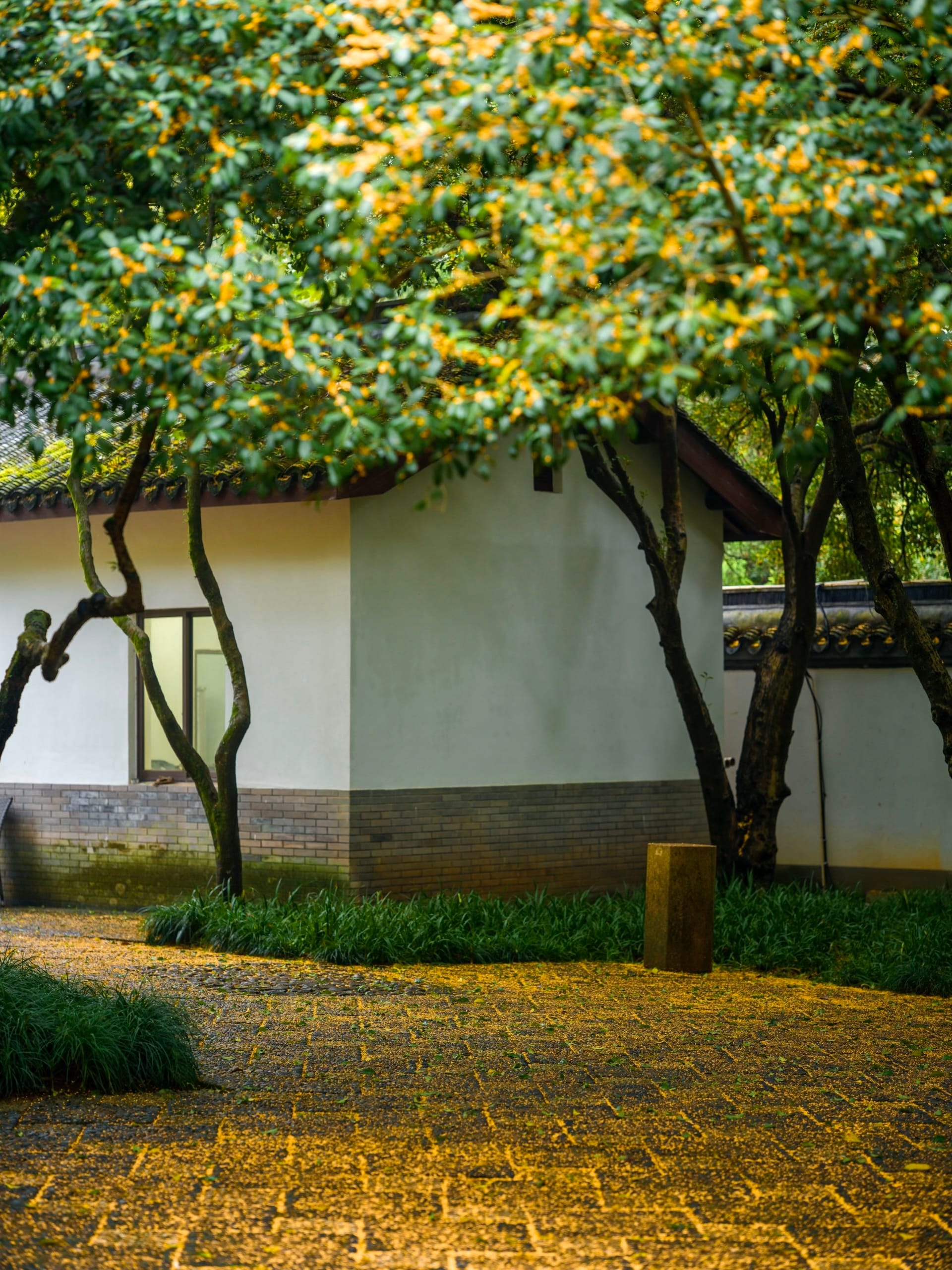
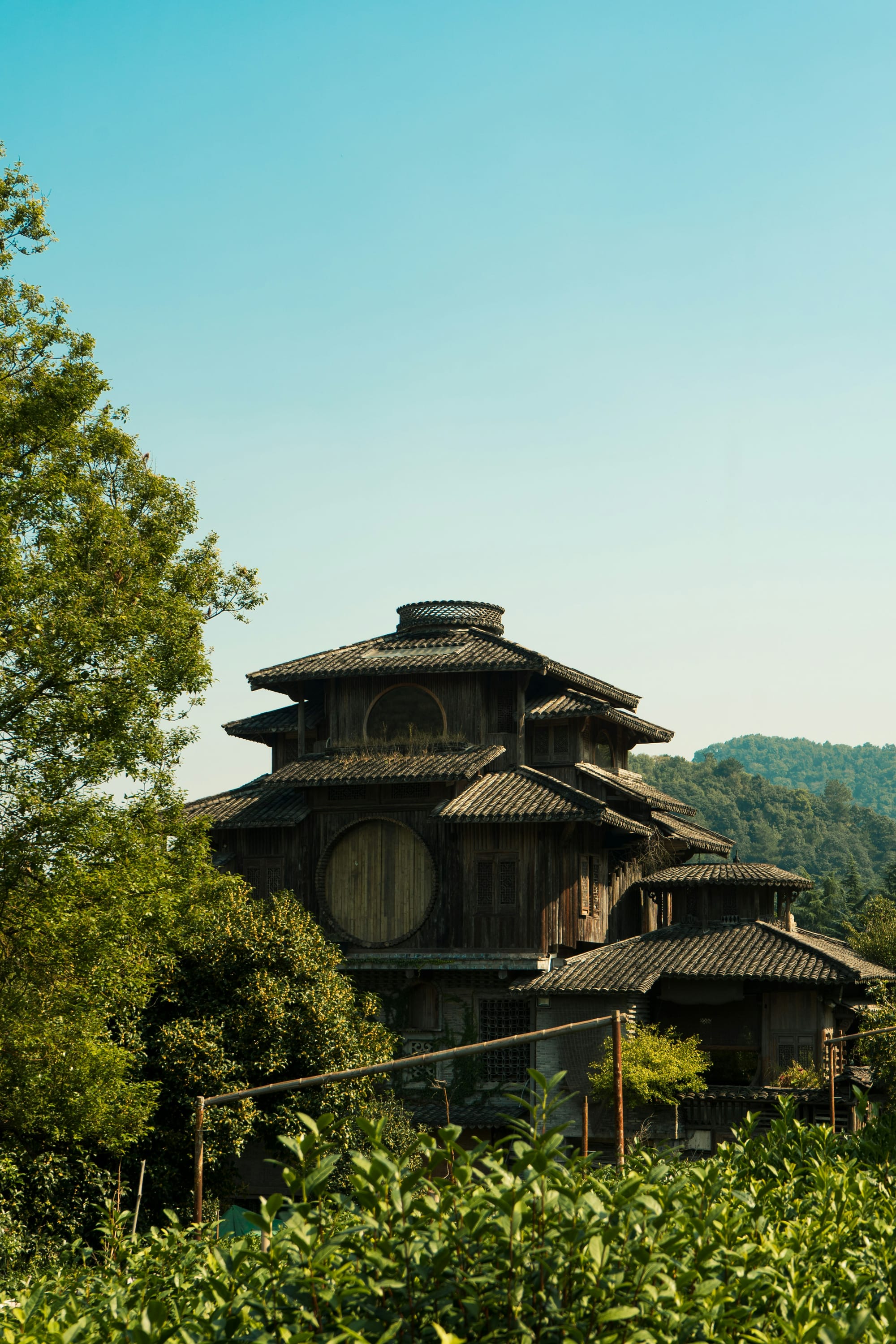
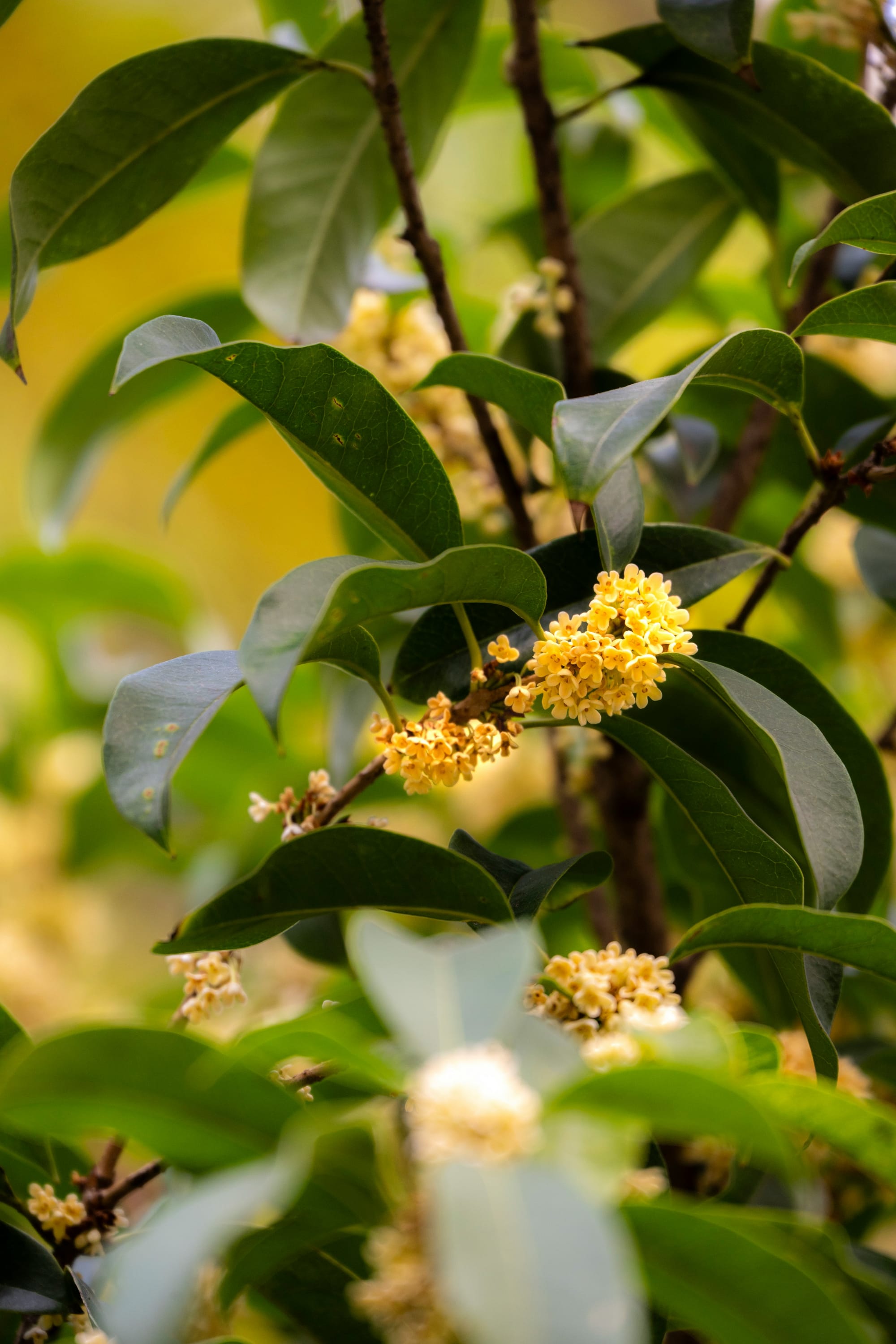
Thousands of osmanthus trees in a small valley southwest of the lake.
From late September through October, the valley fills with the scent of osmanthus blossom, tea houses spill onto the lanes, people come simply to sit under a tree and breathe.
The name traces to a Buddhist temple, Manjue Yuan — "Perfect Enlightenment".
Go if the season lines up.
For the Design-Curious
If industrial conversions and independent studios are your idea of a good afternoon, this one's worth the detour off the usual circuit.
-东信和创园 · Dongxin Hechuang Yuan (Innovation Park)
The furthest from the tourist circuit.
A state-owned telecommunications factory from the 1950s and 60s, its 20 acres now given over to more than a hundred independent design studios, furniture showrooms, ceramics workshops, photography studios, cafés, and galleries. Housed in 61 buildings.
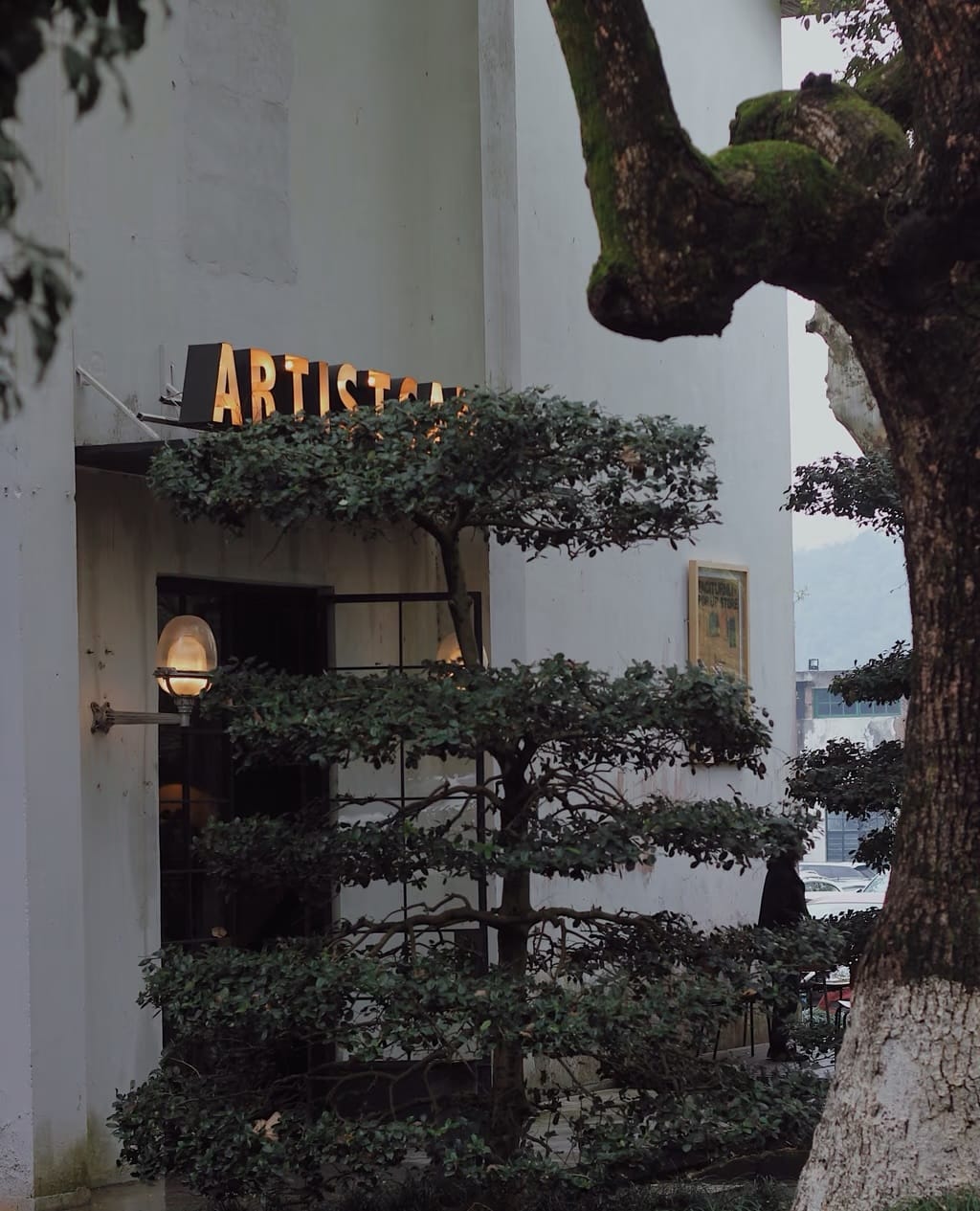
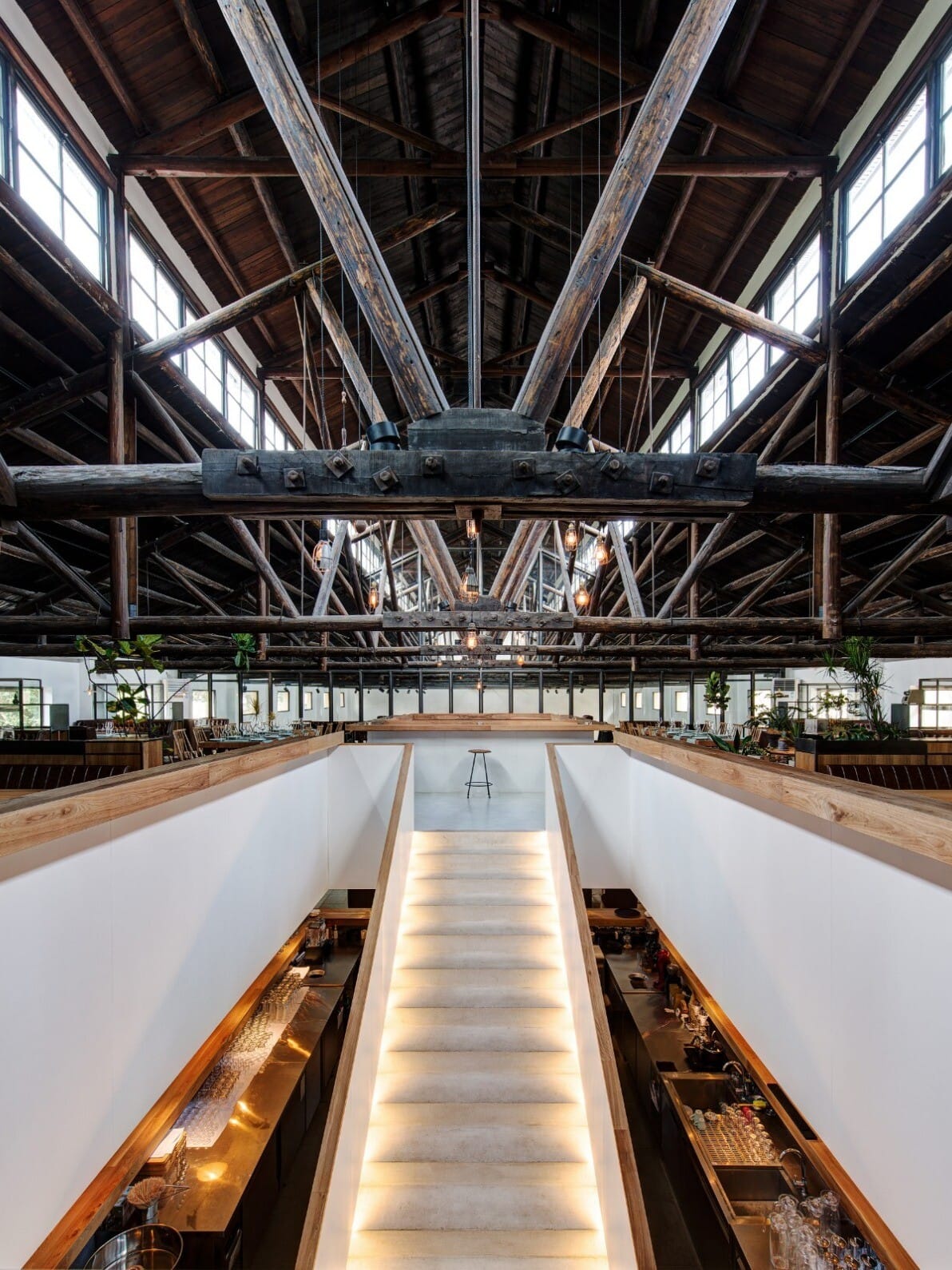
Left: Artistsan, a vintage furniture store. Right: Jintao Kingdom Restaurant. Two residents of Dongxin Hechuang Yuan.
The conversion is deliberately light-handed — peeling paint, moss, uneven concrete left as found — closer in spirit to Berlin's industrial creative quarters than anything else in Hangzhou.
Two anchors especially worth knowing by name: 31 Jian (31间), a former factory building holding a restaurant, an art space, a design hotel, and a lifestyle store, with regular markets. LINE PARK (线形公园) combines indoor showrooms and photography-related spaces with an outdoor area marked by distinctive painted white curves.
Getting there: Located in the Xiaohe Mountain area, roughly 30 minutes by taxi from the city centre.
Requires intent—this isn't a place you pass through on the way to somewhere else.
Day trips from Hangzhou
If you have a day or two to spare beyond the city itself, this is where to spend it.
-桐庐 · Tonglu: The Landscape That Became a Painting
If you've seen Dwelling in the Fuchun Mountains — one of the great scroll paintings of Chinese art — you've already seen Tonglu.
This county, about nineteen minutes from Hangzhou West Station by high-speed rail, is the landscape the fourteenth-century masterpiece was painted from.

Why it's worth the trip
Known as "China's Most Beautiful County," Tonglu sits along the Fuchun River, with deep roots in classical Chinese art and poetry.
It's also known locally as the "kingdom of caves" — more than twenty limestone caves lie scattered across the county, among them Yaolin Wonderland (瑶琳仙境), famed for its stalactite scale, and Tianzi Cave (天子洞), a rarer vertical-shaft formation with a drop said to exceed a hundred metres.
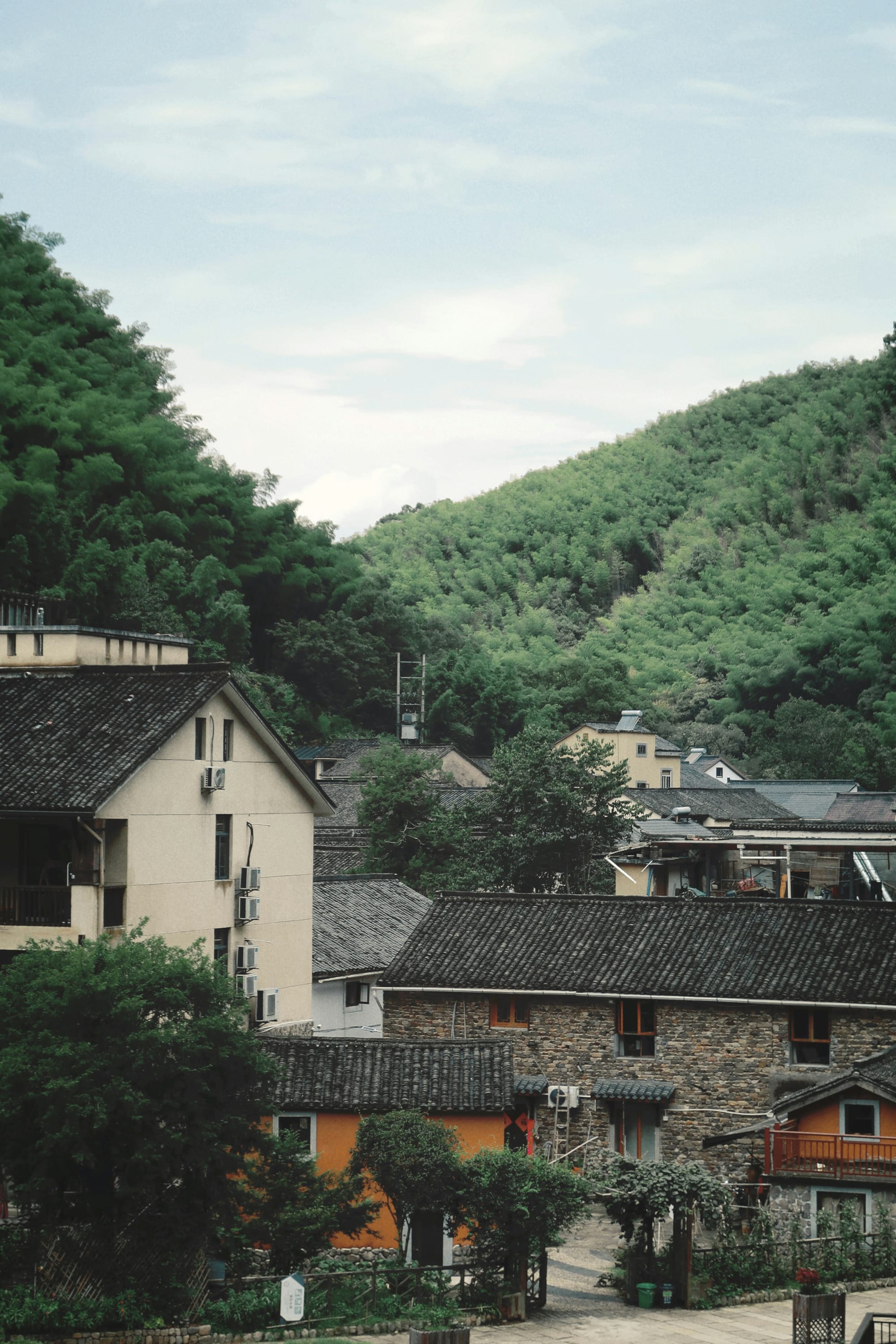
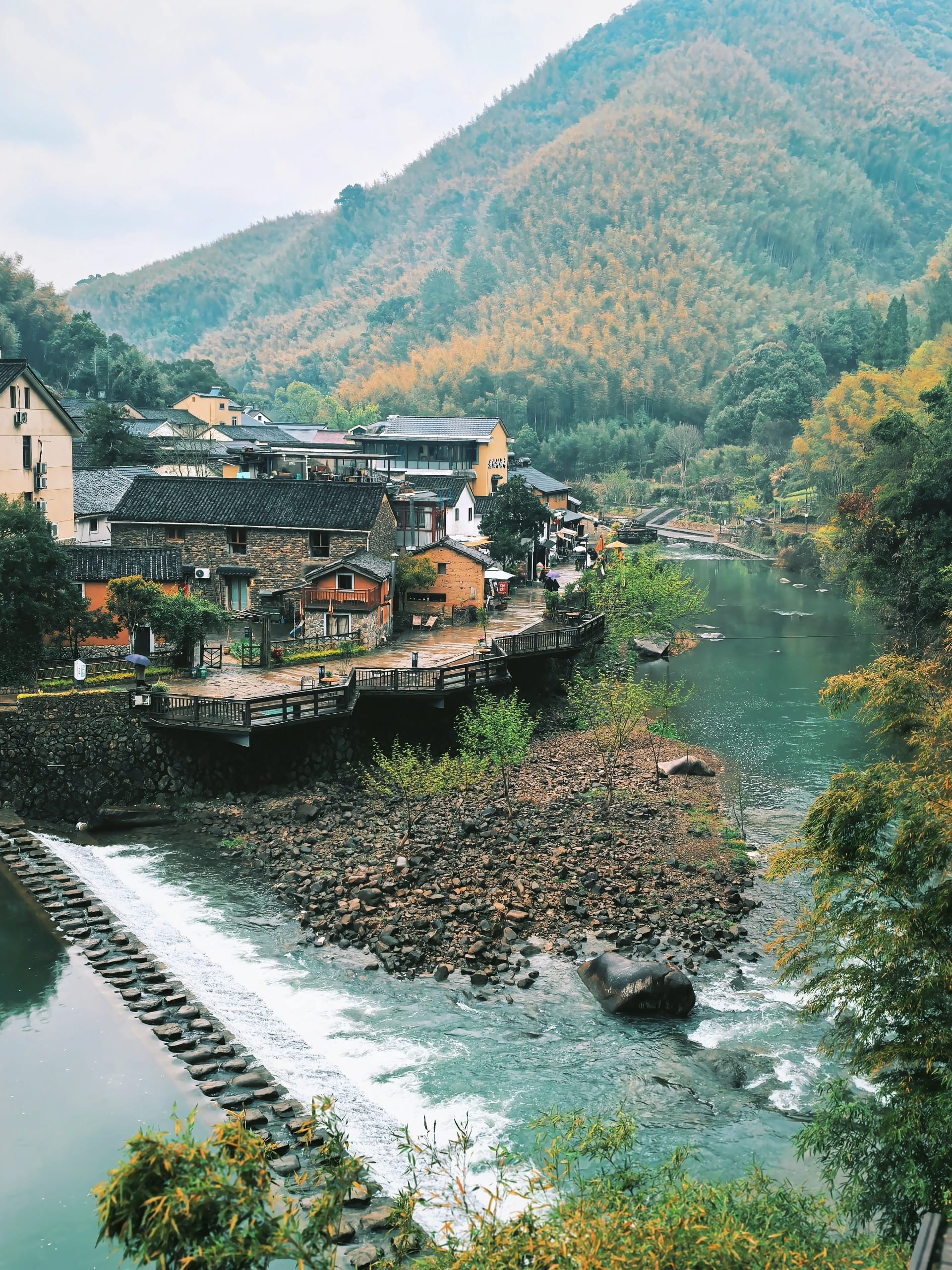
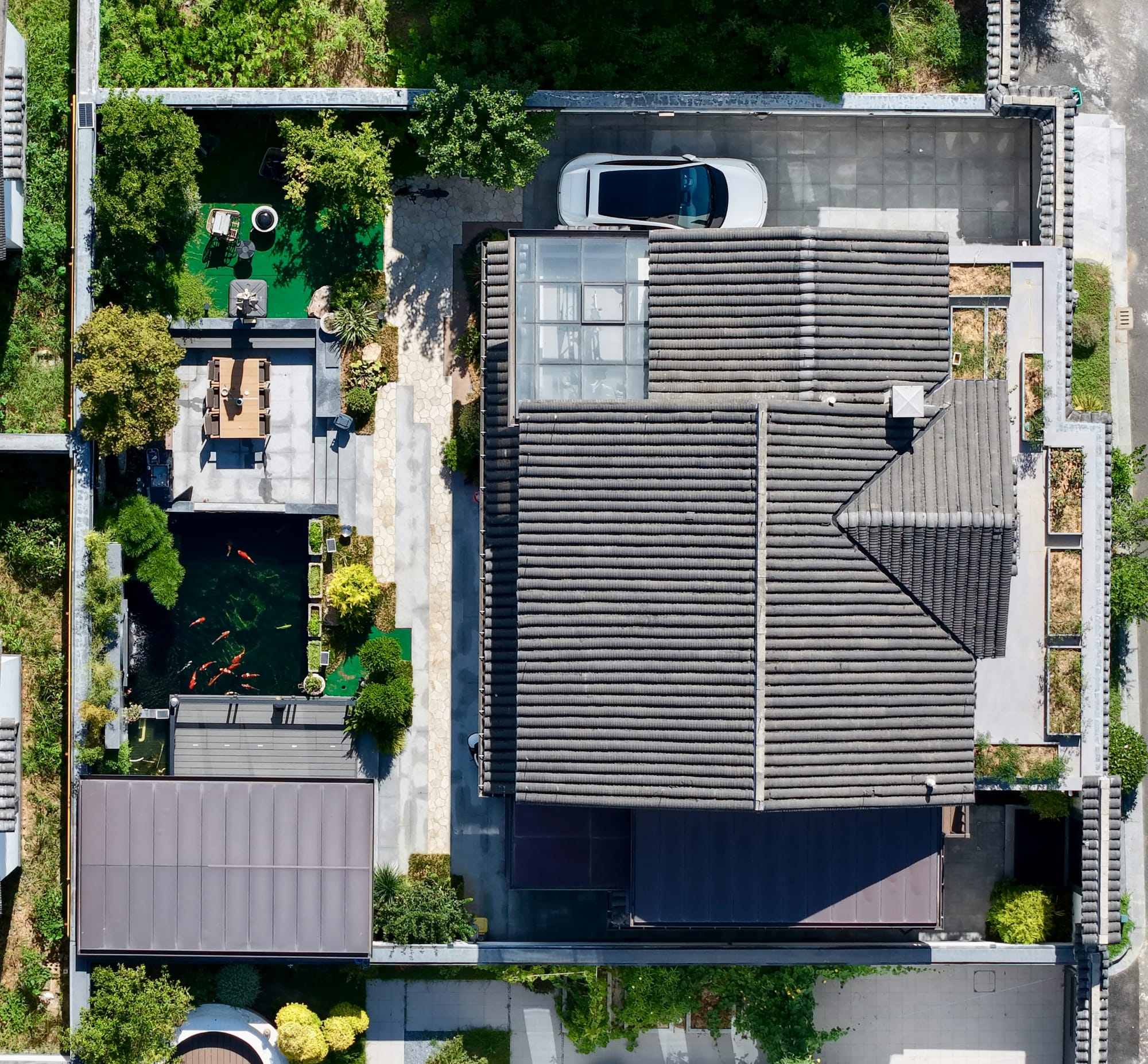
The river itself runs jade-green between bamboo groves and rice paddies, past villages built in the local grammar of white walls and black-tile roofs, the peaks behind them often lost in mist.
What to do
- Fuchun River boat cruise (富春江游船)— the painting, from the water
- Shishe Village (石舍村) — a 400-year-old village with Ming-Qing architecture, now home to galleries and cafés alongside the old houses
- Shen'ao Ancient Village (深澳古村)— over 100 preserved Ming-Qing buildings, around 60 Republican-era buildings and an unusually well-preserved underground water system. Rewarding for its historic fabric with minimal commercial development
- Daqishan National Forest Park (大奇山国家森林公园)— known as the "number one mountain south of the Yangtze," with waterfalls, bamboo forest, and clear pools. (Currently closed for renovation, with no announced reopening date as of mid-2026). The official Tonglu tourism site (Chinese only) has the latest updates — your phone's browser translation should handle it well enough to check current status.)
- Worth knowing for when it reopens: water levels vary significantly by season, and the waterfalls are at their best during Hangzhou's rainy season (typically June) — noticeably less impressive outside that window. Go on a weekday if you can to avoid crowds.
- OMG Heartbeat Park (OMG心跳乐园)— the adventure area associated with the Chuiyun Tongtian River Scenic Area (垂云通天河景区), in a karst valley in Tonglu. Glass walkways, cliff swings and other high-adrenaline experiences, for those who want their scenery with a shot of adrenaline.
Cave, Climb, Coffee
- G·A·P 地表逃离计划 Ground Escape Plan
Also hidden inside the Chuiyun Tongtian River (垂云通天河) scenic area, this is one of East China's first cave via ferrata routes.
The experience opens with Dixing Fangzhou (Star Ark) 地星方舟 — a small boat that carries you along an underground river into a karst cave estimated at 100 million years old.
Once inside, two routes branch off: the longer A-line for experienced climbers, and the gentler B-line, built for beginners and couples. Gear is professional-grade, and the cave holds a constant temperature year-round, so weather is never a factor.
Packages start from 298 RMB, covering the boat ride, the climb, and a coffee (or a speciality drink) at the Cave Café.
岩咖啡 · The Cave Café
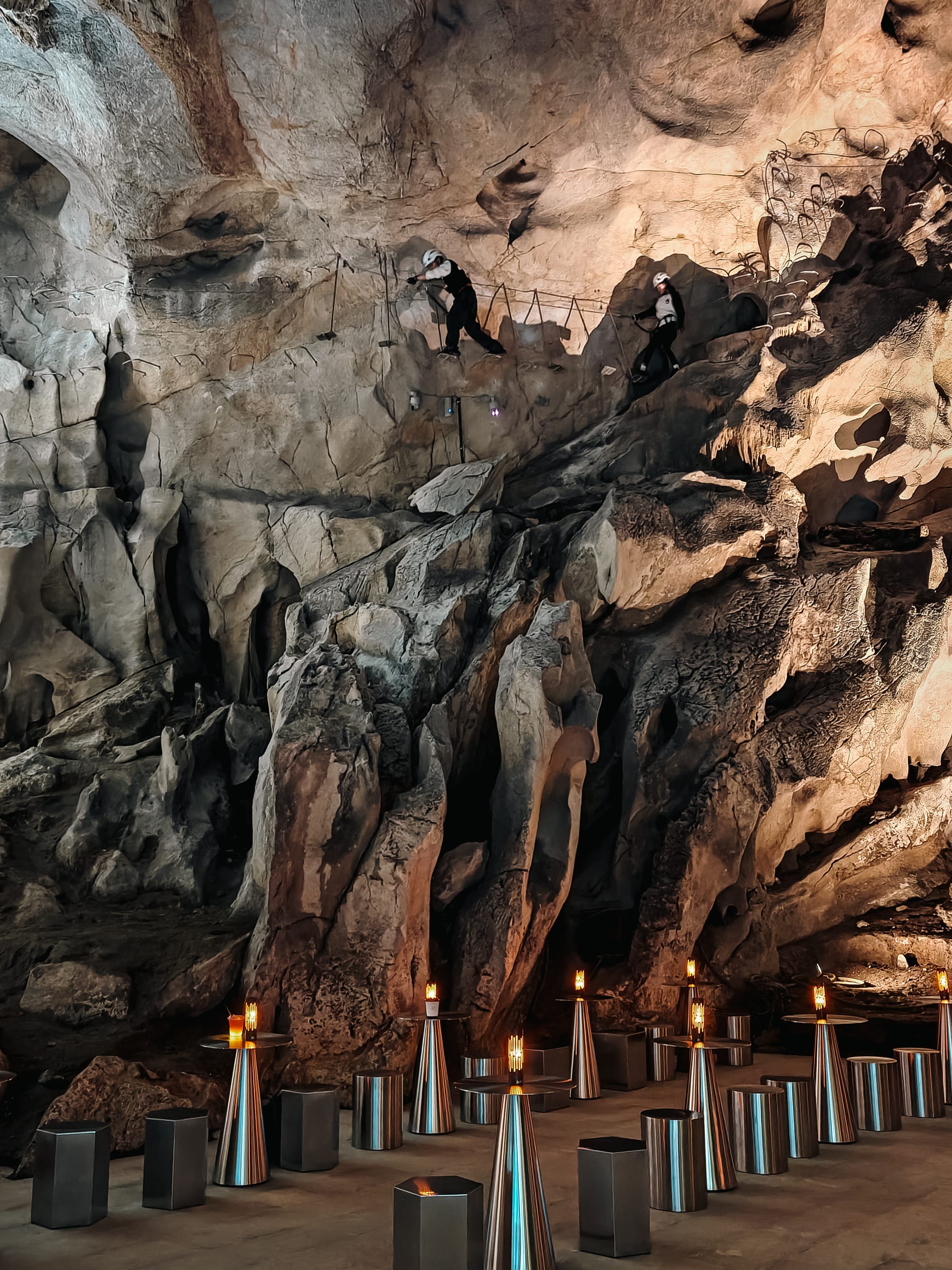
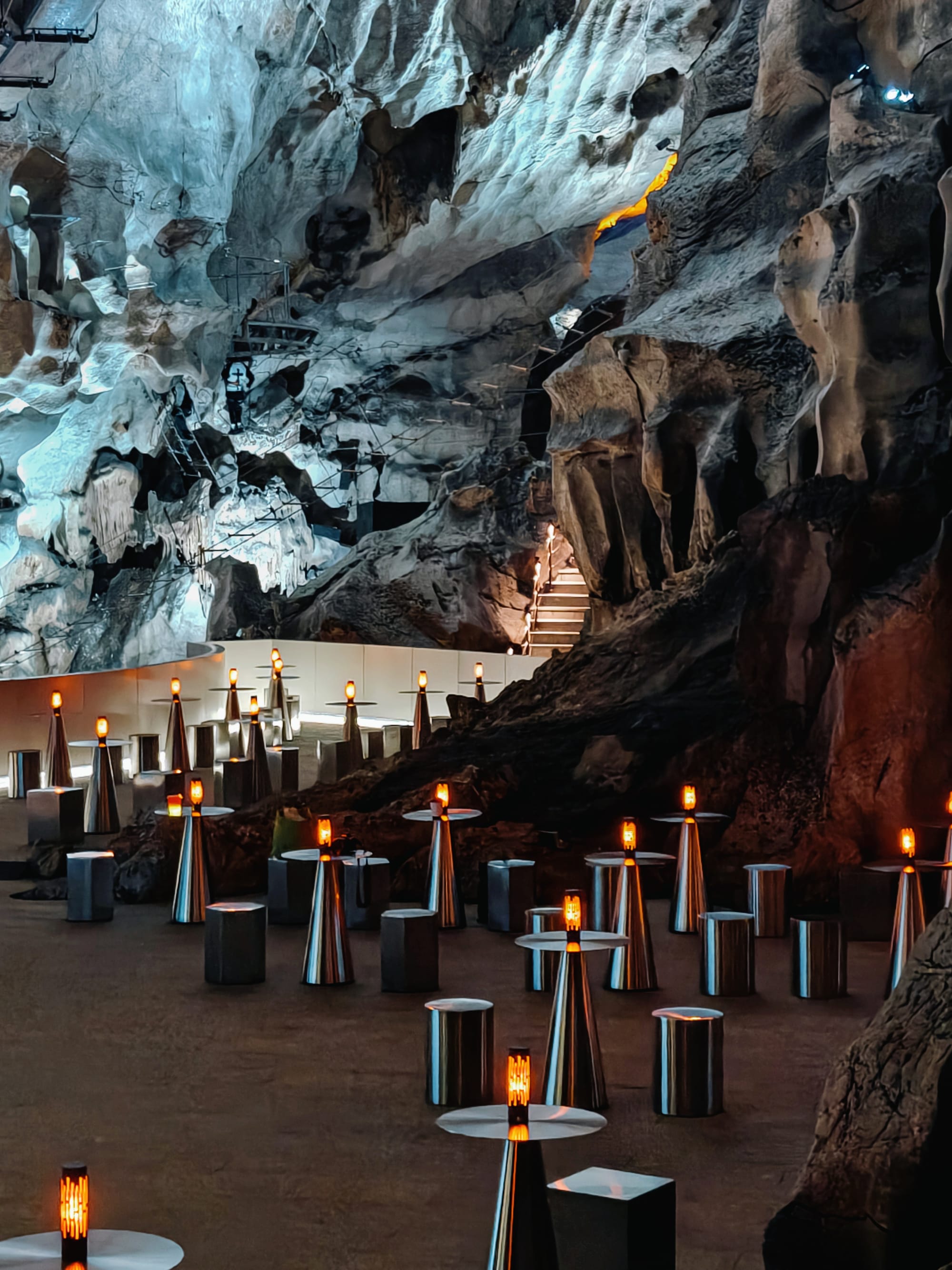
There's no separate entrance for 岩咖啡 — it exists only as part of the GAP experience, set among the cave's stalactites and stalagmites. The name, meaning "rock," is less branding than description.
Skipping the climb doesn't mean skipping the café: the 单人岩咖啡 ticket (around 99 RMB) includes the round-trip boat ride and one coffee, for those who want the atmosphere without the ropes.
It's a rare kind of quiet — cinematic, subterranean, and unlike anywhere else on this list.
Local eats
Tonglu’s river is its pantry. A local proverb famously claims that if river fish held an Olympics, the champion would be born here—yielding mandarin fish, yellow eel, river shrimp, and lake snails.
Usually steamed, braised, or delicately finished with shimmering scallion oil, they are prepared with simple restraint to let the water’s natural clarity shine through.
Getting there: High-speed rail is the seamless choice, requiring an effortless nineteen minutes from Hangzhou West Station to Tonglu East on a frequent, rapid connection. Alternatively, an intercity coach runs from downtown Hangzhou, offering a slower, 100-minute crawl for those in less of a hurry. 90 mins from Hangzhou by car.
Route Pairings: The destination works beautifully as a standalone one-to-two-day escape, or as a perfectly logical, one-way transitional leg on a longer route southwest toward Yiwu (义乌), the "world's supermarket."
Practical note: Tonglu’s appeal is seasonal and deeply elemental. Spring and summer bring emerald waters and lush hillsides; autumn offers clear skies and golden harvests; winter replaces the crowds with drifting mist and a slower, quieter rhythm.
End of Guide