Chongqing
A '8D city' where a train runs through a building, and a fortress once stopped an empire
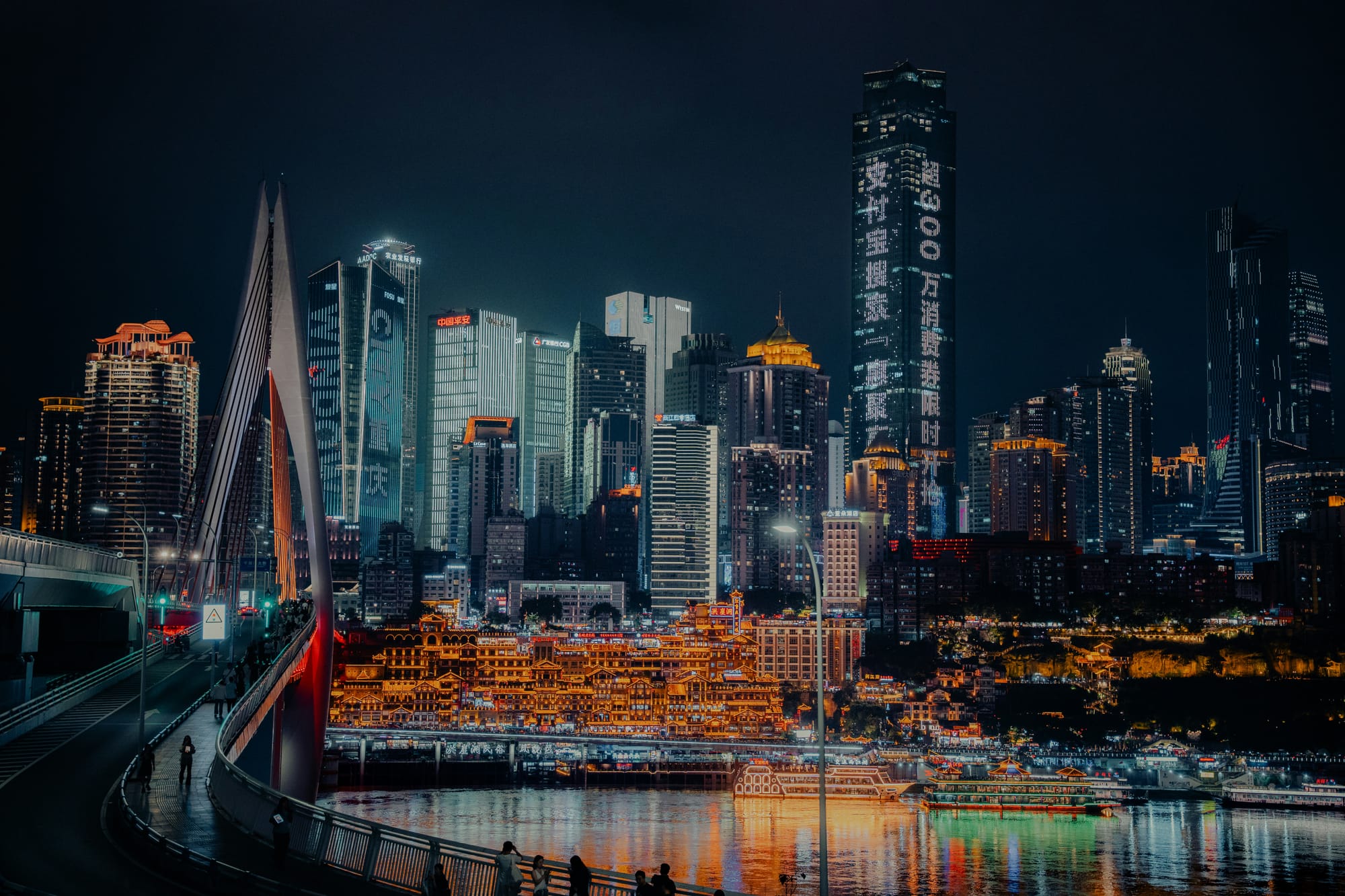
Chongqing might be the single hardest Chinese city to understand through a map. GPS routinely fails here, because roughly three-quarters of its terrain is mountain.
Two rivers — the Yangtze and the Jialing — meet in the city centre, leaving so little flat ground that Chongqing had nowhere to go but up and down at once. The result is what locals call "8D urbanism": you think you're on the ground floor, step outside, and discover you're actually on a 22nd-floor sky terrace.
But what actually sets Chongqing apart is how deep its history runs underneath it — fossil evidence of human activity here dates back nearly 2 million years, and the city has spent every century since layering migration, war, and reinvention directly on top of itself.
36 years
The length of the Diaoyu Fortress siege (1243–1279) — a defense so effective it halted the Mongol Empire's westward conquests entirely
- THE EXPERIENCE
Liziba Station is the gateway to Chongqing's famous verticality. Line 2 cuts directly through the eighth floor of a mixed residential-commercial tower — as the train pulls in, you can see lit living-room windows and laundry hanging to dry through the carriage window, then burst out the other side into a full view of the Jialing River. The city built a dedicated viewing platform at Exit A for catching the moment the train emerges from the building.
South Bank Road (南滨路) traces Chongqing's 1891 opening to foreign trade — a stretch of century-old trading houses, former consulates and churches along the Yangtze, physical evidence of the city's forced, complicated embrace of the outside world. A local saying puts it simply: "one road, half of Chongqing's history."
The WWII wartime capital sites, scattered through Liziba and across the city, mark Chongqing's years as China's provisional capital and the Allied command centre for the Asian theatre of WWII.
Diaoyu Fortress (钓鱼城), about 90 minutes from the city centre in Hechuan, is where Chongqing enters world history. Between 1243 and 1279, Southern Song forces held this clifftop fortress against the Mongol Empire for 36 years, forcing the Mongol armies to withdraw and collapsed their planned conquest of Europe and the rest of Asia. Europeans later called it "the place where God's whip was broken." Stand on the wall today and you're standing on a 700-year-old defense line, with the three rivers it guarded still meeting just below.
Dazu Rock Carvings (大足石刻), about 40 minutes from the city by high-speed rail, is China's second cave-art UNESCO World Heritage Site after Dunhuang, inscribed in 1999. Carved from the early Tang (618–907 CE) through the Song (960–1279 CE), its figures are deliberately human-scaled rather than distant and godlike — scenes of filial devotion and farming blended directly with Buddhist teaching.
- BEST FOR
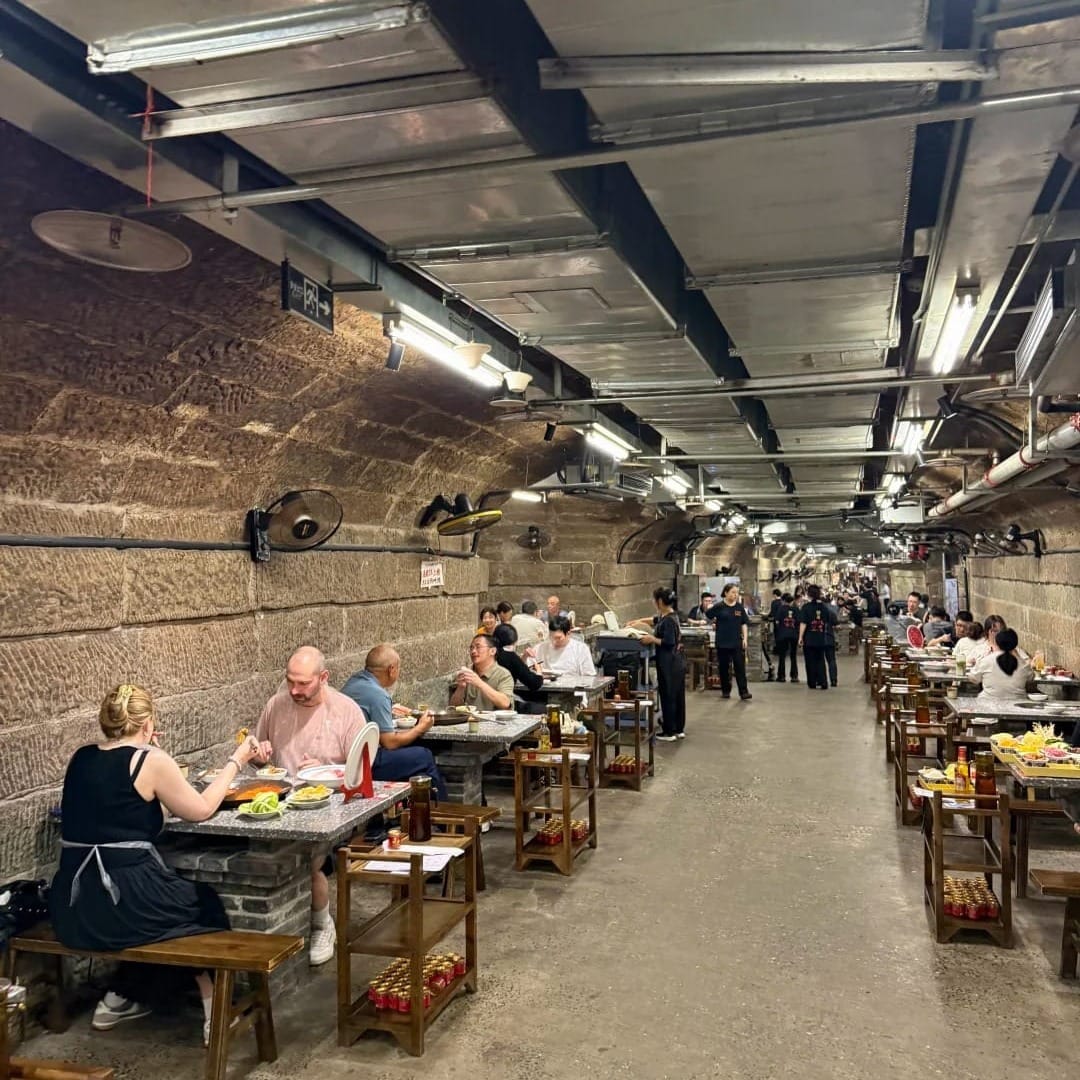
Interest in how geography, war, migration and trade shape a place. Ancient, imperial, and contemporary history, all layered together. World-famous spicy food and hotpot. Dramatic night scenery.
- MAY NOT BE FOR YOU IF
You want an easy city to navigate — getting lost in Chongqing isn't a detour, it's the itinerary. You're not up for serious walking and stair-climbing. You can't handle spice — even "mild" here runs hot.
Hot, humid summers wear you down — the basin geography traps heat and moisture, so summer swings between 80%+ humidity and torrential rain, turning the city into a giant steamer.
- HOW LONG?
3–4 days: one for Liziba, the river crossings and the old quarter; one for Hongyadong at night and hotpot; one for Huguang Guild Hall, South Bank Road and the wartime sites; one full day trip to Diaoyu Fortress or Dazu Rock Carvings, if you want the deeper history.
- GETTING THERE
Chongqing Jiangbei International Airport connects to most major domestic cities. The light rail network reaches most major sights directly.
- PAIRS WELL WITH
Chengdu, about 1.5 hours by high-speed rail, for pandas and a slower pace · Dazu District, under an hour, for rock carvings · Hechuan, about 1.5 hours, for Diaoyu Fortress
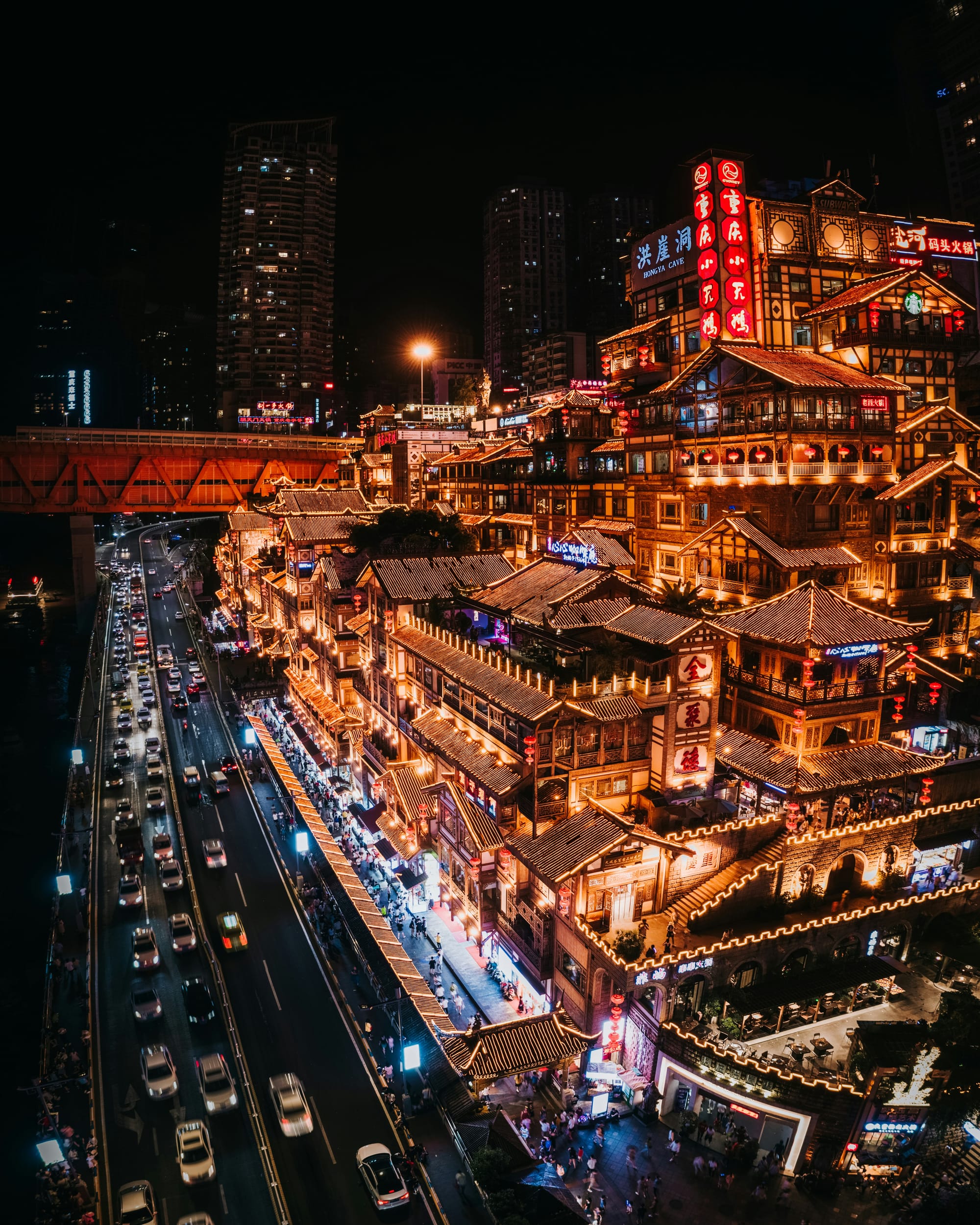
Check Hongyadong's lighting schedule before planning your evening — it runs roughly 6:30–7:30pm, shifting with sunset.
Diaoyu Fortress is still developing its visitor infrastructure as it pursues 5A status and UNESCO consideration, so expect something closer to a real historical site than a polished attraction.