Xi'an
Where the Silk Road began, and 13 dynasties built on top of each other.
Xi'an was China's capital in its most outward-looking era — the Tang dynasty, when it sat as the eastern terminus of the Silk Road and the city Marco Polo would have recognised as the centre of the known world.
Over 3,100 years of city-building and more than 1,100 years as a capital across 13 dynasties have left history stacked in layers here, much of it still standing: a fully intact city wall you can still bike around, and an emperor's army that spent over two thousand years underground before anyone knew it was there.
- THE EXPERIENCE
Xi'an is several cities in one frame: an open-air history book, a living Muslim quarter that's been continuously inhabited for over a thousand years, a pilgrimage site for the Buddhist scriptures that shaped Chinese civilisation, and one of the best street-food circuits in the country.
The wall is where that history becomes something you can physically move through: built in 1370, still complete, wide enough to bike the entire loop.
The Terracotta Army sits about 45 minutes to an hour outside the city — thousands of life-size soldiers, each with a distinct face, still standing in the battle formation built to guard Qin Shi Huang in death, discovered by farmers digging a well in 1974.
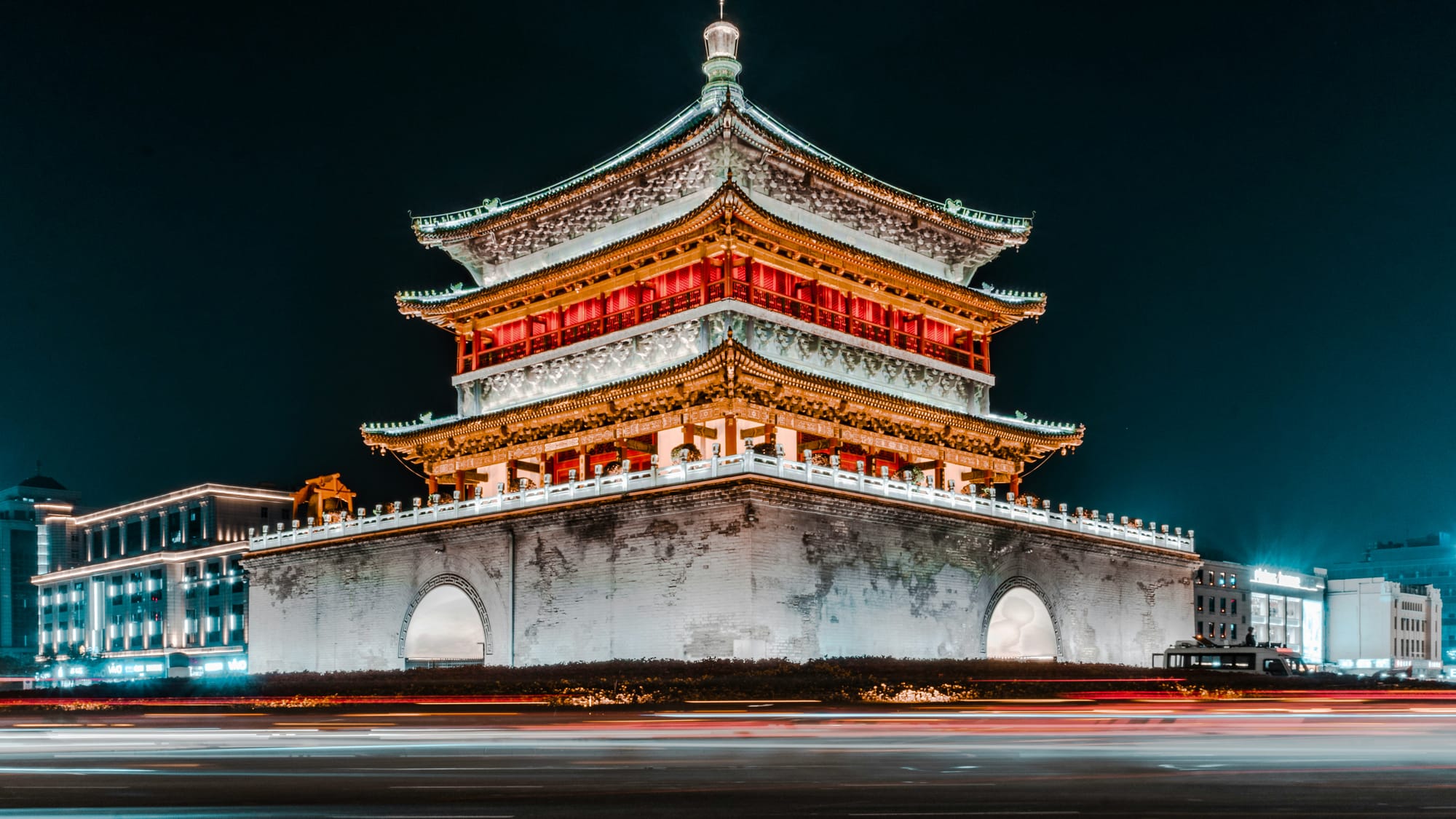
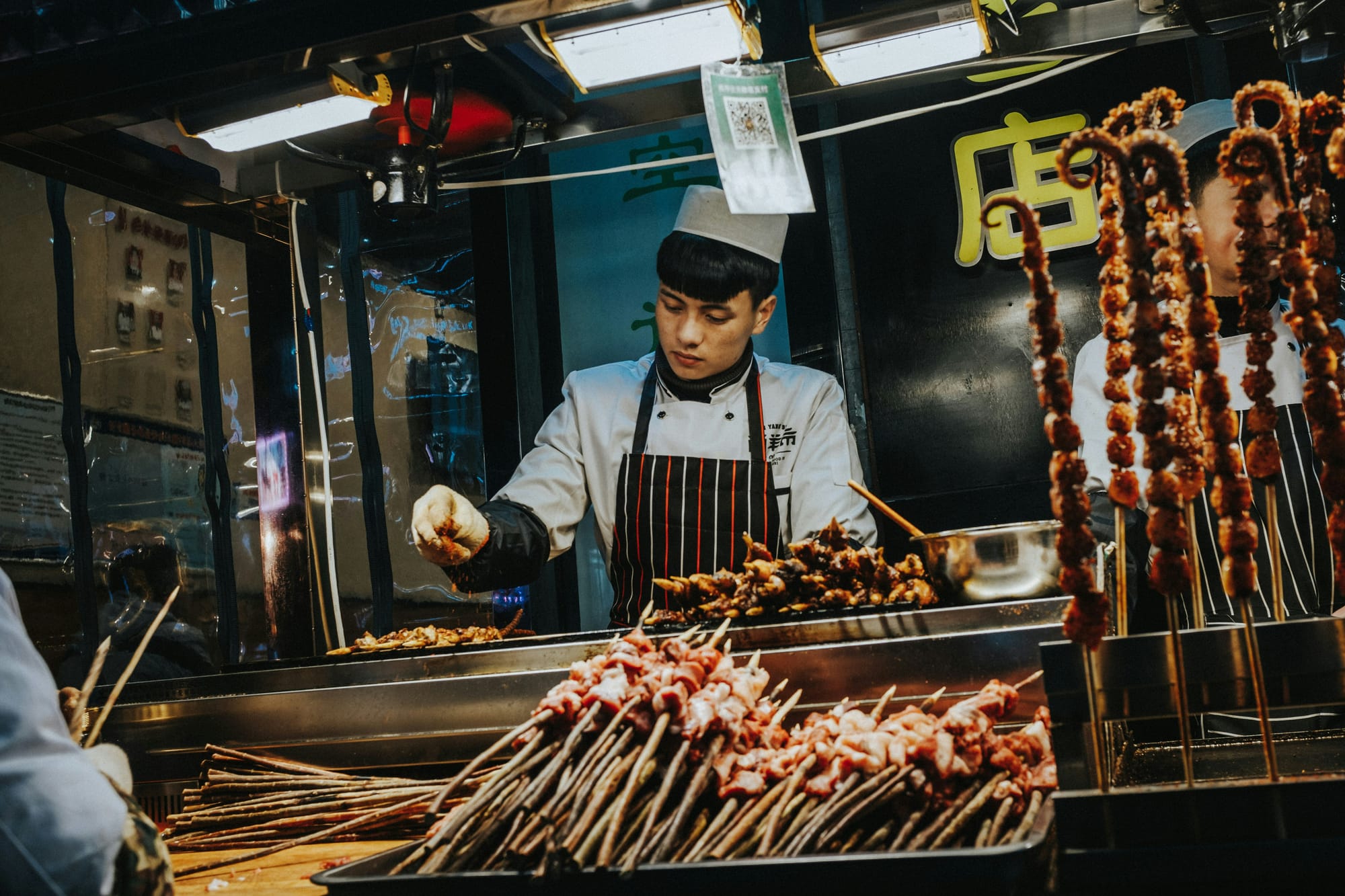
The Muslim Quarter, the old Hui Chinese neighbourhood behind the Drum Tower, is thick with street food — roujiamo, cumin lamb skewers, persimmon cakes — and centred on the Great Mosque, founded in 742: mosque architecture built entirely in Chinese temple form.
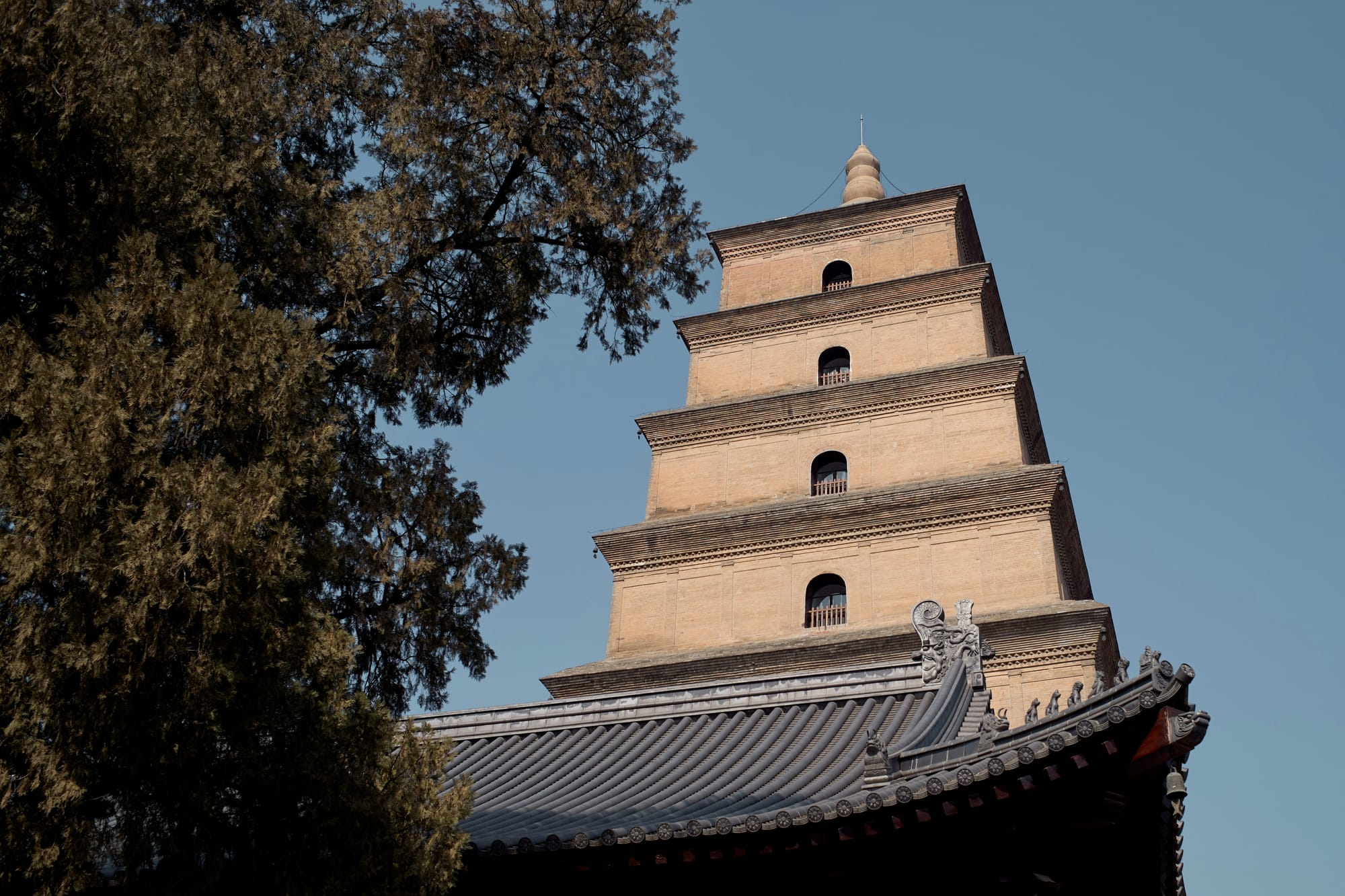
Nearby, the Giant Wild Goose Pagoda was built in 652 to house the Buddhist scriptures the monk Xuanzang carried back from India — faith sitting at the crossroads of Chinese and Indian civilisation.
- BEST FOR
Anyone who wants China's most famous archaeological find in person. Travellers who want a walkable, human-scale old city after Beijing's sprawl. Food-first travellers, and anyone drawn to Buddhism, Islam and Chinese tradition sharing one city.
- MAY NOT BE FOR YOU IF
You want to see everything in a single day — the Terracotta Army alone is a half-day round trip at minimum, and most of Xi'an's headline sights run on advance booking systems.
You want nature to be the main event. Xi'an's draw is urban, walkable, and archaeological; the Qinling mountains and scenic areas like Cuihua Mountain, while spectacular, are day trips from the city.
You want a buzzing, ultra-modern megacity front and centre — Xi'an is thoroughly modern, but it's selling you what's underneath it.
- HOW LONG?
2–3 days: one for the Terracotta Army, one for the wall and the Muslim Quarter, an optional third for the Shaanxi History Museum and the Giant Wild Goose Pagoda. Repeat visitors can add Han Yang Ling Mausoleum, an underground Han-dynasty tomb museum, or simply eat your way through the city.
- GETTING THERE
From Beijing, the fastest high-speed trains take about 4 hours 10 minutes. Xi'an also has its own airport, Xianyang International, about 25km from the city centre.
- PAIRS WELL WITH
Beijing, about 4 hours by high-speed rail, for the other imperial capital · Chengdu, about 4 hours, for pandas and a slower pace · Luoyang, under 2 hours, for more early-dynasty history along the same corridor
Terracotta Army tickets are digital only, real-name, and bookable up to 7 days ahead — bring the physical passport used to book, it's scanned at entry. In peak season (March–November) and around Chinese national holidays, book as early as possible, expect heavy crowds.
Bike rental on the wall runs about ¥45 (single) or ¥90 (tandem) for 3 hours, plus a ¥100 deposit per bike. Rental points are open roughly 8:00–22:00. Age limits apply.
The Shaanxi History Museum is free but requires booking via its official WeChat account 5 days ahead — tickets are released daily at 5pm and go quickly. The museum is closed on Mondays.