Kaifeng
A city buried six times over, and reborn as its own most famous painting
Kaifeng doesn't carry the name recognition of Xi'an or Beijing, even though it was China's capital for over 200 years during the Northern Song, one of the country's most sophisticated and prosperous eras.
Centuries of Yellow River flooding buried six cities that were built here (from the Warring States era to Qing Dynasty), layered from 3- 14 meters underground, with the oldest one on the bottom. City walls on city walls, roads on roads.
Archaeologists call it a "superimposed ancient-and-modern city" — and its central axis hasn't moved in over a thousand years.
Walk down Zhongshan Road today and you're standing on the Northern Song emperor's own royal avenue.
- THE EXPERIENCE
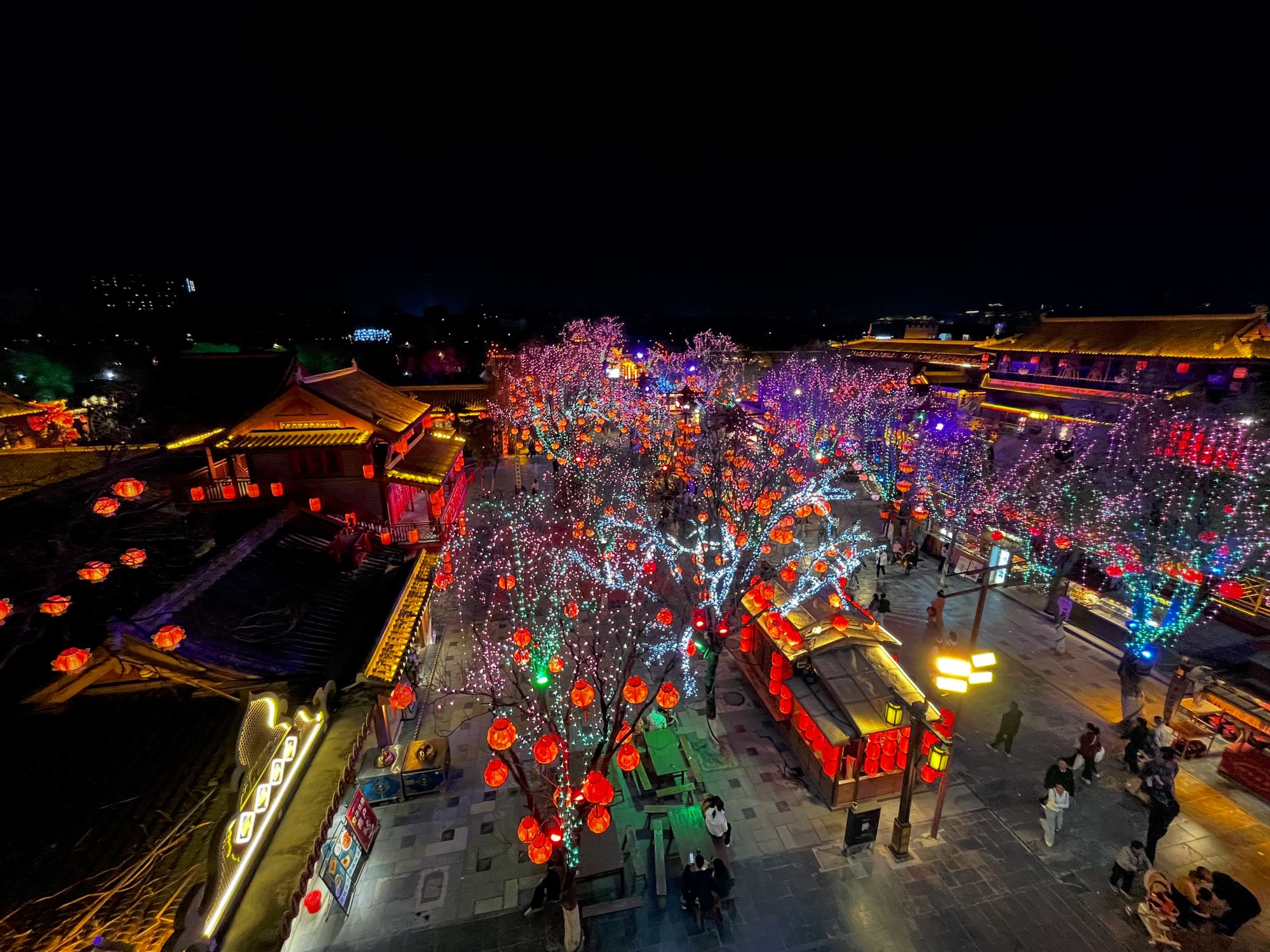
- Millennium City Park (清明上河园). This experiential park takes its entire layout from Along the River During the Qingming Festival, a 12th-century handscroll by court painter Zhang Zeduan — arguably the single most famous painting in Chinese history, a five-metre-long panorama of everyday life in the Northern Song capital: boats, bridges, market stalls, teahouses, thousands of individually drawn figures.

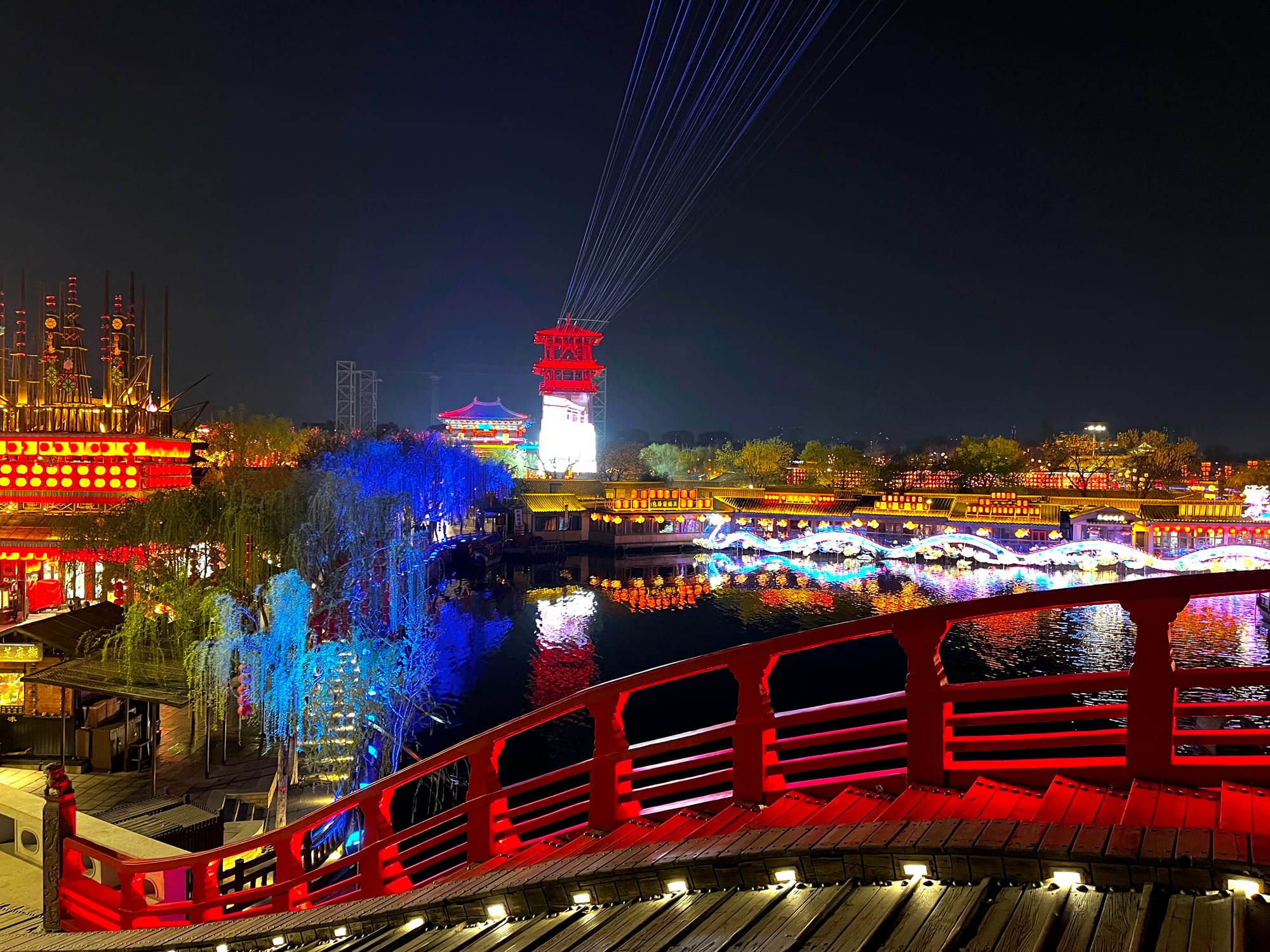
Left: Zhang Zeduan, Along the River During the Qingming Festival (detail of wooden bridge), 12th century, ink and color on silk. Collection of The Palace Museum, Beijing. Image: Wikimedia Commons (Public Domain). Right: The recreated bridge today at Millennium City Park.
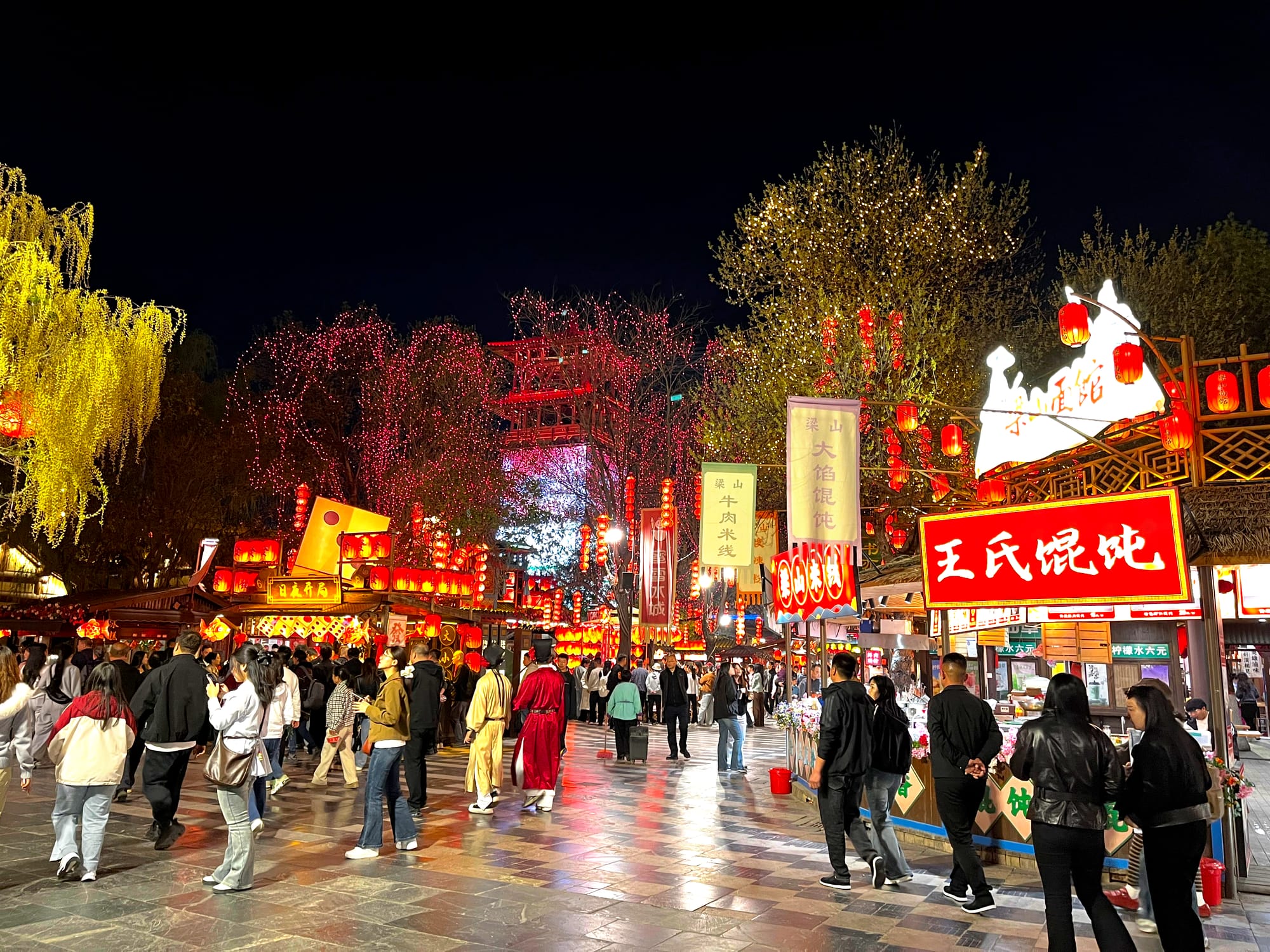
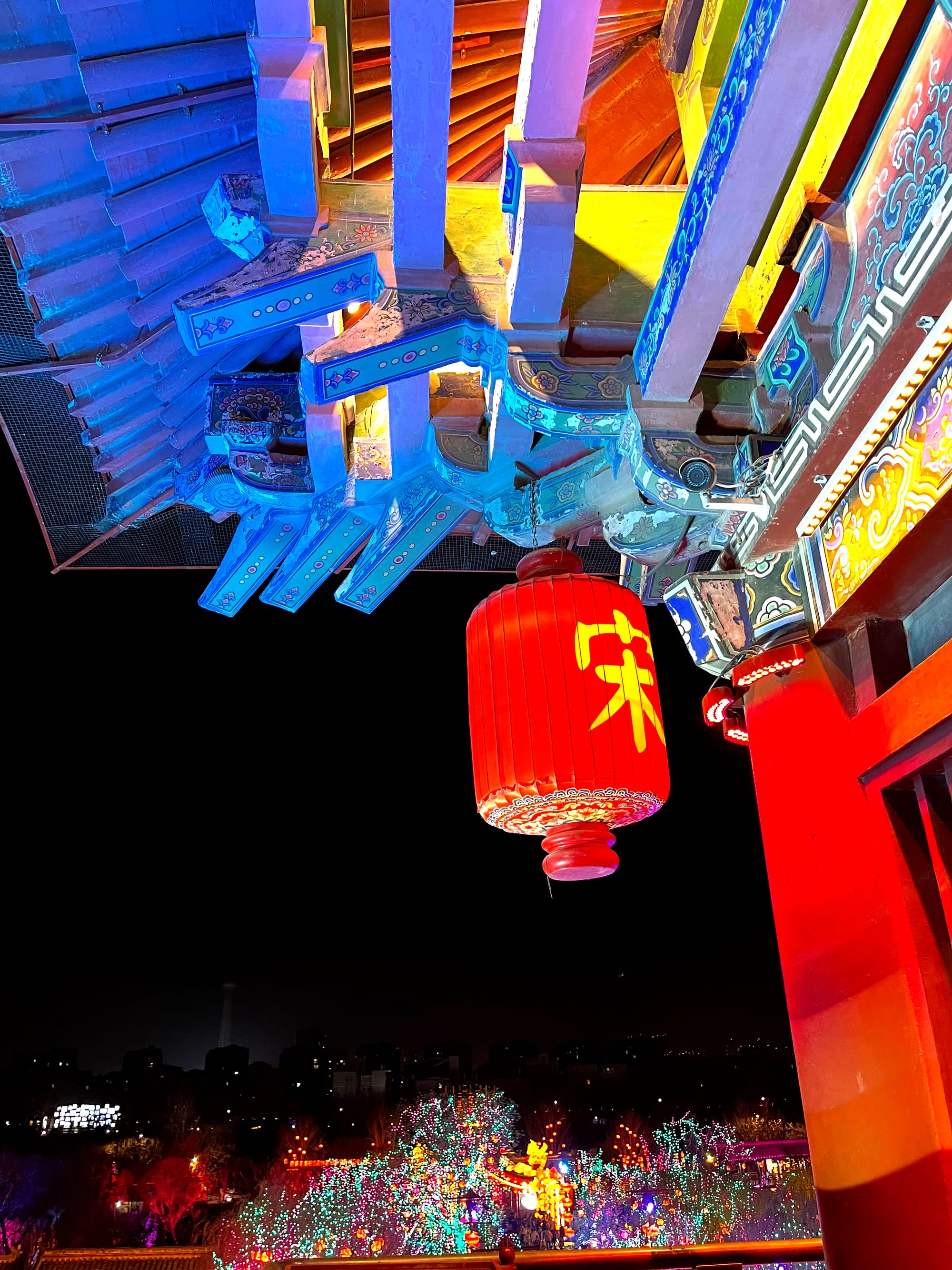
The park invites you to enter that painting — the Rainbow Bridge, the canal running straight through, teahouses and street vendors positioned as the scroll shows them. The real draw is the immersion: costumed actors, street performances, Song-dynasty tea ceremonies...cosplaying 11th-century China as the whole premise of the park.
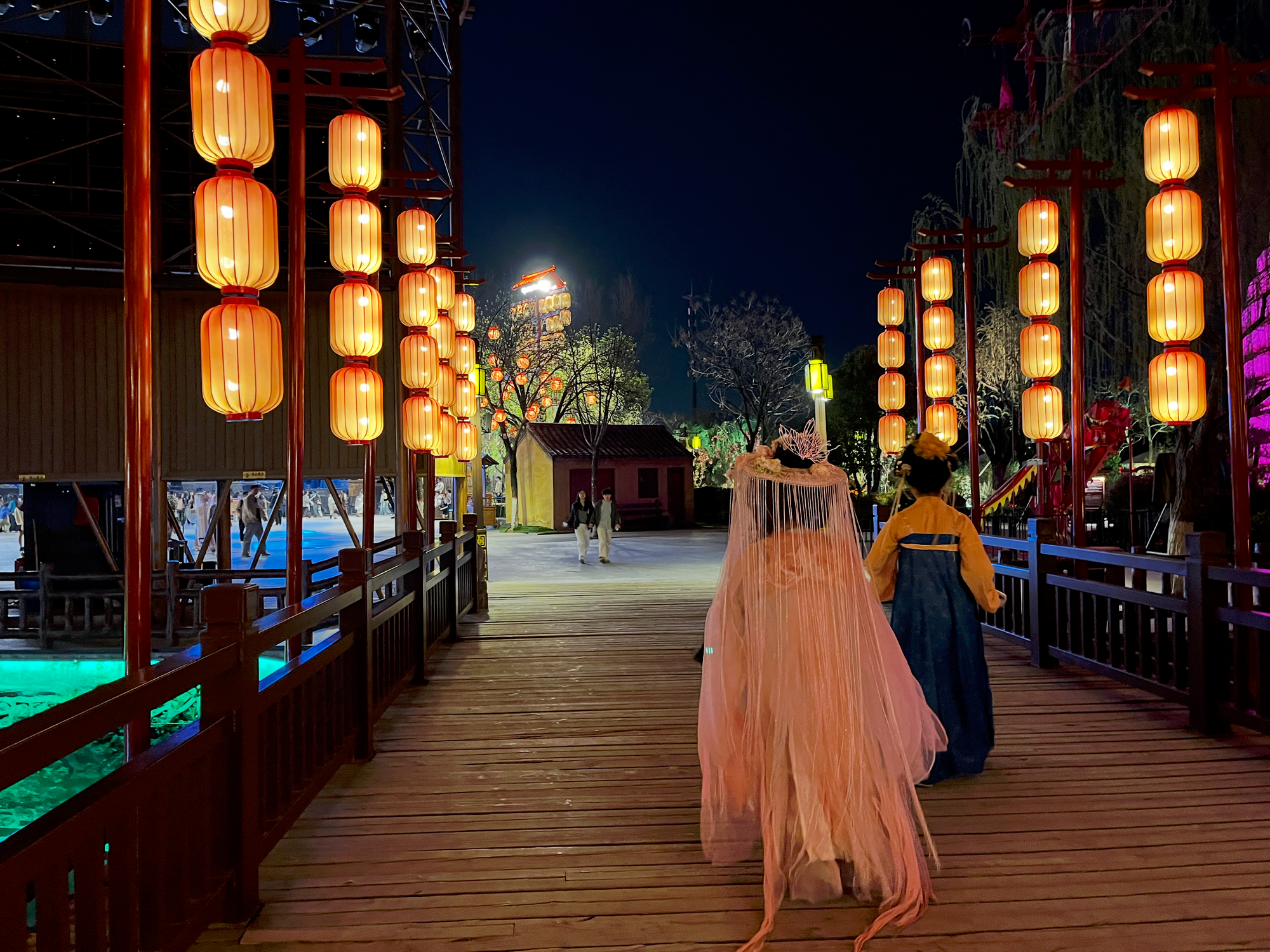
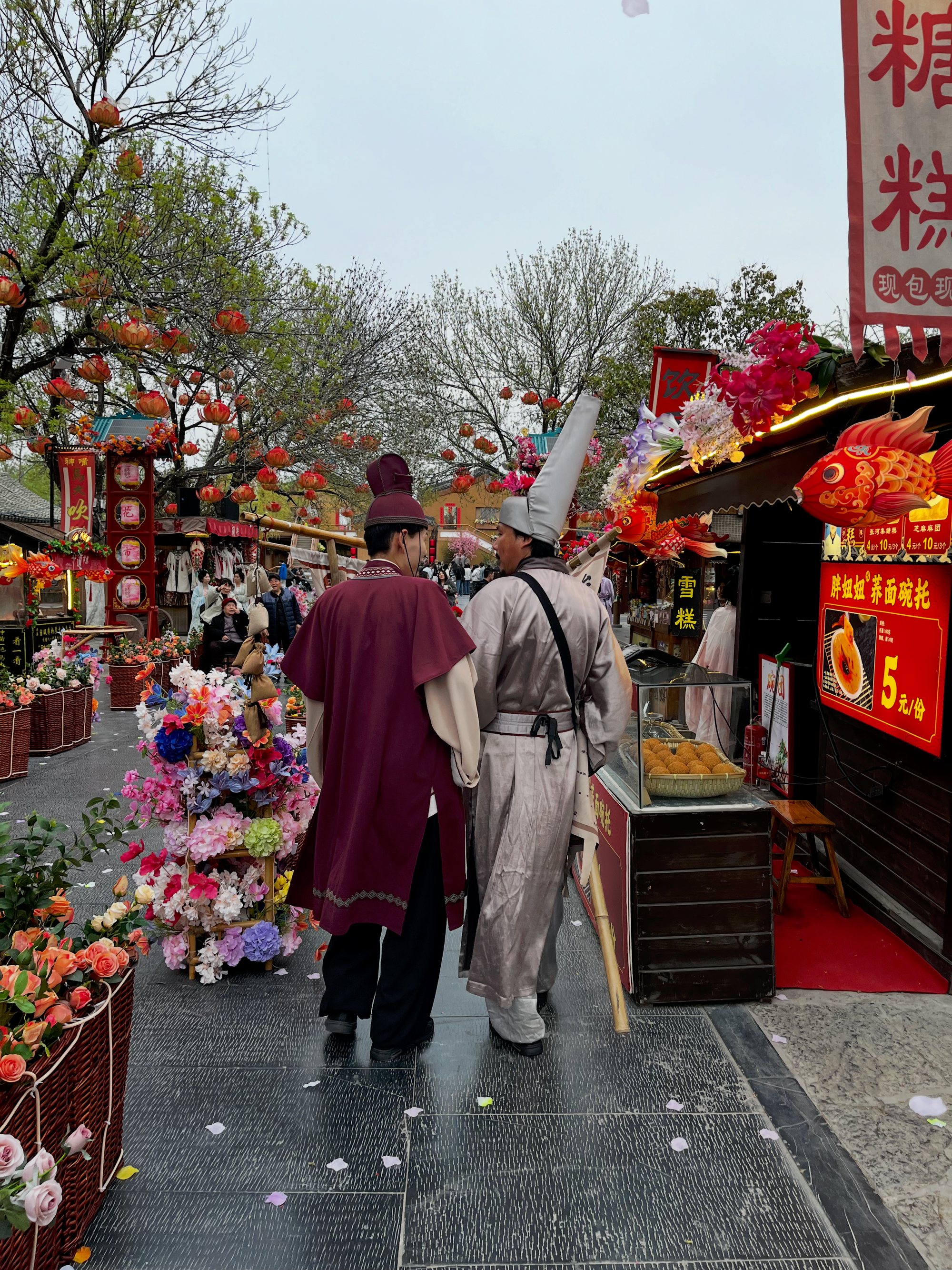
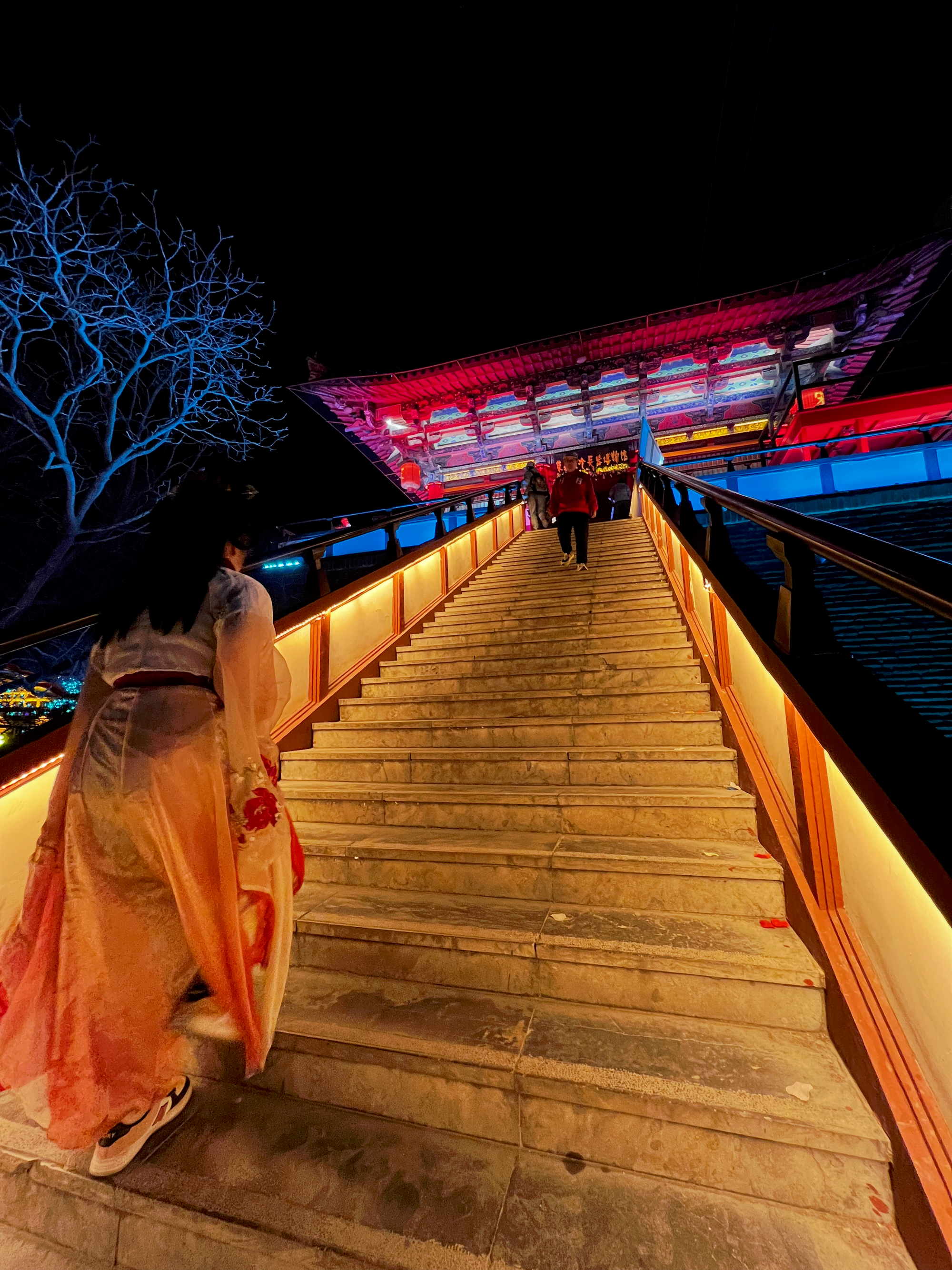
A short walk away, Wansui Mountain Wuxia City runs the same idea through a wuxia (martial-arts fantasy) lens — martial arts theatre, swordplay, a rowdier, more game-like version of the same historical world.
-Historical Sites in Kaifeng:
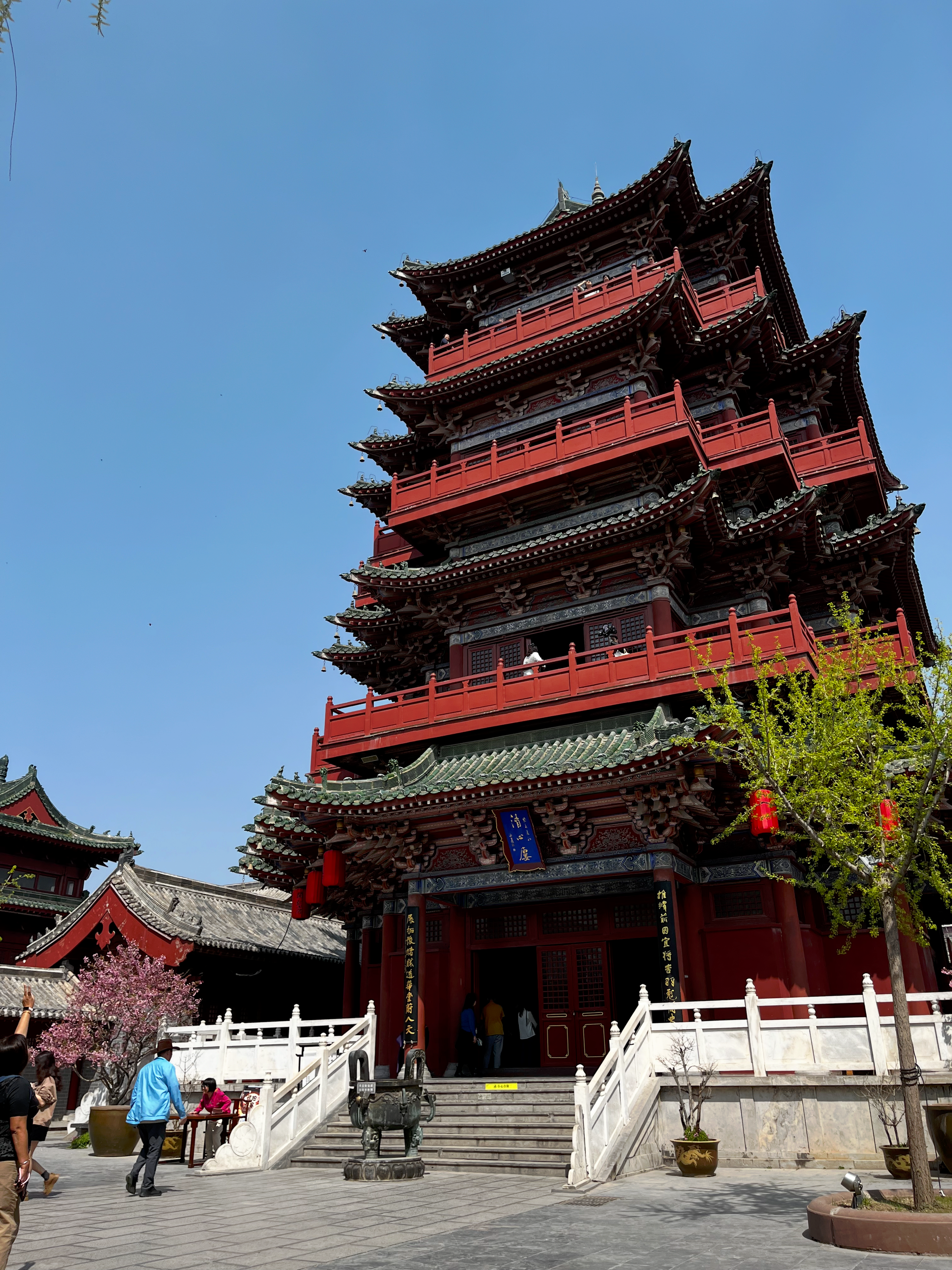
- The Iron Pagoda (开宝寺琉璃塔), built in 1049, is the one structure that is still substantially Northern Song in fabric — its brown glazed brick reads as iron from a distance, which gives it its name. It has survived floods, earthquakes, and wars; only the 1954–57 restoration touched it, and the main body is original Song work.
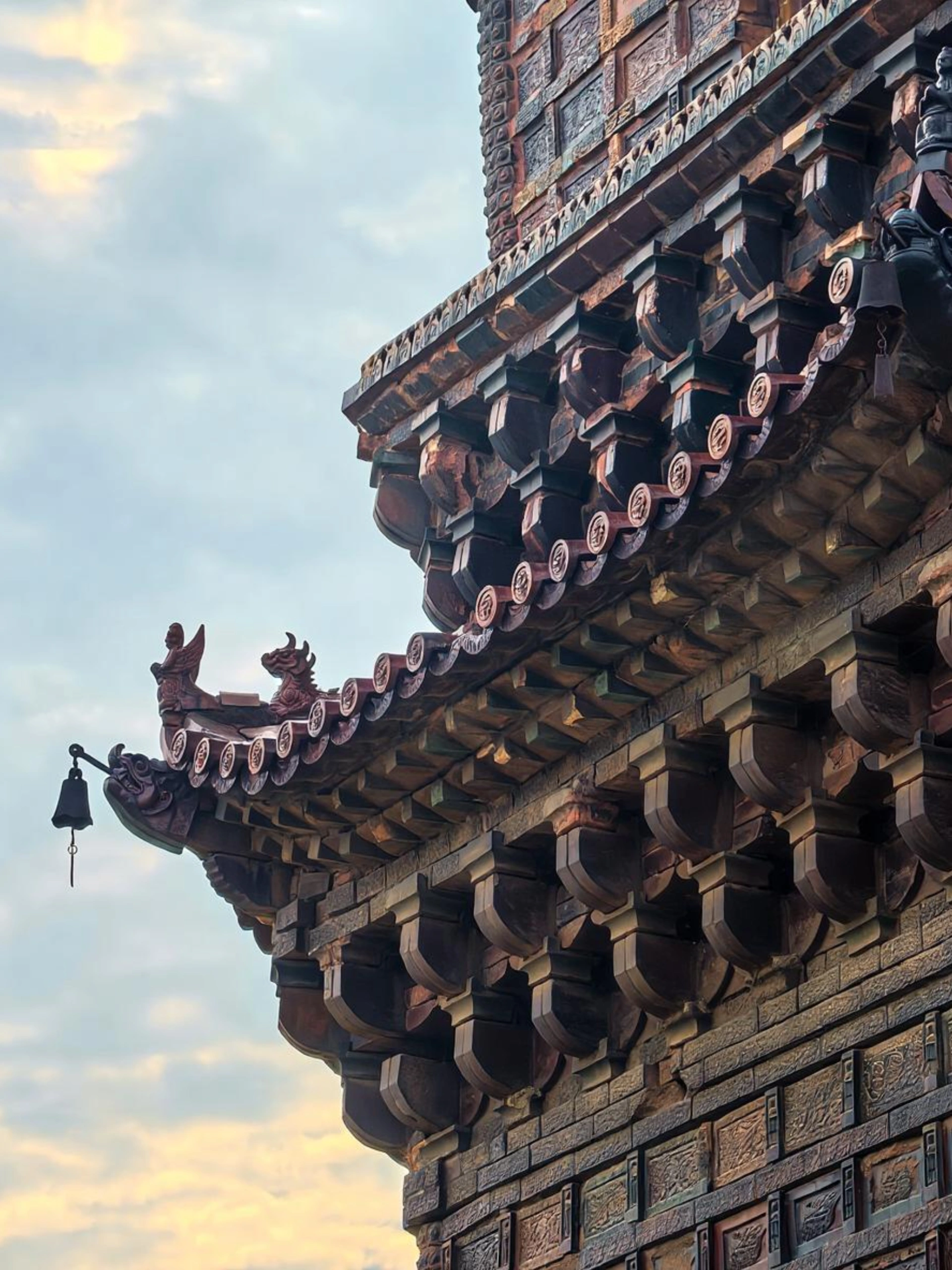
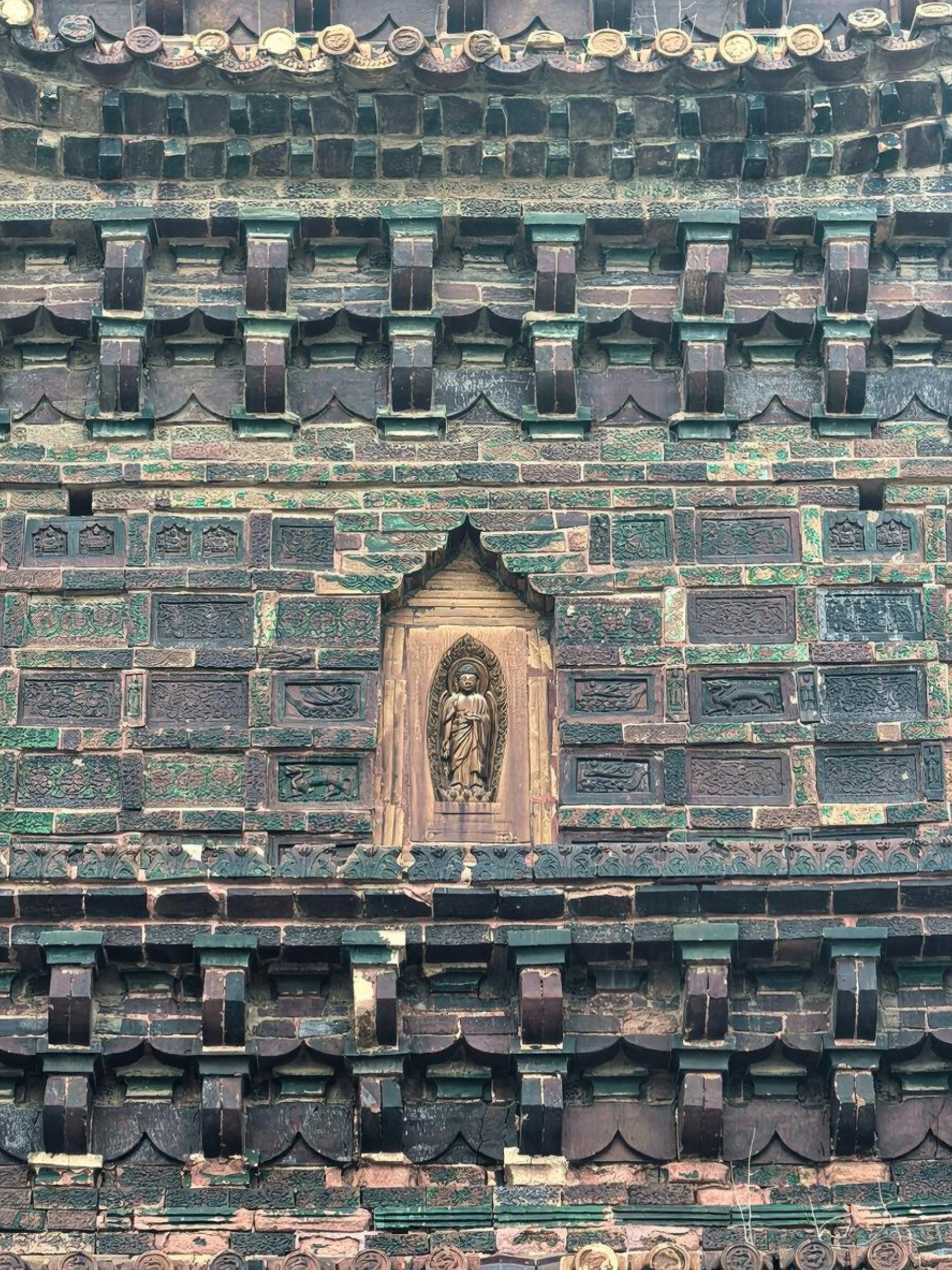
- Dà Xiàngguó Temple (大相国寺), founded in 555 CE and once the imperial temple of the Song court, is still an active place of worship. The site is original but the buildings have gone through reconstructions during the Qing Dynasty.
- Dragon Pavilion (龙亭) sits on the site where six successive dynasties built their palaces. The pavilion itself is Qing, built on top of the buried Song palace. The Song imperial city lies 8–10 metres below your feet.
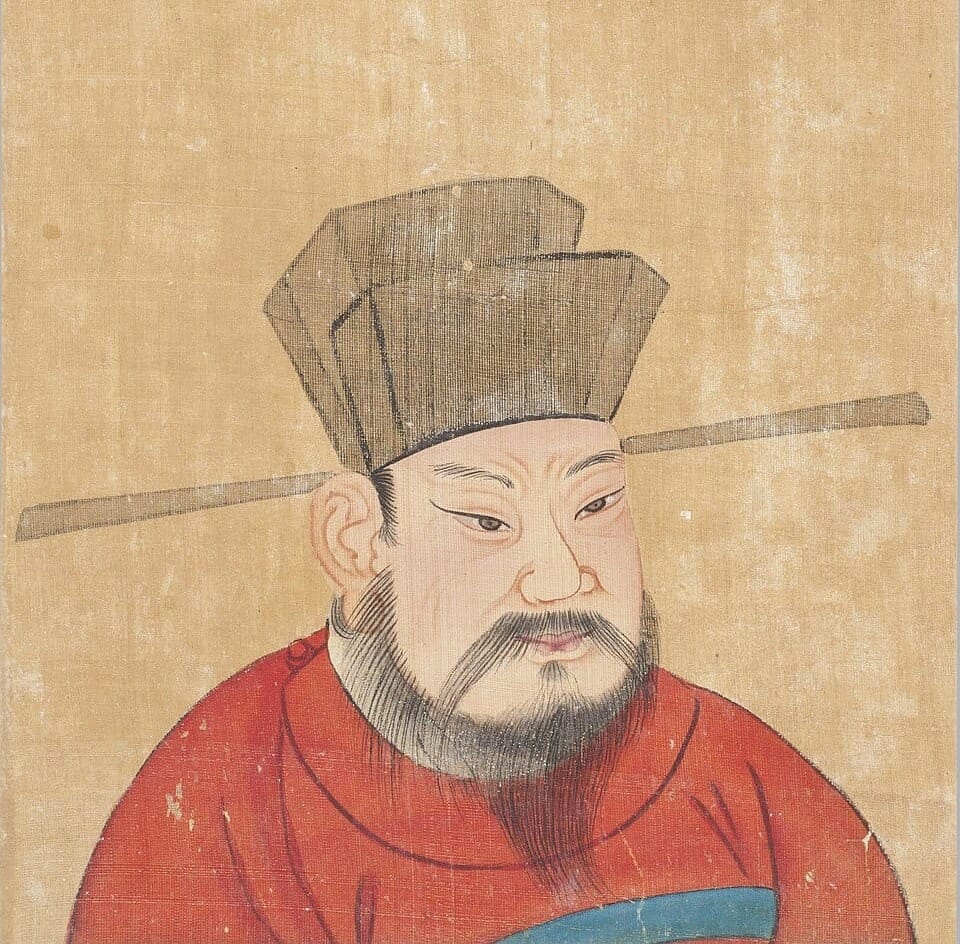
- Kaifeng Fu (开封府)— a 2003 reconstruction of the Northern Song prefectural office on the site of the original. It is the reconstructed courthouse of Kaifeng's most famous magistrate, Bao Zheng, a Song-dynasty official whose reputation for incorruptible justice turned him into a folk hero and a recurring character in Chinese arts. Visiting is less "old government building" and more "step inside the legend."
- BEST FOR
You want "living" Song-dynasty culture, not ruins behind glass. You're here for the after-dark food scene as much as the sights.
The "city stacked on city" layering is the kind of thing that genuinely fascinates you, not just a fun fact.
You're happy to dress up, join a performance, and treat travel as participation rather than sightseeing.
- MAY NOT BE FOR YOU IF
You dislike theme-park-style history — Millennium City Park/Wansui Mountain Wuxia City lean hard into staged performance, and if that's not your thing, it can feel more "produced" than authentic.
You're here for nature — Kaifeng has no mountains, and while the Yellow River runs along its north edge, it's not a scenic destination in itself; for landscape, you'd head toward nearby Zhengzhou or Luoyang instead.
- HOW LONG?
2 days: one for Millennium City Park (清明上河园) and a Bian River cruise (汴河游船) on the canal, ending at Drum Tower Night Market (鼓楼夜市) or Xisi Night Market (西司夜市); a second for the Iron Pagoda (铁塔), Daxiangguo Temple (大相国寺), and Kaifeng Fu (开封府) or Dragon Pavilion (龙亭), with an optional hour at the Northern Song Dongjing City Shuntian Gate Ruins Museum (北宋东京城顺天门遗址博物馆) if the underground layering interests you — note this opens October 2026.
Wansui Mountain Martial Arts City (万岁山武侠城) suits families or younger travellers and can swap in for half a day.
- GETTING THERE
The fastest high-speed trains from Xi'an take under 1.5 hours; from Beijing, roughly 4 hours. Luoyang Longmen station sits just a short taxi ride from the grottoes themselves.
- PAIRS WELL WITH
Xi'an, under 1.5 hours by high-speed rail, for more early-dynasty history along the same corridor · Zhengzhou, under an hour, where a 3,600-year-old Shang-dynasty rammed-earth wall still runs through the city centre · Kaifeng, under 30 minutes, another former capital nearby.
If your visit lands in late October to November, add Dragon Pavilion Park to the itinerary — it hosts Kaifeng's Chrysanthemum Culture Festival, millions of potted chrysanthemums across the city, timed with the year's most comfortable weather.
For food, try the soup dumplings (guàntāng xiǎolóngbāo) at Yī Dì Lóu or Huáng Jiā Lǎo Diàn — — the two are sister houses, both tracing back to the same 1922 kitchen. The method is non-negotiable: "lift gently, move slowly, open a window, then drink the soup" — bite a small hole, sip the broth, then eat the rest.
For breakfast, go to Sì Mén morning market (寺门早市), the old Hui Muslim quarter behind the East Mosque, where the day starts with Kaifeng-style white hulatang (素胡辣汤) — a meat-free, peppery soup thickened with wheat gluten and seaweed, lighter than the beef version you'll find elsewhere in Henan. Pair it with a yóumótóu guàn jīdàn (油馍头灌鸡蛋), a fried dough pocket cracked open and filled with egg, or a bowl of sì wèi cài (四味菜) with a side of guōkuī (锅盔).