Harbin
The world's largest winter playground — Moscow of the East, warmed by northeastern hospitality.
Harbin earned its nickname "Moscow of the East" by way of a railway line. When construction began on the China Eastern Railway in 1898, a small fishing village on the Songhua River was transformed into an international trading port. Within a few decades, Russian engineers, Jewish merchants, Japanese architects and Chinese settlers together built a city dense with churches, cobblestone streets and Western bakeries.
By the 1920s, Harbin held the largest Russian population outside of the Soviet Union. What makes the city unique today is that its food and culture still carry the unbroken trace of that East-meets-West collision — within a city that remains unmistakably and warmly northeastern Chinese.
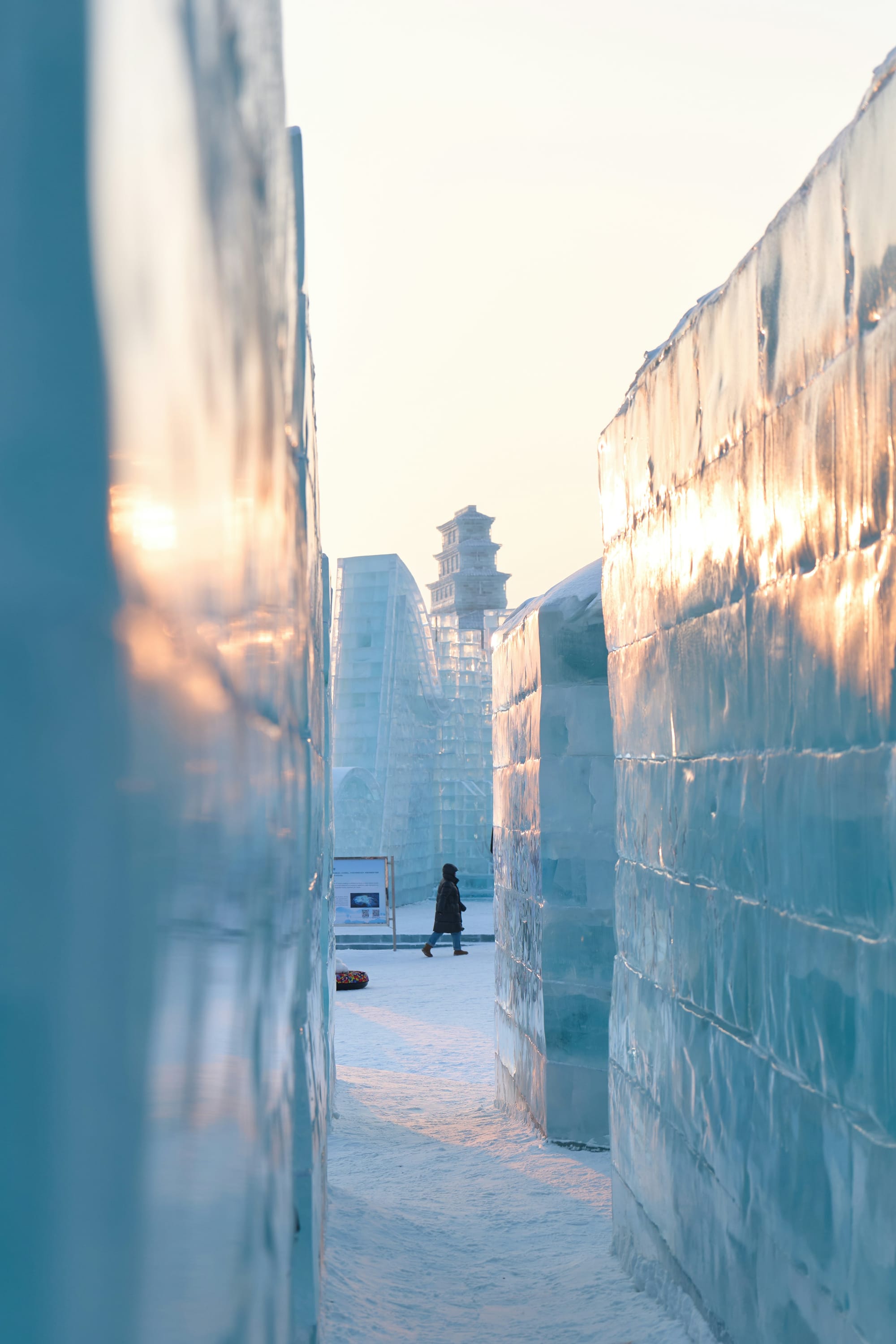
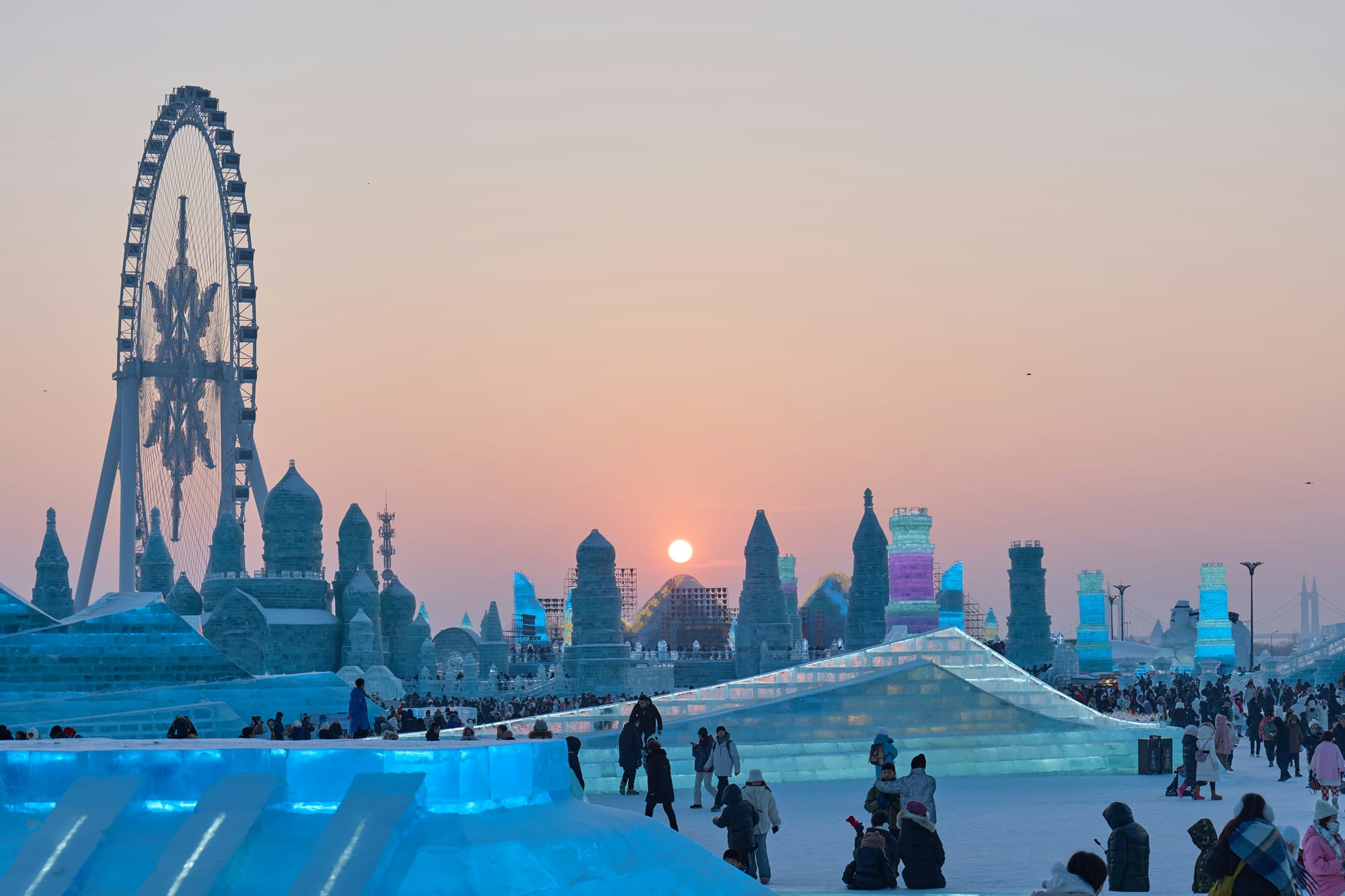
Harbin's far-northern latitude makes it one of the coldest major cities on Earth, and the city has turned that into its biggest draw. Each winter it builds the largest ice-and-snow theme park on the planet from scratch — over a million square metres, hundreds of thousands of cubic metres of carved ice — alongside a month-long international ice festival.
Harbin Institute of Technology traces back to 1920, founded on the site of the former Russian consulate. In 1908, Russian émigrés formed China's first symphony orchestra, opening with Tchaikovsky's 1812 Overture — the beginning of orchestral music in China.
- THE EXPERIENCE
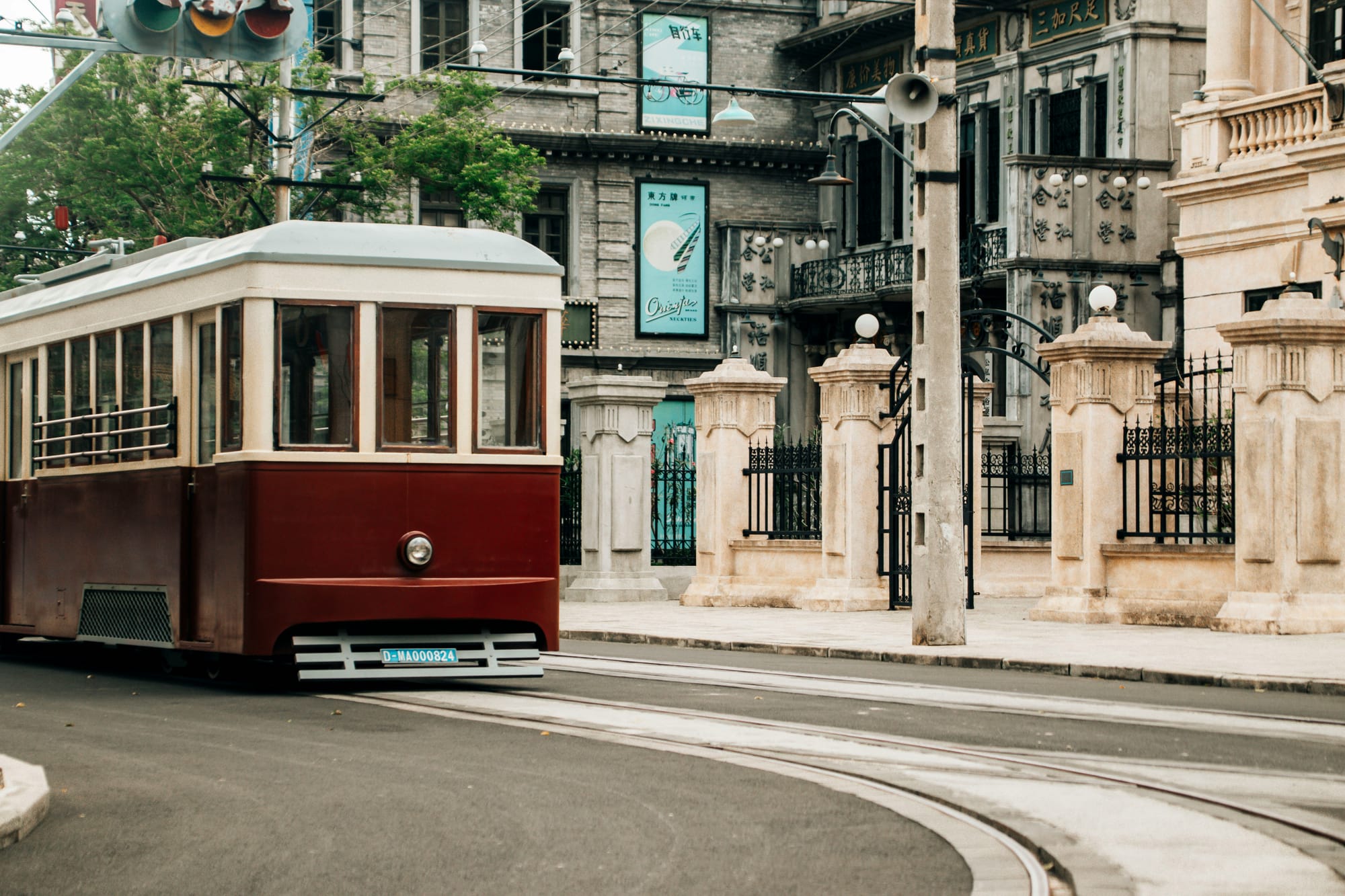
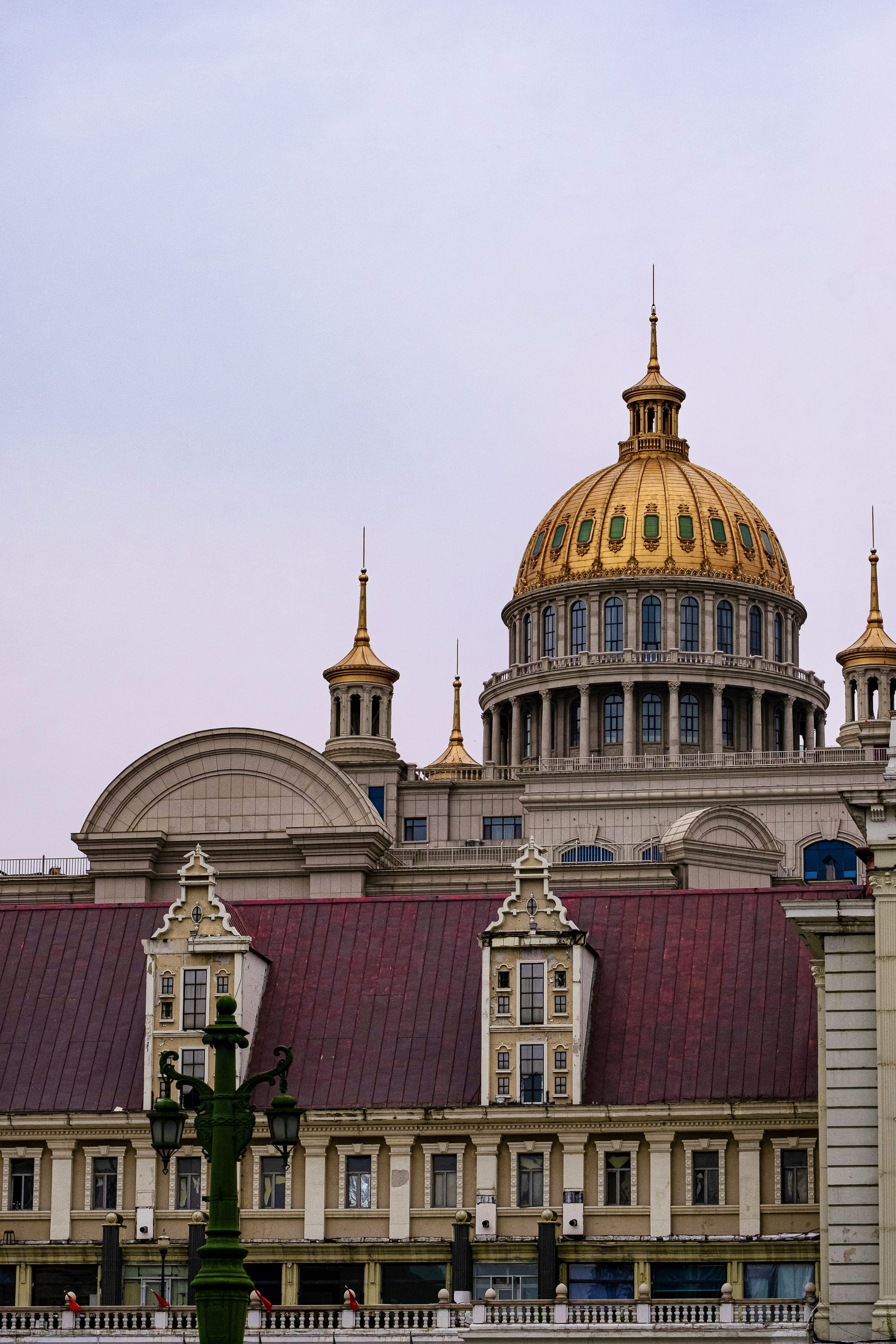
Zhongyang Dajie, Harbin's grand introduction to the world, runs 1,450 metres of Baroque, Renaissance and Art Nouveau facades over granite cobblestones laid in 1924 — an open-air museum that transforms completely once the streetlamps come on at dusk.
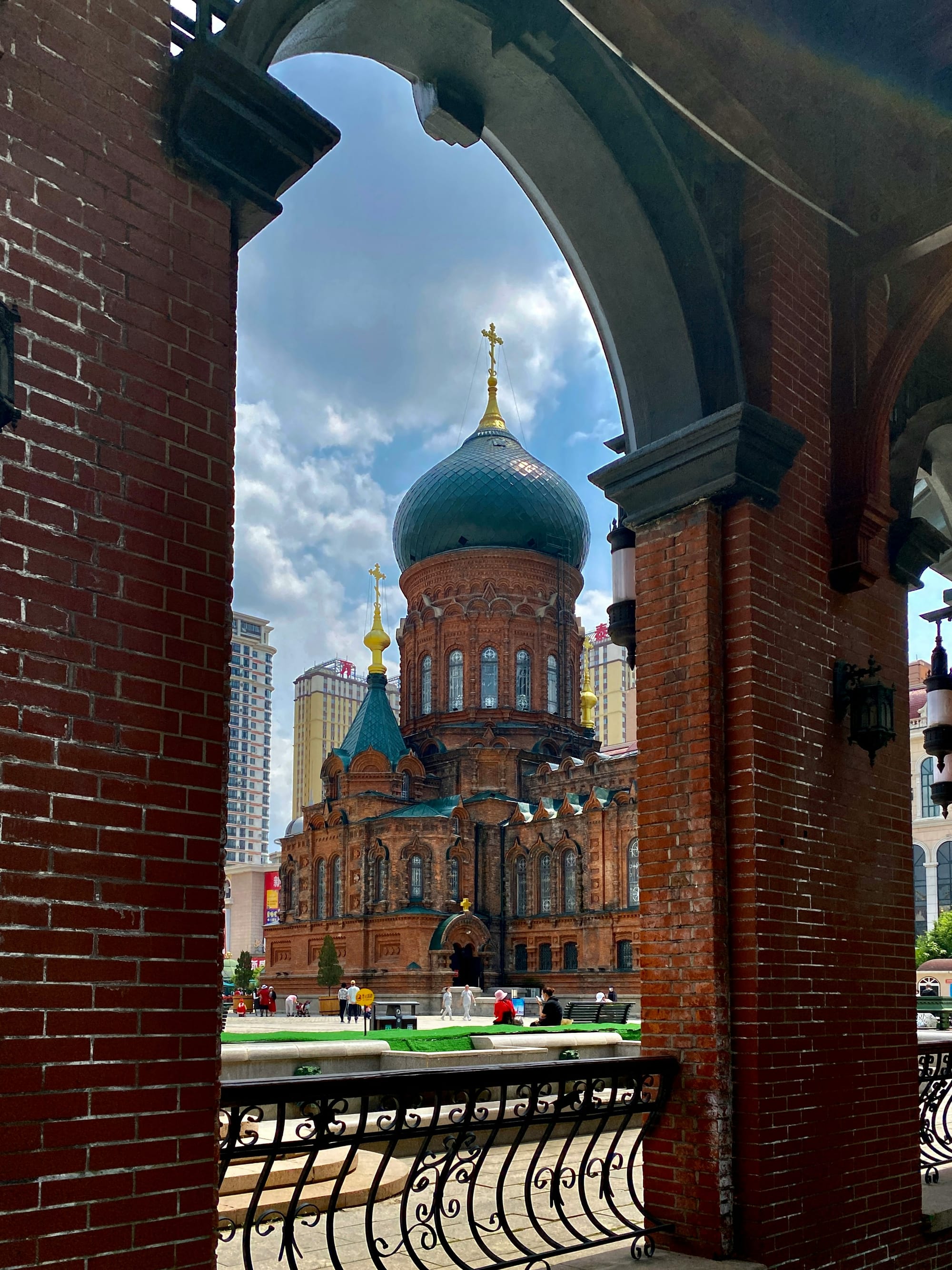
St. Sophia Cathedral, a Byzantine-style Orthodox church begun in 1907, turns gold in late-afternoon light and glows equally dramatic after dark — the most recognizable face of a city that once had over 30 churches.
Huayuan Jie (Garden Street), Harbin's "yellow houses," is the city's best-preserved Russian residential quarter — bayan accordion drifting through restored lanes after dark.
Harbin Ice and Snow World is the largest ice-and-snow theme park on Earth, rebuilt from scratch each winter — ice slides, a towering ferris wheel, and an entire city of light and sculpture that exists for a few months a year and then vanishes.
Food runs just as deep as the architecture: crackling sweet-and-sour pork invented here, century-old ice bars eaten at minus 20°C like a rite of passage, Russian-style black bread and kvass brewed with a fermentation technique said to be lost even in Russia itself.
- BEST FOR
A city where European and Chinese history collided. Winter spectacle — ice sculpture, festivals, a skyline built for snow. Hearty northeastern food alongside a surprisingly intact Russian culinary thread.
- MAY NOT BE FOR YOU IF
You can't handle serious cold — winter temperatures can drop to -30°C, and a proper down coat, snow boots, and a wind mask are mandatory.
You want a destination close to China's heartland — Harbin sits in the far northeast, about 4 hours 50 minutes by the fastest direct train from Beijing.
- HOW LONG?
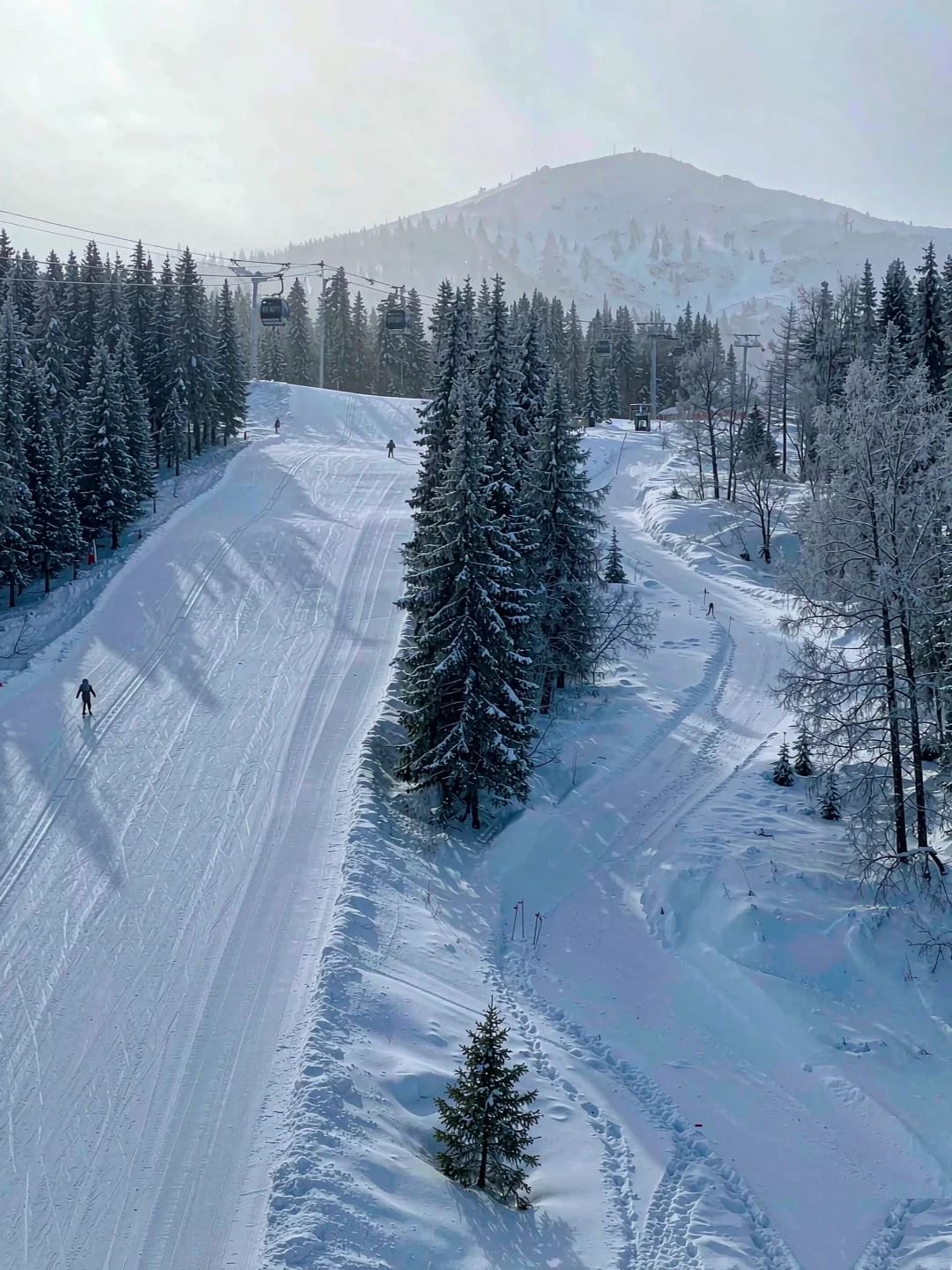
3–4 days: one for Zhongyang Dajie and St. Sophia Cathedral, one for Huayuan Jie and Old Daowai, one for Ice and Snow World (if visiting in season), and an optional day trip to Yabuli for skiing.
- GETTING THERE
Harbin Taiping International Airport connects shuttle bus Line 3 to Zhongyang Dajie; a taxi into the city runs around ¥120.
By rail, Harbin Station (central, 2km from Zhongyang Dajie) or Harbin West (the high-speed train hub) are your two options — Beijing is about 4 hours 50 minutes away on the fastest direct train.
- PAIRS WELL WITH
Yabuli, about 1 hour by high-speed rail, for skiing · Changchun, under 2 hours in Jilin province, for more Manchurian-era history
If you're visiting for skiing, Yabuli Ski Resort is the easiest option — the fastest train reaches Yabuli West in about 1 hour 8 minutes, with daily departures from Harbin Station and Harbin West; a direct shuttle line from Harbin Taiping Airport also runs during the 2025–2026 season.
Book winter accommodation early — hotel prices around Zhongyang Dajie can double during peak season (December–February).