Jianzha (Jainca) County, Qinghai
A former Tibetan chieftain's manor — set in red-rock canyon country
On the eastern edge of the Tibetan Plateau, in Jianzha County, stands one of the last surviving manor houses of Amdo, one of Tibet's three traditional regions — the Angla Qianhu Mansion (昂拉千户庄园).
Local tradition traces the Angla family back to Tri Relpachen, the Tibetan king who reigned from 815 to 838 CE — a lineage the mansion itself it built to remember.
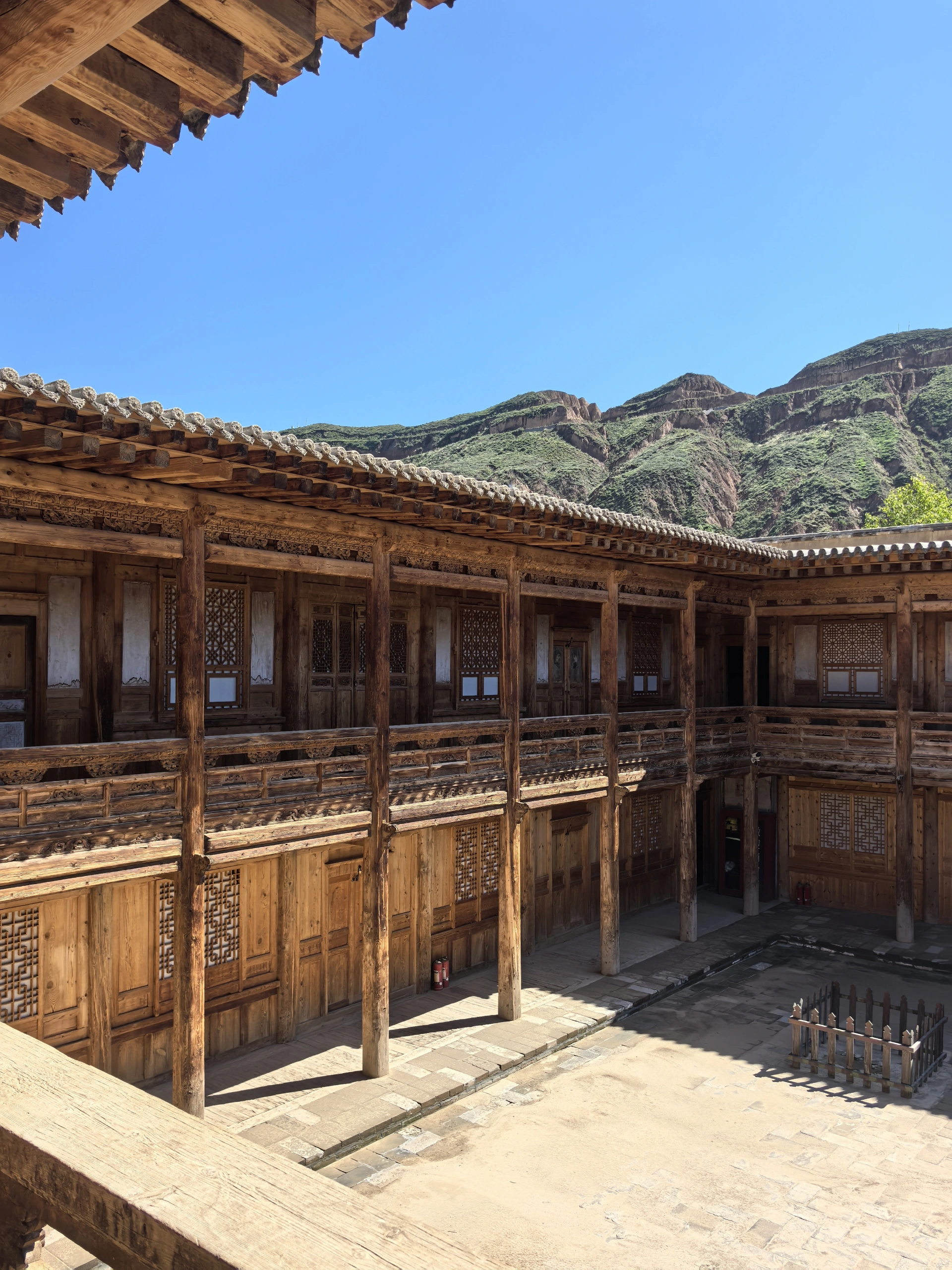
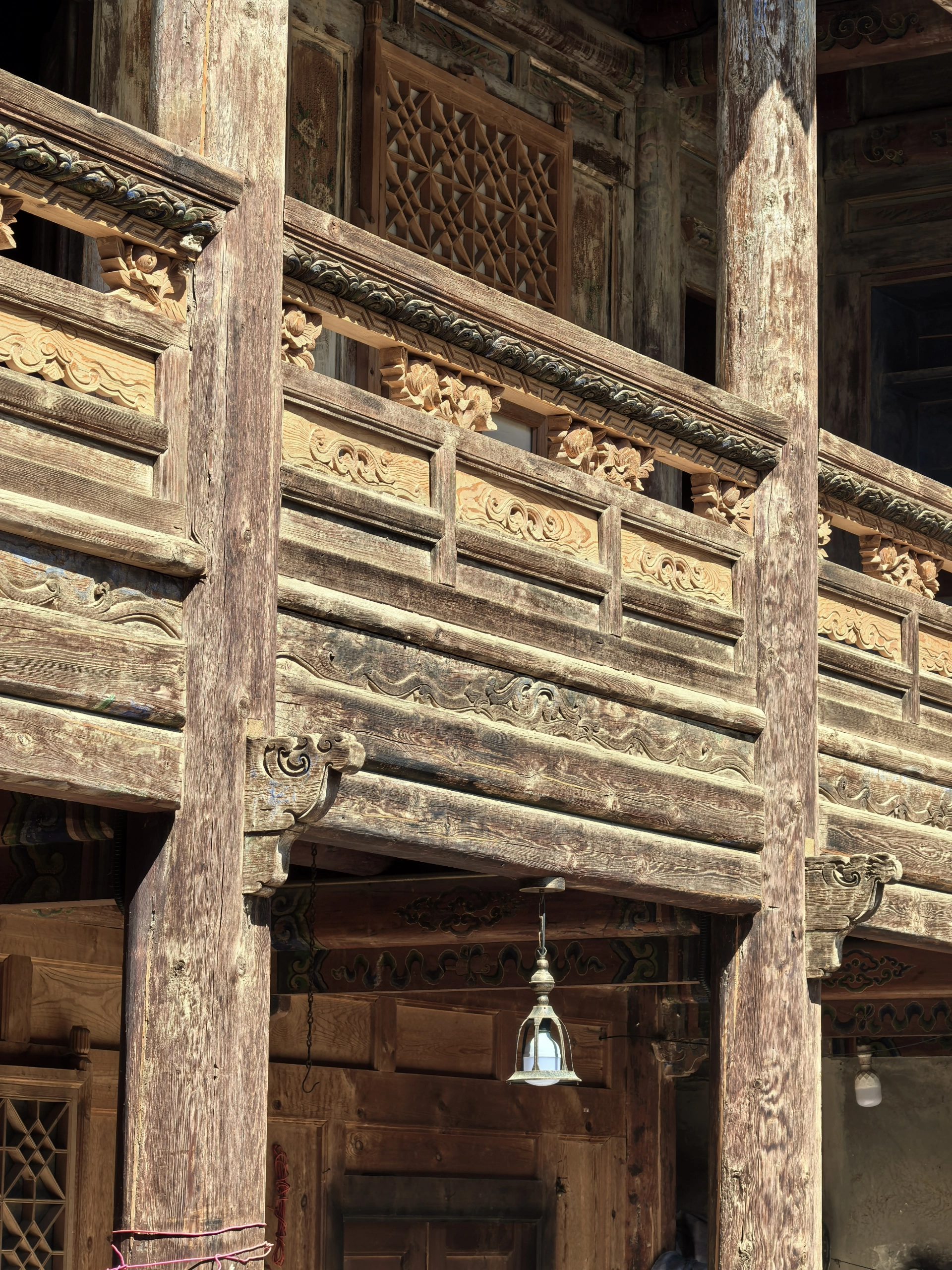
“Its carved wooden doors and windows are said to hold seven generations of chieftain history, and its double-courtyard layout, one courtyard stacked directly above the other, is unlike anything else in the region.”
Today it's preserved as a public heritage site, free to enter, in a county that also holds some of China's most dramatic Danxia rock formations and a stretch of the Yellow River running clear.
- THE EXPERIENCE
The Angla Qianhu Mansion. Built between 1947 and 1949 by Xiangqian Dongzhi, the seventh and last hereditary Qianhu — a chieftain title the Qing court created in 1657 to govern the area on its behalf — the mansion is a feat of Amdo craftsmanship: 4,600 square metres, 97 rooms, its pillars hauled from primeval forest by relay teams from villages under the Qianhu's rule. A 15-step staircase connects the two courtyards — the lower for daily life, the upper for worship and administration — and remains the building's architectural signature. It's now designated a heritage and education site that's open to the public.
Kanbula National Geopark was formally named a UNESCO Global Geopark in 2025, and it's known above all for its Danxia rock (rosy clouds)— the term geologists worldwide use for red sedimentary formations sculpted by erosion into cliffs, towers, and canyons, named after Mount Danxia in Guangdong, where the landform was first classified.
The formations here aren't the soft, rounded Danxia of southern China. They're high-altitude and severe: sword-like peaks, fortress mesas, honeycomb weathering, curtain cliffs.
Go after rain, when the red rock saturates to a colour locals call "a palette knocked over."
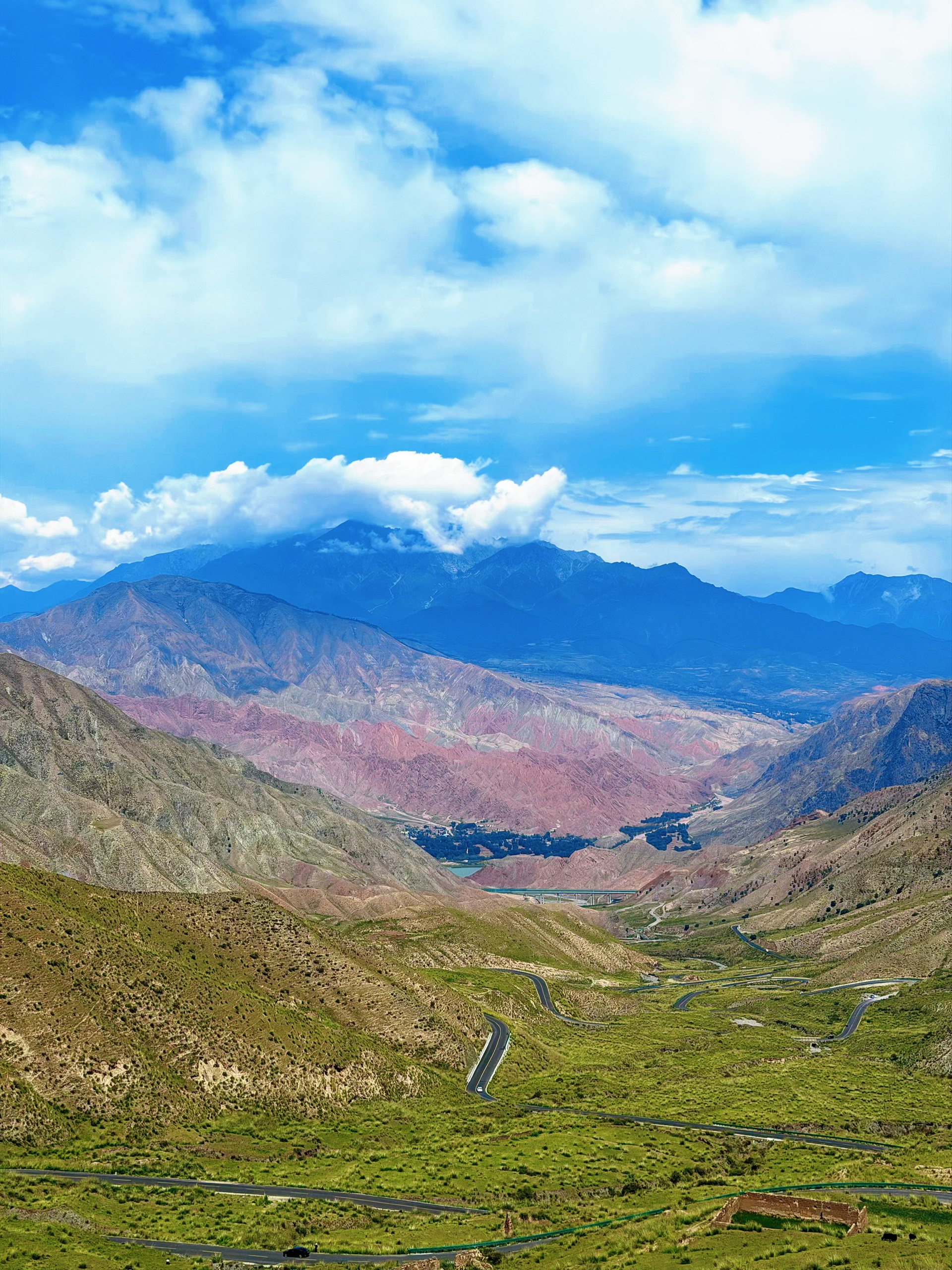
Hiring a local driver is the easiest way to see Kanbula, and worth doing — but book through a licensed travel agency or platform, not a private driver; unlicensed cars aren't worth the risk. Even with a hired car, you may need to switch to the park's internal shuttle to reach some core zones, especially entering from the east. Bring your passport for entry and hotel check-in, and if you want an English-speaking driver or guide, request that specifically when booking — most drivers default to Mandarin only.
The Yellow River — the river that gave rise to Chinese civilization, usually pictured thick with silt — runs turquoise and clear through Jainca for 96km. Behind the dam, the Lijiaxia Reservoir spans nearly 32 square kilometres and plunges to 185 metres at its deepest, red cliffs rising on both banks. Tourist boats run from the Nanzonggou pier (南宗沟码头) out into the reservoir.
Working Tibetan Buddhist monasteries dot the hills. Nanzong Nunnery (阿琼南宗尼姑寺), founded in 1327, is the largest nunnery in Qinghai and a major site of the Nyingma school — the oldest of Tibetan Buddhism's four traditions.
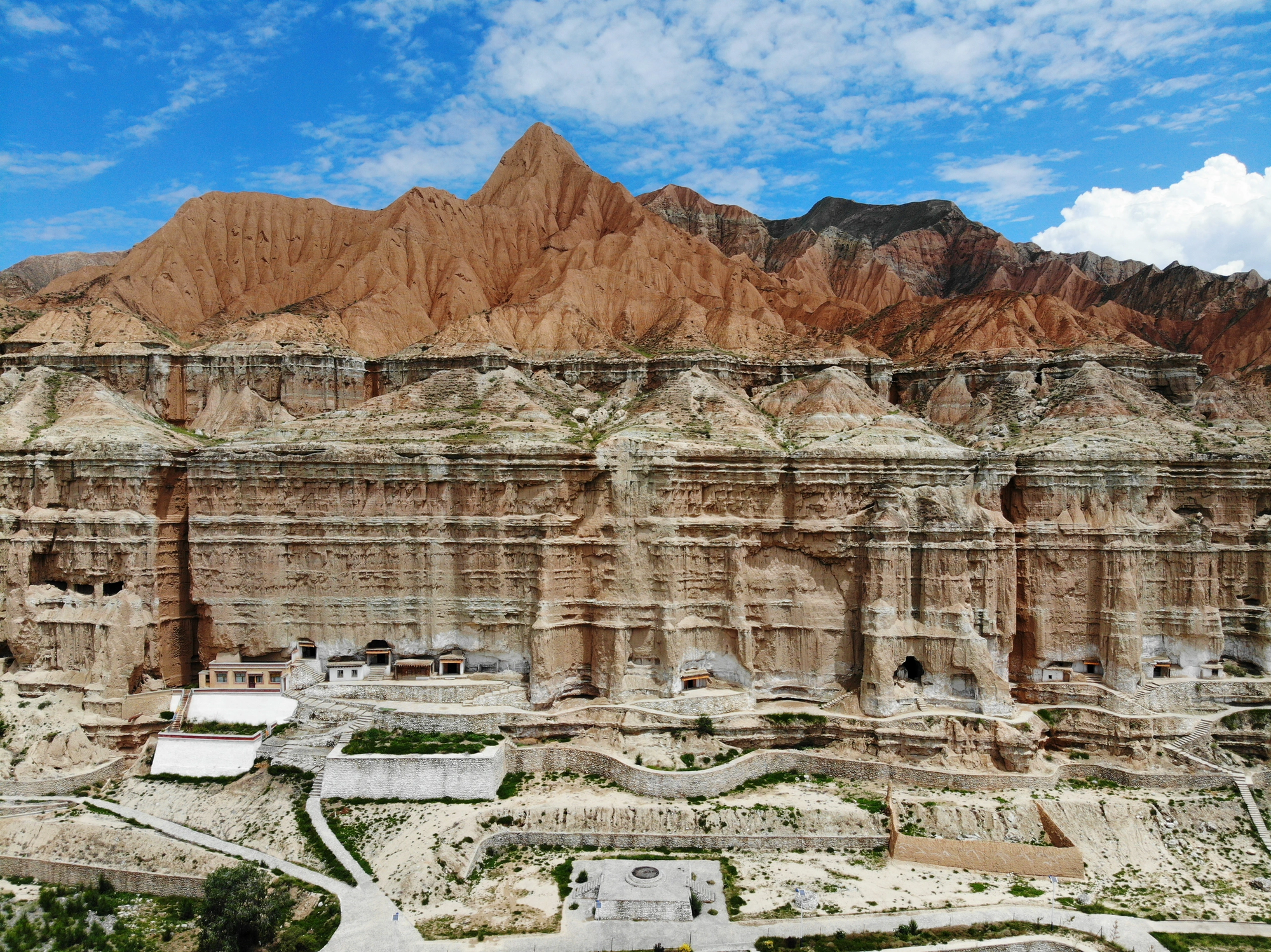
Loduoje Zhighe Monastery (洛多杰智合寺), 4km from the county seat, marks the spot where three monks are said to have hidden during the 9th-century persecution of Buddhism — one of the oldest living threads back to that period anywhere in Amdo.
Also called the Golden Cliff Monastery: its cliff face holds 24 grottoes arranged in a line.
- BEST FOR
Tibetan Amdo architecture found almost nowhere else. Danxia rock — a landform first classified and named in China, and unmatched anywhere else at this scale or concentration — at a harsher, higher-altitude extreme than its more famous southern counterparts.
Adventurous travelers, comfortable with limited English and long drives between sites.
- MAY NOT BE FOR YOU IF
You need reliable English. You want a fast, low-effort day trip. You're not drawn to historical or Tibetan architecture, or to dramatic natural landscapes and geological formations. You’re uncomfortable with long drives.
- HOW LONG?
2–3 days, factoring in travel time from Xining. One day for the mansion and county seat monasteries, one full day for Kanbula and the reservoir, with a half-day buffer for the slower pace of rural Qinghai.
- GETTING THERE
By bus from Xining: departures from Xining Central Station, roughly 1–1.5 hours. Buses typically run through the day until late afternoon.
By car: 2–2.5 hours via the Ping‘an Expressway.
Best season: May–September, when daytime temperatures sit around 18°C in July and the plateau is green. Autumn (September–October) brings clearer air and the best Danxia photography light. Winter is harsh — cold, windy, and many services reduced.
- PAIRS WELL WITH
Xining, 2 hours away, as the gateway
Tongren (Tibetan: Rebkong), about 1.5 hours away from Xining, is the main centre for thangka painting (traditional Tibetan scroll paintings on cotton or silk cloth) and monastic arts.
Guide (贵德), across the Yellow River to the west, for its own Danxia and the “clear Yellow River” stretch.
English is very limited. Bring cash for small monastery donations and roadside stops — mobile payment coverage thins out quickly outside the county seat.
The altitude is moderate (county seat around 2,000–2,300m), but the highest point in the county reaches 4,614m. Take the first day slowly.